
Kirjahaku
Etsi kirjoja tekijän nimen, kirjan nimen tai ISBN:n perusteella.
1000 tulosta hakusanalla John R. Howe

Revolutionary Politics in the Long Parliament
John R MacCormack
Harvard University Press
1973
sidottu
This volume is a systematic study of the politics of five crucial years of the Puritan Revolution, the period between John Pym's death in December 1643 and the execution of Charles I in January 1649. MacCormack provides a fresh and coherent interpretation of the events chronicled in the first volume of S. R. Gardiner's monumental "History of the Great Civil War," a work long known to be inadequate. Through an exhaustive compilation of the activities of individual members, MacCormack examines the Long Parliament and the structures of its parties. He investigates the degree to which the division between parties was religious or political, the character of the leadership of the two major groups (moderates and radicals), and the transformation of the parties during the five-year period. The author focuses on the way in which the Parliamentary radical group led by Oliver St. John, Sir Henry Vane, Jr., and Oliver Cromwell gradually retreated from their revolutionary stance of 1644 in the face of the genuine populism of the Levellers. He contends that their failure to retain the moral leadership of the revolution led to the fragmentation of parties in 1648 and to the eventual dictatorship of Oliver Cromwell. The book includes fresh interpretations of the role of Oliver Cromwell, especially in 1647 and 1648 when he emerged as the central figure. Significant material is also presented on John Lilburne. In analyzing the transformations of the radical party, the author places Lilburne's party, the Levellers, in the political context of the Revolution.
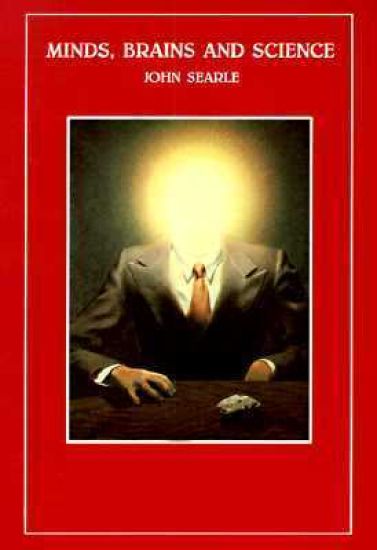
Minds, Brains and Science takes up just the problems that perplex people, and it does what good philosophy always does: it dispels the illusion caused by the specious collision of truths. How do we reconcile common sense and science? John Searle argues vigorously that the truths of common sense and the truths of science are both right and that the only question is how to fit them together.Searle explains how we can reconcile an intuitive view of ourselves as conscious, free, rational agents with a universe that science tells us consists of mindless physical particles. He briskly and lucidly sets out his arguments against the familiar positions in the philosophy of mind, and details the consequences of his ideas for the mind-body problem, artificial intelligence, cognitive science, questions of action and free will, and the philosophy of the social sciences.
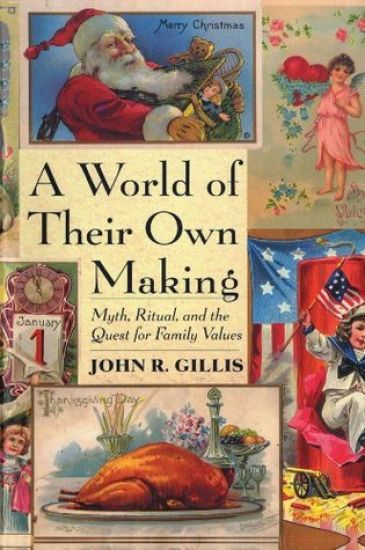
Weddings, birthdays, funerals, reunions, Mother's Day, even Christmas, we think of these ritual events as timeless traditions, our links to the distant past and the future. John Gillis aims to reveal just how modern and how politically constructed these rituals are. Our whole society may be obsessed with family values, but as John Gillis points out in this book, most of our images of home-sweet-home are of very recent vintage. The book questions our idealized notion of "the family", a mind-set in which myth and symbol still hold sway. As the families we live with become more fragile, the symbolic families we live by become more powerful. Yet it is only by accepting the notion that our ritual, myths, and images must be open to perpetual revision that we can satisfy our human needs and changing circumstances. The book uses both recent and historical literature on Western family life from the Middle Ages to the present.
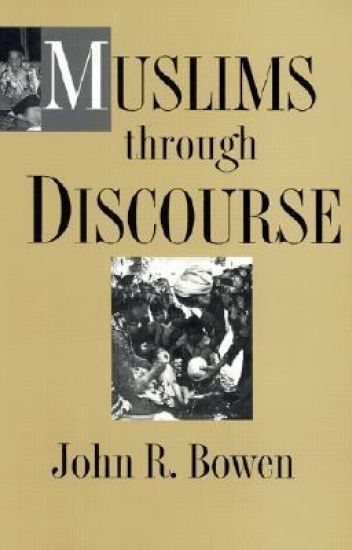
In this rich account of a Muslim society in highland Sumatra, Indonesia, John Bowen describes how men and women debate among themselves ideas of what Islam is and should be--as it pertains to all areas of their lives, from work to worship. Whereas many previous anthropological studies have concentrated on the purely local aspects of culture, this book captures and analyzes the tension between the local and universal in everyday life. Current religious differences among the Gayo stem from debates between "traditionalist" and "modernist" scholars that began in the 1930s, and reveal themselves in the ways Gayo discuss and perform worship, sacrifice, healing, and rites of birth and death, all within an Islamic framework. Bowen considers the power these debates accord to language, especially in arguments over spells, rites of farming, hunting, and healing. Moreover, he traces in these debates a general conception of transacting with spirits that has shaped Gayo practices of sacrifice, worship, and aiding the dead. Bowen concludes by examining the development of competing religious ideas in the highlands, the alternative ritual forms and ideas they have pro-mulgated, and the implications of this phenomenon for the emergence of an Islamic public sphere.
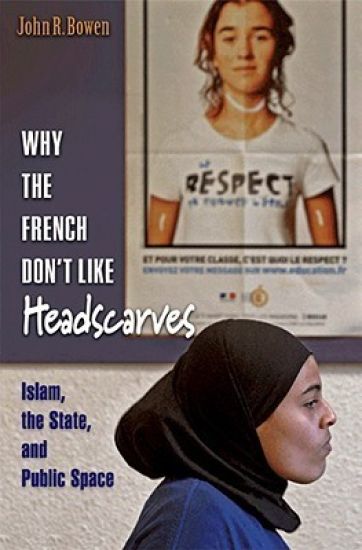
The French government's 2004 decision to ban Islamic headscarves and other religious signs from public schools puzzled many observers, both because it seemed to infringe needlessly on religious freedom, and because it was hailed by many in France as an answer to a surprisingly wide range of social ills, from violence against females in poor suburbs to anti-Semitism. Why the French Don't Like Headscarves explains why headscarves on schoolgirls caused such a furor, and why the furor yielded this law. Making sense of the dramatic debate from his perspective as an American anthropologist in France at the time, John Bowen writes about everyday life and public events while also presenting interviews with officials and intellectuals, and analyzing French television programs and other media. Bowen argues that the focus on headscarves came from a century-old sensitivity to the public presence of religion in schools, feared links between public expressions of Islamic identity and radical Islam, and a media-driven frenzy that built support for a headscarf ban during 2003-2004. Although the defense of laicite (secularity) was cited as the law's major justification, politicians, intellectuals, and the media linked the scarves to more concrete social anxieties--about "communalism," political Islam, and violence toward women. Written in engaging, jargon-free prose, Why the French Don't Like Headscarves is the first comprehensive and objective analysis of this subject, in any language, and it speaks to tensions between assimilation and diversity that extend well beyond France's borders.

Can Islam Be French? is an anthropological examination of how Muslims are responding to the conditions of life in France. Following up on his book Why the French Don't Like Headscarves, John Bowen turns his attention away from the perspectives of French non-Muslims to focus on those of the country's Muslims themselves. Bowen asks not the usual question--how well are Muslims integrating in France?--but, rather, how do French Muslims think about Islam? In particular, Bowen examines how French Muslims are fashioning new Islamic institutions and developing new ways of reasoning and teaching. He looks at some of the quite distinct ways in which mosques have connected with broader social and political forces, how Islamic educational entrepreneurs have fashioned niches for new forms of schooling, and how major Islamic public actors have set out a specifically French approach to religious norms. All of these efforts have provoked sharp responses in France and from overseas centers of Islamic scholarship, so Bowen also looks closely at debates over how--and how far--Muslims should adapt their religious traditions to these new social conditions. He argues that the particular ways in which Muslims have settled in France, and in which France governs religions, have created incentives for Muslims to develop new, pragmatic ways of thinking about religious issues in French society.
On British Islam examines the history and everyday workings of Islamic institutions in Britain, with a focus on shari?a councils. These councils concern themselves with religious matters, especially divorce. They have a higher profile in Britain than in other Western nations. Why? Taking a historical and ethnographic look at British Islam, John Bowen examines how Muslims have created distinctive religious institutions in Britain and how shari?a councils interpret and apply Islamic law in a secular British context. Bowen focuses on three specific shari?a councils: the oldest and most developed, in London; a Midlands community led by a Sufi saint and barrister; and a Birmingham-based council in which women play a leading role. Bowen shows that each of these councils represents a prolonged, unique experiment in meeting Muslims' needs in a Western country. He also discusses how the councils have become a flash point in British public debates even as they adapt to the English legal environment. On British Islam highlights British Muslims' efforts to create institutions that make sense in both Islamic and British terms. This balancing act is rarely acknowledged in Britain--or elsewhere--but it is urgent that we understand it if we are to build new ways of living together.
In a pluralistic society such as ours, tolerance is a virtue--but it doesn't always seem so. Some suspect that it entangles us in unacceptable moral compromises and inequalities of power, while others dismiss it as mere political correctness or doubt that it can safeguard the moral and political relationships we value. Tolerance among the Virtues provides a vigorous defense of tolerance against its many critics and shows why the virtue of tolerance involves exercising judgment across a variety of different circumstances and relationships--not simply applying a prescribed set of rules. Drawing inspiration from St. Paul, Aquinas, and Wittgenstein, John Bowlin offers a nuanced inquiry into tolerance as a virtue. He explains why the advocates and debunkers of toleration have reached an impasse, and he suggests a new way forward by distinguishing the virtue of tolerance from its false look-alikes, and from its sibling, forbearance. Some acts of toleration are right and good, while others amount to indifference, complicity, or condescension. Some persons are able to draw these distinctions well and to act in accord with their better judgment. When we praise them as tolerant, we are commending them as virtuous. Bowlin explores what that commendation means. Tolerance among the Virtues offers invaluable insights into how to live amid differences we cannot endorse--beliefs we consider false, actions we think are unjust, institutional arrangements we consider cruel or corrupt, and persons who embody what we oppose.
In a pluralistic society such as ours, tolerance is a virtue—but it doesn't always seem so. Some suspect that it entangles us in unacceptable moral compromises and inequalities of power, while others dismiss it as mere political correctness or doubt that it can safeguard the moral and political relationships we value. Tolerance among the Virtues provides a vigorous defense of tolerance against its many critics and shows why the virtue of tolerance involves exercising judgment across a variety of different circumstances and relationships—not simply applying a prescribed set of rules.Drawing inspiration from St. Paul, Aquinas, and Wittgenstein, John Bowlin offers a nuanced inquiry into tolerance as a virtue. He explains why the advocates and debunkers of toleration have reached an impasse, and he suggests a new way forward by distinguishing the virtue of tolerance from its false look-alikes, and from its sibling, forbearance. Some acts of toleration are right and good, while others amount to indifference, complicity, or condescension. Some persons are able to draw these distinctions well and to act in accord with their better judgment. When we praise them as tolerant, we are commending them as virtuous. Bowlin explores what that commendation means.Tolerance among the Virtues offers invaluable insights into how to live amid differences we cannot endorse—beliefs we consider false, actions we think are unjust, institutional arrangements we consider cruel or corrupt, and persons who embody what we oppose.
Tracing the history of the Indian National Congress from its founding in 1885 until about 1905, Professor McLane analyzes its efforts to build a national community and to obtain fundamental reforms from the British. In so doing, he extends our understanding of the dynamics of Indian pluralism. In its first two decades of existence, the Congress failed to inspire sacrifices from its members or to attract Muslims or Indians without an English education. The author explains this early stagnation in terms of developments within the Congress as well as outside in Indian society. Originally published in 1978. The Princeton Legacy Library uses the latest print-on-demand technology to again make available previously out-of-print books from the distinguished backlist of Princeton University Press. These editions preserve the original texts of these important books while presenting them in durable paperback and hardcover editions. The goal of the Princeton Legacy Library is to vastly increase access to the rich scholarly heritage found in the thousands of books published by Princeton University Press since its founding in 1905.
This book is a study in depth of the rise to power of Macedonia under the astute leadership of Philip II, whose diplomatic adroitness and military skill paved the way for the career of his son and heir, Alexander the Great. J. R. Ellis has attempted to arrive at an impartial assessment of the process by which Philip brought Macedonia from the periphery to the hub of Balkan and Aegean affairs. Originally published in 1986. The Princeton Legacy Library uses the latest print-on-demand technology to again make available previously out-of-print books from the distinguished backlist of Princeton University Press. These editions preserve the original texts of these important books while presenting them in durable paperback and hardcover editions. The goal of the Princeton Legacy Library is to vastly increase access to the rich scholarly heritage found in the thousands of books published by Princeton University Press since its founding in 1905.
Tracing the history of the Indian National Congress from its founding in 1885 until about 1905, Professor McLane analyzes its efforts to build a national community and to obtain fundamental reforms from the British. In so doing, he extends our understanding of the dynamics of Indian pluralism. In its first two decades of existence, the Congress failed to inspire sacrifices from its members or to attract Muslims or Indians without an English education. The author explains this early stagnation in terms of developments within the Congress as well as outside in Indian society. Originally published in 1978. The Princeton Legacy Library uses the latest print-on-demand technology to again make available previously out-of-print books from the distinguished backlist of Princeton University Press. These editions preserve the original texts of these important books while presenting them in durable paperback and hardcover editions. The goal of the Princeton Legacy Library is to vastly increase access to the rich scholarly heritage found in the thousands of books published by Princeton University Press since its founding in 1905.
This book is a study in depth of the rise to power of Macedonia under the astute leadership of Philip II, whose diplomatic adroitness and military skill paved the way for the career of his son and heir, Alexander the Great. J. R. Ellis has attempted to arrive at an impartial assessment of the process by which Philip brought Macedonia from the periphery to the hub of Balkan and Aegean affairs. Originally published in 1986. The Princeton Legacy Library uses the latest print-on-demand technology to again make available previously out-of-print books from the distinguished backlist of Princeton University Press. These editions preserve the original texts of these important books while presenting them in durable paperback and hardcover editions. The goal of the Princeton Legacy Library is to vastly increase access to the rich scholarly heritage found in the thousands of books published by Princeton University Press since its founding in 1905.
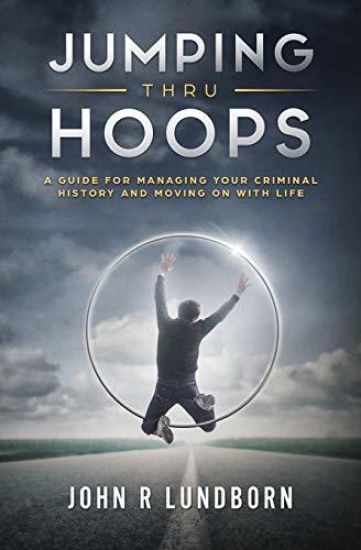
Jumping Thru Hoops: A Guide for Managing Your Criminal History and Moving on with Your Life
John R. Lundborn
John R Lundborn
2018
nidottu
The American criminal justice system is an extremly complex and subjective universe, rife with political undertones, packed with procedures, rules and ritual. A system created by society in order to protect society, yet grossly imperfect and incomplete; so imperfect that society becomes the victim of its incomplete design - the very system it created - like a dog chasing its tail. So what is incomplete about it? Imagine if you are one of the millions of people in the U.S with a record. Having that title, you have struggled to get through your court ordered sanctions, paid your dues so to speak and paid your fines etc. Of course, you are also expected to go out and become a model citizen. Of course, that cant happen because the same system designed to protect the our safety has created so many barriers that it makes it difficult, sometimes impossible to do. And society's response? Not my problem. They should have known. Its their fault. I dont deny that I have been there and said that too. I was a cop and being on the front end of the system, I didnt care nor did I know what happened after I had done my part. I never thought about the end of the system, that is, until I was in the system. I also dont deny that some criminals deserve to be in jail. Thats the reality. But what of the people who got tangled up in drugs or booze? What about those who are mentally incapable of even knowing what they did nevermind the consequence? Heres a truth - interview any inmate and you will come up with history and a diagnosis of some sort. What does that tell us? When the system doesn't adapt and allow for a change in a persons environment to succeed, then they wont succeed. They will keep on doing what they do because trying becomes hopeless. Nothing changes because nothing changes. This book talks about that incomplete part - where ex-cons, people on parole and probation and those who have records need to have the ability to move on. Their environment (aka the system) needs to adapt to allow for change, growth and opportunity. There are millions of people out there with criminal records in the United States. Sadly, many of these people have the records due to mental illness, addiction and substance abuse. The author has the unusual credentials of being on both sides of the system. He has seem first hand the systemic failures, seen the lack of treatment, lack of support and lack of true understanding by those in the criminal justice system. Jumping Thru Hoops is a guide to help you think about and plan your next moves with the knowns you have now. Its time to take action. Learn how to simply navigate, explain, expunge, correct or sometimes just accept and live with the fact that the records exsist.
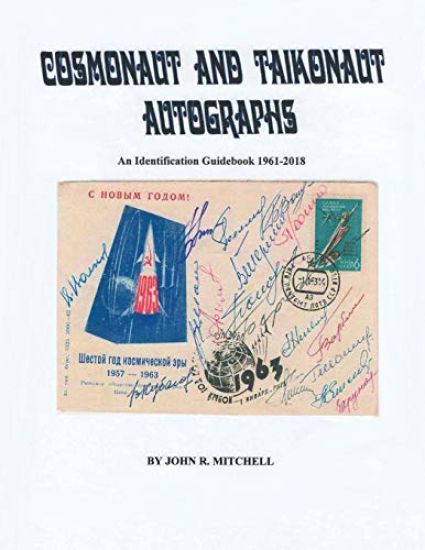
Cosmonaut and Taikonaut Autographs: An Identification Guidebook 1961-2018
John R. Mitchell
John R. Mitchell
2018
nidottu
Identification of Cosmonauts' and Chinese astronauts' autographs is very difficult to those of us who don't read their language. This guidebook is illustrated with examples of autographs to aide the collector in identifying these men and women who have flown in space.

The Camp of God's Tears: The History of the Mound Builders
John R. Mayfield; Marilyn Lee
Collective Frequency
2014
nidottu

Deep in the heart of the Congo is a jungle wilderness filled with exotic beauty and danger. This is the world of Ki-Gor the Jungle Lord, his beautiful mate, Helene and their allies; Tembu George the transplanted American turned Masia warrior and N'Geeso, the daring pygmy chieftain. Here are three brand new adventures featuring these beloved characters from one of pulpdom's most popular series.Writer John R. Rose offers u a trilogy of original tales: A long novella and two short stories. In these Ki-Gor and his friends discover a hidden world, battle Nazi agents and run afoul of greedy treasure hunters. This is classic pullp jungle action reliving the days when Africa was still a vast, uncharted continent and only the braves of the brave dared to venture within its lost and hidden realms.

The World We Left Behind: A Journey From Georgia To Maine
John R. Morris
World We Left Behind
2016
nidottu
John R. Morris, aka Morris the Cat, was at a crossroads in his life. He had many possessions, a good job, a loving family, and a predictable future. By all rights, he should have been happy. Disillusioned by depression, he turned to alcohol to numb his feelings. He wanted to make the stirrings of dissatisfaction go away. At last, he came to the realization that not only did something have to change, everything had to change. So he deconstructed. Selling all of his possessions, bidding adieu to his friends and family, he set out on the most famous hiking trail in the country-the Appalachian Trail. From Georgia to Maine, this trail features some of the toughest and ever-changing terrain. Though the path would challenge him in every way, Morris persisted. And with each challenge came change. John's encounters with life existing as a drifter detail not only his initial blind na vet but his unyielding determination to give meaning and understanding to a world he no longer felt a part of. The World We Left Behind: Book One - Now Available * The World We Left Behind: Book Two - Mid-2016 * The World We Came To Find - TBA