Kirjojen hintavertailu. Mukana 12 016 292 kirjaa ja 12 kauppaa.

Kirjahaku

Etsi kirjoja tekijän nimen, kirjan nimen tai ISBN:n perusteella.

1000 tulosta hakusanalla Kenneth Neill Cameron

The Imperiled Union

The Imperiled Union

Kenneth M. Stampp

Oxford University Press Inc
1981
nidottu
A collection of essays by a master historian. Amongst the subjects that Stampp tackles are the inevitability of the Civil War and the truth about why the confederacy actually died. The other essays are a mix of historiography and analysis of issues including Lincoln's role in reinforcing Fort Sumter, the impact of psychology in trading slaves, and the role of racism in the Republican Party.
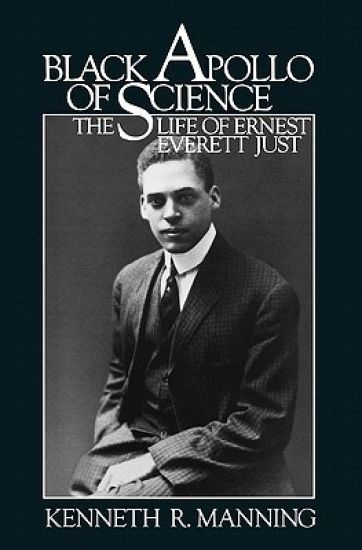
Black Apollo of Science

Black Apollo of Science

Kenneth R. Manning

Oxford University Press Inc
1995
nidottu
This biography illuminates the racial attitudes of an elite group of American scientists and foundation officers. It is the story of a complex and unhappy man. It blends social, institutional, black, and political history with the history of science.
Crabgrass Frontier

Crabgrass Frontier

Kenneth T. Jackson

Oxford University Press Inc
1987
nidottu
The winner of the Bancroft Prize and the Francis Parkman Prize, this book is the first detailed history of suburban life in America from its origin to the drive-in culture of today.
Indi'n Humor

Indi'n Humor

Kenneth Lincoln

Oxford University Press Inc
1993
sidottu
Lincoln's study of Native American humour moves from tribal culture to interethnic literature. He covers the traditional Trickster of origin myths, historical ironies (speeches, treatises, as-told-to life stories), Euroamericans `playing Indian', Feminist Indian home humour, contemporary painters and playwrights reinventing Coyote, popular mixed-blood music and Red English, and three Native American novelists, Louise Erdrich, James Welch, and N. Scott Momaday, as well as a bicultural novel, The Northern Lights, by Howard Norman.
Human Judgment and Social Policy

Human Judgment and Social Policy

Kenneth R. Hammond

Oxford University Press Inc
1996
sidottu
This book introduces a new topic; a critical researched-based analysis of the role of human judgment in social policy formation. It applies what has been learned from research on human judgment to specific examples - from the Challenger disaster to present-day debates on health care. Human judgment can be a source of both hope and fear in the creation of social policy. Yet this important process has rarely been examined because research on human judgment has been scarce. Now, however, the results of 50 years of empirical work offer an unprecedented opportunity to examine human judgment and the basis of our hopes and fears. Numerous examples from law, medicine, engineering, and economics are used throughout to demonstrate these and other features of human judgment in action.
Searching for a Distant God

Searching for a Distant God

Kenneth Seeskin

Oxford University Press Inc
2000
sidottu
Monotheism is usually considered Judaism's greatest contribution to world culture, but it is far from clear what monotheism is. This work examines the notion that monotheism is not so much a claim about the number of God as a claim about the nature of God. Seeskin argues that the idea of a God who is separate from his creation and unique is not just an abstraction but a suitable basis for worship. He examines this conclusion in the contexts of prayer, creation, sabbath observance, repentance, religious freedom, and love of God. Maimonides plays a central role in the argument both because of his importance to Jewish self-understanding and because he deals with the question of how philosophic ideas are embodied in religious ritual.
Judgments Under Stress

Judgments Under Stress

Kenneth R. Hammond

Oxford University Press Inc
2000
sidottu
Judgments Under Stress presents a new and exciting approach to understanding the effects of stressful conditions on judgment and decision making -- a topic so important it was addressed in a Congressional Hearing in 1988. Consisting mainly of two parts, the book synthesizes a vast body of cognitive psychology research into an innovative theoretical framework. Part I provides the reader with background in regards to judgment under stress while Part II discusses a new approach to studying it. Author Kenneth Hammond extends his examination from the effects of stress on professional judgments to its effects on moral and political judgments, working out a conceptual framework wholly within a psychological context. The book also includes discussions on sleep deprivation, fatigue, noise, heat, shock, and time pressure. In addition to laboratory experiments, Hammond looks at real life historical events such as Iran Flight 655 and the Bay of Pigs Invasion. Judgments Under Stress provides a shrewd analysis of the effects of stress on human rationale, making it ideal for professional psychologists as well as for those interested in political science and social policy.
Introduction to Relativistic Quantum Chemistry

Introduction to Relativistic Quantum Chemistry

Kenneth G. Dyall; Knut Faegri

Oxford University Press Inc
2007
sidottu
This book introduces relativistic methods in quantum chemistry to non-experts and students. Its five sections cover classically relativity background; the Dirac question; four component methods, including symmetry, correlation, and properties; approximate methods, including perturbation theory, transformed Hamiltonians, regular approximations, matrix approximations, and pseudopotential methods; and an overview of relativistic effects on bonding.
Human Judgment and Social Policy

Human Judgment and Social Policy

Kenneth R. Hammond

Oxford University Press Inc
2000
nidottu
From the O.J. Simpson verdict to peace-making in the Balkans, the critical role of human judgment--complete with its failures, flaws, and successes--has never been more hotly debated and analyzed than it is today. This landmark work examines the dynamics of judgment and its impact on events that take place in human society, which require the direction and control of social policy. Research on social policy typically focuses on content. This book concentrates instead on the decision-making process itself. Drawing on 50 years of empirical research in decision theory, Hammond examines the possibilities for wisdom and cognitive competence in the formation of social policies, and applies these lessons to specific examples, such as the space shuttle Challenger disaster and the health care debate. Uncertainly, he tells us, can seldom be fully eliminated; thus error is inevitable, and injustice for some unavoidable. But the capacity for make wise judgments increases to the extent that we understand the potential pitfalls and their origin. The judgment process for example involves an ongoing rivalry between intuition and analysis, accuracy and rationality. The source of this tension requires an examination of the evolutionary roots of human judgment and how these fundamental features may be changing as our civilization increasingly becomes an information and knowledge-based society. With numerous examples from law, medicine, engineering, and economics, the author dramatizes the importance of judgment and its role in the formation of social policies which affect us all, and issues the first comprehensive examination of its underlying dynamics.
Referring to the World

Referring to the World

Kenneth A. Taylor

Oxford University Press Inc
2021
sidottu
Our words and ideas refer to objects and properties in the external world; this phenomenon is central to thought, language, communication, and science. But great works of fiction are full of names that don't seem to refer to anything! In this book Kenneth A. Taylor explores the myriad of problems that surround the phenomenon of reference. How can words in language and perturbations in our brains come to stand for external objects? Reference is essential to truth, but which is more basic: reference or truth? How can fictional characters play such an important role in imagination and literature, and how does this use of language connect with more mundane uses? Taylor develops a framework for understanding reference, and the theories that other thinkers-past and present-have developed about it. But Taylor doesn't simply tell us what others thought; the book is full of new ideas and analyses, making for a vital final contribution from a seminal philosopher.
Matter of Mind

Matter of Mind

Kenneth M. Heilman

Oxford University Press Inc
2002
sidottu
Most of what has been learned about how the brain mediates behaviour comes from experiments of nature where a stroke or other damage to the brain produces changes in a person's behaviour. In Matter of Mind, one of the leading figures in behavioural and cognitive neurology uses patient vignettes and other examples from his rich professional life to show just how much knowledge about brain functions such as reading, writing, language, control of emotions, skilled movement, perception, attention, and motiviation has been gained from the study of patients with diseases of or damage to the brain. No knowledge of neurology or neuroscience is required to understand the book, which is intended for neurological patients and their families. It will also be of interest to professionals who study the brain or treat patients with brain damage including neuropsychologists, neurologists, neuroscientists, psychologists, speech pathologists, occupational and physical therapists, and their students and trainees.
Behaving

Behaving

Kenneth F. Schaffner

Oxford University Press Inc
2016
sidottu
Behaving presents an overview of the recent history and methodology of behavioral genetics and psychiatric genetics, informed by a philosophical perspective. Kenneth F. Schaffner addresses a wide range of issues, including genetic reductionism and determinism, "free will," and quantitative and molecular genetics. The latter covers newer genome-wide association studies (GWAS) that have produced a paradigm shift in the subject, and generated the problem of "missing heritability." Schaffner also presents cases involving pro and con arguments for genetic testing for IQ and for Attention Deficit Hyperactivity Disorder (ADHD). Schaffner examines the nature-nurture controversy and Developmental Systems Theory using C. elegans or "worm" studies as a test case, concluding that genes are special and provide powerful tools, including "deep homology," for investigating behavior. He offers a novel account of biological knowledge emphasizing the importance of models, mechanisms, pathways, and networks, which clarifies how partial reductions provide explanations of traits and disorders. The book also includes examinations of personality genetics and of schizophrenia and its etiology, alongside interviews with prominent researchers in the area, and discusses debates about psychosis that led to changes in the DSM-5 in 2013. Schaffner concludes by discussing additional philosophical implications of the genetic analyses in the book, some major worries about "free will," and arguments pro and con about why genes and DNA are so special. Though genes are special, newer perspectives presented in this book will be needed for progress in behavioral genetics- perspectives that situate genes in complex multilevel prototypic pathways and networks. With a mix of optimism and pessimism about the state of the field and the subject, Schaffner's book will be of interest to scholars in the history and philosophy of science, medicine, and psychiatry.
After the Golden Age

After the Golden Age

Kenneth Hamilton

Oxford University Press Inc
2007
sidottu
Kenneth Hamilton's book engagingly and lucidly dissects the oft-invoked myth of a Great Tradition, or Golden Age of Pianism. It is written both for players and for members of their audiences by a pianist who believes that scholarship and readability can go hand-in-hand. Hamilton discusses in meticulous yet lively detail the performance-style of great pianists from Liszt to Paderewski, and delves into the far-from-inevitable development of the piano recital. He entertainingly recounts how classical concerts evolved from exuberant, sometimes riotous events into the formal, funereal trotting out of predictable pieces they can be today, how an often unhistorical "respect for the score" began to replace pianists' improvisations and adaptations, and how the clinical custom arose that an audience should be seen and not heard. Pianists will find food for thought here on their repertoire and the traditions of its performance. Hamilton chronicles why pianists of the past did not always begin a piece with the first note of the score, nor end with the last. He emphasizes that anxiety over wrong notes is a relatively recent psychosis, and playing entirely from memory a relatively recent requirement. Audiences will encounter a vivid account of how drastically different are the recitals they attend compared to concerts of the past, and how their own role has diminished from noisily active participants in the concert experience to passive recipients of artistic benediction from the stage. They will discover when cowed listeners eventually stopped applauding between movements, and why they stopped talking loudly during them. The book's broad message proclaims that there is nothing divinely ordained about our own concert-practices, programming and piano-performance styles. Many aspects of the modern approach are unhistorical-some laudable, some merely ludicrous. They are also far removed from those fondly, if deceptively, remembered as constituting a Golden Age.
Time to Heal

Time to Heal

Kenneth M. Ludmerer

Oxford University Press Inc
2005
nidottu
The recipient of extraordinary critical acclaim, this magisterial book provides a landmark account of American medical education in the twentieth century, concluding with a call for the reformation of a system currently handicapped by managed care and by narrow, self-centred professional interests. Kenneth M. Ludmerer describes the evolution of American medical education from 1910, when a muck-raking report on medical diploma mills spurred the reform and expansion of medical schools, to the current era of managed care, when commercial interests once more have come to the fore, compromising the training of the nation's future doctors. Ludmerer portrays the experience of learning medicine from the perspective of students, house officers, faculty, administrators, and patients, and he traces the immense impact on academic medical centres of outside factors such as World War II, the National Institutes of Health, private medical insurance, and Medicare and Medicaid. Most notably, the book explores the very real threats to medical education in the current environment of managed care, viewing these developments not as a catastrophe but as a challenge to make many long overdue changes in medical education and medical practice. Panoramic in scope, meticulously researched, brilliantly argued, and engagingly written, Time to Heal is both a stunning work of scholarship and a courageous critique of modern medical education. The definitive book on the subject, it provides an indispensable framework for making informed choices about the future of medical education and health care in America.
The Poverty of Riches

The Poverty of Riches

Kenneth Baxter Wolf

Oxford University Press Inc
2005
nidottu
Saint Francis of Assisi is arguably the most attractive saint ever produced by the Catholic Church. The unusually high regard with which he is held has served to insulate him from any real criticism of the kind of sanctity that he embodied: sanctity based first and foremost on his deliberate pursuit of poverty. In this book, Kenneth Baxter Wolf takes a fresh look at Francis and the idea of voluntary poverty as a basis for Christian perfection. Wolf's point of departure is a series of simple but hitherto unasked questions about the precise nature of Francis's poverty: How did he go about transforming himself from a rich man to a poor one? How successful was this transformation? How did his self-imposed poverty compare to the involuntary poverty of those he met in and around Assisi? What did poor people of this type get out of their contact with Francis? What did Francis get out of his contact with them? Wolf finds that while Francis's conception of poverty as a spiritual discipline may have opened the door to salvation for wealthy Christians like himself, it effectively precluded the idea that the poor could use their own involuntary poverty as a path to heaven. Based on a thorough reconsideration of the earliest biographies of the saint, as well as Francis's own writings, Wolf's work sheds important new light on the inherent ironies of poverty as a spiritual discipline and its relationship to poverty as a socio-economic affliction.
Relational Being

Relational Being

Kenneth J. Gergen

Oxford University Press Inc
2009
sidottu
This book builds on two current developments in psychology scholarship and practice. The first centers on broad discontent with the individualist tradition in which the rational agent, or autonomous self, is considered the fundamental atom of social life. Critique of individualism spring not only from psychologists working in the academy, but also from communities of therapy and counseling. The second, and related development from which this work builds, is the search for alternatives to individualist understanding. Thus, therapists such as Steve Mitchell, along with feminists at the Stone Center, expand the psychoanalytic tradition to include a relational orientation to therapy. The present volume will give voice to the critique of individualism, but its major thrust is to develop and illustrate a far more radical and potentially exciting landscape of relational thought and practice that now exists. Most existing attempts to build a relational foundation remain committed to a residual form of individualist psychology. The present work carves out a space of understanding in which relational process stands prior to the very concept of the individual. More broadly, the book attempts to develop a thoroughgoing relational account of human activity. In doing so, Gergen reconstitutes 'the mind' as a manifestation of relationships and bears out these ideas in a range of everyday professional practices, including family therapy, collaborative classrooms, and organizational psychology.
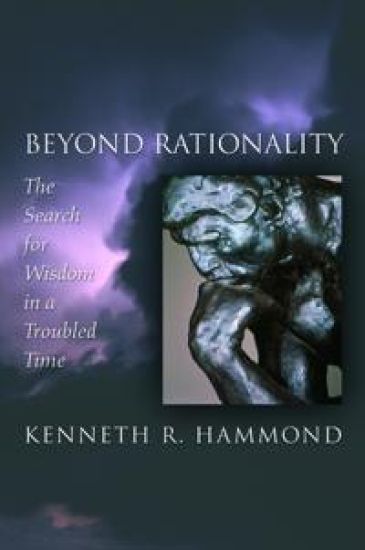
Beyond Rationality

Beyond Rationality

Kenneth R. Hammond

Oxford University Press Inc
2007
sidottu
Ken Hammond has spent over a half-century analysing judgment and decision-making. His long-time focus has been on the dichotomy between judgment theories of correspondence (working to achieve empirical accuracy) and coherence (aiming for rationality and consistency) and the political consequences that can come from not understanding which of these theories people are following. In Beyond Rationality Hammond sums up his work and illustrates it with penetrating case studies on topics such as why Kennedy and Khruschev misunderstood each other, Colin Powell's misjudgments, the modes of thought on the Supreme Court, and much, much more. Hammond has changed the way academics think about decision making; with this book, he aims to show a larger audience why mistaken judgments happen, how to make better decisions, and how to understand the thought modes operating in the political process.
Postgraduate Year One

Postgraduate Year One

Kenneth M. Heilman

Oxford University Press Inc
2008
nidottu
Academic interest in the non-scientific parts of good medical practice continues to grow as evidenced by the increasing number of undergraduate and trainee-level courses on doctor-patient communication, ethics and professionalism. Lessons in Caring provides an introduction for students and trainees to fundamental but unquantifiable clinical skills.