

Kirjahaku
Etsi kirjoja tekijän nimen, kirjan nimen tai ISBN:n perusteella.
1000 tulosta hakusanalla Lars Machmuller




This book explores the relationship between contemporary theatre, particularly contemporary theatre directors, and the dramatic canon of plays.Through focusing on productions of plays by three canonical playwrights (Shakespeare, Ibsen, and Brecht) by eight contemporary European directors (Michael Buffong, Joe Hill-Gibbins, and Emma Rice from the UK, Christopher Rüping from Germany, Thorleifur Örn Arnarsson from Iceland, and Kjeriski Hom, Alexander Mørk-Eidem, and Sigrid Strøm Reibo from Norway) the book investigates why and how the theatre continues to engage with canonical plays. In particular, the book questions the political and cultural implications of theatrical reproductions of the literary canon. Drawing on Chantal Mouffe’s theories of agonism and ‘critical art,’ the book investigates whether theatrical reproduction of the canon always reconstitutes the hegemonic values and ideologies of the canon, or whether theatrical interventions in the canon can challenge such values and ideologies, and thereby also challenge the dominant ideologies and hegemonies of contemporary culture and society.This study will be of great interest to academics and students in drama and theatre, particularly those who work with theatre in the twenty-first century, directors’ theatre, and the political impact of theatre.

This book explores the relationship between contemporary theatre, particularly contemporary theatre directors, and the dramatic canon of plays. Through focusing on productions of plays by three canonical playwrights (Shakespeare, Ibsen, and Brecht) by eight contemporary European directors (Michael Buffong, Joe Hill-Gibbins, and Emma Rice from the UK, Christopher Rüping from Germany, Thorleifur Örn Arnarsson from Iceland, and Kjeriski Hom, Alexander Mørk-Eidem, and Sigrid Strøm Reibo from Norway) the book investigates why and how the theatre continues to engage with canonical plays. In particular, the book questions the political and cultural implications of theatrical reproductions of the literary canon. Drawing on Chantal Mouffe’s theories of agonism and ‘critical art,’ the book investigates whether theatrical reproduction of the canon always reconstitutes the hegemonic values and ideologies of the canon, or whether theatrical interventions in the canon can challenge such values and ideologies, and thereby also challenge the dominant ideologies and hegemonies of contemporary culture and society. This study will be of great interest to academics and students in drama and theatre, particularly those who work with theatre in the twenty-first century, directors’ theatre, and the political impact of theatre.
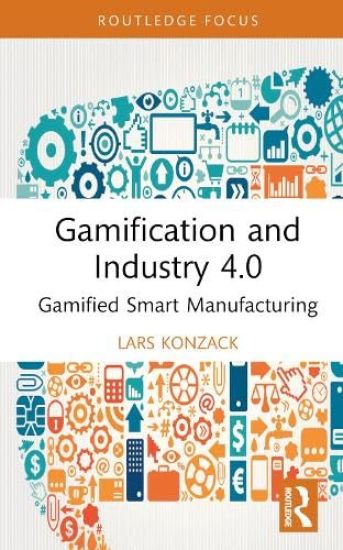
Gamification and Industry 4.0 are two concepts that each in their own right have sparked attention. Gamification as a way to use game elements in non-game activities, and Industry 4.0 as a way to describe how the interconnected digital transformation of operational technologies are changing manufacturing in the 21st Century. Gamification now offers an opportunity to enhance the productivity of manufacturing and improve quality of work life in the process.Gamification and Industry 4.0 looks at how the transformative shift of production and manufacturing opens up for gamified experiences in the work place. What the industry requires are deeper kinds of gamification, comprehending the knowledge of industrial production, computer applications, game design, learning, and motivational psychology. In order to achieve this, this book offers interdisciplinary expertise from such fields as psychology, management, software engineering, information science, game studies, and industrial production and innovation. The concept of Industry 4.0 and different types of gamifications are discussed in relation to motivation and learning. The book also examines cybersecurity of gamified systems and the potential risks any changes made to digital devices and industrial control systems may cause.This unique book will be of value to researchers, academics and upper-level students across various fields, but in particular, management and organization studies, production and manufacturing as well as technology and innovation management.
Situating key texts and writers in their proper historical context, this book presents a history of Swedish economic thinking from early modern times to the present day.Highlighting key elements of Swedish political, economic and social history allows the book to shed new light on important parts of the story including the development of neo-classical economics from the late 19th century - associated with leading names such as Knut Wicksell, Gustav Cassel and Eli Heckscher – and the rise of the so-called Stockholm school in the 1920´s and 30´s. But the book also goes back further to explore the Swedish economic literature of the 18th century, particularly its more “liberal” version of mercantilism and cameralism, as well as early modern and medieval developments. Throughout, the book emphasizes the unique nature of much of the economic thinking emanating from Sweden. Emulation and adaption of political economic thinking imported from abroad – primarily the UK, France and German speaking countries - is an important part of this story, but this is shown to be an active process which has resulted in great originality in Swedish economic thought.This book will be of interest to readers in the history of economic thought, economic history, the history of ideas and Swedish history.
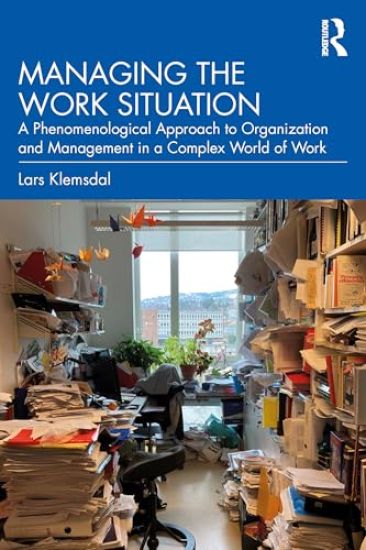
Managing the Work Situation outlines a perspective on how organization and management in the contemporary world of work happens as active everyday accomplishments by workers and managers, facing and handling complex work situations with an excess of expectations.Based on philosophical and sociological phenomenology, notably Jean-Paul Sartre’s and Erving Goffman’s works, the book coins a situation-centric perspective on organization and management, and the concept of ‘situational sensemaking’, as the driving mechanism of organization as well as the focus of management – characterized as ‘situation management’.The book addresses an academic audience with interests in organization and management of work, both theoretically and practically. A prime audience will be (academic and executive) master students in organization and management.
Managing the Work Situation outlines a perspective on how organization and management in the contemporary world of work happens as active everyday accomplishments by workers and managers, facing and handling complex work situations with an excess of expectations.Based on philosophical and sociological phenomenology, notably Jean-Paul Sartre’s and Erving Goffman’s works, the book coins a situation-centric perspective on organization and management, and the concept of ‘situational sensemaking’, as the driving mechanism of organization as well as the focus of management – characterized as ‘situation management’.The book addresses an academic audience with interests in organization and management of work, both theoretically and practically. A prime audience will be (academic and executive) master students in organization and management.
Analyzing long-cycle patterns during the twentieth century, this book presents novel findings on how core features of financialization are interconnected across advanced economies. It proposes that, since the late nineteenth century, international macroeconomic policy regimes have favored either capital or labor, giving rise to corresponding cycles of financialization and de-financialization: a liberal phase of financialization (1896–1929), a regulated phase of de-financialization (1946–1973), and a neoliberal phase of financialization (1983–2019). The book argues that these cycles can be explained through underconsumption theory in 13 advanced economies. During financialization, the study suggests inequality created a savings glut that stimulated liquidity for credit expansion, which in turn led to financial instability. Meanwhile, the lack of aggregate demand due to inequality depressed economic growth. By contrast, during the de-financialization of the regulated Bretton Woods era, credit formation did not lead to financial crises, and economic growth was high. Nevertheless, both the liberal and regulated phases succumbed to structural crises caused by internal frictions. These crises transformed not only the economy, but also the political landscape – and at times, even democracy itself. The question remains whether the neoliberal regime is also undergoing an existential crisis, and what lessons we can learn from history to avoid the pitfalls ahead. The book is primarily aimed at scholars and students of global political economy.

Young people in the West are more likely to encounter religion in videogames than in places of worship like churches, mosques or temples. Lars de Wildt interviews developers and players of games such as Assassin’s Creed to find out how and why the Pop Theology of Videogames is so appealing to modern audiences. Based on extensive fieldwork, this book argues that developers of videogames and their players engage in a ‘Pop Theology’ through which laymen reconsider traditional questions of religion by playing with them. Games allow us to play with religious questions and identities in the same way that children play at being a soldier, or choose to ‘play house.’ This requires a radical rethinking of religious questions as no longer just questions of belief or disbelief; but as truths to be tried on, compared, and discarded at will.

Marooned on a desert island with a black Raven as his only companion, Thaddeus C Noble spends his long lonely days writing endless letters about his bizarre surreal experiences. A mixture of mundanity, fanciful tales and absurd dreamscapes, he seals his missives inside bottles and throws them out to sea. These hermetic, introverted curious stories are imbued with the underlying enigma of a game whose rules are unknown. The densely obscure narrative collapses both the writer and reader into a circular reality that creates stories out of stories.



if you absorb the energy from a single flash of lightning you won't have to eat for the next 50 years
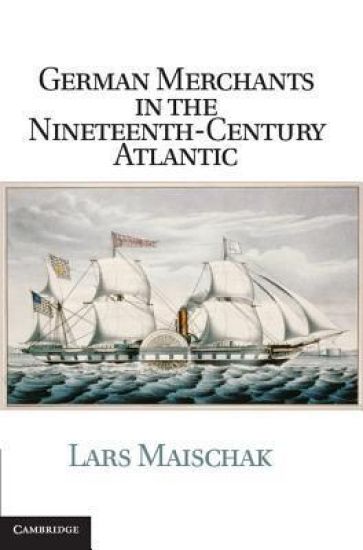
German Merchants in the Nineteenth-Century Atlantic
Lars Maischak
Cambridge University Press
2013
sidottu
This study brings to life the community of trans-Atlantic merchants who established strong economic, political and cultural ties between the United States and the city-republic of Bremen, Germany in the nineteenth century. Lars Maischak shows that the success of Bremen's merchants in helping make an industrial-capitalist world market created the conditions of their ultimate undoing: the new economy of industrial capitalism gave rise to democracy and the nation-state, undermining the political and economic power of this mercantile elite. Maischak argues that the experience of Bremen's merchants is representative of the transformation of the role of merchant capital in the first wave of globalization, with implications for our understanding of modern capitalism, in general.

Inequality, Grievances, and Civil War
Lars-Erik Cederman; Kristian Skrede Gleditsch; Halvard Buhaug
Cambridge University Press
2013
sidottu
This book argues that political and economic inequalities following group lines generate grievances that in turn can motivate civil war. Lars-Erik Cederman, Kristian Skrede Gleditsch, and Halvard Buhaug offer a theoretical approach that highlights ethnonationalism and how the relationship between group identities and inequalities are fundamental for successful mobilization to resort to violence. Although previous research highlighted grievances as a key motivation for political violence, contemporary research on civil war has largely dismissed grievances as irrelevant, emphasizing instead the role of opportunities. This book shows that the alleged non-results for grievances in previous research stemmed primarily from atheoretical measures, typically based on individual data. The authors develop new indicators of political and economic exclusion at the group level, and show that these exert strong effects on the risk of civil war. They provide new analyses of the effects of transnational ethnic links and the duration of civil wars, and extended case discussions illustrating causal mechanisms.
German Merchants in the Nineteenth-Century Atlantic
Lars Maischak
Cambridge University Press
2015
pokkari
This study brings to life the community of trans-Atlantic merchants who established strong economic, political and cultural ties between the United States and the city-republic of Bremen, Germany in the nineteenth century. Lars Maischak shows that the success of Bremen's merchants in helping make an industrial-capitalist world market created the conditions of their ultimate undoing: the new economy of industrial capitalism gave rise to democracy and the nation-state, undermining the political and economic power of this mercantile elite. Maischak argues that the experience of Bremen's merchants is representative of the transformation of the role of merchant capital in the first wave of globalization, with implications for our understanding of modern capitalism, in general.

Inequality, Grievances, and Civil War
Lars-Erik Cederman; Kristian Skrede Gleditsch; Halvard Buhaug
Cambridge University Press
2013
pokkari
This book argues that political and economic inequalities following group lines generate grievances that in turn can motivate civil war. Lars-Erik Cederman, Kristian Skrede Gleditsch, and Halvard Buhaug offer a theoretical approach that highlights ethnonationalism and how the relationship between group identities and inequalities are fundamental for successful mobilization to resort to violence. Although previous research highlighted grievances as a key motivation for political violence, contemporary research on civil war has largely dismissed grievances as irrelevant, emphasizing instead the role of opportunities. This book shows that the alleged non-results for grievances in previous research stemmed primarily from atheoretical measures, typically based on individual data. The authors develop new indicators of political and economic exclusion at the group level, and show that these exert strong effects on the risk of civil war. They provide new analyses of the effects of transnational ethnic links and the duration of civil wars, and extended case discussions illustrating causal mechanisms.