Young people in the West are more likely to encounter religion in videogames than in places of worship like churches, mosques or temples. Lars de Wildt interviews developers and players of games such as Assassin’s Creed to find out how and why the Pop Theology of Videogames is so appealing to modern audiences. Based on extensive fieldwork, this book argues that developers of videogames and their players engage in a ‘Pop Theology’ through which laymen reconsider traditional questions of religion by playing with them. Games allow us to play with religious questions and identities in the same way that children play at being a soldier, or choose to ‘play house.’ This requires a radical rethinking of religious questions as no longer just questions of belief or disbelief; but as truths to be tried on, compared, and discarded at will.
Marooned on a desert island with a black Raven as his only companion, Thaddeus C Noble spends his long lonely days writing endless letters about his bizarre surreal experiences. A mixture of mundanity, fanciful tales and absurd dreamscapes, he seals his missives inside bottles and throws them out to sea. These hermetic, introverted curious stories are imbued with the underlying enigma of a game whose rules are unknown. The densely obscure narrative collapses both the writer and reader into a circular reality that creates stories out of stories.
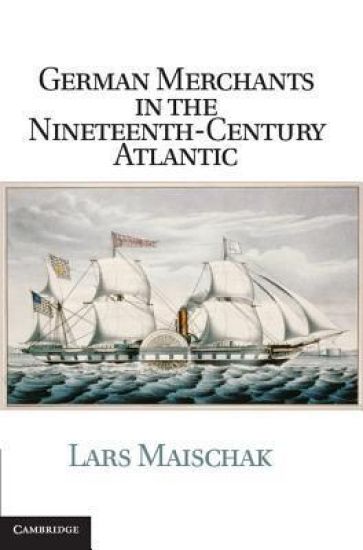
This study brings to life the community of trans-Atlantic merchants who established strong economic, political and cultural ties between the United States and the city-republic of Bremen, Germany in the nineteenth century. Lars Maischak shows that the success of Bremen's merchants in helping make an industrial-capitalist world market created the conditions of their ultimate undoing: the new economy of industrial capitalism gave rise to democracy and the nation-state, undermining the political and economic power of this mercantile elite. Maischak argues that the experience of Bremen's merchants is representative of the transformation of the role of merchant capital in the first wave of globalization, with implications for our understanding of modern capitalism, in general.
This book argues that political and economic inequalities following group lines generate grievances that in turn can motivate civil war. Lars-Erik Cederman, Kristian Skrede Gleditsch, and Halvard Buhaug offer a theoretical approach that highlights ethnonationalism and how the relationship between group identities and inequalities are fundamental for successful mobilization to resort to violence. Although previous research highlighted grievances as a key motivation for political violence, contemporary research on civil war has largely dismissed grievances as irrelevant, emphasizing instead the role of opportunities. This book shows that the alleged non-results for grievances in previous research stemmed primarily from atheoretical measures, typically based on individual data. The authors develop new indicators of political and economic exclusion at the group level, and show that these exert strong effects on the risk of civil war. They provide new analyses of the effects of transnational ethnic links and the duration of civil wars, and extended case discussions illustrating causal mechanisms.
This study brings to life the community of trans-Atlantic merchants who established strong economic, political and cultural ties between the United States and the city-republic of Bremen, Germany in the nineteenth century. Lars Maischak shows that the success of Bremen's merchants in helping make an industrial-capitalist world market created the conditions of their ultimate undoing: the new economy of industrial capitalism gave rise to democracy and the nation-state, undermining the political and economic power of this mercantile elite. Maischak argues that the experience of Bremen's merchants is representative of the transformation of the role of merchant capital in the first wave of globalization, with implications for our understanding of modern capitalism, in general.
This book argues that political and economic inequalities following group lines generate grievances that in turn can motivate civil war. Lars-Erik Cederman, Kristian Skrede Gleditsch, and Halvard Buhaug offer a theoretical approach that highlights ethnonationalism and how the relationship between group identities and inequalities are fundamental for successful mobilization to resort to violence. Although previous research highlighted grievances as a key motivation for political violence, contemporary research on civil war has largely dismissed grievances as irrelevant, emphasizing instead the role of opportunities. This book shows that the alleged non-results for grievances in previous research stemmed primarily from atheoretical measures, typically based on individual data. The authors develop new indicators of political and economic exclusion at the group level, and show that these exert strong effects on the risk of civil war. They provide new analyses of the effects of transnational ethnic links and the duration of civil wars, and extended case discussions illustrating causal mechanisms.
Does power sharing bring peace? Policymakers around the world seem to think so. Yet, while there are many successful examples of power sharing in multi-ethnic states, such as Switzerland, South Africa and Indonesia, other instances show that such arrangements offer no guarantee against violent conflict, including Rwanda, Yugoslavia, Zimbabwe and South Sudan. Given this mixed record, it is not surprising that scholars disagree as to whether power sharing actually reduces conflict. Based on systematic data and innovative methods, this book comes to a mostly positive conclusion by focusing on practices rather than merely formal institutions, studying power sharing's preventive effect, analyzing how power sharing is invoked in anticipation of conflict, and by showing that territorial power sharing can be effective if combined with inclusion at the center. The authors' findings demonstrate that power sharing is usually the best option to reduce and prevent civil conflict in divided states.
Does power sharing bring peace? Policymakers around the world seem to think so. Yet, while there are many successful examples of power sharing in multi-ethnic states, such as Switzerland, South Africa and Indonesia, other instances show that such arrangements offer no guarantee against violent conflict, including Rwanda, Yugoslavia, Zimbabwe and South Sudan. Given this mixed record, it is not surprising that scholars disagree as to whether power sharing actually reduces conflict. Based on systematic data and innovative methods, this book comes to a mostly positive conclusion by focusing on practices rather than merely formal institutions, studying power sharing's preventive effect, analyzing how power sharing is invoked in anticipation of conflict, and by showing that territorial power sharing can be effective if combined with inclusion at the center. The authors' findings demonstrate that power sharing is usually the best option to reduce and prevent civil conflict in divided states.
This interdisciplinary study explores how classical ideals of generosity influenced the writing and practice of gift giving in medieval Europe. In assuming that medieval gift giving was shaped by oral 'folk models', historians have traditionally followed in the footsteps of social anthropologists and sociologists such as Marcel Mauss and Pierre Bourdieu. This first in-depth investigation into the influence of the classical ideals of generosity and gift giving in medieval Europe reveals to the contrary how historians have underestimated the impact of classical literature and philosophy on medieval culture and ritual. Focusing on the idea of the gift expounded in the classical texts read most widely in the Middle Ages, including Seneca the Younger's De beneficiis and Cicero's De officiis, Lars Kjaer investigates how these ideas were received, adapted and utilised by medieval writers across a range of genres, and how they influenced the practice of generosity.
This interdisciplinary study explores how classical ideals of generosity influenced the writing and practice of gift giving in medieval Europe. In assuming that medieval gift giving was shaped by oral 'folk models', historians have traditionally followed in the footsteps of social anthropologists and sociologists such as Marcel Mauss and Pierre Bourdieu. This first in-depth investigation into the influence of the classical ideals of generosity and gift giving in medieval Europe reveals to the contrary how historians have underestimated the impact of classical literature and philosophy on medieval culture and ritual. Focusing on the idea of the gift expounded in the classical texts read most widely in the Middle Ages, including Seneca the Younger's De beneficiis and Cicero's De officiis, Lars Kjaer investigates how these ideas were received, adapted and utilised by medieval writers across a range of genres, and how they influenced the practice of generosity.
In the interpretive literature from the 1950's through the 1970's the term 'criterion' was thought to be a central key to the understanding of Wittgenstein's later philosophy. Later on, it was relegated from this place of honour to being one of a variety of expressions used by Wittgenstein in dealing with philosophical questions. This Element tries to account for the shifting fate of this concept. It discusses the various occurrences of the word “criteria” in the Philosophical Investigations, argues that the post-Wittgensteinian debate about criteria was put on the wrong track by a problematic passage in Wittgenstein's early Blue Book, and finally gives an overview of the main contributions to this debate, trying to achieve a reconciliation between the rival conceptions.
For many, smart grids are the biggest technological revolution since the Internet. They have the potential to reduce carbon dioxide emissions, increase the reliability of electricity supply, and increase the efficiency of our energy infrastructure. Smart Grid Applications, Communications, and Security explains how diverse technologies play hand-in-hand in building and maintaining smart grids around the globe. The book delves into the communication aspects of smart grids, provides incredible insight into power electronics, sensing, monitoring, and control technologies, and points out the potential for new technologies and markets. Extensively cross-referenced, the book contains comprehensive coverage in four major parts: Part I: Applications provides a detailed introduction to smart grid applications—spanning the transmission, distribution, and consumer side of the electricity gridPart II: Communications discusses wireless, wireline, and optical communication solutions—from the physical layers up to sensing, automation, and control protocols running on the application layersPart III: Security deals with cyber security—sharpening the awareness of security threats, reviewing the ongoing standardization, and outlining the future of authentication and encryption key managementPart IV: Case Studies and Field Trials presents self-contained chapters of studies where the smart grid of tomorrow has already been put into practice With contributions from major industry stakeholders such as Siemens, Cisco, ABB, and Motorola, this is the ideal book for both engineering professionals and students.
Control systems have come to play an important role in the performance of modern vehicles with regards to meeting goals on low emissions and low fuel consumption. To achieve these goals, modeling, simulation, and analysis have become standard tools for the development of control systems in the automotive industry. Modeling and Control of Engines and Drivelines provides an up-to-date treatment of the topic from a clear perspective of systems engineering and control systems, which are at the core of vehicle design. This book has three main goals. The first is to provide a thorough understanding of component models as building blocks. It has therefore been important to provide measurements from real processes, to explain the underlying physics, to describe the modeling considerations, and to validate the resulting models experimentally. Second, the authors show how the models are used in the current design of control and diagnosis systems. These system designs are never used in isolation, so the third goal is to provide a complete setting for system integration and evaluation, including complete vehicle models together with actual requirements and driving cycle analysis. Key features: Covers signals, systems, and control in modern vehiclesCovers the basic dynamics of internal combustion engines and drivelinesProvides a set of standard models and includes examples and case studiesCovers turbo- and super-charging, and automotive dependability and diagnosisAccompanied by a web site hosting example models and problems and solutions Modeling and Control of Engines and Drivelines is a comprehensive reference for graduate students and the authors’ close collaboration with the automotive industry ensures that the knowledge and skills that practicing engineers need when analysing and developing new powertrain systems are also covered.
Most practitioners within wind energy have only a very basic knowledge about meteorology, leading to a lack of understanding of one of the most fundamental subjects in wind energy. This book will therefore provide an easy-to-understand introduction to the subject of meteorology, as seen from the viewpoint of wind energy. Catering for a range of academic backgrounds, the book is mathematically rigorous with accessible explanations for non-mathematically oriented readers. Through exercises in the text and at the end of each chapter the reader will be challenged to think, seek further information and practice the knowledge obtained from reading the book. This practical yet comprehensive reference will enable readers to fully understand the theoretical background of meteorology with wind energy in mind and will include topics such as: measurements; wind profiles; wakes; modelling; turbulence and the fundamentals of atmospheric flow on all scales including the local scale. Key features: • Provides practitioners of wind energy with a solid theoretical grounding in relevant aspects of meteorology enabling them to exercise useful judgment in matters related to resource estimation, wind farm development, planning, turbine design and electrical grids. • Supports a growing area of professional development with the increasing importance of wind energy estimation in all aspects of electrical energy production from wind. • Accompanying website includes data sets for exercises in data analysis, photographs, animations & worked examples, helping to further bridge the gap between theory and practice. Meteorology for Wind Energy: An Introduction is aimed at engineers, developers and project managers in the wind power and electrical utility sectors without the essential theoretical background required to understand the topic. It will also have significant appeal to senior undergraduate and postgraduate students of Wind Energy, Environmental Studies or Renewables Studies.
Save time, save money, and grow your business with more effective CRM CRM For Dummies is the small business leader's guide to managing customer interactions. Customer relationship management is a critical part of any business, and it encompasses everything from business strategy and HR to sales, marketing, events, and more. Solutions exist for businesses of any size, but how do you know which one is right for you? What features do you need? Do you have the people and processes in place to get the most out of whichever one you choose? This book is designed to help business leaders better understand effective CRM and identify the right solution for their business—but it's about much more than software; effective CRM requires appropriate team structures, intradepartmental collaboration, and process efficiency. Packed with tactics and strategies that will save your company thousands of dollars and man-hours, these chapters answer the most pressing questions that will make the biggest impact on your sales. Building relationships with current and future customers is the critical point of business. This book helps you bring sales, marketing, and operations together to work toward that common goal, and shows you the tools and techniques that make your efforts more effective. Define your market segments, buyer personas, and voiceBuild an effective internal structure, and choose the right CRM solutionOptimize leads and conduct effective email marketingStreamline processes, automate where possible, and employ analytics Your customers are the lifeblood of your company; you need to reach them, engage them, and retain them—without wasting precious time or money. CRM For Dummies gets you up to speed on the latest, most effective CRM tools and techniques to help your business succeed.
Build a world class business with a clear blueprint to success Entrepreneur: Building Your Business From Start to Success is your guidebook to achieving entrepreneurial success. Whether you’re an existing business owner seeking to increase your reach, or a budding entrepreneur ready to take the next step, this book provides invaluable guidance from experts who have made it happen time and time again. A simple step-by-step process will help you translate your ideas into effective business plans, raise the capital needed to start and grow your business, build a winning team and leave the competition behind. Drawing upon their experience founding more than 30 companies, the authors share their entrepreneurial wisdom and reveal the real-world techniques that lead to success. With a pragmatic and personal approach, the authors explore the personal characteristics that are vital to achievement; managing stress, withstanding heavy workloads and coping with potential health concerns are subjects often overlooked in the pursuit of business achievement. Addressing the link between business concerns and personal welfare, the authors offer suggestions on how to most effectively reconcile entrepreneurial drive with personal well-being. Build or revitalise a business with proven methods from two globally-recognized experts in the fieldDevelop an effective business plan to maximise your probability of successUnderstand funding markets and raise capital necessary to start or grow your business Grow your business by beating the competition and dominating your market Providing invaluable insight into real-world entrepreneurial methods that work, this book arms current and future business leaders with the skills, knowledge and motivation to create the organization of their dreams.