History of Art in Phrygia, Lydia, Caria and Lycia is an unchanged, high-quality reprint of the original edition of 1892. Hansebooks is editor of the literature on different topic areas such as research and science, travel and expeditions, cooking and nutrition, medicine, and other genres. As a publisher we focus on the preservation of historical literature. Many works of historical writers and scientists are available today as antiques only. Hansebooks newly publishes these books and contributes to the preservation of literature which has become rare and historical knowledge for the future.
The short story is one of the most varied and exciting genres in American literature. This collection brings together many of its finest examples from the early nineteenth century to the present. It contains a richly diverse cast of characters, including convicts, artists, farm labourers, slaves, soldiers and salesmen, witches and ghosts, families and lovers. Their stories are told by some of America's most celebrated writers (Nathaniel Hawthorne, Edith Wharton, Raymond Carver) and a few, like Fanny Fern or Charles W. Chestnutt, who may be less familiar. The collection offers a stimulating combination of acknowledged classics, including Mark Twain's hilarious 'Jim Smiley's Jumping Frog' and Edgar Allan Poe's chilling 'The Tell-Tale Heart', and some remarkable pieces that deserve a wider audience, such as Ernest Hemingway's story of miscommunication, 'Out of Season', or Lorrie Moore's tale of modern love and wit, 'Starving Again'.Kasia Boddy's introduction traces the history of the American short story and explores the changes and continuities in its forms and preoccupations. This edition also contains a chronology, explanatory and biographical notes and suggestions for further reading. Table of contentsWashington Irving - The Little Man in Black (1807)Nathaniel Hawthorne - Young Goodman Brown (1835)Edgar Allan Poe - The Tell-Tale Heart (1843)Fanny Fern - Aunt Hetty on Matrimony (1851)Mark Twain - Jim Smiley and His Jumping Frog (1865)Joel Chandler Harris - The Tar Baby Story (1880)Mary Wilkins Freeman - Two Friends (1887)Charles W. Chesnutt - The Wife of his Youth (1898)Henry James - The Real Right Thing (1899)Stephen Crane - An Episode of War (1899)O. Henry - Hearts and Hands (1903)Sherwood Anderson - The Untold Lie (1917)Ernest HemingwayOut of Season (1923)Edith Wharton - Atrophy (1927)Dorothy Parker - New York to Detroit (1928)Eudora Welty - The Whistle (1938)William Faulkner - Barn Burning (1939)F. Scott Fitzgerald - The Lost Decade (1939)Zora Neale Hurston - Now You Cookin' with Gas (1942)Bernard Malamud - The First Seven Years (1950)Flannery O'Connor - A Late Encounter with the Enemy (1953)John Updike - Sunday Teasing (1956)John Cheever - Reunion (1962)Grace Paley - Wants (1971)Alice Walker - The Flowers (1973)Donald Barthelme - I Bought a Little City (1974)Raymond Carver - Collectors (1975)Richard Ford - Communist (1985)Lorrie Moore - Starving Again (1990)Jhumpa Lahiri - The Third and Final Continent (1999)Lydia Davis - The Caterpillar (2006)
Abe Lincoln Country Louisville, Kentucky 1859 Wade Taylor is the perfect blend of American renegade-pioneer and English aristocracy. He stands for God, the Bible, freedom, and guns. If anyone can bring Owens to justice, he can The problem is, Miss Jenna is bait and doesn't even realize it. It's going to take round the clock coverage to protect her. Twelve schools in Jefferson County under his jurisdiction, but the school house in rural county district four... Owens is fixated on. Vivacious and beautiful, Jenna is the product of her southern belle mother and abolitionist father. She's also the new teacher in district four. How on earth is he going to keep her out of trouble and bring Owens to justice? The tension is building in beautiful, rolling Kentucky in this Civil War Era love story Kentucky author, Lisa M. Prysock, manages to keep readers on the edge of their seats with many twists and turns in this heartwarming, Christian, faith-inspired, historical romance. 'The Lydia Collection' is a series of unrelated, Christ-centered, historical romance books that can be read in any order. The first story in the collection is "The Redemption of Lady Georgiana," a Regency time-period romance, loosely adapted from one of the greatest Bible love stories of all time, The Book of Ruth. Lisa is the award-winning, bestselling author of seventeen Christian fiction novels, including a devotional. You can find out more about this author at www.LisaPrysock.com.
?Helst och bäst minns jag en natt för jämnt fyrti år sen, som visst också du kommer ihåg. Då var jag upprört lycklig, det vet jag historiskt, fastän jag inte längre kan föreställa mig hur sådant känns. Efteråt blev jag förstås ännu upprördare olycklig". Så skrev litteraturkritikern Klara Johanson till studierektorn, författaren och kvinnosakskvinnan Lydia Wahlström på trettiotalet. Den nämnda natten anspelar på den 18 november 1894. Kärleksmötet mellan Klara och Lydia ägde rum på Sysslomannagatan 21 i Uppsala, och kan sägas utgöra startsignalen för de två kvinnornas passionshistoria, som varade i fyra år. År 1898 upphörde kärleksrelationen med en krasch, då Lydia lämnade Klara för en annan kvinna. Om just denna passions utveckling, om sekelskifteskvinnors kärlek som inte uteslöt ett sexuellt begär, och om hur dessa kvinnors självuppfattning förändrades mot bakgrund av den homosexuella identitetens framväxt i början av 1900-talet skriver Greger Eman. Det var kvinnofrigörelsen som utgjorde förutsättningen för de nya relationerna, menar han, och som bidrog till att kvinnor som älskade kvinnor kunde utveckla en historiskt helt ny identitet. ?För mig lyste nya himlar över en ny jord?, skriver Klara Johanson. Greger Eman är redaktör för tidningen Kom Ut! och har gett ut ett urval ur Klara Johansons dagböcker.
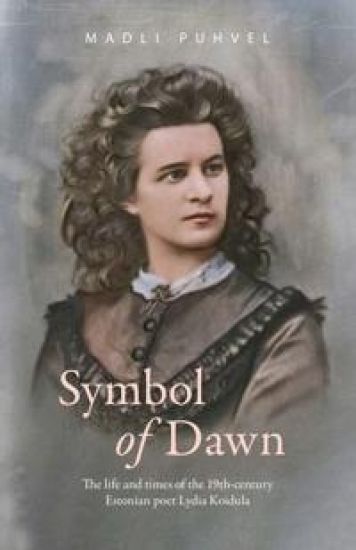
In Symbol of Dawn Madli Puhvel presents the story of the life and times of Lydia Koidula to English-speaking readers. Koidula, who lived in the latter half of the 19th century, was the first great poet to write in Estonian. At the time, it was still considered vulgar in the Baltic provinces for a woman to have her name appear in print and her poems were published anonymously. An admiring contemporary dubbed the author with the nom de plume "Koidula", a name which in Estonian has connotations of "dawn". That name became universally recognized by Estonians who learned her patriotic poems at school. These were inspirational messages advocating ethnic pride and love of native land to a people who were just emerging from over 600 years of serfdom. In her personal life the poet was plagued by depression. In this she shared the fate of many intellectually gifted women who lived during times when intellect in women was largely deplored. Her nom de plume was well known during her lifetime, but real recognition came largely posthumously. Today she is considered Estonia's national heroine, a woman whose portrait adorned (before the adoption of Euro) Estonian currency and postage stamps. ABOUT THE AUTHOR Born in Estonia and educated in England, Canada, and the United States, Madli Puhvel holds a doctorate from the University of California. Besides her academic career as a research scientist and professor of medicine at UCLA she has cultivated an interest in literature, history, and biography.









![Traits of the Aborigines of America. a Poem. [By Lydia H. Huntley, Afterwards Sigourney.]](/covers/9781241079536.jpg)