Kirjojen hintavertailu. Mukana 11 717 486 kirjaa ja 12 kauppaa.

Kirjahaku

Etsi kirjoja tekijän nimen, kirjan nimen tai ISBN:n perusteella.

1000 tulosta hakusanalla Magda

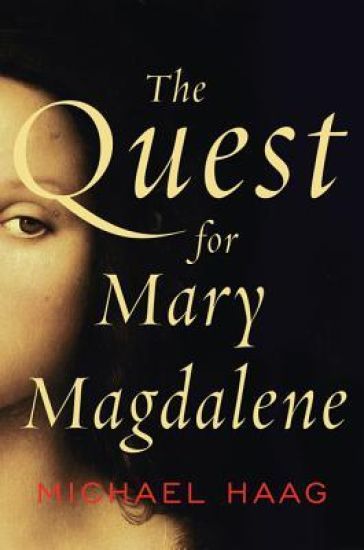
The Quest for Mary Magdalene

The Quest for Mary Magdalene

Michael Haag

HARPER PAPERBACKS
2016
nidottu
From Michael Haag, the international bestselling author of The Templars: The History & the Myth and The Tragedy of the Templars, comes a fascinating account of one of the most mysterious and controversial figures in religious history.Mary Magdalene is a potent and enigmatic figure. In the gospels she finances Jesus' mission in Galilee and is the only person with Jesus at his crucifixion, burial and resurrection--the critical moments that define his purpose and give rise to a new religion.Yet in the sixth century Mary Magdalene fell foul of a profound argument in which the established, ritualized and hierarchical Church required that God be worshipped through itself, whereas everything about Mary Magdalene suggests a more immediate and personal experience of the divine. Pope Gregory reduced Mary Magdalene from an independent visionary to a sinner and a prostitute while making Jesus' mother Mary, who is a nonentity in the gospels, into a creature of the Church, hailing her as the epitome of all things feminine and holy.In The Quest for Mary Magdalene, historian Michael Haag presents Mary Magdalene as the woman at the center of Jesus's life, a visionary and a radically independent woman. He explores how she has been used and abused and reinterpreted in every age, and he examines what she reveals about men and women, Jesus and God.

Looking for Mary Magdalene

Looking for Mary Magdalene

Anna Fedele

Oxford University Press Inc
2012
sidottu
Anne Fedele offers a comprehensive ethnography of alternative pilgrimages to French Catholic shrines dedicated to Saint Mary Magdalene. Drawing on more than three years of extensive fieldwork, she describes how pilgrims from Italy, Spain, Britain, and the United States interpret Catholic figures, symbols, and sites according to spiritual theories and practices derived from the transnational Neopagan movement. Fedele pays particular attention to the life stories of the pilgrims, the crafted rituals they perform, and the spiritual-esoteric literature they draw upon. She examines how they devise their rituals; why this kind of spirituality is increasingly prevalent in the West; and the influence of anthropological literature on the pilgrims. Among these pilgrims, spirituality is lived and negotiated in interaction with each other and with textual sources: Jungian psychology, Goddess mythology, and ''indigenous'' traditions merge into a corpus of theories and practices centered upon the worship of divinities such as the Goddess, Mother Earth, and the sacralization of the reproductive cycle. The pilgrims' rituals present a critique of the Roman Catholic Church and the medical establishment and have critical implications for contemporary discourses on gender. Looking for Mary Magdalene is an invaluable resource for anyone interested in ritual and pilgrimage.
Looking for Mary Magdalene

Looking for Mary Magdalene

Anna Fedele

Oxford University Press Inc
2012
nidottu
Anne Fedele offers a comprehensive ethnography of alternative pilgrimages to French Catholic shrines dedicated to Saint Mary Magdalene. Drawing on more than three years of extensive fieldwork, she describes how pilgrims from Italy, Spain, Britain, and the United States interpret Catholic figures, symbols, and sites according to spiritual theories and practices derived from the transnational Neopagan movement. Fedele pays particular attention to the life stories of the pilgrims, the crafted rituals they perform, and the spiritual-esoteric literature they draw upon. She examines how they devise their rituals; why this kind of spirituality is increasingly prevalent in the West; and the influence of anthropological literature on the pilgrims. Among these pilgrims, spirituality is lived and negotiated in interaction with each other and with textual sources: Jungian psychology, Goddess mythology, and ''indigenous'' traditions merge into a corpus of theories and practices centered upon the worship of divinities such as the Goddess, Mother Earth, and the sacralization of the reproductive cycle. The pilgrims' rituals present a critique of the Roman Catholic Church and the medical establishment and have critical implications for contemporary discourses on gender. Looking for Mary Magdalene is an invaluable resource for anyone interested in ritual and pilgrimage.
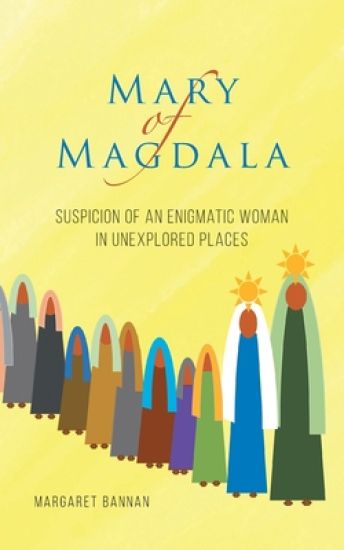
Mary of Magdala

Mary of Magdala

Margaret Bannan

Tellwell Talent
2020
pokkari
This book draws on hermeneutics of suspicion and imagination to discover Mary of Magdala in unexplored places in the scriptures. It explores how Mary of Magdala may have met Jesus and who the women were who followed Jesus from a distance. It challenges the legends that only the twelve apostles were with Jesus at the last supper and who witnessed the agony of Jesus in the garden at Gethsemane. In the Gospel of John there is an 'other disciple' who follows Jesus to the Palace of Annas and it presents the possibility that it was Mary of Magdala. It refutes the legend that Mary, the mother of Jesus, was given into the care of the Apostle John. It explores Mary of Magdala's role at the resurrection of Jesus and then meeting up with Jesus at Lake Tiberias. It makes a case for consideration that Mary of Magdala was the 'beloved disciple' of Jesus and author of the Gospel of John. Lastly, it presents Saint Mary of Magdala as an inspiration for women today.
Ireland's Magdalen Laundries and the Nation's Architecture of Containment
The Magdalen laundries were workhouses in which many Irish women and girls were effectively imprisoned because they were perceived to be a threat to the moral fiber of society. Mandated by the Irish state beginning in the eighteenth century, they were operated by various orders of the Catholic Church until the last laundry closed in 1996. A few years earlier, in 1993, an order of nuns in Dublin sold part of their Magdalen convent to a real estate developer. The remains of 155 inmates, buried in unmarked graves on the property, were exhumed, cremated, and buried elsewhere in a mass grave. This triggered a public scandal in Ireland and since then the Magdalen laundries have become an important issue in Irish culture, especially with the 2002 release of the film The Magdalene Sisters. Focusing on the ten Catholic Magdalen laundries operating between 1922 and 1996, Ireland's Magdalen Laundries and the Nation's Architecture of Containment offers the first history of women entering these institutions in the twentieth century. Because the religious orders have not opened their archival records, Smith argues that Ireland's Magdalen institutions continue to exist in the public mind primarily at the level of story (cultural representation and survivor testimony) rather than history (archival history and documentation). Addressed to academic and general readers alike, James M. Smith's book accomplishes three primary objectives. First, it connects what history we have of the Magdalen laundries to Ireland's "architecture of containment" that made undesirable segments of the female population such as illegitimate children, single mothers, and sexually promiscuous women literally invisible. Second, it critically evaluates cultural representations in drama and visual art of the laundries that have, over the past fifteen years, brought them significant attention in Irish culture. Finally, Smith challenges the nation—church, state, and society—to acknowledge its complicity in Ireland's Magdalen scandal and to offer redress for victims and survivors alike.
Ireland's Magdalen Laundries and the Nation's Architecture of Containment
The Magdalen laundries were workhouses in which many Irish women and girls were effectively imprisoned because they were perceived to be a threat to the moral fiber of society. Mandated by the Irish state beginning in the eighteenth century, they were operated by various orders of the Catholic Church until the last laundry closed in 1996. A few years earlier, in 1993, an order of nuns in Dublin sold part of their Magdalen convent to a real estate developer. The remains of 155 inmates, buried in unmarked graves on the property, were exhumed, cremated, and buried elsewhere in a mass grave. This triggered a public scandal in Ireland and since then the Magdalen laundries have become an important issue in Irish culture, especially with the 2002 release of the film The Magdalene Sisters. Focusing on the ten Catholic Magdalen laundries operating between 1922 and 1996, Ireland's Magdalen Laundries and the Nation's Architecture of Containment offers the first history of women entering these institutions in the twentieth century. Because the religious orders have not opened their archival records, Smith argues that Ireland's Magdalen institutions continue to exist in the public mind primarily at the level of story (cultural representation and survivor testimony) rather than history (archival history and documentation). Addressed to academic and general readers alike, James M. Smith's book accomplishes three primary objectives. First, it connects what history we have of the Magdalen laundries to Ireland's "architecture of containment" that made undesirable segments of the female population such as illegitimate children, single mothers, and sexually promiscuous women literally invisible. Second, it critically evaluates cultural representations in drama and visual art of the laundries that have, over the past fifteen years, brought them significant attention in Irish culture. Finally, Smith challenges the nation—church, state, and society—to acknowledge its complicity in Ireland's Magdalen scandal and to offer redress for victims and survivors alike.
The Secret Magdalene

The Secret Magdalene

Longfellow Ki

Three Rivers Press
2007
pokkari
Based on the revelations of the Nag Hammadi codices, a historical novel follows the life of Mary Magdalene, detailing her privileged childhood, the prophetic visions that torment her, her banishment, her study in the Great Library of Alexandria disguised as a young man, her fascination with John the Baptizer's cousin Yesh'a, and her role as teacher and advisor to Jesus. Reprint. 40,000 first printing.
Changing Sentiments and the Magdalen Hospital
This book charts the complex ideological territory of eighteenth-century sentimental discourse through the uniquely revealing lens of the London Magdalen Hospital for Penitent Prostitutes. The establishment of the London Magdalen House in 1758 is read as the cultural high watermark of sentimental confidence in the compatibility of virtue and commerce. It is the product of a whiggish, moral-sense discourse at its most ebullient and culturally authoritative. Equally visible, though, in this context, are the ideological limitations of moral-sense thinking and an anticipation of the ways in which its ideas ultimately failed to underwrite commercial virtue. Sentimental discourse fractures in the course of the mid-century: in part it becomes increasingly divorced from the world; retreating into a primitivist, proto-Romantic virtue which claims no purchase on "things as they are." Where sentimental vocabulary persists in a worldly context, it becomes divorced from a vocabulary of moral virtue. It is overlaid with a French usage where "sentiment" and "sensibility" describe exquisite emotion rather than refined and cultivated virtue.' Changing Sentiments and the Magdalen Hospital registers the fracturing and shifting ground of sentimental discourse in the changing institutional practise of the Magdalen institution, most particularly in its increasingly embrace of evangelical religion.
The Three Deaths of Magdalene Lynton

The Three Deaths of Magdalene Lynton

Katherine Hayton

Katherine Hayton
2016
pokkari
Magdalene Lynton died forty years ago: a vivacious teenager who fell victim to an obscene, accidental drowning. The coroner's office issued a verdict of death by misadventure and filed her case. The farming commune she'd lived within, splintered apart. Her body was left behind in a small, private cemetery encircled by acres of fallow ground. Until Paul Worthington confessed to her murder. Magdalene's case lands with Ngaire Blakes, a Maori detective recovering from a brutal stabbing. After fighting for the resources to investigate, Ngaire discovers that Paul's confession doesn't fit with the facts of Magdalene's death. The trouble is, neither does the original verdict. Together with her partner, Deb, Ngaire digs deeper into the case to uncover inconsistencies, lies, and mortal danger. The Three Deaths of Magdalene Lynton is the first book in a new series of mystery novels set in the deep shadows of New Zealand. If you savor tightly raveled mysteries, strong female leads, and psychologically unsettled minds, then you'll enjoy Katherine Hayton's opening story in a compelling new trilogy. Buy The Three Deaths of Magdalene Lynton to unravel the mystery today.
The Three Deaths of Magdalene Lynton

The Three Deaths of Magdalene Lynton

Katherine Hayton

Katherine Hayton
2016
sidottu
Magdalene Lynton died forty years ago: a vivacious teenager who fell victim to an obscene, accidental drowning. The coroner's office issued a verdict of death by misadventure and filed her case. The farming commune she'd lived within, splintered apart. Her body was left behind in a small, private cemetery encircled by acres of fallow ground. Until Paul Worthington confessed to her murder. Magdalene's case lands with Ngaire Blakes, a Maori detective recovering from a brutal stabbing. After fighting for the resources to investigate, Ngaire discovers that Paul's confession doesn't fit with the facts of Magdalene's death. The trouble is, neither does the original verdict. Together with her partner, Deb, Ngaire digs deeper into the case to uncover inconsistencies, lies, and mortal danger. The Three Deaths of Magdalene Lynton is the first book in a new series of mystery novels set in the deep shadows of New Zealand. If you savor tightly raveled mysteries, strong female leads, and psychologically unsettled minds, then you'll enjoy Katherine Hayton's opening story in a compelling new trilogy. Buy The Three Deaths of Magdalene Lynton to unravel the mystery today.
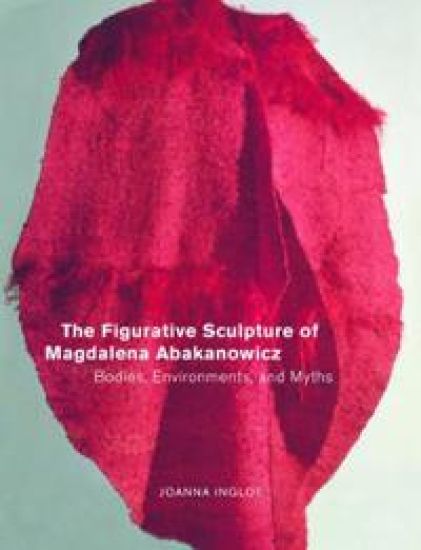
The Figurative Sculpture of Magdalena Abakanowicz

The Figurative Sculpture of Magdalena Abakanowicz

Inglot Joanna

University of California Press
2004
sidottu
Since the early 1980s, the Polish artist Magdalena Abakanowicz (b. 1930) has gained worldwide acclaim for her role in the revival of figuration in late-twentieth-century sculpture. Her cycles of headless, hollow, and crude burlap crowds of the mid-1970s and the 1980s, exhibited in major museums across America, Europe, and Asia, are roundly praised for their expressive power and innovative form. In this first scholarly art historical analysis of Abakanowicz's figurative sculpture, Joanna Inglot penetrates the myth of isolation that surrounds and obscures this internationally celebrated artist to disclose the artistic, sociopolitical, and cultural context in which Abakanowicz has lived and worked. Examining Abakanowicz's representations of the human body from the fiber works of the 1960s known as Abakans through her War Games and outdoor environments of the 1980s and early 1990s, Inglot shows how these works engage the international art scene and the figurative sculpture of postwar Poland, and how they reflect a particular generation's experience of war and communism. With reference to Abakanowicz's use of national symbols and ceremonies drawn from the public and political discourse of the 1970s and 1980s, Inglot explains the complexity of the artist's attitudes toward contemporary politics and the troubled history of her native country. Inglot clearly locates Abakanowicz as a major contemporary sculptor whose works have embodied innovations in style and media and reflected important sociopolitical issues.
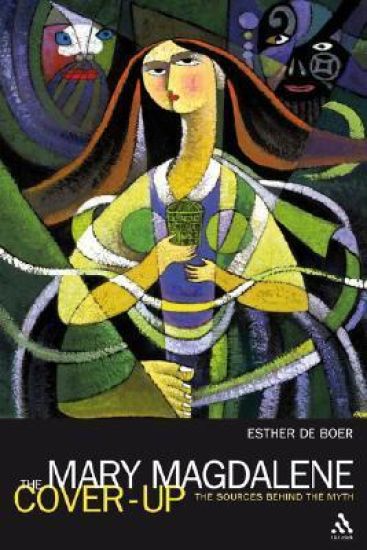
The Mary Magdalene Cover-Up

The Mary Magdalene Cover-Up

Esther A. de Boer

T. T.Clark Ltd
2007
nidottu
Mary Magdalene has always been the subject of both popular and scholarly intrigue. Was she the wife of Jesus, his complete initiate, a Goddess or a priestess? Did the Church dramatically alter her image to deny her importance? These questions have inspired representations of her in art, film and literature, from "Caravaggio" to "The Last Temptation of Christ" and "The Da Vinci Code". The "Mary Magdalene Cover-Up" is the first book to bring the original sources that have informed our current day view of Mary to a wider audience. Esther de Boer has brought together an impressive array of texts from the first century, when Mary Magdalene was alive, to the sixth century, when her image as a penitent sinner was invented. Each text is accompanied by an informed and lively commentary by the author placing it in its historical context. This combination of original texts and commentary enables the reader to draw their own conclusions about this most enigmatic of first-century women.
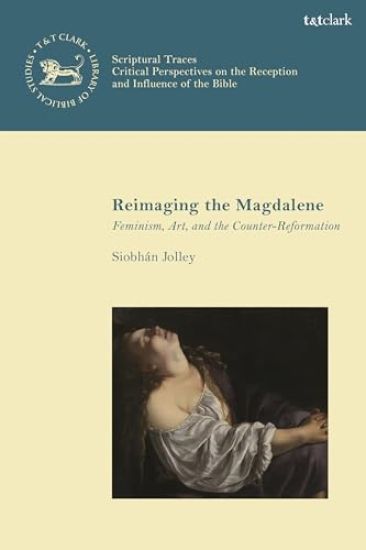
Reimaging the Magdalene

Reimaging the Magdalene

Siobhán Jolley

BLOOMSBURY PUBLISHING PLC
2025
sidottu
This book offers a new, intersectional feminist approach to utilising and interpreting the visual reception of Mary Magdalene. Through employment of Liberative Reception Criticism, which develops traditional reception theory in line with liberative hermeneutics, via the insights of intersectionality as critical theory, Siobhán Jolley provides a novel means of analysing how women, and particularly the Magdalene, are imaged in Christian tradition. Knowledge of both the biblical figure of Mary Magdalene and her cultural reception continue to be dominated by long-discredited ideas about her life and sexuality, which bear the hallmarks of their development under patriarchy. Through close study of relevant biblical texts and extracanonical accounts, and a comprehensive survey of the Magdalene’s presentation in the Italian art of the Counter-Reformation, Jolley demonstrates that the patriarchal portrayal of the Magdalene as a sexualised penitent and mournful witness to the resurrection is sustained by its mythic attachment to biblical text. Rather than adopting the same tropes uncritically, we are invited to look again at artworks and related texts in order to explore what happens when the influence of patriarchy is actively and intersectionally resisted. Ultimately, the Magdalene is transformed from a reductive and patriarchally mythologised figure to a multidimensional character, who is relatable and liberative as an exemplar.