Kirjojen hintavertailu. Mukana 11 699 587 kirjaa ja 12 kauppaa.

Kirjahaku

Etsi kirjoja tekijän nimen, kirjan nimen tai ISBN:n perusteella.

1000 tulosta hakusanalla Maral Atmaca

Moral Threats and Dangerous Desires

Moral Threats and Dangerous Desires

Deborah Lupton

Taylor Francis Ltd
1994
nidottu
Since 1981, AIDS has had an enormous impact upon the popular imagination. Few other diseases this century have been greeted with quite the same fear, loathing, and prejudice against those who develop it. The mass media, and in particular, the news media, have played a vital part in "making sense" of AIDS. This volume takes an interdisciplinary perspective, combining cultural studies, history of medicine, and contemporary social theory to examine AIDS reporting. There have been three major themes dominating coverage: the "gay-plague" dominant in the early 1980s, panic-stricken visions of the end of the world as AIDS was said to pose a threat to everyone, in the late 1980s; and a growing routinising of coverage in the 1990s. This book lays bare the sub-textual ideologies giving meaning to AIDS news reports, including anxieties about pollution and contagion, deviance, bodily control, the moral meanings of risk, the valorisation of drugs and medical science. Drawing together the work of cultural and politicaltheorists, sociologists and historians who have written about medicine, disease and the body, as well as that of theorists in Europe and the USA who have focused their attention specificaiiy on AIDS, this book explores the wide theoretical debate about the importance of language in the social construction of illness and disease. This text offers insights into the sociocultural context in which attitudes towards people with HIV or AIDS and people's perceptions of risk from HIV infection are developed and the responses of governments to the AIDS epidemic are formulated.

Moral Geographies

Moral Geographies

David M. Smith

Edinburgh University Press
2000
sidottu
This book explores the interface between geography, ethics and morality. It considers questions that have haunted the past, are subjects of controversy in the present, and which affect the future. Does distance diminish responsibility? Should we interfere with the lives of those we do not know? Is there a distinction between private and public space? Which values and morals, if any, are absolute, and which cultural, communal or personal? And are universal rights consistent with respect for difference? David Smith shows how these questions play themselves out in politics, planning, development, social and personal relations, the exploitation of resources, and competition for territory. After introducing the essential elements of moral philosophy from Plato to postmodernism, he examines the moral significance of concepts of landscape, location and place, proximity, distance and community, space and territory, justice, and nature. He is concerned above all with the morality people practice, to see how this varies according to geographical context, and to assess the inevitability of its outcomes. His argument is seamlessly interwoven with everyday observation and vividly described case studies: the latter include genocide and rescue during the Holocaust, the conflicts over space between Israeland Palestine and within Israel itself, and the social tensions and aspirations in post-apartheid South Africa. The meaning, possibility and limits of social justice lie at the heart of the book. That geographical context is vital to the understanding of moral practice and ethical theory is its central proposition. The book is clearly and engagingly written. The author has a student readership in mind, but his book will appeal widely to geographers and others involved in planning, development, politics, social theory, and the analysis of the contemporary world.
Moral Geographies

Moral Geographies

David M. Smith

Edinburgh University Press
2000
nidottu
This book explores the interface between geography, ethics and morality. It considers questions that have haunted the past, are subjects of controversy in the present, and which affect the future. Does distance diminish responsibility? Should we interfere with the lives of those we do not know? Is there a distinction between private and public space? Which values and morals, if any, are absolute, and which cultural, communal or personal? And are universal rights consistent with respect for difference? David Smith shows how these questions play themselves out in politics, planning, development, social and personal relations, the exploitation of resources, and competition for territory. After introducing the essential elements of moral philosophy from Plato to postmodernism, he examines the moral significance of concepts of landscape, location and place, proximity, distance and community, space and territory, justice, and nature. He is concerned above all with the morality people practice, to see how this varies according to geographical context, and to assess the inevitability of its outcomes. His argument is seamlessly interwoven with everyday observation and vividly described case studies: the latter include genocide and rescue during the Holocaust, the conflicts over space between Israeland Palestine and within Israel itself, and the social tensions and aspirations in post-apartheid South Africa. The meaning, possibility and limits of social justice lie at the heart of the book. That geographical context is vital to the understanding of moral practice and ethical theory is its central proposition. The book is clearly and engagingly written. The author has a student readership in mind, but his book will appeal widely to geographers and others involved in planning, development, politics, social theory, and the analysis of the contemporary world.
Mara's Choice

Mara's Choice

Anna Jacobs

Allison Busby
2021
sidottu
When Mara Gregory receives a letter from the father whom she believed to have died when she was a child, her world is turned upside down. Aaron Buchanan only discovered that he had a daughter a couple of years ago and now he's desperate to play a part in her life. In the face of her mother's opposition, Mara arranges to meet her father and his family. In a breath-taking corner of the world, amid a waterfront community on Australia's west coast, will Mara find him the disappointment that her mother promises? And when Australia brings another man into her life, she's faced with some huge decisions and some heartrending choices.
Mara's Choice

Mara's Choice

Anna Jacobs

Allison Busby
2021
nidottu
When Mara Gregory receives a letter from the father whom she believed to have died when she was a child, her world is turned upside down. Aaron Buchanan only discovered that he had a daughter a couple of years ago and now he's desperate to play a part in her life. In the face of her mother's opposition, Mara arranges to meet her father and his family. In a breath-taking corner of the world, amid a waterfront community on Australia's west coast, will Mara find him the disappointment that her mother promises? And when Australia brings another man into her life, she's faced with some huge decisions and some heartrending choices.
Moral Education and Pluralism
Volume IV looks at the development of moral education, with particular relation to the context of cultural pluralism. Taking a theoretical approach, it discusses philosophical issues of moral relativism as well as the application of theory to good practice.
Moral Philosophy and the Holocaust

Moral Philosophy and the Holocaust

Eve Garrard; Geoffrey Scarre

Ashgate Publishing Limited
2003
sidottu
How far can we ever hope to understand the Holocaust? What can we reasonably say about right and wrong, moral responsibility, praise and blame, in a world where ordinary reasons seem to be excluded? In the century of Nazism, ethical writing in English had much more to say about the meaning of the word `good` than about the material reality of evil. This book seeks to redress the balance at the start of a new century. Despite intense interest in the Holocaust, there has been relatively little exploration of it by philosophers in the analytic tradition. Although ethical writers often refer to Nazism as a touchstone example of evil, and use it as a case by which moral theorising can be tested, they rarely analyse what evil amounts to, or address the substantive moral questions raised by the Holocaust itself. This book draws together new work by leading moral philosophers to present a wide range of perspectives on the Holocaust. Contributors focus on particular themes of central importance, including: moral responsibility for genocide; the moral uniqueness of the Holocaust; responding to extreme evil; the role of ideology; the moral psychology of perpetrators and victims of genocide; forgiveness and the Holocaust; and the impact of the `Final Solution` on subsequent culture. Topics are treated with the precision and rigour characteristic of analytic philosophy. Scholars, teachers and students with an interest in moral theory, applied ethics, genocide and Holocaust studies will find this book of particular value, as will all those seeking greater insight into ethical issues surrounding Nazism, race-hatred and intolerance.
Moral Philosophy and the Holocaust

Moral Philosophy and the Holocaust

Eve Garrard; Geoffrey Scarre

Ashgate Publishing Limited
2003
nidottu
How far can we ever hope to understand the Holocaust? What can we reasonably say about right and wrong, moral responsibility, praise and blame, in a world where ordinary reasons seem to be excluded? In the century of Nazism, ethical writing in English had much more to say about the meaning of the word `good` than about the material reality of evil. This book seeks to redress the balance at the start of a new century. Despite intense interest in the Holocaust, there has been relatively little exploration of it by philosophers in the analytic tradition. Although ethical writers often refer to Nazism as a touchstone example of evil, and use it as a case by which moral theorising can be tested, they rarely analyse what evil amounts to, or address the substantive moral questions raised by the Holocaust itself. This book draws together new work by leading moral philosophers to present a wide range of perspectives on the Holocaust. Contributors focus on particular themes of central importance, including: moral responsibility for genocide; the moral uniqueness of the Holocaust; responding to extreme evil; the role of ideology; the moral psychology of perpetrators and victims of genocide; forgiveness and the Holocaust; and the impact of the `Final Solution` on subsequent culture. Topics are treated with the precision and rigour characteristic of analytic philosophy. Scholars, teachers and students with an interest in moral theory, applied ethics, genocide and Holocaust studies will find this book of particular value, as will all those seeking greater insight into ethical issues surrounding Nazism, race-hatred and intolerance.
Moral Responsibility and Alternative Possibilities

Moral Responsibility and Alternative Possibilities

David Widerker

Ashgate Publishing Limited
2006
nidottu
This book explores an important issue within the free will debate: the relation between free will and moral responsibility. In his seminal article 'Alternate Possibilities and Moral Responsibility', Harry Frankfurt launched a vigorous attack on the standard conception of that relation, questioning the claim that a person is morally responsible for what she has done only if she could have done otherwise. Since then, Frankfurt's thesis has been at the center of philosophical discussions on free will and moral responsibility. Moral Responsibility and Alternative Possibilities, edited by David Widerker and Michael McKenna, draws together the most recent work on Frankfurt's thesis by leading theorists in the area of free will and responsibility. As the majority of the essays appear here for the first time, Moral Responsibility and Alternative Possibilities offers the newest developments in this important debate.
Moral Panics over Contemporary Children and Youth
The concept of moral panic has received considerable scholarly attention, but as yet little attention has been accorded to panics over children and youth. This is the first book to examine this important and controversial social issue by employing a rigorous intellectual framework to explore the cultural construction of youth, through the dissemination of moral panics. It is accessible in manner and makes use of the latest contemporary research by addressing some of the pressing recent concerns relating to children and youth, including cyber-related panics, child abuse and pornography, education and crime. A truly international collection, this volume features new global research focusing on the United Kingdom, Australia, Canada, South Africa, and France as well as the United States. Genuinely multidisciplinary in approach, it will appeal to researchers and students across the social sciences and humanities - from sociology and social theory, to media, education, anthropology, criminology, geography and history.
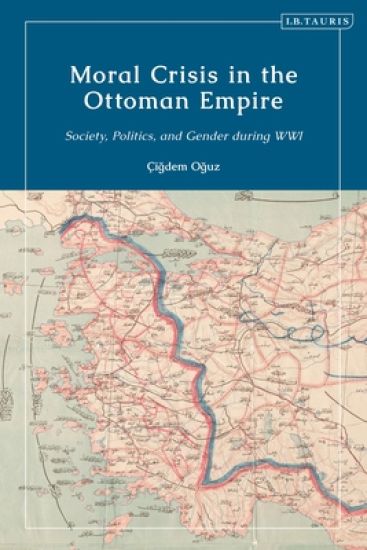
Moral Crisis in the Ottoman Empire

Moral Crisis in the Ottoman Empire

Çigdem Oguz

BLOOMSBURY PUBLISHING PLC
2022
nidottu
To what extent did a perceived morality crisis play a role in the dramatic events of the last years of the Ottoman Empire? Beginning in the late nineteenth century when some of the Ottoman elites began to question the moral climate as evidence for the losses facing the empire, this book shows that during the course of World War I many social, economic, and political problems were translated into a discourse of moral decline, ultimately making morality a contested space between rival ideologies, identities, and intellectual currents. Examining the primary journals and printed sources that represented the various constituencies of the period, it fills important gaps in the scholarship of the Ottoman experience of World War I and the origins of Islamism and secularism in Turkey, and is essential reading for social and intellectual historians of the late Ottoman Empire.
Moral Moments

Moral Moments

Joel Marks

University Press of America
2000
nidottu
Originally designed for the author's introductory college-course in Ethics, Moral Moments provides an accessible, yet philosophical, study of Ethics. The book's thirty-three short essays focus on the following themes: ethics is not subjective, ethics is relevant to business and everyday life, and 'What is ethics?'. The unique format includes some previously published newspaper op-ed columns that cover everything from everyday life to headline news. The culmination of these essays is a work that argues, against the social scientific spirit of the age, that ethics has a distinct role to play in contemporary decision making. Students and the general public will find Moral Moments' personal and conversational tone refreshing, while teachers will find helpful the many classroom episodes depicted, as well as the accompanying website www.moralmoments.com.
Moral Catechesis and Catholic Social Teaching

Moral Catechesis and Catholic Social Teaching

Joaquim Parron Maria

University Press of America
2003
nidottu
The purpose of this book is twofold: first, to examine whether and to what extent three representative catechisms, widely used in Latin America, have incorporated official Catholic social teaching; and second, to suggest ways in which Catholic social teaching can be further integrated into catechetical approaches. In the same way, this approach tries to grasp and give some contributions to the call of Pope John Paul II to the Church in the American continents, Ecclesia in America, for developing a catechesis for social justice and peace. Thus, this book addresses and proposes some lines of development to integrate social ethics into moral catechesis.
Moral Cruelty

Moral Cruelty

Timothy L. Hulsey; Christopher J. Frost

University Press of America
2004
nidottu
The overarching purpose of Moral Cruelty is to identify and sensitize the reader to the existence of "moral sadism." As it stands, every act of overt violence, from Bosnia to Columbine, is immediately followed by a discourse of clichés. The acts of violence are attributed to the media, song lyrics, availability of guns, racism, persistent poverty, and so on. Although such influences are surely involved, the tendency of assigning "the cause" to external agents leads us away from asking ourselves, "Is it possible that I contribute to the escalation of violence in ways that I currently cannot see? Is it possible that I interact in ways that have effects that I do not understand?" It is the authors' contention that what we as individuals perceive as "normal" modes of interaction conceal hidden contributions to cruelty.
Moral Reasons

Moral Reasons

Charles K. Fink

University Press of America
2007
nidottu
Distinguished by its readability and scope, Moral Reasons analyzes issues in moral and political philosophy with careful attention to the role of argumentation in the study of ethics. After a comprehensive overview of moral reasoning—including dozens of examples and exercises—Charles K. Fink guides readers through the theories and arguments of philosophers from Plato to Peter Singer, covering such diverse topics as moral skepticism, abortion, euthanasia, political authority, punishment and war. Ideal as a main text for courses on applied ethics or as a supplemental text for courses on social and political philosophy, this book offers one of the most diverse investigations of moral philosophy there is to date.
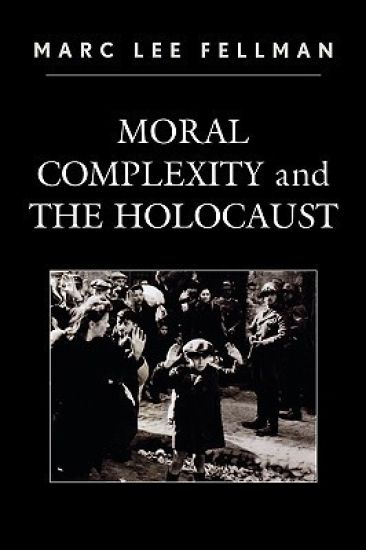
Moral Complexity and The Holocaust

Moral Complexity and The Holocaust

Marc Lee Fellman

University Press of America
2009
nidottu
This book introduces the first sustained analysis of the idea that the Holocaust constitutes a tension between moral complexity and moral enormity. A great deal has been written in regards to the Holocaust as a powerful symbol, perhaps as the quintessential symbol of moral enormity in the modern era. Less has been said about the human experiences and events of the Holocaust as embodying moral complexity. The author examines those tensions, in part by exploring the categories of victims, bystanders and perpetrators, and suggests novel ways for how we may come to understand the moral landscape of the Holocaust.
Moral Desert

Moral Desert

Howard Simmons

University Press of America
2010
nidottu
In Moral Desert, Howard Simmons notes that the idea that we deserve to be praised or rewarded for good behavior and blamed or punished when we act badly seems central to everyone's moral deliberation and practices. Simmons subjects this assumption to critical scrutiny. He argues that in a wide range of cases it is almost impossible to know the extent of people's moral responsibility, and indeed that it may be a complete delusion. He attacks the still-popular theory of retributive punishment, with special reference to the views of Peter French and J. Angelo Corlett. Simmons does not conclude that punishment is always unjustified, but insists that any justification should relate to its real world consequences. State punishment should be inflicted according to strict consequentialist precepts, and the author provides systematic principles for determining an appropriate sentence and for deciding when offenders should be excused. He also considers the implications of his views for distributive justice and personal morality.
Moral Education in a Democracy

Moral Education in a Democracy

Charles Thomas Taylor

University Press of America
2011
nidottu
In Moral Education in a Democracy, Charles Thomas Taylor argues that a common morality is essential for the security and well-being of a democratic society, but that the traditional dissemination of such moral values is now insufficient and inadequate. This deficiency requires a dramatic shift of the burden of this activity from the religious institutions to the public schools. Taylor proposes both a curriculum and a methodology for public moral education. While he maintains that an appropriate body of ethics can be derived from the ethical tenets of the major religions, he offers as a working model his own composite of such an ethics code. He further proposes a program of adult remedial moral education for use as an integral component of criminal rehabilitation and mental healthcare for convicts.
Moral Reasons

Moral Reasons

Charles K. Fink

Hamilton Books
2016
nidottu
Distinguished by its readability and scope, Moral Reasons explains how to think critically about issues in ethics and political philosophy. After a detailed overview of moral reasoning-including dozens of exercises-the text guides readers through the theories and arguments of philosophers from Plato to Peter Singer. Among the topics explored are moral skepticism, abortion, euthanasia, vegetarianism, political authority, punishment, and war. Ideal as a main text for courses in introductory or applied ethics or as a supplemental text for courses in political philosophy, this book offers one of the most diverse investigations of moral philosophy there is to date.
Moral Conflict

Moral Conflict

W. (Walter) Barnett Pearce; Stephen W. Littlejohn

SAGE Publications Inc
1997
nidottu
Moral Conflict, the subject of this book is passionate and difficult to resolve. Responses that are normally effective such as explaining, persuading, and compromising can make matters worse and drive people further apart in such conflicts. Moral conflicts occur when incommensurate social realities come to clash. Disputes about abortion, religion in politics and education, legal rights for homosexuals, and environmental politics are issues in which well-intentioned parties have created polarized and diverse patterns of communication. The most virtuous actions of each side not only fail, but widen the schism. Such conflicts require us to find forms of communication that go beyond our normal ways of dealing with disagreement. In an original synthesis of communication theory and their own research, W. Barnett Pearce and Stephen W. Littlejohn describe a dialectical tension between the expression and suppression of conflict that can be transcended in ways that lead to personal growth and productive patterns of social action. In Moral Conflict several projects are described as practical examples of these new ways of working through difficult struggles.