
Kirjahaku
Etsi kirjoja tekijän nimen, kirjan nimen tai ISBN:n perusteella.
1000 tulosta hakusanalla Maria Story
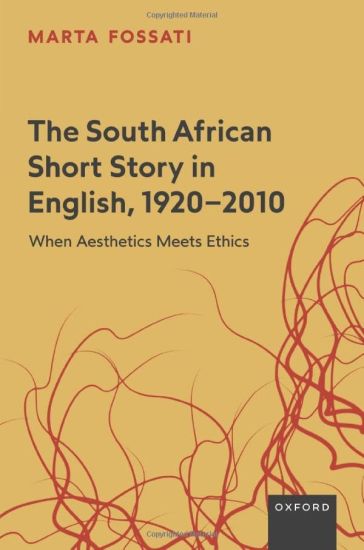
The South African Short Story in English, 1920-2010
Marta Fossati
Oxford University Press
2024
sidottu
Through detailed close readings alongside investigations into the history of print culture, Marta Fossati traces the development of the South African short story in English from the late 1920s to the first decade of the twenty-first century. She examines a selection of short stories by important Black South African writers (Rolfes and Herbert Dhlomo, Peter Abrahams, Can Themba, Alex La Guma, Mtutuzeli Matshoba, Ahmed Essop, and Zoë Wicomb) with an alertness to the dialogue between ethics and aesthetics performed by these texts. This new history of Black short fiction problematises and interrogates the often-polarised readings of Black literature in South Africa that can be torn between notions of literariness, protest, and journalism. Due to material constraints, short fiction in South Africa circulated first and foremost through local print media, which Fossati analyses in detail to show the cross-fertilisation between journalism and the short story. While rooted in the South African context, the short stories considered also hold a translocal dimension, allowing us to explore the ethical and aesthetic practice of intertextuality. These are writings that complicate the aesthetics/ethics binary, generic classifications, and the categories of the literary and the political. Theoretically eclectic in its approach, although largely underpinned by a narratological analysis, The South African Short Story in English, 1920-2010: When Aesthetics Meets Ethics offers a fresh perspective on the South African short story in English, spotlighting several hitherto marginalised figures in South African literary studies.

*** CONGRATULATIONS TO THE BRITISH BOOK AWARDS AUTHOR OF THE YEAR 2022***Step into the lives of three women whose ambitions collide in the hilarious and heart-warming novel from the No. 1 bestselling author of Grown Ups'Wonderful, subtle, hilarious and highly sophisticated. You can't stop reading' EVENING STANDARD'It had me in tears . . . and barking with laughter' DAILY TELEGRAPH___________'There are three sides to every story. Your side, their side, and the truth . . .'Jojo, a sharkish literary agent, has just made a very bad career move - she's slept with her married boss Mark.Lily, Jojo's bestselling author, has blown her advance on a house with new boyfriend Anton, only to come down with writer's block.Gemma used to be Lily's best friend until Lily ran off with Anton. Now she's pouring her heart out, and a certain literary agent likes her style . . .Soon the fortunes of Jojo, Lily and Gemma are horribly entangled.But each is about to discover that there's more than one side to every story . . .___________'Keyes's genius lies in making the darkest, most difficult aspects of humanity mentionable and manageable . . . Keyes's plot is cracking, but the story becomes even bolder and brighter because she lets her characters tell it' Independent'Packed with sound writing, wit and common sense' GuardianPraise for Marian Keyes:'Mercilessly funny' The Times'Funny, tender and completely absorbing!' Graham Norton'Keyes is in a class of her own' Daily Express
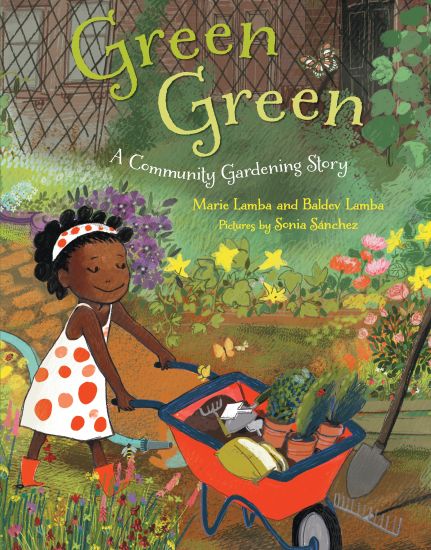
Green Green: A Community Gardening Story
Marie Lamba; Baldev Lamba
Farrar, Straus and Giroux (Byr)
2017
sidottu
Green grass is wide and fresh and clean for a family to play in, and brown dirt is perfect for digging a garden. But when gray buildings start to rise up and a whole city builds, can there be any room for green space? The neighborhood children think so, and they inspire the community to join together and build a garden for everyone to share in the middle of the city.

First time in trade-the Dracula legend continues in a novel "destined to become a literary classic."* In Bram Stoker's immortal novel, Mina Harker became a living, breathing object of obsession- only to fall prey to her stalker's seductive powers. There was only one way to save her soul-by destroying the life of Count Dracula, the creature who controlled and consumed her. But was the spell really broken? Could Mina return to the ordinary turns of a day, and to the restraints of a Victorian marriage, after the pleasures of such exquisite darkness?
The Emerald Story Book
Ada Marie (EDT) Skinner; Eleanor Louise (ILT) Skinner
Kessinger Pub
2008
pokkari
The Story of the Eagle and the Maple Leaf for Love is Strong as Death (Song 8) Rev. Ashley McDonald Buchanan, D.D. Poems
M Ps Marie M Buchanan
Lulu.com
2009
pokkari
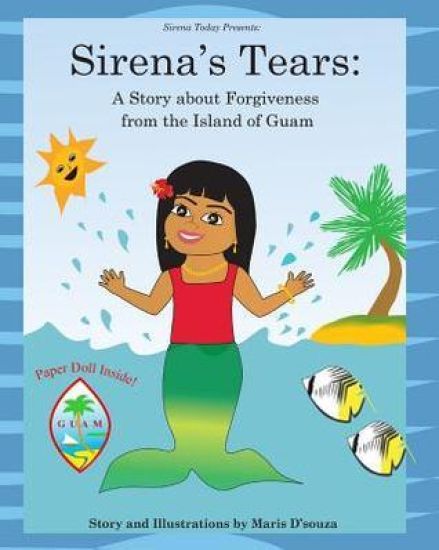
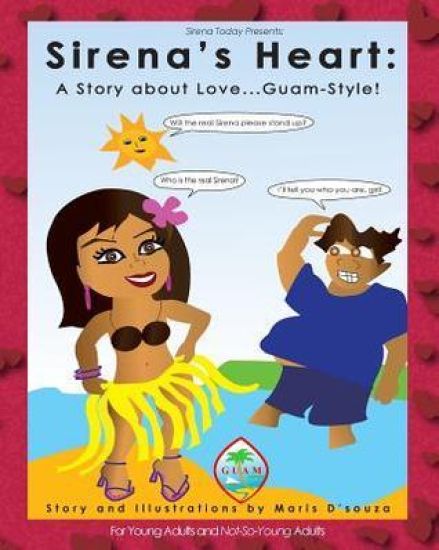
Sirena's Tears: A Story about Forgiveness from the Island of Guam
Maris D'Souza
Rjd Consulting
2010
nidottu
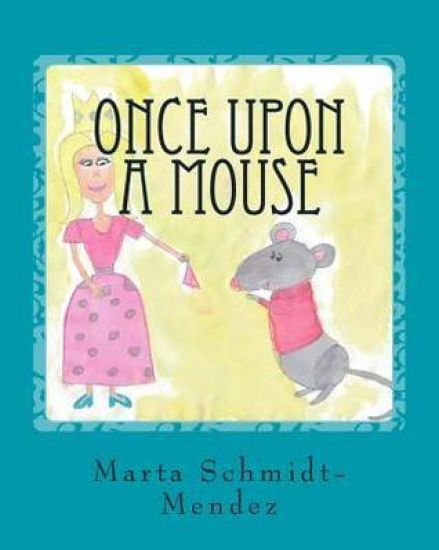
Once Upon a Mouse: A story about conquering fear
Marta M. Schmidt-Mendez
Mental Health Children's Book
2014
nidottu
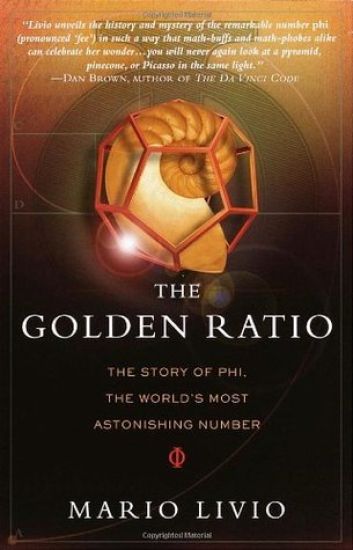
The Golden Ratio: The Story of Phi, the World's Most Astonishing Number
Mario Livio
Crown Publishing Group (NY)
2003
nidottu
From the author of The Accelerating Universe comes a thought-provoking look at phi or "The Golden Ratio," discovered by Euclid more than two thousand years ago, examining the meaning of this remarkable mathematical proportion in terms of science, biology, art and architecture, philosophy, and other fields. Reprint.

Intelligent Love: The Story of Clara Park, Her Autistic Daughter, and the Myth of the Refrigerator Mother
Marga Vicedo
BEACON PRESS
2021
sidottu
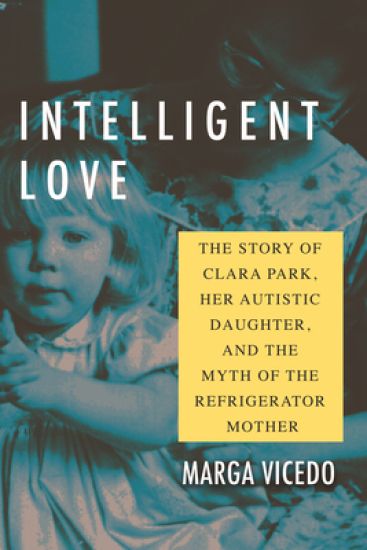
Winner of the History of Science Society's 2022 Davis Prize How one mother challenged the medical establishment and misconceptions about autistic children and their parents In the early 1960s, Massachusetts writer and homemaker Clara Park and her husband took their 3-year-old daughter, Jessy, to a specialist after noticing that she avoided connection with others. Following the conventional wisdom of the time, the psychiatrist diagnosed Jessy with autism and blamed Clara for Jessy's isolation. Experts claimed Clara was the prototypical "refrigerator mother," a cold, intellectual parent who starved her children of the natural affection they needed to develop properly. Refusing to accept this, Clara decided to document her daughter's behaviors and the family's engagement with her. In 1967, she published her groundbreaking memoir challenging the refrigerator mother theory and carefully documenting Jessy's development. Clara's insights and advocacy encouraged other parents to seek education and support for their autistic children. Meanwhile, Jessy would work hard to expand her mother's world, and ours. Drawing on previously unexamined archival sources and firsthand interviews, science historian Marga Vicedo illuminates the story of how Clara Park and other parents fought against medical and popular attitudes toward autism while presenting a rich account of major scientific developments in the history of autism in the US. Intelligent Love is a fierce defense of a mother's right to love intelligently, the value of parents' firsthand knowledge about their children, and an individual's right to be valued by society.
Intelligent Love: The Story of Clara Park, Her Autistic Daughter, and the Myth of the Refrigerator Mother
Marga Vicedo
BEACON PRESS
2022
nidottu
Winner of the History of Science Society's 2022 Davis Prize How one mother challenged the medical establishment and misconceptions about autistic children and their parents In the early 1960s, Massachusetts writer and homemaker Clara Park and her husband took their 3-year-old daughter, Jessy, to a specialist after noticing that she avoided connection with others. Following the conventional wisdom of the time, the psychiatrist diagnosed Jessy with autism and blamed Clara for Jessy's isolation. Experts claimed Clara was the prototypical "refrigerator mother," a cold, intellectual parent who starved her children of the natural affection they needed to develop properly. Refusing to accept this, Clara decided to document her daughter's behaviors and the family's engagement with her. In 1967, she published her groundbreaking memoir challenging the refrigerator mother theory and carefully documenting Jessy's development. Clara's insights and advocacy encouraged other parents to seek education and support for their autistic children. Meanwhile, Jessy would work hard to expand her mother's world, and ours. Drawing on previously unexamined archival sources and firsthand interviews, science historian Marga Vicedo illuminates the story of how Clara Park and other parents fought against medical and popular attitudes toward autism while presenting a rich account of major scientific developments in the history of autism in the US. Intelligent Love is a fierce defense of a mother's right to love intelligently, the value of parents' firsthand knowledge about their children, and an individual's right to be valued by society.
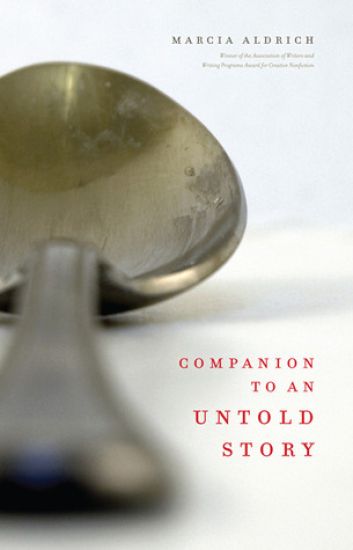
When Marcia Aldrich’s friend took his own life at the age of forty-six, they had known each other many years. As part of his preparations for death, he gave her many of his possessions, concealing his purposes in doing so, and when he committed his long-contemplated act, he was alone in a bare apartment.In Companion to an Untold Story, Aldrich struggles with her own failure to act on her suspicions about her friend’s intentions. She pieces together the rough outline of his plan to die and the details of its execution. Yet she acknowledges that she cannot provide a complete narrative of why he killed himself. The story remains private to her friend, and out of that difficulty is born another story— the aftershocks of his suicide and the author’s responses to what it set in motion.This book, modeled on the type of reference book called a “companion,” attempts to find a form adequate to the way these two stories criss-cross, tangle, knot, and break. Organized alphabetically, the entries introduce, document, and reflect upon how suicide is so resistant to acceptance that it swallows up other aspects of a person’s life. Aldrich finds an indirect approach to her friend’s death, assembling letters, objects, and memories to archive an ungrievable loss and create a memorial to a life that does not easily make a claim on public attention. Intimate and austere, clear eyed and tender, this innovative work creates a new form in which to experience grief, remembrance, and reconciliation.
When Marcia Aldrich’s friend took his own life at the age of forty-six, they had known each other many years. As part of his preparations for death, he gave her many of his possessions, concealing his purposes in doing so, and when he committed his long-contemplated act, he was alone in a bare apartment.In Companion to an Untold Story, Aldrich struggles with her own failure to act on her suspicions about her friend’s intentions. She pieces together the rough outline of his plan to die and the details of its execution. Yet she acknowledges that she cannot provide a complete narrative of why he killed himself. The story remains private to her friend, and out of that difficulty is born another story— the aftershocks of his suicide and the author’s responses to what it set in motion.This book, modeled on the type of reference book called a “companion,” attempts to find a form adequate to the way these two stories criss-cross, tangle, knot, and break. Organized alphabetically, the entries introduce, document, and reflect upon how suicide is so resistant to acceptance that it swallows up other aspects of a person’s life. Aldrich finds an indirect approach to her friend’s death, assembling letters, objects, and memories to archive an ungrievable loss and create a memorial to a life that does not easily make a claim on public attention. Intimate and austere, clear eyed and tender, this innovative work creates a new form in which to experience grief, remembrance, and reconciliation.
The Search for Pedro's Story
Marian L. Martinello; Samuel P. Nesmith
Texas Christian University Press,U.S.
2006
nidottu
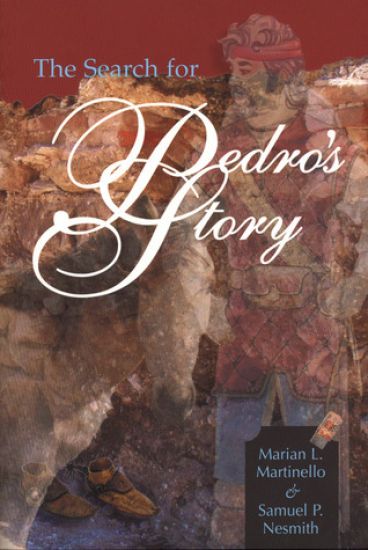
The Search for Pedro's Story recreates the life experiences of Pedro Peres, a leather jacket soldier in the Spanish colonial army in eighteenth-century Texas. Each chapter begins with a signpost artifact related to one of Pedro's roles-soldier, horseman, explorer, guard, spouse, messenger, and cowboy-and ends with a fictional account of an event in Pedro's life from the findings. The discipline of history usually focuses on heroic deeds and people, but Martinello thinks its methods of detection should also reveal how ordinary people lived. In The Search for Pedro's Story, fragments of a real life are pieced together from things Pedro knew, including taming a mustang and playing cards. The book suggests how to ask questions, seek sources, and make sense of findings that history, especially the history of the ordinary, demands.
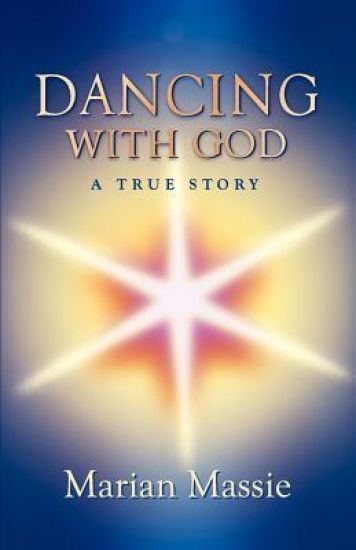
Dancing With God...a true story gives you concrete methods to connect with God regardless of your religion or lack of one. This connection brings you more happiness, joy and wisdom for your life right here, right now, regardless of your life situation. Is there something missing in your life, despite your success? Have you wondered what is the "real" purpose of life? Do you fear death, experience an emptiness or a void, or would you like to live life from a deeper purpose? Do you just want to know that there is life after death? Throughout, Dancing With God, the author, Marian Massie intimately shares her premonition dreams, as well as other profound spiritual experiences she has had communicating with God. Through reading her experiences you get a working knowledge of what God's communication may look like, understand there is indeed life beyond this physical reality and that you are not alone. Marian's engaging and heart opening story may assist you in developing qualities that can help you to thrive from a more profound place of greater joy, inner peace, confidence and awareness, in good times or bad. Dancing with God...a true story, is an inspirational and compelling true story keeps you at the edge of your seat, while opening your heart and helping you understand that you too, are truly dancing with God every day.