Kirjojen hintavertailu. Mukana 11 717 486 kirjaa ja 12 kauppaa.

Kirjahaku

Etsi kirjoja tekijän nimen, kirjan nimen tai ISBN:n perusteella.

1000 tulosta hakusanalla Matthias Engmann

Chirurgia Curiosa

Chirurgia Curiosa

Matthias Gottfried Purmann

Gale Ecco, Print Editions
2018
sidottu
The 18th century was a wealth of knowledge, exploration and rapidly growing technology and expanding record-keeping made possible by advances in the printing press. In its determination to preserve the century of revolution, Gale initiated a revolution of its own: digitization of epic proportions to preserve these invaluable works in the largest archive of its kind. Now for the first time these high-quality digital copies of original 18th century manuscripts are available in print, making them highly accessible to libraries, undergraduate students, and independent scholars.Medical theory and practice of the 1700s developed rapidly, as is evidenced by the extensive collection, which includes descriptions of diseases, their conditions, and treatments. Books on science and technology, agriculture, military technology, natural philosophy, even cookbooks, are all contained here.++++The below data was compiled from various identification fields in the bibliographic record of this title. This data is provided as an additional tool in helping to insure edition identification: ++++British LibraryT114595With an initial imprimatur leaf. 'Natura morborum medicatrix' has a separate titlepage, dated 1705. Pagination irregular after p.106.London: printed for D. Browne, R. Smith, and T. Browne, 1706. 22],343, i.e.283]p., plates; 2
A Sermon, Preached the Second Lord's Day After the Death of his Amiable and Excellent Wife, Mrs. Ann Burnet, who Died in Child-bed, July 7th, 1789. In the XXXVth Year of her Age
The 18th century was a wealth of knowledge, exploration and rapidly growing technology and expanding record-keeping made possible by advances in the printing press. In its determination to preserve the century of revolution, Gale initiated a revolution of its own: digitization of epic proportions to preserve these invaluable works in the largest archive of its kind. Now for the first time these high-quality digital copies of original 18th century manuscripts are available in print, making them highly accessible to libraries, undergraduate students, and independent scholars.Delve into what it was like to live during the eighteenth century by reading the first-hand accounts of everyday people, including city dwellers and farmers, businessmen and bankers, artisans and merchants, artists and their patrons, politicians and their constituents. Original texts make the American, French, and Industrial revolutions vividly contemporary.++++The below data was compiled from various identification fields in the bibliographic record of this title. This data is provided as an additional tool in helping to insure edition identification: ++++Library of CongressW022216New-Haven: Printed by Thomas and Samuel Green, MDCCXC. 1790]. 24 p.; 4
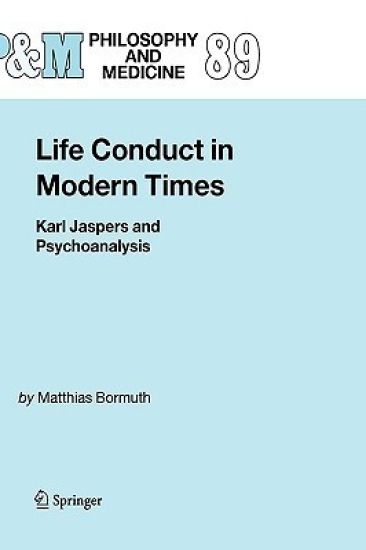
Life Conduct in Modern Times

Life Conduct in Modern Times

Matthias Bormuth

SPRINGER-VERLAG NEW YORK INC.
2006
sidottu
We read, but we are also read by others. Interferences of these readings. Forcing someone to read himself as he is read (slavehood). Forcing the others to read me as I read myself (conquest). 1 Simone Weil Karl Jaspers was born in Oldenburg in 1883, grew up in a liberal-minded banker’s family, studied medicine and was granted a chair in philosophy at the Uni- 2 versity of Heidelberg in 1922. The decisive factor in this appointment was Jaspers’ 1919 monograph Psychology of World Views (Psychologie der Weltanschauungen), 3 which founded so-called ‘existence philosophy’. What is less known is that in 1913 Jaspers had already published an epoch-making methodological systematics, his General Psychopathology (Allgemeine Psychopathologie), which had established 4 him as an authority in the field of psychiatry in the German-speaking world. As a result of this as well as the fact that Jaspers addressed questions concerning physi- 5 sicians’ self-identity, Jaspers is now celebrated as one of the “classic figures of 6 medicine”. 1 Weil (1990), pg. 134. 2 Karl Jaspers (1883-1969) worked as a psychiatrist in Heidelberg starting in 1909, and from 1914 on he held a position as a Privatdozent for psychology in the Department of Philosophy after having completed his Habilitation. In 1920 he was granted an assistant professorship and in 1922 a chair in this department. In 1937 he was forced to retire because his wife was Jewish. In 1945 he was reinstated.
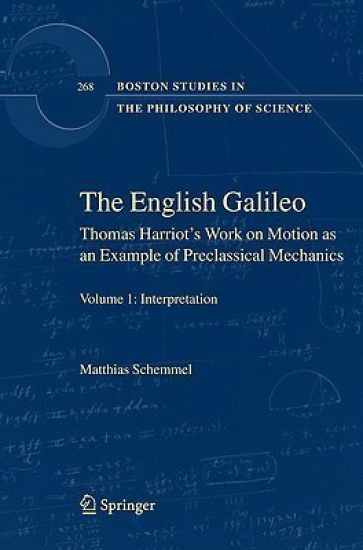
The English Galileo

The English Galileo

Matthias Schemmel

Springer-Verlag New York Inc.
2008
sidottu
The English Galileo—the title of this book draws on the extraordinary prominence of Galileo Galilei in the historiography of the early modern Scienti?c Revolution. At the same time it questions the uniqueness of Galileo (not as a person, of course, but as an early modern phenomenon) by proclaiming another ?gure of his kind: Thomas H- riot. But putting Harriot on a pedestal next to Galileo is not a concern of this book, which is rather motivated by questions of the following kind: How did modern s- ence come about? What were the processes of knowledge and concept transformation that led from premodern to modern science, and, more speci?cally, from preclassical to classical mechanics? Which aspects of these developments rely on the peculiarities of particular historical actors and what aspects re?ect more general characteristics of the knowledge system at the time and its potentials for development? To answer such questions it is obviously necessary to complement the existing studies on Galileo’s science with studies on the work of his lesser-known contemporaries; and it is imp- tant that these studies are carried out in similar detail to make the different prota- nists’ work comparable. Without such comparison—this is the basic assumption of this book—our understanding of the shared knowledge of early modern thinking and the processes of knowledge transformation from which modern science emerged will remain incomplete and biased.
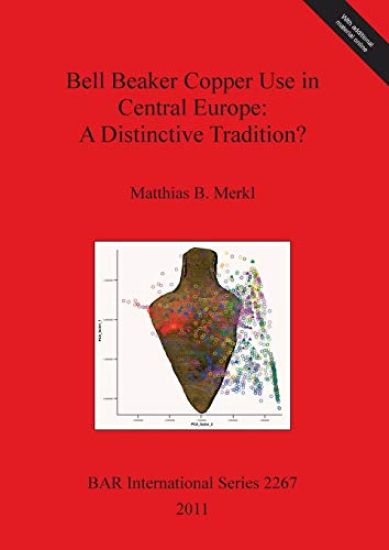
Bell Beaker Copper Use in Central Europe: A Distinctive Tradition
Based on a dataset of trace element compositions of copper finds from central Europe dating between 4500 and 2000 BC, this research aims to indicate whether the metallurgy of the Eastern Bell Beaker group indicates a specific knowledge that distinguishes the metal work of this community from other archaeological groups. It also aims to explain the motivation underlying the use of chronologically and chorologically varying types of copper during this period, asking whether the selection of copper types was based on a knowledge of their specific material.
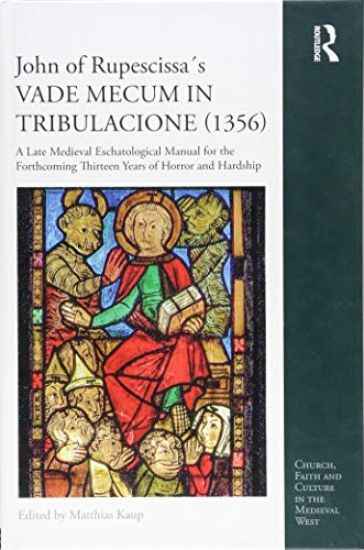
John of Rupescissa´s VADE MECUM IN TRIBULACIONE (1356)

John of Rupescissa´s VADE MECUM IN TRIBULACIONE (1356)

Matthias Kaup

Ashgate Publishing Limited
2016
sidottu
The VADE MECUM IN TRIBULACIONE was meant as an eschatological manual for the thirteen catastrophic years between its composition in December 1356 and the Thousand-Year Reign of Christ expected to begin in 1370. This manual, permeated by passion for clerical reform, was intended to give righteous Christians practical and spiritual advice on how to survive this period of tribulation. Likewise, it aimed to inform them about what to expect from the envoys of Satan, the Western and the Eastern Antichrists, but also from Christ’s warriors, the papal restorer and his secular assistant, the French-Roman Emperor. Moreover, it offered a brief outline of Christ’s Thousand-Year Reign and of Armageddon.The VADE MECUM was written by John of Rupescissa OFM (c. 1310-1366), the most prolific apocalyptic author of the Middle Ages, as the central work of in all three manuals designed to prepare Christendom for the impending crises. As a completely new text type and summary of the late Rupescissa’s doctrines, this eschatological manual fascinated numerous readers in the Late Middle Ages, who copied, reworked and translated it and made it thus a pivotal text of medieval apocalypticism: ten versions of the Latin VADE MECUM in more than forty manuscripts have come down to us.Rupescissa’s eschatological manual is his last known and most widely distributed work; the present study provides an annotated critical edition equipped with an English translation. It inducts in the manual’s contents, places them in the context of Rupescissa’s work and medieval prophetic literature, investigates important aspects of its reception and clarifies the relationships between its different versions. Furthermore, it ends with a critical edition of the VENI MECUM IN TRIBULACIONE, the most influential compendious version of the VADE MECUM. Thus this book offers an indispensable fundamental contribution to the flourishing studies of Rupescissa and medieval apocalypticism.
Jim Curious and the Jungle Journey

Jim Curious and the Jungle Journey

Matthias Picard

Abrams Books for Young Readers
2021
sidottu
This wordless picture book follows a boy’s jungle adventures in breathtaking 3-D illustrations In Jim Curious and the Jungle Journey, a young boy goes on an adventure in an old-fashioned diving suit. After waking up in bed (or is he really awake?), Jim walks through a mirror and into a shallow swamp that leads to a mysterious island. There, in the jungle, he encounters snakes, monkeys, and a giant turtle, as well as some creepy-crawly creatures, before discovering an ancient abandoned temple deep in the heart of the jungle.
Computing the Continuous Discretely

Computing the Continuous Discretely

Matthias Beck; Sinai Robins

Springer-Verlag New York Inc.
2010
nidottu
The world is continuous, but the mind is discrete. David Mumford We seek to bridge some critical gaps between various ?elds of mathematics by studying the interplay between the continuous volume and the discrete v- ume of polytopes. Examples of polytopes in three dimensions include crystals, boxes, tetrahedra, and any convex object whose faces are all ?at. It is amusing to see how many problems in combinatorics, number theory, and many other mathematical areas can be recast in the language of polytopes that exist in some Euclidean space. Conversely, the versatile structure of polytopes gives us number-theoretic and combinatorial information that ?ows naturally from their geometry. Fig. 0. 1. Continuous and discrete volume. The discrete volume of a body P can be described intuitively as the number of grid points that lie inside P, given a ?xed grid in Euclidean space. The continuous volume of P has the usual intuitive meaning of volume that we attach to everyday objects we see in the real world. VIII Preface Indeed, the di?erence between the two realizations of volume can be thought of in physical terms as follows. On the one hand, the quant- level grid imposed by the molecular structure of reality gives us a discrete notion of space and hence discrete volume. On the other hand, the N- tonian notion of continuous space gives us the continuous volume.
Multivariate and Mixture Distribution Rasch Models

Multivariate and Mixture Distribution Rasch Models

Matthias von Davier; Claus H. Carstensen

Springer-Verlag New York Inc.
2010
nidottu
This volume gathers together a set of extensions of the Rasch model, one of the most prominent models for measurement in educational research and - cial science developed by Danish mathematician Georg Rasch. The idea for this volume emerged during a meeting of the Psychometric Society in M- terey, CA. At that meeting, friends and colleagues discussed news about the impending retirement of Dr. Jurgen ¨ Rost, an important innovator and m- tor in this ?eld. To recognize Jurgen’s ¨ contributions, we decided to produce a collection of research on extending the Rasch model as well as embedding the Rasch model in more complex statistical models, an area that is receiving broad interest in many ?elds of social sciences at the current time. This collection contains 22 chapters by recognized international experts in the?eld.Thecontributionscovertopicsrangingfromgeneralmodelextensions to application in ?elds as diverse as cognition, personality, organizational and sports psychology, and health sciences and education. The Rasch model is designed for categorical data, often collected as ex- inees’ responses to multiple tasks such as cognitive items from psychological tests or from educational assessments. The Rasch model’s elegant mathema- cal form is suitable for extensions that allow for greater ?exibility in handling complex samples of examinees and collections of tasks from di?erent domains. In these extensions, the Rasch model is enhanced by additional structural - ements that account either for di?erences between diverse populations or for di?erences among observed variables.
Building ASIPs:  The Mescal Methodology

Building ASIPs: The Mescal Methodology

Matthias Gries; Kurt Keutzer

Springer-Verlag New York Inc.
2010
nidottu
An increasing number of system designers are using ASIP’s rather than ASIC’s to implement their system solutions. Building ASIPs: The Mescal Methodology gives a simple but comprehensive methodology for the design of these application-specific instruction processors (ASIPs). The key elements of this methodology are: Judiciously using benchmarking Inclusively identifying the architectural space Efficiently describing and evaluating the ASIPs Comprehensively exploring the design space Successfully deploying the ASIP This book includes demonstrations of applications of the methodologies using the Tipi research framework as well as state-of-the-art commercial toolsets from CoWare and Tensilica.