Kirjojen hintavertailu. Mukana 12 016 292 kirjaa ja 12 kauppaa.

Kirjahaku

Etsi kirjoja tekijän nimen, kirjan nimen tai ISBN:n perusteella.

1000 tulosta hakusanalla Maya Eisel

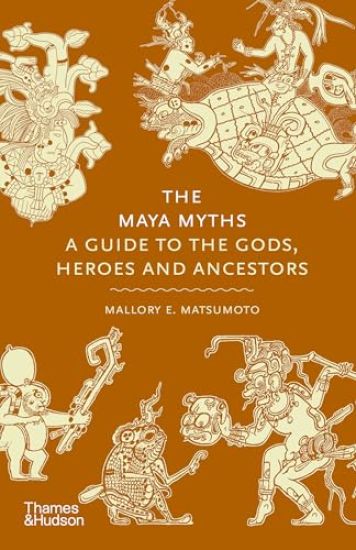
The Maya Myths

The Maya Myths

Mallory Matsumoto

THAMES HUDSON LTD
2025
sidottu
The perfect introduction to the gods, heroes and ancestors of the great Maya civilization. The Maya civilization was highly complex, divided into politically fragmented noble houses, the Maya have produced a diverse and complicated mythology that can vary between groups and retellings. For example, there are three different myths about the origins of the sun and moon, in one creation myth animals and objects rise up to torment humanity; whilst in another, pots shatter and speak, unleashing demons upon the people. Elsewhere, heroes descend to the ballcourt of the underworld where trees grow fruit in the likeness of severed heads, the ancestors converse with animals and the Maize God is caught in a perpetual cycle of death and rebirth. But to the Maya these were more than fireside tales, these myths formed the foundation of their culture, weaving together their ancestral and primordial pasts into a cohesive and meaningful narrative. In The Maya Myths Mallory Matsumoto skilfully evokes the enduring vibrancy of Maya culture, from the peak of the Maya hieroglyphic tradition in the eighth century AD, through the invasions of the Spanish conquistadors up to the present day. The book draws from texts, images and Maya oral histories, reflecting a history of contact and change, rather than a sealed-off past. The Maya region has always been fragmented, leading to a unique cultural and linguistic diversity resulting in a varied and intriguing mixture of stories. Here are well-known texts like the Books of Chilam Balam and the Popol Vuh, Spanish texts, as well as lesser-known sources. This will highlight the richness and varied nature of Maya myths, offering readers a deeper understanding of the communities that produced these captivating stories.
Reading Maya Art

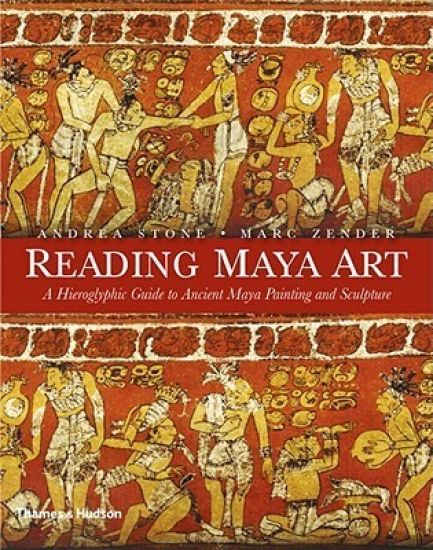
Reading Maya Art

Andrea Stone; Marc Zender

Thames Hudson Ltd
2011
sidottu
Presented here for the first time is a compendium of one hundred hieroglyphs that are also building blocks of ancient Maya painting and sculpture. Organized thematically, the symbols touch on many facets of the Maya world, from the natural environment – animals, plants, the heavens – to the metaphysical landscape of gods, myths and rituals. Using over five hundred line drawings and photographs, Andrea Stone and Marc Zender show how to identify these signs, understand their meaning, and appreciate the novel ways they appear in art. In addition to providing a clear and accessible introduction to Maya art, linguistics and writing, the authors also offer many new and exciting interpretations. Lavishly illustrated, fully cross-referenced and indexed, this remarkable and innovative guide will prove an invaluable tool for those wishing to see Maya art, perhaps for the first time, through the eyes of ancient scribes and artists.
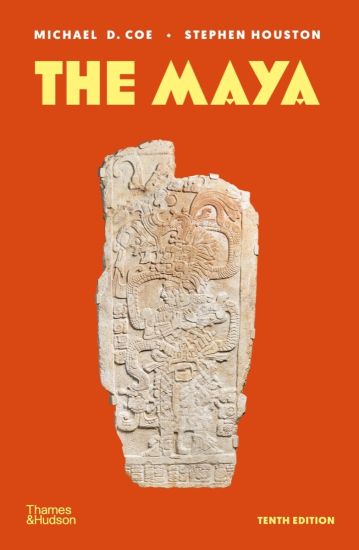
The Maya

The Maya

Michael D. Coe; Stephen Houston

THAMES HUDSON LTD
2022
nidottu
The definitive history of the Maya, fully updated with the latest archaeological studies. The Maya has long been established as the best, most readable introduction to the ancient Maya on the market today. This classic book has been updated by distilling the latest scholarship for the general reader and student. This tenth edition incorporates the most recent archaeological and epigraphic findings, which continue to proceed at a fast pace, along with full-colour illustrations. The new material includes evidence of the earliest human occupants of the Maya region and the beginnings of agriculture and settled life; analysis from lidar on swampy areas, such as Usumacinta, that show enormous rectangle earthworks, including Aguada Fénix, dating from 1050 to 750 BC; and recent advances in decoding Maya writing and imagery. It also expands on information on the roles of women, courtiers and outsiders; covers novel research about Maya cities, including research into water quality, marketplaces, fortifications and integrated road systems; and features coverage of more recent Maya history, including the displacement and mistreatment of the Maya people, along with growing affirmations of their cultural identity and rights. Highlighting the vitality of current scholarship about this brilliant culture, The Maya remains the gold standard introductory book on the subject.
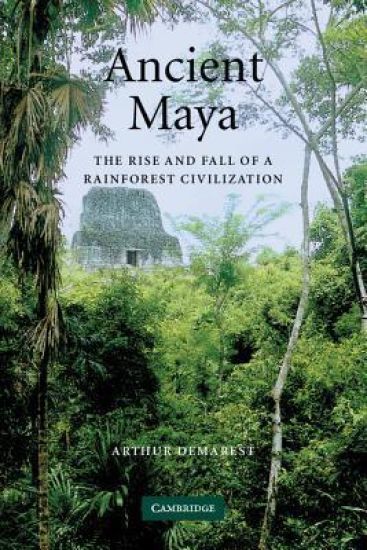
Ancient Maya

Ancient Maya

Arthur Demarest

Cambridge University Press
2004
pokkari
In this new archaeological study, Arthur Demarest brings the lost pre-Columbian civilization of the Maya to life. In applying a holistic perspective to the most recent evidence from archaeology, paleoecology, and epigraphy, this theoretical interpretation emphasises both the brilliant rain forest adaptations of the ancient Maya and the Native American spirituality that permeated all aspects of their daily life. Demarest draws on his own discoveries and the findings of colleagues to reconstruct the complex lifeways and volatile political history of the Classic Maya states of the first to eighth centuries. He provides a new explanation of the long-standing mystery of the ninth-century abandonment of most of the great rain forest cities. Finally, he draws lessons from the history of the Classic Maya cities for contemporary society and for the ongoing struggles and resurgence of the modern Maya peoples, who are now re-emerging from six centuries of oppression.
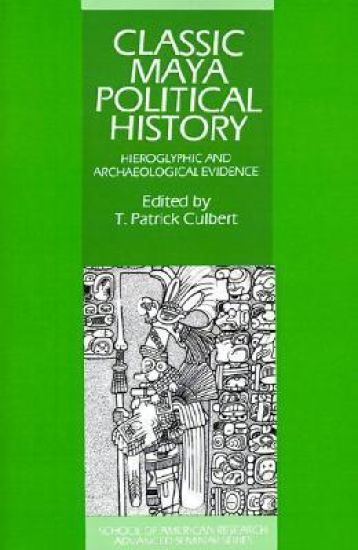
Classic Maya Political History

Classic Maya Political History

Cambridge University Press
1996
pokkari
Ancient Maya civilization once flourished in the rainforests of what is today southern Mexico and Central America. It possessed the only full system of writing ever to be developed in the Americas. The pace of decipherment of Maya hieroglyphic writing has accelerated, and within the last decade half of the inscriptions from the sites of the Classic Period (AD 250–900) have been translated. Much of the newly available information consists of historical records of the careers of Maya rulers of the time. This volume is the first to present in detail the results of decipherment and to consider the implications of a Classic Maya written history. Contributors examine the way in which the Maya elite created the kinship, alliance, warfare and ceremonial networks on which the civilisation was founded. Drawing upon important material recently made available, they have transformed our understanding of the Maya.
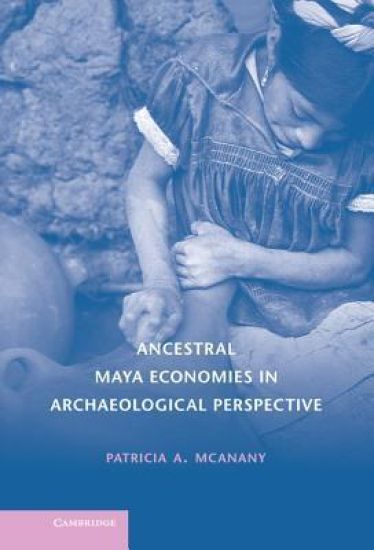
Ancestral Maya Economies in Archaeological Perspective

Ancestral Maya Economies in Archaeological Perspective

Patricia A. McAnany

Cambridge University Press
2010
sidottu
The decipherment of Maya hieroglyphs has enabled scholars to better understand Classic society, but many aspects of this civilization remain shrouded in mystery, particularly its economies and social structures. How did farmers, artisans, and rulers make a living in a tropical forest environment? In this study, Patricia McAnany tackles this question and presents the first comprehensive view of ancestral Maya economic practice. Bringing an archaeological approach to the topic, she demonstrates the vital role of ritual practice in indigenous ecologies, gendered labour, and the construction of colossal architecture. Examining Maya royalty as a kind of social speciation, McAnany also shows the fundamentality of social difference as well as the pervasiveness of artisan production and marketplaces in ancestral Maya societies. Written in an engaging and accessible style, this book situates Maya economies within contemporary social, political, and economic theories of social practice, gender, actor-networks, inalienable goods, materiality, social difference, indigenous ecologies, and strategies of state finance.
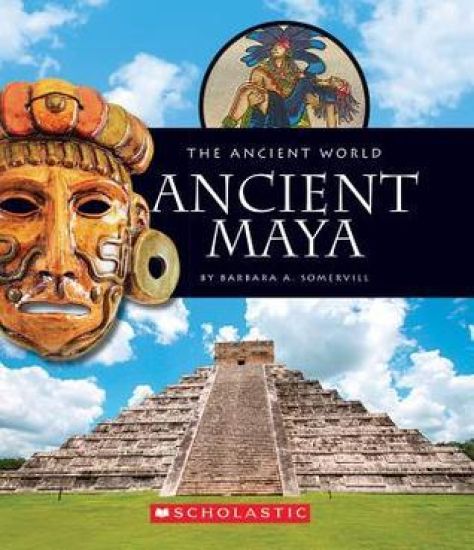
Ancient Maya (the Ancient World)

Ancient Maya (the Ancient World)

Barbara A. Somervill

C. Press/F. Watts Trade
2012
nidottu
Thousands of years ago, in what is now Guatemala, Belize, and southern Mexico, the Mayan people began to build one of history's greatest civilizations.This book details the history of the Mayan people, from the settlement of their earliest villages and farms to their demise at the hands of the Spanish in the 16th century. Readers (Grades 6-9) will discover how Mayan culture grew and developed over time and how these remarkable people continue to influence the world today.
Alex & Maya Love to Surf

Alex & Maya Love to Surf

Chrys Coulter

Cloudbreak Media Inc.
2016
pokkari
With rhyming text and cheerful illustrations, Alex and Maya embark on an adventure to surf waves and experience the sense of contentment that only a fun-filled day at the beach can provide. Swimming past fish, turtles and other vibrant sea-creatures, they discover the sights and sounds of the ocean. As Alex and Maya gently drift into slumber that night, dreaming of the waves they caught, parents can share their own memories of the beach as they lull their young ones to sleep.
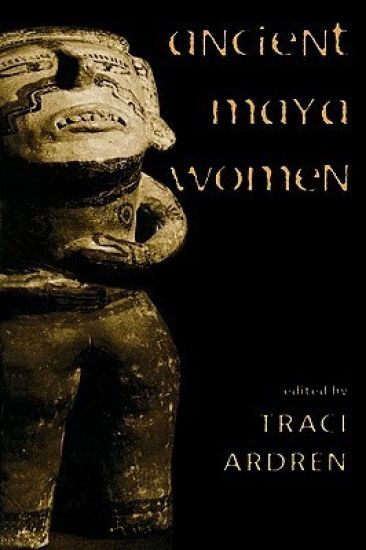
Ancient Maya Women

Ancient Maya Women

AltaMira Press,U.S.
2001
nidottu
The flood of archaeological work in Maya lands has revolutionized our understanding of gender in ancient Maya society. The dozen contributors to this volume use a wide range of methodological strategies—archaeology, bioarchaeology, iconography, ethnohistory, epigraphy, ethnography—to tease out the details of the lives, actions, and identities of women of Mesoamerica. The chapters, most based upon recent fieldwork in Central America, examine the role of women in Maya society, their place in the political hierarchy and lineage structures, the gendered division of labor, and the discrepancy between idealized Mayan womanhood and the daily reality, among other topics. In each case, the complexities and nuances of gender relations is highlighted and the limitations of our knowledge acknowledged. These pieces represent an important advance in the understanding of Maya socioeconomic, political, and cultural life—and the archaeology of gender—and will be of great interest to scholars and students.
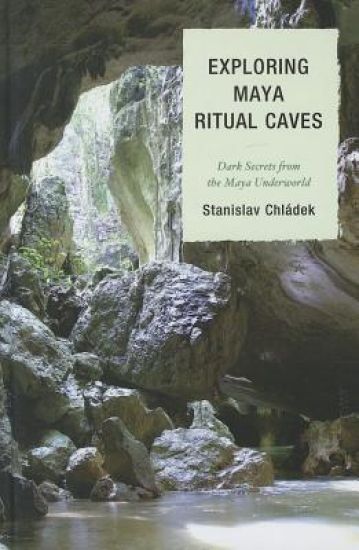
Exploring Maya Ritual Caves

Exploring Maya Ritual Caves

Stanislav Chládek

AltaMira Press,U.S.
2011
sidottu
Exploring Maya Ritual Caves offers a rare survey and explication of most of the known ancient Maya ritual caves in Mexico, Guatemala, and Belize. The caves were the Maya underworld, where rituals, including animal and human sacrifice, were carried out. The Maya cave cult and mythology, construction and modification of the caves, and cult art and artifacts are discussed. Chládek, an intrepid explorer, then describes important caves that he has recently visited and provides photos of their wonders.
Ancient Maya Inside Out

Ancient Maya Inside Out

Stuckey Rachel

Crabtree Publishing Co,US
2017
nidottu
This exciting book explores the culture and achievements of the ancient Maya through the examination of artifacts that have survived through the centuries. Each artifact offers the reader significant clues to the civilization's technologies, cultural traditions, foods, and conflicts.
Over Maya Dead Body

Over Maya Dead Body

S Orchard

Fleming H. Revell Company
2017
nidottu
FBI Special Agent Serena Jones arrives on Martha's Vineyard with her family, ready for a little bit of R&R and a whole lot of reminiscing as they celebrate the engagement of an old family friend. But crime doesn't take a vacation, and she's soon entangled in an investigation of a suspicious death tied to an antiquities smuggling ring. When her investigation propels her into danger, Serena must stay the course and solve this case before anyone else dies. But just how is she supposed to do that when the two men in her life arrive on the scene, bringing with them plenty of romantic complications--and even a secret or two? Award-winning author Sandra Orchard keeps readers guessing with this fast-paced mystery laced with romance.
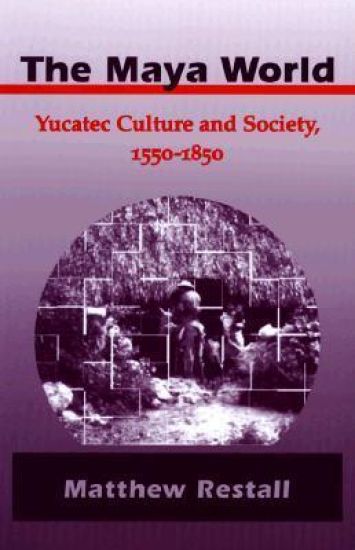
The Maya World

The Maya World

Matthew Restall

Stanford University Press
1999
pokkari
This pathbreaking work is a social and cultural history of the Maya peoples of the province of Yucatan in colonial Mexico, spanning the period from shortly after the Spanish conquest of the region to its incorporation as part of an independent Mexico. Instead of depending on the Spanish sources and perspectives that have formed the basis of previous scholarship on colonial Yucatan, the author aims to give a voice to the Maya themselves, basing his analysis entirely on his translations of hundreds of Yucatec Maya notarial documents—from libraries and archives in Mexico, Spain, and the United States—most of which have never before received scholarly attention. These documents allow the author to reconstruct the social and cultural world of the Maya municipality, or cah, the self-governing community where most Mayas lived and which was the focus of Maya social and political identity. The first two parts of the book examine the ways in which Mayas were organized and differentiated from each other within the community, and the discussion covers such topics as individual and group identities, sociopolitical organization, political factionalism, career patterns, class structures, household and family patterns, inheritance, gender roles, sexuality, and religion. The third part explores the material environment of the cah, emphasizing the role played by the use and exchange of land, while the fourth part describes in detail the nature and significance of the source documentation, its genres and its language. Throughout the book, the author pays attention to the comparative contexts of changes over time and the similarities or differences between Maya patterns and those of other colonial-era Mesoamericans, notably the Nahuas of central Mexico.
Translating Maya Hieroglyphs

Translating Maya Hieroglyphs

Scott A. J. Johnson

University of Oklahoma Press
2014
nidottu
Maya hieroglyphic writing may seem impossibly opaque to beginning students, but scholar Scott A. J. Johnson presents it as a regular and comprehensible system in this engaging, easy-to-follow textbook. The only comprehensive introduction designed specifically for those new to the study, Translating Maya Hieroglyphs uses a hands-on approach to teach learners the current state of Maya epigraphy.Johnson shows readers step by step how to translate ancient Maya glyphs. He begins by describing how to break down a Mayan text into individual glyphs in the correct reading order, and then explains the different types of glyphs and how they function in the script. Finally, he shows how to systematically convert a Mayan inscription into modern English.Not simply a reference volume, Translating Maya Hieroglyphs is pedagogically arranged so that it functions as an introductory foreign-language textbook. Chapters cover key topics, including spelling, dates and numbers, basic grammar, and verbs. Formal linguistic information is accessibly explained, while worksheets and exercises complement and reinforce the material covered in the text. Glyph blocks and phrases drawn from actual monuments illustrate the variety and scribal virtuosity of Maya writing.The Maya writing system has not been fully deciphered. Throughout the text, Johnson outlines and explains the outstanding disputes among Mayanists. At the end of each chapter, he offers sources for further reading. Helpful appendices provide quick reference to vocabulary, glyph meanings, and calendrical data for students undertaking a translation.The study of Maya glyphs has long been an arcane subject known only to a few specialists. This book will change that. Taking advantage of the great strides scholars have made in deciphering hieroglyphs in the past four decades, Translating Maya Hieroglyphs brings this knowledge to a broader audience, including archaeologists and budding epigraphers.