

Kirjahaku
Etsi kirjoja tekijän nimen, kirjan nimen tai ISBN:n perusteella.
1000 tulosta hakusanalla Michael A. Cook
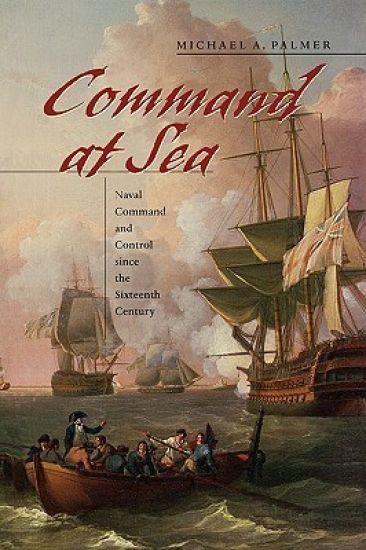
Commanders at sea struggle not only with the unpredictability of natural elements, but also with a shroud of uncertainty often referred to as the "fog of war." Over the centuries most admirals yielded to the natural temptation to find in new technologies a means to assert centralized control over their forces. But other commanders have recognized the fog for what it is: a constant level of uncertainty resistant to mere technological solution. In this grand history of naval warfare, Michael Palmer observes five centuries of dramatic encounters under sail and steam. From reliance on signal flags in the seventeenth century to satellite communications in the twenty-first, admirals looked to the next advance in technology as the one that would allow them to control their forces. But while abilities to communicate improved, Palmer shows how other technologies simultaneously shrank admirals' windows of decision. The result was simple, if not obvious: naval commanders have never had sufficient means or time to direct subordinates in battle. Successful commanders as distant as Horatio Nelson (1758-1805) and Arleigh Burke (1901-1996) accepted this reality. They sought solutions to the dilemmas of command in the personal indoctrination of subordinates through discussion, comradeship, and displays of trust and confidence. Such leaders created a commonality of vision and fostered a high degree of individual initiative. Their decentralized approach to command resulted in a resiliency that so often provided the key to success in battle.Palmer's exciting and enlightening history reveals the myriad efforts of naval commanders to navigate the fog of war.
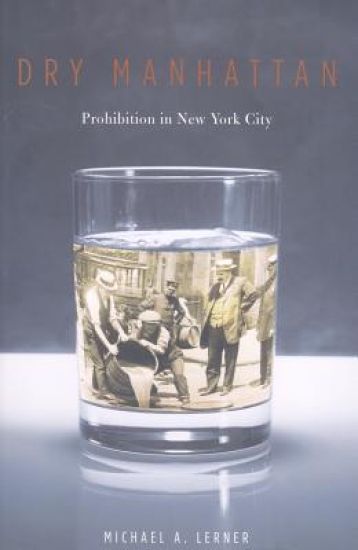
In 1919, the United States embarked on the country’s boldest attempt at moral and social reform: Prohibition. The 18th Amendment to the Constitution prohibited the manufacture, transportation, and sale of alcohol around the country. This “noble experiment,” as President Hoover called it, was intended to usher in a healthier, more moral, and more efficient society. Nowhere was such reform needed more, proponents argued, than in New York City—and nowhere did Prohibition fail more spectacularly. Dry Manhattan is the first major work on Prohibition in nearly a quarter century, and the only full history of Prohibition in the era’s most vibrant city.Though New Yorkers were cautiously optimistic at first, Prohibition quickly degenerated into a deeply felt clash of cultures that utterly transformed life in the city. Impossible to enforce, the ban created vibrant new markets for illegal alcohol, spawned corruption and crime, fostered an exhilarating culture of speakeasies and nightclubs, and exposed the nation’s deep prejudices. Writ large, the conflict over Prohibition, Michael Lerner demonstrates, was about much more than the freedom to drink. It was a battle between competing visions of the United States, pitting wets against drys, immigrants against old stock Americans, Catholics and Jews against Protestants, and proponents of personal liberty against advocates of societal reform.In his evocative history, Lerner reveals Prohibition to be the defining issue of the era, the first major “culture war” of the twentieth century, and a harbinger of the social and moral debates that divide America even today.
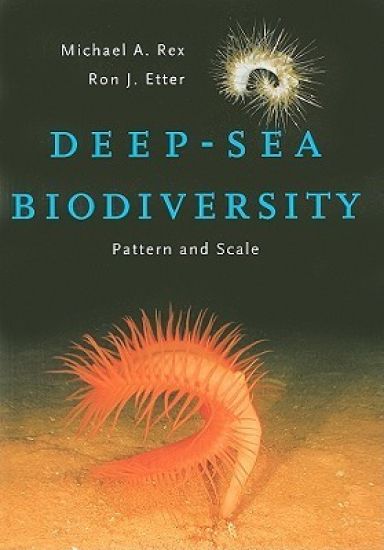
Frigid, dark, and energy-deprived, the deep sea was long considered hostile to life. However, new sampling technologies and intense international research efforts in recent decades have revealed a remarkably rich fauna and an astonishing variety of novel habitats. These recent discoveries have changed the way we look at global biodiversity. In Deep-Sea Biodiversity, Michael Rex and Ron Etter present the first synthesis of patterns and causes of biodiversity in organisms that dwell in the vast sediment ecosystem that blankets the ocean floor. They provide the most comprehensive analysis to date of geographic variation in benthic animal abundance and biomass. The authors document geographic patterns of deep-sea species diversity and integrate potential ecological causes across scales of time and space. They also review the most recent molecular population genetic evidence to describe how and where evolutionary processes have generated the unique deep-sea fauna. Deep-Sea Biodiversity offers a new understanding of marine biodiversity that will be of general interest to ecologists and is crucial to responsible exploitation of natural resources at the deep-sea floor.

What drives literary change? Does literature merely follow shifts in a culture, or does it play a distinctive role in shaping emergent trends? Michael Fuller explores these questions while examining the changes in Chinese shi poetry from the late Northern Song dynasty (960–1127) to the end of the Southern Song (1127–1279), a period of profound social and cultural transformation.Shi poetry written in response to events was the dominant literary genre in Song dynasty China, serving as a central form through which literati explored meaning in their encounters with the world. By the late Northern Song, however, old models for meaning were proving inadequate, and Daoxue (Neo-Confucianism) provided an increasingly attractive new ground for understanding the self and the world. Drifting among Rivers and Lakes traces the intertwining of the practice of poetry, writings on poetics, and the debates about Daoxue that led to the cultural synthesis of the final years of the Southern Song and set the pattern for Chinese society for the next six centuries. Examining the writings of major poets and Confucian thinkers of the period, Fuller discovers the slow evolution of a complementarity between poetry and Daoxue in which neither discourse was self-sufficient.

The second edition of An Introduction to Literary Chinese incorporates recent developments in linguistics and has been expanded to include a lesson on Buddhist texts. Beginning with an overview of literary Chinese—its phonology, morphology, and syntax, as well as a short account of the nature of the writing system—the textbook then presents thirty-six lessons of increasing difficulty designed to introduce students to the basic patterns of the language and give them practice in reading a variety of texts.Part I presents eight lessons on the basic syntactic components in literary Chinese. Each lesson begins with an overview of its topic, introduces an exemplary text, and provides a glossary, notes, and practice exercises. The sixteen lessons in Part II use increasingly long and complex texts to introduce styles of narrative and argumentation in literary Chinese and, at the same time, solidify students’ grasp of the syntax. The advanced texts in the six lessons in Part III introduce students to central authors and philosophical traditions in premodern China and broaden the process of reading to include elements of cultural and historical interpretation. Part IV has six lessons comprising important Tang and Song dynasty prose and poetic texts.
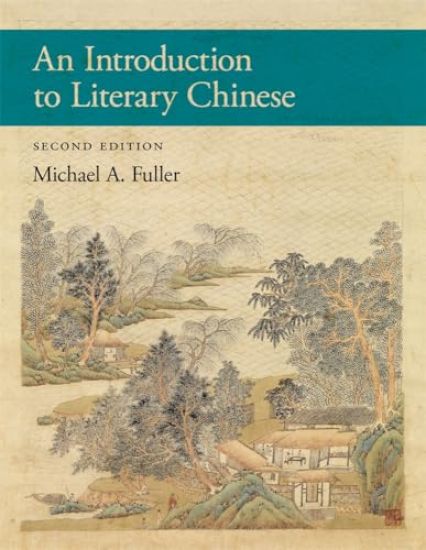
The second edition of An Introduction to Literary Chinese incorporates recent developments in linguistics and has been expanded to include a lesson on Buddhist texts. Beginning with an overview of literary Chinese—its phonology, morphology, and syntax, as well as a short account of the nature of the writing system—the textbook then presents thirty-six lessons of increasing difficulty designed to introduce students to the basic patterns of the language and give them practice in reading a variety of texts.Part I presents eight lessons on the basic syntactic components in literary Chinese. Each lesson begins with an overview of its topic, introduces an exemplary text, and provides a glossary, notes, and practice exercises. The sixteen lessons in Part II use increasingly long and complex texts to introduce styles of narrative and argumentation in literary Chinese and, at the same time, solidify students’ grasp of the syntax. The advanced texts in the six lessons in Part III introduce students to central authors and philosophical traditions in premodern China and broaden the process of reading to include elements of cultural and historical interpretation. Part IV has six lessons comprising important Tang and Song dynasty prose and poetic texts.

This innovative textbook for learning classical Chinese poetry moves beyond the traditional anthology of poems translated into English and instead brings readers—including those with no knowledge of Chinese—as close as possible to the texture of the poems in their original language. The first two chapters introduce the features of classical Chinese that are important for poetry and then survey the formal and rhetorical conventions of classical poetry. The core chapters present the major poets and poems of the Chinese poetic tradition from earliest times to the lyrics of the Song Dynasty (960–1279).Each chapter begins with an overview of the historical context for the poetry of a particular period and provides a brief biography for each poet. Each of the poems appears in the original Chinese with a word-by-word translation, followed by Fuller’s unadorned translation, and a more polished version by modern translators. A question-based study guide highlights the important issues in reading and understanding each particular text.Designed for classroom use and for self-study, the textbook’s goal is to help the reader appreciate both the distinctive voices of the major writers in the Chinese poetic tradition and the grand contours of the development of that tradition.

This innovative textbook for learning classical Chinese poetry moves beyond the traditional anthology of poems translated into English and instead brings readers—including those with no knowledge of Chinese—as close as possible to the texture of the poems in their original language. The first two chapters introduce the features of classical Chinese that are important for poetry and then survey the formal and rhetorical conventions of classical poetry. The core chapters present the major poets and poems of the Chinese poetic tradition from earliest times to the lyrics of the Song Dynasty (960–1279).Each chapter begins with an overview of the historical context for the poetry of a particular period and provides a brief biography for each poet. Each of the poems appears in the original Chinese with a word-by-word translation, followed by Fuller’s unadorned translation, and a more polished version by modern translators. A question-based study guide highlights the important issues in reading and understanding each particular text.Designed for classroom use and for self-study, the textbook’s goal is to help the reader appreciate both the distinctive voices of the major writers in the Chinese poetic tradition and the grand contours of the development of that tradition.
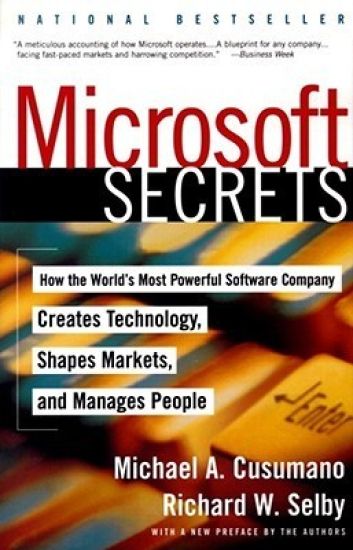
Today, Microsoft commands the high ground of the information superhighway by owning the operating systems and basic applications programs that run on the world's 170 million computers. Beyond the unquestioned genius and vision of Bill Gates, what accounts for Microsofts astounding success? Drawing on almost two years of on-site observation at Microsoft headquarters, eminent scientists Michael A. Cusumano and Richard W. Selby reveal many of Microsoft's innermost secrets. This inside report, based on forty in-depth interviews by authors who had access to confidential documents and project data, outlines the seven complementary strategies that characterize exactly how Microsoft competes and operates, including the "Brain Trust" of talented employees and exceptional management; "bang for the buck" competitive strategies and clear organizational goals that produce self-critiquing, learning, and improving; a flexible, incremental approach to product development; and a relentless pursuit of future markets. Cusumano and Selby's masterful analysis successfully uncovers the distinctive way in which Microsoft has combined all of the elements necessary to get to the top of an enormously important industry -- and stay there.
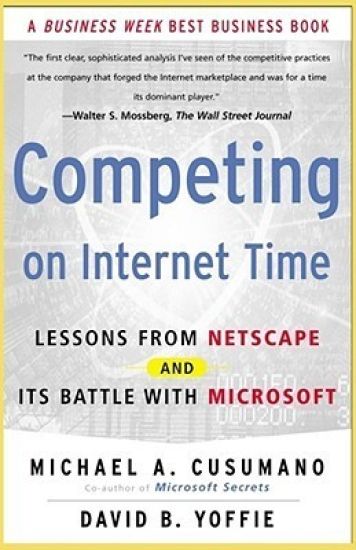
When Marc Andreessen and Jim Clark founded Netscape in 1994, they were the first to envision how the Internet could revolutionise conventional ways of using computers, distributing software, communicating with other people, and conducting business. In this penetrating analysis of strategy-making and product innovation in the dynamic markets of commercial cyberspace, bestselling authors Cusumano and Yoffie draw vital lessons from Netscape and how it has employed the techniques of 'judo strategy' in its pitched battle against Microsoft. Through on-site observation and in-depth interviews, the authors construct a blueprint detailing how this hugely successful software company has competed on Internet time. They suggest that by designing products that run on multiple operating systems and staying flexible, they have forced Microsoft into an immovable and therefore less competitive position. Managers everywhere will want to absorb these valuable lessons from the fastest growing software company in history and put them to work in their organisations now - before the competition does!
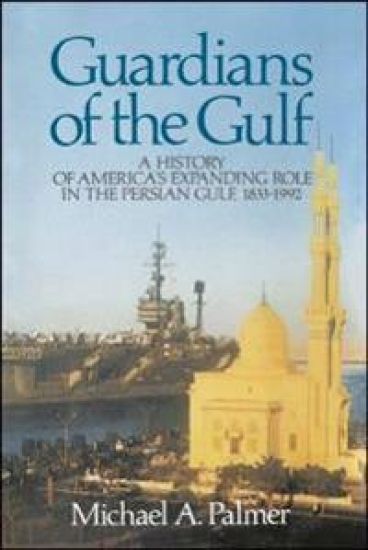
From the nineteenth century through the 1991 war with Iraq, this study of America's expanding role in the Persian Gulf traces the development of American commercial interests in the region and the resulting growth of military and political involvement.
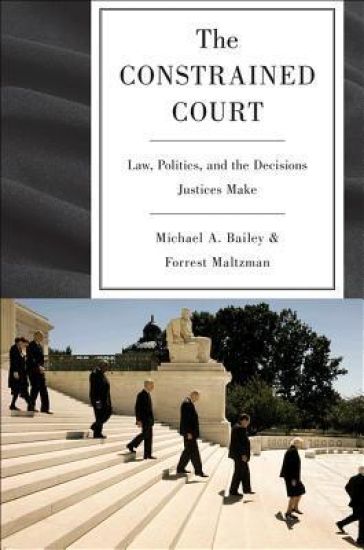
How do Supreme Court justices decide their cases? Do they follow their policy preferences? Or are they constrained by the law and by other political actors? The Constrained Court combines new theoretical insights and extensive data analysis to show that law and politics together shape the behavior of justices on the Supreme Court. Michael Bailey and Forrest Maltzman show how two types of constraints have influenced the decision making of the modern Court. First, Bailey and Maltzman document that important legal doctrines, such as respect for precedents, have influenced every justice since 1950. The authors find considerable variation in how these doctrines affect each justice, variation due in part to the differing experiences justices have brought to the bench. Second, Bailey and Maltzman show that justices are constrained by political factors. Justices are not isolated from what happens in the legislative and executive branches, and instead respond in predictable ways to changes in the preferences of Congress and the president. The Constrained Court shatters the myth that justices are unconstrained actors who pursue their personal policy preferences at all costs. By showing how law and politics interact in the construction of American law, this book sheds new light on the unique role that the Supreme Court plays in the constitutional order.

In proposing that places, movements, and directions are deeply implicated in the narrative structure of Ulysses, Michael Seidel contends that Joyce recreates in Dublin the significant epic geography of the Odyssey. The author demonstrates how Joyce adjusts the spaces of Ulysses to accommodate the three theaters of Homeric action as mapped by Victor Berard's Lex Pheniciens et I'Odyssee. Originally published in 1976. The Princeton Legacy Library uses the latest print-on-demand technology to again make available previously out-of-print books from the distinguished backlist of Princeton University Press. These editions preserve the original texts of these important books while presenting them in durable paperback and hardcover editions. The goal of the Princeton Legacy Library is to vastly increase access to the rich scholarly heritage found in the thousands of books published by Princeton University Press since its founding in 1905.

Using an innovative blending of ideological, implementation, and comparative institutional analysis, this book takes the New York City case as a springboard for assessing the role of an executive agency in making and implementing egalitarian policies. Originally published in 1985. The Princeton Legacy Library uses the latest print-on-demand technology to again make available previously out-of-print books from the distinguished backlist of Princeton University Press. These editions preserve the original texts of these important books while presenting them in durable paperback and hardcover editions. The goal of the Princeton Legacy Library is to vastly increase access to the rich scholarly heritage found in the thousands of books published by Princeton University Press since its founding in 1905.
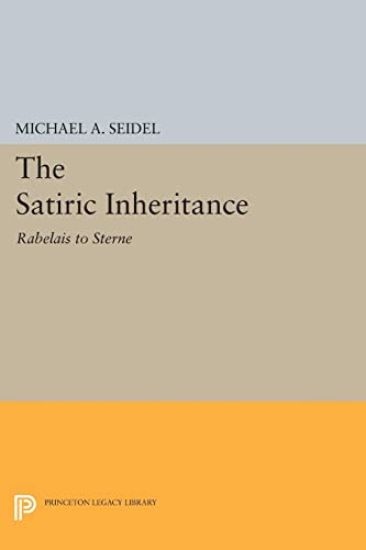
Arguing that satiric potential is latent in virtually all dispensation, succession, and inheritance narratives, Michael Seidel suggests a new and comprehensive understanding of satire's place in the more general context of narrative theory. The notion of inheritance shares with traditional narrative action the need to transmit and preserve form. Originally published in 1979. The Princeton Legacy Library uses the latest print-on-demand technology to again make available previously out-of-print books from the distinguished backlist of Princeton University Press. These editions preserve the original texts of these important books while presenting them in durable paperback and hardcover editions. The goal of the Princeton Legacy Library is to vastly increase access to the rich scholarly heritage found in the thousands of books published by Princeton University Press since its founding in 1905.

In proposing that places, movements, and directions are deeply implicated in the narrative structure of Ulysses, Michael Seidel contends that Joyce recreates in Dublin the significant epic geography of the Odyssey. The author demonstrates how Joyce adjusts the spaces of Ulysses to accommodate the three theaters of Homeric action as mapped by Victor Berard's Lex Pheniciens et I'Odyssee. Originally published in 1976. The Princeton Legacy Library uses the latest print-on-demand technology to again make available previously out-of-print books from the distinguished backlist of Princeton University Press. These editions preserve the original texts of these important books while presenting them in durable paperback and hardcover editions. The goal of the Princeton Legacy Library is to vastly increase access to the rich scholarly heritage found in the thousands of books published by Princeton University Press since its founding in 1905.

Using an innovative blending of ideological, implementation, and comparative institutional analysis, this book takes the New York City case as a springboard for assessing the role of an executive agency in making and implementing egalitarian policies. Originally published in 1985. The Princeton Legacy Library uses the latest print-on-demand technology to again make available previously out-of-print books from the distinguished backlist of Princeton University Press. These editions preserve the original texts of these important books while presenting them in durable paperback and hardcover editions. The goal of the Princeton Legacy Library is to vastly increase access to the rich scholarly heritage found in the thousands of books published by Princeton University Press since its founding in 1905.

Arguing that satiric potential is latent in virtually all dispensation, succession, and inheritance narratives, Michael Seidel suggests a new and comprehensive understanding of satire's place in the more general context of narrative theory. The notion of inheritance shares with traditional narrative action the need to transmit and preserve form. Originally published in 1979. The Princeton Legacy Library uses the latest print-on-demand technology to again make available previously out-of-print books from the distinguished backlist of Princeton University Press. These editions preserve the original texts of these important books while presenting them in durable paperback and hardcover editions. The goal of the Princeton Legacy Library is to vastly increase access to the rich scholarly heritage found in the thousands of books published by Princeton University Press since its founding in 1905.

1. The main category of the book: Effective High School Building Leadership. 2. Other subject categories: Preparation for the School Principal's Certification Exam and the School Building Appointment Interview; School Supervision and Administrative Leadership; The Criteria for Selecting and Evaluating a School Principal, Job Requirements, and the Job Analysis of the Principalship; The Structure, Functional Components, and Organizational Elements of a High School; Effectively Managing Administrative and Instructional Practices That Raise Student Academic Achievement; Effective Organizational and Institutional Leadership.