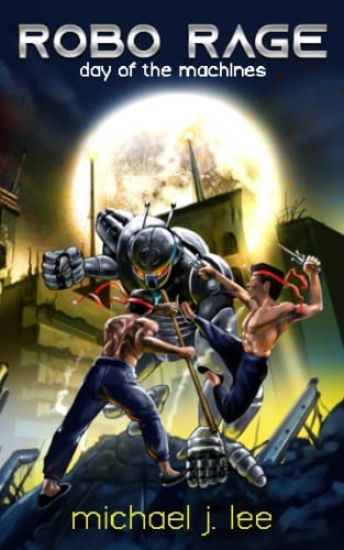
Robo Rage - Day of the Machines is a dystopian novel about a future in which unenhanced humans are dominated by a new race of superhuman cyborgs and their robots and decide to fight back for their rapidly disappearing rights. The story is set in Tokyo in the 2040s, when machines have taken over control of society. While humans are starting to vanish due to the pressures of depopulation, robots are rolling off the assembly line to take jobs previously done by humans.
This book will change the way we understand cities. It provides readers with not only an introduction to cities and urbanism in the postmodern world but also overturns many common assumptions about urban structure.
The first edition of this book was one of the first to present the ideas of the psychology of learning in an integrated text. This fully revised edition includes the psychological research into children's learning and intelligence which has taken place over the past decade.
This book is about disease and death. It is an ecologist's view of Darwin's vivid evocation of Nature, red in tooth and claw. An international team of authors examines broad patterns in the population biology of natural enemies, and addresses general questions about the role of natural enemies in the population dynamics and evolution of their prey. For instance, how do large natural enemies like wolves differ from small natural enemies like bacterial diseases in their effects on prey abundance? Is it better to chase after prey, or sit and wait for it to come to you? How should prey behave in order to minimize the risk of being eaten? The answers are all in this fascinating senior undergraduate/postgraduate text.
This book is written for chemists, chemical engineers and chemical technologists who are not expert users of Raman spectroscopy technology. The background to the technique is covered along with its analytical applications. A brief introduction to Raman spectroscopy and instrumentation in general is included, along with detailed explanations of the advantages of Raman over other techniques. Emphasis is placed on the way it has been used to solve a range of analytical problems in the chemical and allied industries.
Of major economic, environmental and social importance, industrial microbiology involves the utilization of microorganisms in the production of a wide range of products, including enzymes, foods, beverages, chemical feedstocks, fuels and pharmaceuticals, and clean technologies employed for waste treatment and pollution control. Aimed at undergraduates studying the applied aspects of biology, particularly those on biotechnology and microbiology courses and students of food science and biochemical engineering, this text provides a wide-ranging introduction to the field of industrial microbiology. The content is divided into three sections: key aspects of microbial physiology, exploring the versatility of microorganisms, their diverse metabolic activities and products industrial microorganisms and the technology required for large-scale cultivation and isolation of fermentation products investigation of a wide range of established and novel industrial fermentation processes and products Written by experienced lecturers with industrial backgrounds, Industrial Microbiology provides the reader with groundwork in both the fundamental principles of microbial biology and the various traditional and novel applications of microorganisms to industrial processes, many of which have been made possible or enhanced by recent developments in genetic engineering technology. A wide-ranging introduction to the field of industrial microbiology Based on years of teaching experience by experienced lecturers with industrial backgrounds Explains the underlying microbiology as well as the industrial application. Content is divided into three sections: 1. key aspects of microbial physiology, exploring the versatility of microorganisms, their diverse metabolic activities and products 2. industrial microorganisms and the technology required for large-scale cultivation and isolation of fermentation products 3. investigation of a wide range of established and novel industrial fermentation processes and products
In his first full-length poetry collection, Natural Philosophies, Michael J. Leach grasps for truth and solace by embracing interdisciplinary perspectives and alternative meanings. The poems in this collection address the archaic term 'natural philosophy'-the philosophical study of nature and the universe-in past, present, and future contexts through the lenses of various natural science disciplines, including botany, zoology, astronomy, chemistry, and medicine. Michael explores a range of urgent personal and public issues, from climate change, extinction, and post-truth logic to assisted dying, natural death, and COVID-19, all the while pinpointing much-needed beauty across physical, emotional, and spiritual domains of existence.
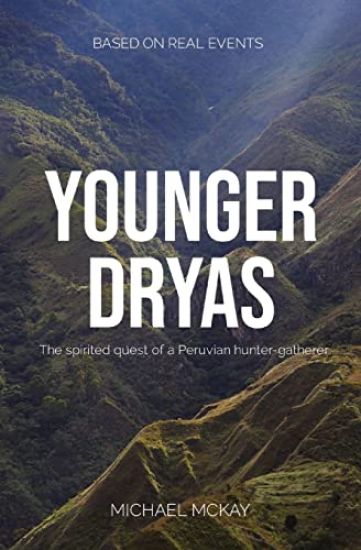
It's 12,800 years ago... Jung, a boy from The Cloud Forest in southern Peru, becomes separated from his tribe when a star hits Earth.Battling floods, earthquakes and below-freezing conditions, Jung goes in search of his father who he lost the day before the impact. Retracing his father's footsteps, he travels to Lake Titicaca where he encounters Kon-Tiki, a strange-looking man who claims to have sailed from the other side of Earth.Kon-Tiki tells Jung he has come to Peru to build a pyramid-a machine connected to the pyramids in Egypt and Angkor Wat-capable of taking a passenger to any time and place in the universe. He promises Jung a ticket to use the pyramid to find his father if he can retrieve a piece of the star that hit Earth.With his own reasons to visit the crash site, Jung agrees to the deal and journeys north. As things unravel, however, it becomes clear not all is what it seems.Based on real events documented by Graham Hancock in his books: Fingerprints of the Gods, Magicians of the Gods and America Before.
In understanding God, the best way is to keep it simple and aim for the basic and essential. It is a good foundation upon which to build a Christian identity and future. But what are the essential pieces of the puzzle called 'God' and how will a concise explanation of their importance read? And what will the full picture look like? Not every Christian is sufficiently familiar with it. Walking with God discusses twenty puzzle pieces (topics) that together answer the most pertinent aspects of God's plan for creation and everyday living. The information is uncomplicated and practical, with insights towards psycho-spiritual health and wellbeing. is to keep it simple and aim for the basic and essential. It is a good foundation upon which to build a Christian identity and future. But what are the essential pieces of the puzzle called 'God' and how will a concise explanation of their importance read? And what will the full picture look like? Not every Christian is sufficiently familiar with it. Walking with God discusses twenty puzzle pieces (topics) that together answer the most pertinent aspects of God's plan for creation and everyday living. The information is uncomplicated and practical, with insights towards psycho-spiritual health and wellbeing. God is easy to walk with.
For thousands of years philosophers and religious thinkers have written about the soul. Hardly surprising, for soul is what human experience is all about. Ideas have been plentiful and interesting. Historically, soul has been understood as immaterial, as spirit-like, until recently modern science and psychology joined the fray. They consider the concept of spirit outdated and soul a body manifestation. Scientifically, the phenomenon of soul is addressed in studies of the brain. Neurobiology is gaining considerable insights. The expectation is that one day brain function will reveal all.The idea of people having a soul is readily accepted. Soul is central to a person's consciousness and every moment of awareness involves the soul. It reflects attitude, mind and emotions and is an indicator of wellbeing. It is no surprise that the reality of soul has been commented on throughout the ages. Aristotle had distinct ideas about it, as did St Augustine and other philosophers. Novelists have dealt with the nature of soul in many varied ways. These days the fields of biology, medicine and psychology are the new frontier.Findings will remain limited when the dynamic of spirit is excluded. This view is held by many and not only by religious people. Life feels so much larger than merely being a body manifestation. Something else must be in play and it is called spirit. But what might the idea of spirit entail?
In 2022 I had a disturbing vision which prompted the writing of this book. 'Let me help you in a fragile world, ' the Lord says. He is asking for his people to come closer into his presence. Intimacy with God is liberating and uniquely personal. It is fully relational and not religious. The Lord is kind, gently guides and never points the finger. He heals the soul, strengthens the spirit and nurtures resilience. How this happens in a natural way, that is yet supernatural, is the topic of Being with God. How the ordinary may become supra-ordinary and every day a special one. the ebook is available for free from AgapeDeum.com
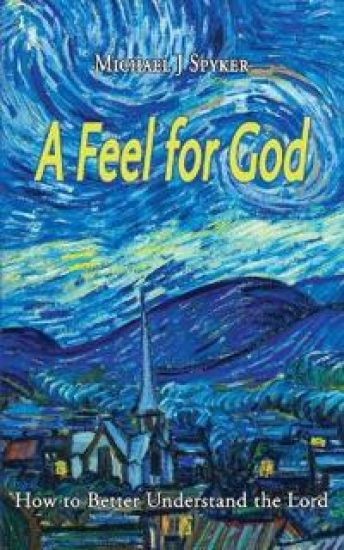
A landscape painter once explained how he had visited a certain view for years to have it absorbed within his soul before putting brush to canvas. Having gained a good feel for the vista, the painting of it came automatically, he said. He just understood the land in his particular way and was able to express that in beautiful paintings with a distinct character.God is like that. Spend enough time with the Lord and develop a feel for what it is all about. A Feel for God presents ideas of what is important in shaping understanding of divine realities by using your senses. Right thinking about the Lord always is guided by spiritual sensitivity. A good feel for God brings peace and joy to the soul.
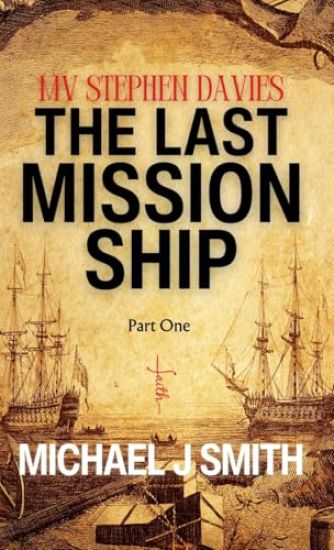
The Last Mission Ship - Part One, has been produced on behalf of Uncharted Collective with the aim of raising awareness of what is believed to be the last Mission vessel built for sail in Australian and South Sea waters - the seventy-two year old MV Stephen Davies. This book is also to deliver an ongoing legacy aimed at raising awareness of the impact Missionaries and Missions had in the South Seas, including Cape York and the Torres Strait, with a particular focus on the sailing ships involved in the trade and the communities, villages and Islands in which they operated. Mission Vessel (MV) Stephen Davies is the last Missionary Ship built under sail for Australia's last frontier Missions, dotted throughout remote Cape York and the Torres Strait. MV Stephen Davies may also well be the last sailing Missionary Ship surviving in the South Seas. MV Stephen Davies' story, along with the many owners, missionaries, government officials, passengers and crew and their children who stepped aboard her, all have a story to tell, long into the next century. MV Stephen Davies still has a role to play. We need your support to bring one of the last Mission vessels built under sail, back into service to do some of the good work that she was built for. The Last Mission Ship - Part One is the first of a three-part book series. Part Two will be in-depth history of Missionaries and their ships of the South Pacific and Part Three being the history, restoration and relaunch of the MV Stephen Davies itself.
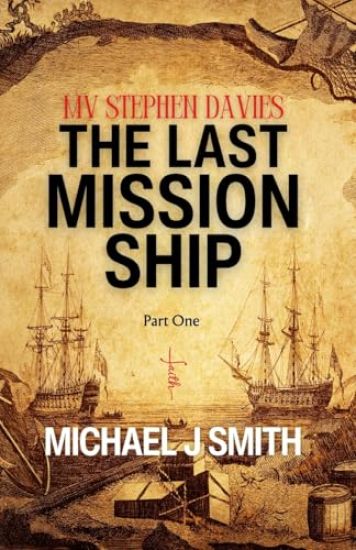
The Last Mission Ship - Part One, has been produced on behalf of Uncharted Collective with the aim of raising awareness of what is believed to be the last Mission vessel built for sail in Australian and South Sea waters - the seventy-two year old MV Stephen Davies. This book is also to deliver an ongoing legacy aimed at raising awareness of the impact Missionaries and Missions had in the South Seas, including Cape York and the Torres Strait, with a particular focus on the sailing ships involved in the trade and the communities, villages and Islands in which they operated. Mission Vessel (MV) Stephen Davies is the last Missionary Ship built under sail for Australia's last frontier Missions, dotted throughout remote Cape York and the Torres Strait. MV Stephen Davies may also well be the last sailing Missionary Ship surviving in the South Seas. MV Stephen Davies' story, along with the many owners, missionaries, government officials, passengers and crew and their children who stepped aboard her, all have a story to tell, long into the next century. MV Stephen Davies still has a role to play. We need your support to bring one of the last Mission vessels built under sail, back into service to do some of the good work that she was built for. The Last Mission Ship - Part One is the first of a three-part book series. Part Two will be in-depth history of Missionaries and their ships of the South Pacific and Part Three being the history, restoration and relaunch of the MV Stephen Davies itself.
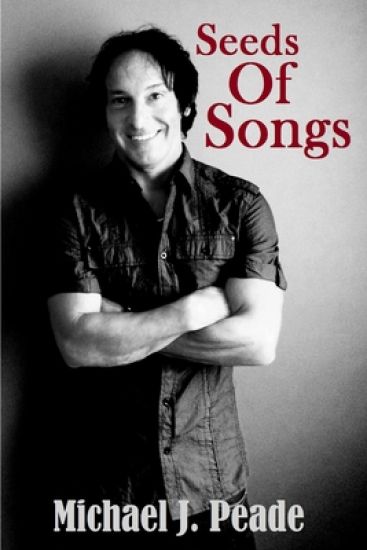
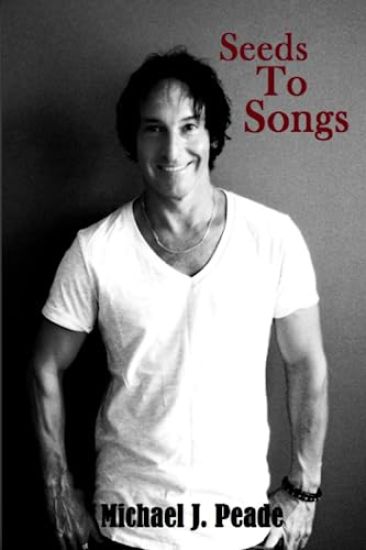
Author, Poet, Lyricist and Playwright Michael J. Peade's book, Seeds Of Songs, is a collection of chosen works from his poetry and song lyric catalogue over the past 40 years. Inspirational, dreaming, hurt and love fills the pages in between from this Australian writer.