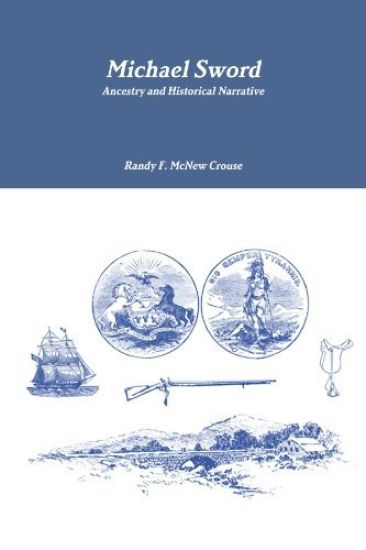
Get discount code at: http://www.lulu.com/promos/current-specials ; enter code at Lulu.com checkout.This book is the result of several years of diligent research, the purpose of which was to prove the ancestry of Michael Sword and to document his Revolutionary War record. Michael Sword is the descendant of German immigrants who first arrived in Philadelphia in 1737. He served in the Revolution in the Army and was in battles at Brandywine, Germantown, and Charleston,SC. This book will be of interest to genealogists and those interested in military history and especially of interest to those researching the Sword family of Russell County, Virginia. Indexed. Fourth Edition. Full color front and back covers. Interior printed in black and white.
This book explores Michael Psellos' place in the history of Greek rhetoric and self-representation and his impact on the development of Byzantine literature. Avoiding the modern dilemma that vacillates between Psellos the pompous rhetorician and Psellos the ingenious thinker, Professor Papaioannou unravels the often misunderstood Byzantine rhetoric, its rich discursive tradition and the social fabric of elite Constantinopolitan culture which rhetoric addressed. The book offers close readings of Psellos' personal letters, speeches, lectures and historiographical narratives, and analysis of other early Byzantine and classical models of authorship in Byzantine book culture, such as Gregory of Nazianzos, Synesios of Cyrene, Hermogenes and Plato. It also details Psellos' innovative attention to authorial creativity, performative mimesis and the aesthetics of the self. Simultaneously, it traces within Byzantium complex expressions of emotion and gender, notions of authorship and subjectivity, and theories of fictionality and literature, challenging the common fallacy that these are modern inventions.
Michael Kelly (1762–1826) was an Irish singer and composer who studied music in a Naples conservatory before touring Europe and performing for royalty. His voyage to Italy began with a brush with pirates, one of whom was a childhood acquaintance. Kelly also found himself stranded penniless in Venice, spent a night in prison after a fist fight at the theatre, and had a narrow escape from revolutionary France. He is probably best remembered for creating the roles of Don Basilio and Don Curzio in the first performance, in 1786, of Le Nozze di Figaro, of which he describes the rehearsal period and reception. He later joined London's Theatre Royal as both a performer and composer and opened a music shop, which went bankrupt. These memoirs, published in 1826, provide rich first hand insights into a key period in theatre history. Volume 1 covers Kelly's early life and musical training.
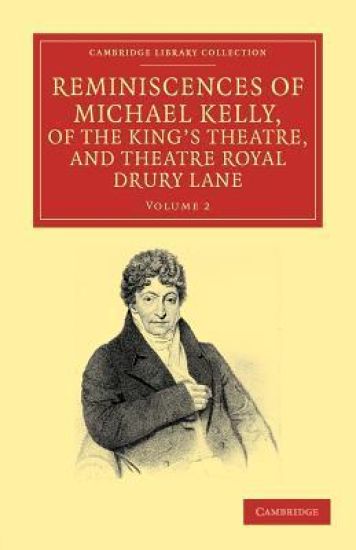
Michael Kelly (1762-1826) was an Irish singer and composer who studied music in a Naples conservatory before touring Europe and performing for royalty. His voyage to Italy began with a brush with pirates, one of whom was a childhood acquaintance. Kelly also found himself stranded penniless in Venice, spent a night in prison after a fist fight at the theatre, and had a narrow escape from revolutionary France. He is probably best remembered for creating the roles of Don Basilio and Don Curzio in the first performance, in 1786, of Le Nozze di Figaro, of which he describes the rehearsal period and reception. He later joined London's Theatre Royal as both a performer and composer and opened a music shop, which went bankrupt. These memoirs, published in 1826, provide rich first-hand insights into a key period in theatre history. Volume 2 covers Kelly's later musical and theatrical career.
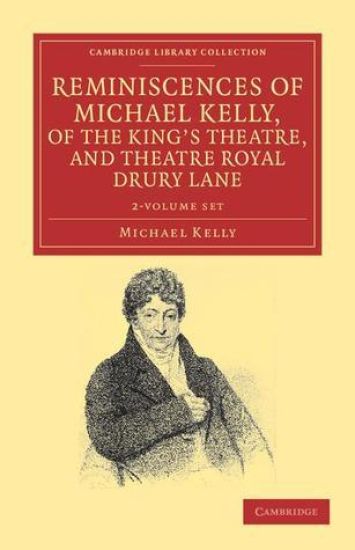
Michael Kelly (1762–1826) was an Irish singer and composer who studied music in a Naples conservatory before touring Europe and performing for royalty. His voyage to Italy began with a brush with pirates, one of whom was a childhood acquaintance. Kelly also found himself stranded penniless in Venice, spent a night in prison after a fist fight at the theatre, and had a narrow escape from revolutionary France. He is probably best remembered for creating the roles of Don Basilio and Don Curzio in the first performance, in 1786, of Mozart's Le Nozze di Figaro, of which he describes the rehearsal period and reception. He later joined London's Theatre Royal as both a performer and composer and opened a music shop, which went bankrupt. These memoirs, published in 1826, cover an extraordinary life during turbulent times but also provide rich first-hand insights into a key period in theatre history.
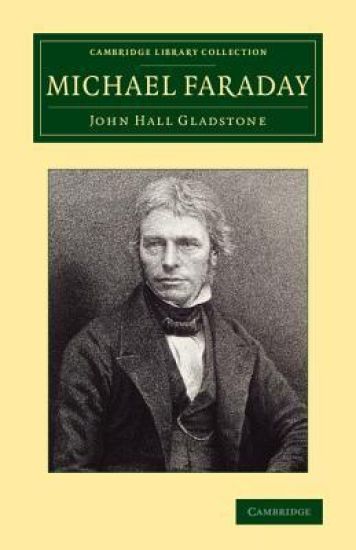
Encouraged to share his memories of Michael Faraday (1791–1867), John Hall Gladstone (1827–1902) published in 1872 this short work about his late friend's life and career. Faraday's successor as Fullerian Professor of Chemistry at the Royal Institution, Gladstone discusses how Faraday approached science, and the value of his discoveries. Offering informed insights into Faraday's character, Gladstone includes a number of extracts from personal letters. The work also includes a translation of part of the eulogy given by Jean-Baptiste Dumas at the Académie des Sciences, as well as an anonymous poem honouring Faraday and published in Punch shortly after his death. An appendix lists the numerous learned societies to which Faraday belonged. Also reissued in this series are The Life and Letters of Faraday (1870), compiled by Henry Bence Jones, and John Tyndall's Faraday as a Discoverer (1868).
Explore effective learning programs with the father of e-learning Michael Allen's Guide to e-Learning: Building Interactive, Fun, and Effective Learning Programs for Any Company, Second Edition presents best practices for building interactive, fun, and effective online learning programs. This engaging text offers insight regarding what makes great e-learning, particularly from the perspectives of motivation and interactivity, and features history lessons that assist you in avoiding common pitfalls and guide you in the direction of e-learning success. This updated edition also considers changes in technology and tools that facilitate the implementation of the strategies, guidelines, and techniques it presents. E-learning has experienced a surge in popularity over the past ten years, with education professionals around the world leveraging technology to facilitate instruction. From hybrid courses that integrate technology into traditional classroom instruction to full online courses that are conducted solely on the internet, a range of e-learning models is available. The key to creating a successful e-learning program lies in understanding how to use the tools at your disposal to create an interactive, engaging, and effective learning experience. Gain a new perspective on e-learning, and how technology can facilitate educationExplore updated content, including coverage regarding learner interface, gamification, mobile learning, and individualizationDiscuss the experiences of others via targeted case studies, which cover good and not so good e-learning projectsUnderstand key concepts through new examples that reinforce essential ideas and demonstrate their practical application Michael Allen's Guide to e-Learning: Building Interactive, Fun, and Effective Learning Programs for Any Company, Second Edition is an essential resource if you are studying for the e-Learning Instructional Design Certificate Program.