Kirjojen hintavertailu. Mukana 12 016 292 kirjaa ja 12 kauppaa.

Kirjahaku

Etsi kirjoja tekijän nimen, kirjan nimen tai ISBN:n perusteella.

1000 tulosta hakusanalla Muhammad Anwar-Ul-Haq

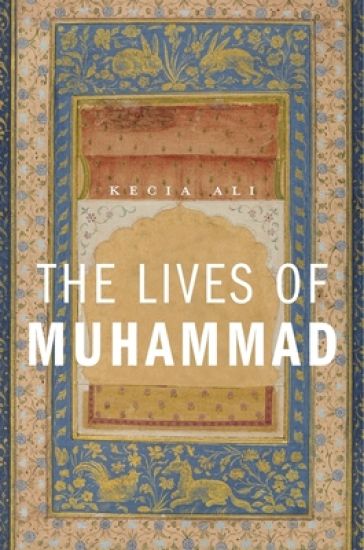
The Lives of Muhammad

The Lives of Muhammad

Kecia Ali

Harvard University Press
2016
nidottu
Recent outbursts sparked by a viral video and controversial cartoons powerfully illustrate the passions and sensitivities that continue to surround the depiction of the seventh-century founder of Islam. The Lives of Muhammad delves into the many ways the Prophet’s life story has been told from the earliest days of Islam to the present, by both Muslims and non-Muslims. Emphasizing the major transformations since the nineteenth century, Kecia Ali shows that far from being mutually opposed, these various perspectives have become increasingly interdependent.Since the nineteenth century, two separate streams of writing, one hagiographic and the other polemical, have merged into a single, contentious story about the life of Muhammad. Protestant missionaries, European Orientalists, Indian and Egyptian modernists, and American voices across the spectrum, including preachers, scholars, Islamophobes, journalists, academics, and new-age gurus, debated Muhammad’s character and the facts of his life. In the process, texts written symbolically came to be read literally. Muhammad’s accomplishments as a religious and political leader, his military encounters with Meccans and Medinan Jews, and—a subject of perennial interest—his relationships with women, including his young wife Aisha, are among the key subjects writers engaged, repurposing early materials for new circumstances.Many of the ideas about Muhammad that Muslims embrace today—Muhammad the social reformer, Muhammad the consummate leader, Muhammad the ideal husband—arose in tandem and in tension with Western depictions. These were in turn shaped by new ideas about religion, sexuality, and human accomplishments.
Medieval Latin Lives of Muhammad

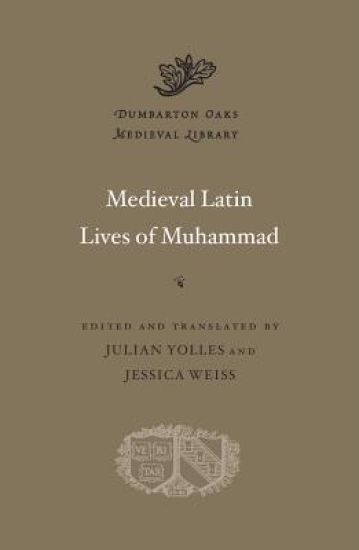
Medieval Latin Lives of Muhammad

Julian Yolles

Harvard University Press
2018
sidottu
Throughout the Middle Ages, Christians wrote about Islam and the life of Muhammad. These stories, ranging from the humorous to the vitriolic, both informed and warned audiences about what was regarded as a schismatic form of Christianity. Medieval Latin Lives of Muhammad covers nearly five centuries of Christian writings on the prophet, including accounts from the farthest-flung reaches of medieval Europe, the Iberian Peninsula, and the Byzantine Empire. Over time, authors portrayed Muhammad in many guises, among them: Theophanes’s influential ninth-century chronicle describing the prophet as the heretical leader of a Jewish conspiracy; Embrico of Mainz’s eleventh-century depiction of Muhammad as a former slave who is manipulated by a magician into performing unholy deeds; and Walter of Compiègne’s twelfth-century presentation of the founder of Islam as a likable but tricky serf ambitiously seeking upward social mobility.The prose, verse, and epistolary texts in Medieval Latin Lives of Muhammad help trace the persistence of old clichés as well as the evolution of new attitudes toward Islam and its prophet in Western culture. This volume brings together a highly varied and fascinating set of Latin narratives and polemics never before translated into English.
Before and After Muhammad

Before and After Muhammad

Garth Fowden

Princeton University Press
2013
sidottu
Islam emerged amid flourishing Christian and Jewish cultures, yet students of Antiquity and the Middle Ages mostly ignore it. Despite intensive study of late Antiquity over the last fifty years, even generous definitions of this period have reached only the eighth century, whereas Islam did not mature sufficiently to compare with Christianity or rabbinic Judaism until the tenth century. Before and After Muhammad suggests a new way of thinking about the historical relationship between the scriptural monotheisms, integrating Islam into European and West Asian history. Garth Fowden identifies the whole of the First Millennium--from Augustus and Christ to the formation of a recognizably Islamic worldview by the time of the philosopher Avicenna--as the proper chronological unit of analysis for understanding the emergence and maturation of the three monotheistic faiths across Eurasia. Fowden proposes not just a chronological expansion of late Antiquity but also an eastward shift in the geographical frame to embrace Iran. In Before and After Muhammad, Fowden looks at Judaism, Christianity, and Islam alongside other important developments in Greek philosophy and Roman law, to reveal how the First Millennium was bound together by diverse exegetical traditions that nurtured communities and often stimulated each other.
Faces of Muhammad

Faces of Muhammad

John Tolan

PRINCETON UNIVERSITY PRESS
2019
sidottu
Heretic and impostor or reformer and statesman? The contradictory Western visions of MuhammadIn European culture, Muhammad has been vilified as a heretic, an impostor, and a pagan idol. But these aren’t the only images of the Prophet of Islam that emerge from Western history. Commentators have also portrayed Muhammad as a visionary reformer and an inspirational leader, statesman, and lawgiver. In Faces of Muhammad, John Tolan provides a comprehensive history of these changing, complex, and contradictory visions. Starting from the earliest calls to the faithful to join the Crusades against the “Saracens,” he traces the evolution of Western conceptions of Muhammad through the Reformation, the Enlightenment, and the nineteenth and twentieth centuries, and up to the present day.Faces of Muhammad reveals a lengthy tradition of positive portrayals of Muhammad that many will find surprising. To Reformation polemicists, the spread of Islam attested to the corruption of the established Church, and prompted them to depict Muhammad as a champion of reform. In revolutionary England, writers on both sides of the conflict drew parallels between Muhammad and Oliver Cromwell, asking whether the prophet was a rebel against legitimate authority or the bringer of a new and just order. Voltaire first saw Muhammad as an archetypal religious fanatic but later claimed him as an enemy of superstition. To Napoleon, he was simply a role model: a brilliant general, orator, and leader.The book shows that Muhammad wears so many faces in the West because he has always acted as a mirror for its writers, their portrayals revealing more about their own concerns than the historical realities of the founder of Islam.
Before and After Muhammad

Before and After Muhammad

Garth Fowden

Princeton University Press
2015
pokkari
Islam emerged amid flourishing Christian and Jewish cultures, yet students of Antiquity and the Middle Ages mostly ignore it. Despite intensive study of late Antiquity over the last fifty years, even generous definitions of this period have reached only the eighth century, whereas Islam did not mature sufficiently to compare with Christianity or rabbinic Judaism until the tenth century. Before and After Muhammad suggests a new way of thinking about the historical relationship between the scriptural monotheisms, integrating Islam into European and West Asian history. Garth Fowden identifies the whole of the First Millennium--from Augustus and Christ to the formation of a recognizably Islamic worldview by the time of the philosopher Avicenna--as the proper chronological unit of analysis for understanding the emergence and maturation of the three monotheistic faiths across Eurasia. Fowden proposes not just a chronological expansion of late Antiquity but also an eastward shift in the geographical frame to embrace Iran. In Before and After Muhammad, Fowden looks at Judaism, Christianity, and Islam alongside other important developments in Greek philosophy and Roman law, to reveal how the First Millennium was bound together by diverse exegetical traditions that nurtured communities and often stimulated each other.
Faces of Muhammad

Faces of Muhammad

John Tolan

PRINCETON UNIVERSITY PRESS
2025
pokkari
Heretic and impostor or reformer and statesman? The contradictory Western visions of MuhammadIn European culture, Muhammad has been vilified as a heretic, an impostor, and a pagan idol. But these aren’t the only images of the Prophet of Islam that emerge from Western history. Commentators have also portrayed Muhammad as a visionary reformer and an inspirational leader, statesman, and lawgiver. In Faces of Muhammad, John Tolan provides a comprehensive history of these changing, complex, and contradictory visions. Starting from the earliest calls to the faithful to join the Crusades against the “Saracens,” he traces the evolution of Western conceptions of Muhammad through the Reformation, the Enlightenment, and the nineteenth and twentieth centuries, and up to the present day.Faces of Muhammad reveals a lengthy tradition of positive portrayals of Muhammad that many will find surprising. To Reformation polemicists, the spread of Islam attested to the corruption of the established Church, and prompted them to depict Muhammad as a champion of reform. In revolutionary England, writers on both sides of the conflict drew parallels between Muhammad and Oliver Cromwell, asking whether the prophet was a rebel against legitimate authority or the bringer of a new and just order. Voltaire first saw Muhammad as an archetypal religious fanatic but later claimed him as an enemy of superstition. To Napoleon, he was simply a role model: a brilliant general, orator, and leader.The book shows that Muhammad wears so many faces in the West because he has always acted as a mirror for its writers, their portrayals revealing more about their own concerns than the historical realities of the founder of Islam.
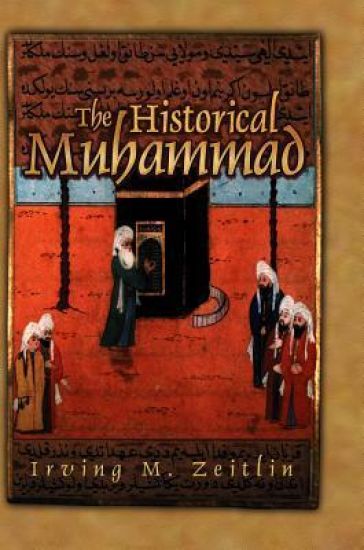
The Historical Muhammad

The Historical Muhammad

Irving M. Zeitlin

Polity Press
2007
sidottu
In his quest for the historical Muhammad, Zeitlin's chief aim is to catch glimpses of the birth of Islam and the role played by its extraordinary founder. Islam, as its Prophet came to conceive it, was a strict and absolute monotheism. How Muhammad had arrived at this view is not a problem for Muslims, who believe that the Prophet received a revelation from Allah or God, mediated by the Angel Gabriel. For scholars, however, interested in placing Muhammad in the historical context of the seventh-century Arabian Peninsula, the source of the Prophets inspiration is a significant question. It is apparent that the two earlier monotheisms, Judaism and Christianity, constituted an influential presence in the Hijaz, the region comprising Mecca and Medina. Indeed, Jewish communities were salient here, especially in Medina and other not-too-distant oases. Moreover, in addition to the presence of Jews and Christians, there existed a third category of individuals, the Hanifs, who, dissatisfied with their polytheistic beliefs, had developed monotheistic ideas. Zeitlin assesses the extent to which these various influences shaped the emergence of Islam and the development of the Prophets beliefs. He also seeks to understand how the process set in motion by Muhammad led, not long after his death, to the establishment of a world empire.
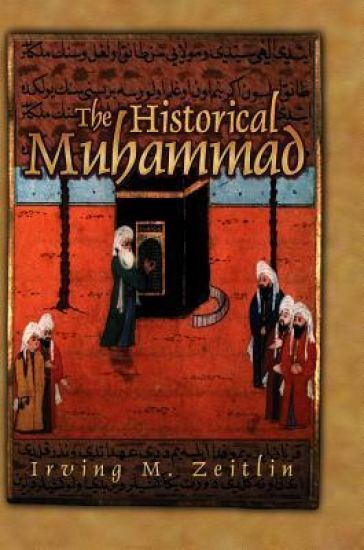
The Historical Muhammad

The Historical Muhammad

Irving M. Zeitlin

Polity Press
2007
nidottu
In his quest for the historical Muhammad, Zeitlin's chief aim is to catch glimpses of the birth of Islam and the role played by its extraordinary founder. Islam, as its Prophet came to conceive it, was a strict and absolute monotheism. How Muhammad had arrived at this view is not a problem for Muslims, who believe that the Prophet received a revelation from Allah or God, mediated by the Angel Gabriel. For scholars, however, interested in placing Muhammad in the historical context of the seventh-century Arabian Peninsula, the source of the Prophets inspiration is a significant question. It is apparent that the two earlier monotheisms, Judaism and Christianity, constituted an influential presence in the Hijaz, the region comprising Mecca and Medina. Indeed, Jewish communities were salient here, especially in Medina and other not-too-distant oases. Moreover, in addition to the presence of Jews and Christians, there existed a third category of individuals, the Hanifs, who, dissatisfied with their polytheistic beliefs, had developed monotheistic ideas. Zeitlin assesses the extent to which these various influences shaped the emergence of Islam and the development of the Prophets beliefs. He also seeks to understand how the process set in motion by Muhammad led, not long after his death, to the establishment of a world empire.
The Leadership of Muhammad

The Leadership of Muhammad

John Adair

Kogan Page Ltd
2010
sidottu
The Leadership of Muhammad is a very personal study of the life-story and leadership skills of the Prophet. John Adair served with a Bedouin regiment in the Arab Legion and this story is full of fascinating detail of desert life and Bedouin beliefs. A business book that crosses boundaries it highlights the key leadership skills displayed by Muhammad and allows you to share in his wisdom. John Adair weaves the story of Muhammad's life together with aspects of Bedouin culture and ancient proverbs to provide key points for leaders and aspiring leaders. He discusses tribal leadership and essential attributes such as integrity, moral authority and humility. Learning and leadership go hand in hand. You are not born a leader, but you can become one and it is never too late to learn. John Adair's study or Muhammad and the tribal tradition of leadership is an essential addtion to the leadership debate.
An Introduction to Elijah Muhammad Studies

An Introduction to Elijah Muhammad Studies

Abul Pitre

University Press of America
2009
nidottu
In this ground-breaking work, An Introduction to the Elijah Muhammad Series: The New Educational Paradigm, a new field of study is being introduced. The book attempts to lay a foundation for situating the teachings of Elijah Muhammad in academia, creating a field of study that particularly extrapolates the jewels of Muhammad's teachings. In a rare opportunity, scholars and lay persons are given a sneak preview of the teachings of Elijah Muhammad and its multifaceted, interdisciplinary scope. This book has the potential to change the philosophical and practical methods of education.
An Introduction to Elijah Muhammad Studies

An Introduction to Elijah Muhammad Studies

Abul Pitre

University Press of America
2010
sidottu
In this ground-breaking work, An Introduction to the Elijah Muhammad Series: The New Educational Paradigm, a new field of study is being introduced. The book attempts to lay a foundation for situating the teachings of Elijah Muhammad in academia, creating a field of study that particularly extrapolates the jewels of Muhammad's teachings. In a rare opportunity, scholars and lay persons are given a sneak preview of the teachings of Elijah Muhammad and its multifaceted, interdisciplinary scope. This book has the potential to change the philosophical and practical methods of education.
An Introduction to Elijah Muhammad Studies

An Introduction to Elijah Muhammad Studies

Abul Pitre

UNIVERSITY PRESS OF AMERICA
2021
sidottu
First published in 2009, this ground-breaking work introduced a new field in Africana studies and laid the groundwork for positioning the teachings of Elijah Muhammad in academia. Today, this work remains a rare opportunity for scholars and lay persons to a preview the teachings of Elijah Muhammad and its multifaceted, interdisciplinary scope. This book has the potential to change the philosophical and practical methods of education. In this revised edition, new terminology for Elijah Muhammad Studies coined Elijahmatology. It additionally includes updated references and expanded discussion about the impact of Elijah Muhammad’s teachings in the 21st century. The book lays a foundation for situating the teachings of Elijah Muhammad in academia, identifying Africana Studies as the discipline from which it could develop into a field of study.
An Introduction to Elijah Muhammad Studies

An Introduction to Elijah Muhammad Studies

Abul Pitre

UNIVERSITY PRESS OF AMERICA
2024
nidottu
First published in 2009, this ground-breaking work introduced a new field in Africana studies and laid the groundwork for positioning the teachings of Elijah Muhammad in academia. Today, this work remains a rare opportunity for scholars and lay persons to a preview the teachings of Elijah Muhammad and its multifaceted, interdisciplinary scope. This book has the potential to change the philosophical and practical methods of education. In this revised edition, new terminology for Elijah Muhammad Studies is coined Elijahmatology. It additionally includes updated references and expanded discussion about the impact of Elijah Muhammad’s teachings in the 21st century. The book lays a foundation for situating the teachings of Elijah Muhammad in academia, identifying Africana Studies as the discipline from which it could develop into a field of study.
Paul Meets Muhammad – A Christian–Muslim Debate on the Resurrection

Paul Meets Muhammad – A Christian–Muslim Debate on the Resurrection

Michael R. Licona; Lee Strobel

Baker Books, a division of Baker Publishing Group
2006
nidottu
Imagine if the Apostle Paul were alive to defend the truth of Jesus's resurrection-only to be countered by none other than the prophet Muhammad himself.In an approach as creative as any scholar has taken, Michael R. Licona describes an invention that can make historical figures appear alive and present. Imagining an audience of both Christians and Muslims, Licona crafts a lively debate between Paul and Muhammad, each speaking on and analyzing the validity of the Qur'an, the gospel accounts, and both Christian and Muslim doctrine.Intriguing and entertaining, Paul Meets Muhammad uniquely offers evangelism advice for Christians who want to speak the gospel to Muslim friends and neighbors. This fictional scenario presents a powerful, comprehensive defense of Jesus's resurrection and of Christianity itself.
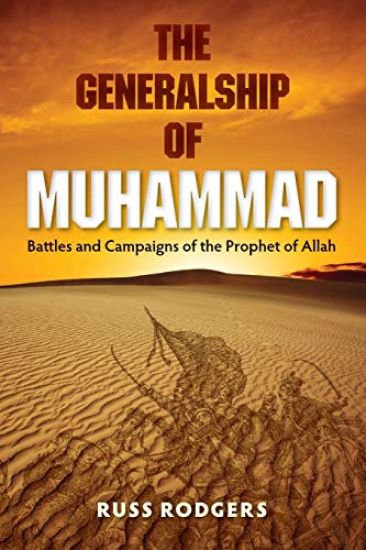
The Generalship of Muhammad

The Generalship of Muhammad

Russ Rodgers

University Press of Florida
2017
nidottu
There are many biographies of the Prophet, and they tend to fall into three categories: pious works that emphasize the virtues of the early Islamic community, general works for non-Muslim or non-specialist readers, and source-critical works that grapple with historiographical problems inherent in early Islamic history. In The Generalship of Muhammad, Russ Rodgers charts a new path by merging original sources with the latest in military theory to examine Muhammad's military strengths and weaknesses. Incorporating military, political, and economic analyses, Rodgers focuses on Muhammad’s use of insurgency warfare in seventh-century Arabia to gain control of key cities such as Medina. Seeking to understand the operational aspects of these world-changing battles, he provides battlefield maps and explores the supply and logistic problems that would have plagued any military leader at the time.Rodgers explains how Muhammad organized his forces and gradually built his movement against sporadic resistance from his foes. He draws from the hadith literature to shed new light on the nature of the campaigns. He examines the Prophet's intelligence network and the employment of what would today be called special operations forces. And he considers the possibility that Muhammad received outside support to build and maintain his movement as a means to interdict trade routes between the Byzantine Empire and the Sasanid Persians.
The Life of Muhammad

The Life of Muhammad

Ashgate Publishing Limited
1998
sidottu
This is a set of key articles which deal with various aspects of the life of Muhammad: the Muslim authors of Muhammad’s biography, the major events in his life, the development of the idealised image of Muhammad, and the image of Muhammad in the eyes of early medieval non-Muslim writers. The articles are preceded by an introduction reviewing major trends in the scholarly research.
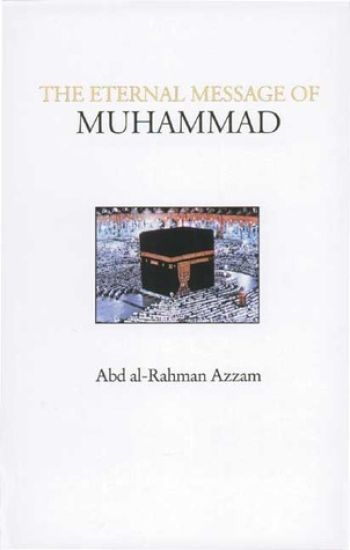
The Eternal Message of Muhammad

The Eternal Message of Muhammad

Abd al-Rahman Azzam

The Islamic Texts Society
1993
nidottu
This translation into English of a great Islamic classic offers the western world a simple yet profound interpretation of Islam. Drawing upon years of unparalleled experience in diplomacy and government, Azzam examines the social and economic ramifications of the Muslim state, one based on humane ideals of law and justice expressed in the Qur'an, and one which can provide the foundation for a just society. Abd al-Rahman Azzam (1893-1976) is generally considered as the father of the Arab League. He served as the League's first Secretary-General between 1945-52 as well as distinguishing himself in a long career as an ambassador and parliamentarian. As Vincent Sheean points out in his introduction, 'In Damascus as well as in Djakarta, Istanbul and Baghdad, this man is known for valour of spirit and elevation of mind...He combines in the best Islamic mode, the aspects of thought and action, like the Muslim warriors of another time who are typified for us Westerners by the figure of Saladin.' Malcolm X's reading of 'The Eternal Message of Muhammad' and his meeting with Azzam Pasha are vividly recounted in his 'Autobiography'.It is clear that these events marked the point in his life at which Malcolm X turned towards orthodox traditional Islam.
The People vs Muhammad - Psychological Analysis
"Read with great interest and was very impressed by the level of research committed to the project." - Katie Hopkins Productions, Radio DJ for LBC UK"J.K Sheindlin has done something incredible " - WND Online NewsIn 'The People vs Muhammad', #1 international bestselling author JK Sheindlin psychologically analyses the founding father of Islam, while putting him on trial for crimes against humanity.Is Islam a "religion of peace"? Was Muhammad the true and final prophet of God? Is the Quran the fulfilment of the Bible, and legitimately continuing the traditions of the Judeo-Christian scriptures? Perhaps one of the most audacious, shocking, unthinkable and highly controversial ideas to ever be conceived, The People vs Muhammad places the founding father of Islam on trial for crimes against humanity, and to challenge his self-proclaimed authority. With the growing threat of home-grown Muslim jihadist terrorist attacks and the ominous cataclysm of a global holy war, there's no doubt Islam has become a burdensome issue which has our own western governments perplexed.This book series intends to investigate the true ideology of Islam, to ascertain with reason and logic the legitimacy of Muhammad's claim and core teachings of his cult. Throughout this series, author J.K Sheindlin carefully analyses the Quran and the Islamic texts legalistically to expose the shocking truth pertaining to Muhammad's advocation for: Pedophilia, honor killings, sex slavery, prostitution, racism, extortion, murder, psychological indoctrination, intellectual terrorism, censorship, grand larceny, racketeering, domestic violence, gender inequality, and much more In this powerful series, the first installment Psychological analysis delves deep into Muhammad's past and uncovers disturbing facts which undoubtedly prove to be the origins of his multiple psychopathological disorders. Using entirely the Islamic sources in reference to contemporary psychiatric-medical archives, J.K Sheindlin details Muhammad's extensive catalogue of mental illnesses which include: Psychopathy, Gynophobia, Napoleon Complex, Schizophrenia, Narcissistic Personality Disorder, Messiah-God Complex, Obsessive Compulsive Disorder, Athazagorophobia, Oedipus Complex, Sex-addiction, Pedophilia, and Necrophilia. Furthermore, the author also hypothesizes a convincing argument based on medical science, which debunks Muhammad's first revelation. These external factors being: Volcanic gas inhalation, sensory deprivation, starvation, dehydration, brain damage and Syphilis. Written to provoke a rational response from both Muslim and western readers, the verdict is ultimately decided by the public to determine if Muhammad's claim to prophethood is legitimate.