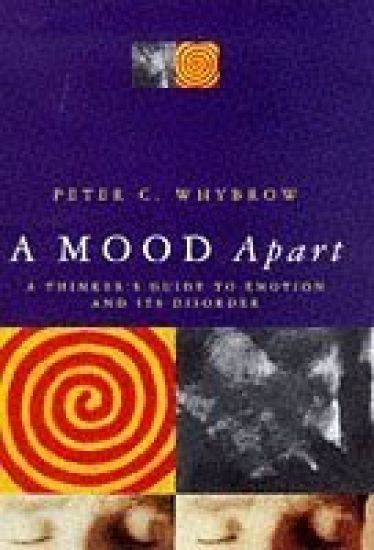
A compassionate exploration of depression and manic-depression. -- ForecastThe most thorough and wide-ranging discussion for lay readers about the interplay of the physical and emotional elements of depression and manic-depression... His presentation is illuminating, and the case histories demonstrate his sensitivity and skill as a clinician.... Whybrow's presentation offers a deeper understanding of, along with a humane and wise approach to these very troubling illnesses. -- Kirkus Reviews
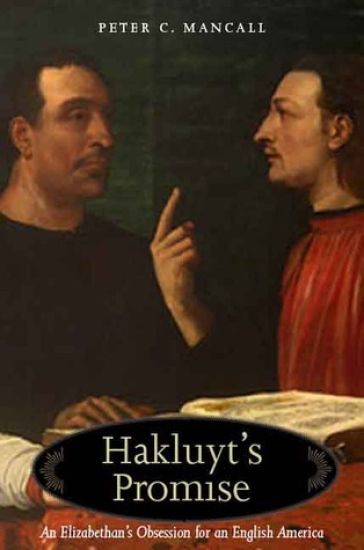
Richard Hakluyt the younger, a contemporary of William Shakespeare, advocated the creation of English colonies in the New World at a time when the advantages of this idea were far from self-evident. This book describes in detail the life and times of Hakluyt, a trained minister who became an editor of travel accounts. "Hakluyt's Promise" demonstrates his prominent role in the establishment of English America as well as his interests in English opportunities in the East Indies. The volume presents nearly 50 illustrations - many unpublished since the sixteenth century - and offers a fresh view of Hakluyt's milieu and the central concerns of the Elizabethan age. Though he never travelled farther than Paris, young Hakluyt spent much of the 1580s recording information about the western hemisphere and became an international authority on overseas exploration. The book traces his rise to prominence as a source of information and inspiration for England's policy makers, including the queen, and his advocacy for colonies in Roanoke and Jamestown. Hakluyt's thought was shaped by debates that stretched across Europe, and his interests ranged just as widely, encompassing such topics as peaceful coexistence with Native Americans, the New World as a Protestant Holy Land, and in, his later life, trade with the Spice Islands.
Originally published in 1997, a guide to mood and emotion disorders, written by the Director of the Neuropsychiatric Institute at UCLA. It discusses topics such as mental illness, depression and mania, using real life case studies to demonstrate.
This title includes a book and CD-ROM. It may be the most collected muscle car in history. The Ford Mustang captured the hearts and minds of the American public in 1964 with its stunning introduction. Originally designed to be an economy car of sorts, targeted to young females, the Ford Mustang quickly became the muscle car of choice for many teens and young men. As one of the industry's longest-lasting models, many people collect the Ford Mustang. With the car changing over the years, but often remaining true to its heritage, owners all have their favourite era of Mustangs.For the Mustang owner, or for someone considering the purchase and restoration of this classic muscle car, Peter and Nilda Sessler have put together a definitive guide on the subject. From the first Mustang in 1964, which some consider a 1964-1/2 model year, others a 1965 model, to the latest 2006 model, this book provides a buyer's guide for each and every year. Chapters on restoration are also included, covering engine, drivetrain, bodywork, interior, and detailing. The topics addressed include: Buyers Guide; Restoration Guide; Parts Sources Performance Engines; Special Cars.It includes a full-colour CD-ROM with hundreds of photographs from the author's personal collection of Ford Mustang photographs.
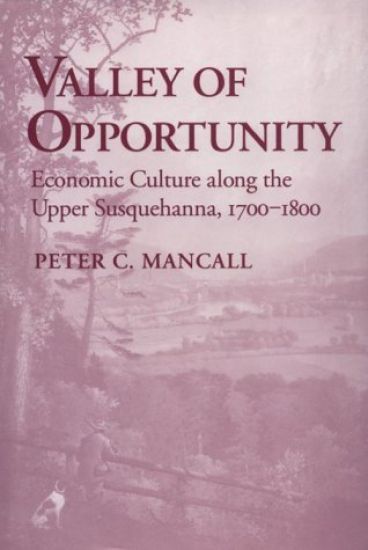
Valley of Opportunity recreates an age when Indians, colonists, and post-Revolutionary settlers embraced a similar dream: to create a successful economy in the rural hinterland of the middle colonies. Peter C. Mancall draws on abundant evidence from seldom-used archives in the region, as well as from libraries on both sides of the Atlantic, to reconstruct their daily economic life. The author describes the varied economic transformations that took place in the area, considering these changes from an environmental as well as an economic standpoint. He shows how different groups of people perceived the resources of the region and how their perceptions shaped settlement patterns, land use, and the formation of commercial networks. Ultimately, each of the three peoples looked beyond the mountains that set the boundaries of their physical world and tried to establish ties to the larger commercial network that linked North America to Europe.Mancall offers connections between the development of a particular region, previously overlooked by most historians, and the wide pattern of American economic change. He breaks through old ethnocentric barriers of settlement history by portraying Indian people in their full diversity and by including Indians and whites as actors of comparable significance, and he shows how attitudes that developed in the colonial period affected economic patterns well beyond the Revolution. Integrating a range of disciplines, from anthropology through ecology and geography to zoology, he seeks to answer the questions: what did different groups of people make of the natural resources of this river valley and how did they allocate the rewards? His answers provide a novel overview of the economic culture of the eighteenth century.Studded with sharp insights and attention-catching quotations that mirror everyday life of the times, Valley of Opportunity will appeal to those interested in the development of the American economy, the impact of the Revolution on urban Americans, and the relations between the peoples who together created a vibrant world along the edges of European settlement in North America.
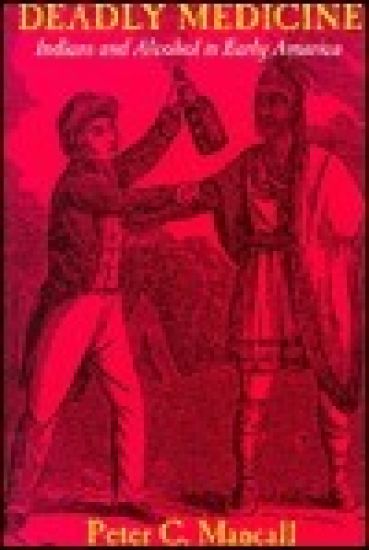
Alcohol abuse has killed and impoverished American Indians since the seventeenth century, when European settlers began trading rum for furs. In the first book to probe the origins of this ongoing social crisis, Peter C. Mancall explores the liquor trade's devastating impact on the Indian communities of colonial America.Mancall recounts how English settlers quickly found a market for alcohol among the Indians, and traffic in rum became a prominent source of revenue for the British Empire. In spite of the colonists' growing awareness that some Indians abused alcohol and that drinking threatened the stability of countless Indian villages already decimated by European diseases, they expanded the liquor trade into virtually every Indian community from the Atlantic to the Mississippi. In response, Indians created one of the most important temperance movements in American history, a movement that was nevertheless unable to halt the lucrative commerce.The author follows the trail of rum from the West Indian producers to the colonial distributors and on to the Indian consumers in the eastern woodlands. To discover why Indians participated in the trade and why they experienced such a powerful desire for alcohol, he addresses current medical views on alcoholism and reexamines the colonial era as a time when Indians were forming new strategies for survival in a world that had been radically changed. Finally, Mancall compares Indian drinking in New France and New Spain with that in the British colonies.Forever shattering the stereotype of the drunken Indian, Mancall offers a powerful indictment of English participation in the liquor trade and a new awareness or the trade's tragic cost for the American Indians.
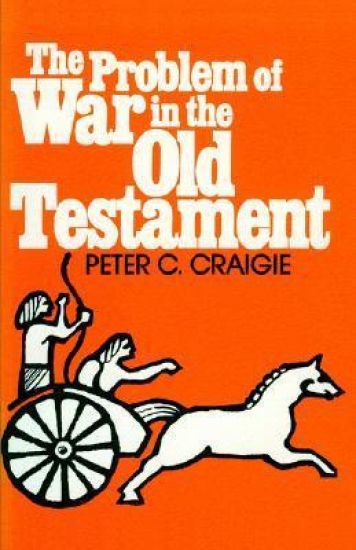
The predominance of war in the Old Testament troubles many Christians. However it is an issue that must be faced, says Peter C. Craigie, because it has serious ramifications for contemporary Christian attitudes about war. Professor Craigie categorizes the problems into two kinds - personal and external. The personal problems arise from the Christian's attempt to grapple with the emphasis on war in a book fundamental to faith. Three areas are considered here: the representation of God as warrior; God's revelation of himself in a book which preserves an extensive amount of war literature; and the seemingly conflicting ethics taught in the Old Testament and the New Testament. The external problems are critiques against the Bible and the Christian faith, based on the war-like nature of the Old Testament and the close association between Christianity and war throughout history. Only by examining and understanding the problem of war in the Old Testament will Christians be able to respond intelligently to attacks on their faith, to educate their youth in the nature of war, and to influence modern attitudes toward war. Peter C.Craigie was Academic Vice-President of the University of Calgary, professor of religious studies, and authored The Book of Deuteronomy in the New International Commentary on the Old Testament series (Eerdmans). "Dr. Craigie is acutely aware of the ethical problems posed by his subject, and his study should be helpful to others who are equally aware of these problems. I am glad to commend this book." - F. F. Bruce University of Manchester "Professor Craigie approaches a difficult subject in an irenic, open manner, conveying both his grasp of the subject matter and his deep concern as a theologian and churchman for helping lay people think about a troubling problem in a fresh way...Any person or group seeking to wrestle with the problem of war in the Old Testament will find Craigie's thoughtful study one of the most helpful resources available." - Patrick D. Miller, Jr. Princeton Theological Seminary
Globalization, privatization, and liberalization of energy markets are dramatically changing the nature of services to the energy sector. But the providers of the services underpinning the production, transport, and distribution of energy are likewise changing the nature of services to the energy sector. Firms are increasingly supplying energy services through crossborder trade, the establishment of a local presence in foreign countries, and the temporary entry of skilled personnel and equipment. Global trade negotiations have not encompassed all ramifications of this sector, which is vital to the world economy. Peter C. Evans examines current efforts to deepen trade commitments regarding energy services. The author reviews benefits of and barriers to liberalization of the energy market, analyzes the deficiencies of the current trade regime and the implications of extending GATS rules to the energy sector, considers the most meaningful additional commitments in the energy trade sector, explores issues yet to be negotiated, and forecasts prospects for a comprehensive GATS agreement on energy services.
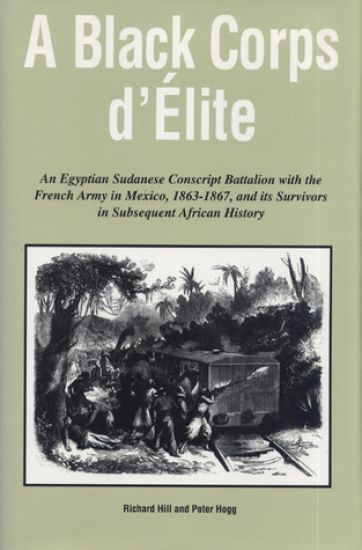
For several years, the armies of Napoleon III deployed some 450 Muslim Sudanese slave soldiers in Veracruz, the port of Mexico City. As in the other case of Western hemisphere military slavery (the West India Regiments, a British unit in existence 1795-1815), the Sudanese were imported from Africa in the hopes that they would better survive the tropical diseases that so terribly afflicted European soldiers. In both cases, the Africans did indeed fulfill these expectations. The mixture of cultures embodied by this event has piqued the interest of several historians, so it is by no means unknown. Hill and Hogg provide a particularly thorough account of this exotic interlude, explaining its background, looking in detail at the battle record in Mexico, and figuring out who exactly made up the battalion. Much in their account is odd and interesting, for example, the Sudanese superiority to Austrian troops and their festive nine-day spree in Paris on the emperor's tab. The authors also assess the episode's longer-term impact on the Sudan, showing that the veterans of Mexico, having learnt much from their extended exposure to French military practices, rose quickly in the ranks, then taught these methods to others.
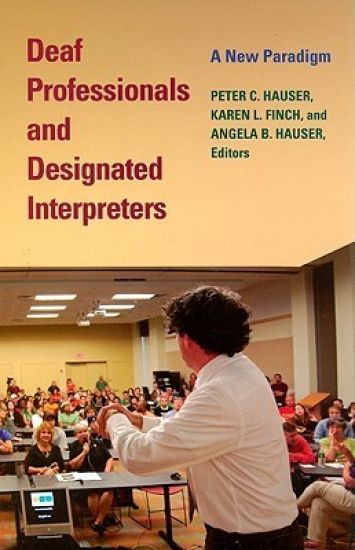
"Deaf Professionals and Designated Interpreters: A New Paradigm" defines a new model that depends upon strong partnerships between the growing number of deaf experts and their interpreters. Editors Peter C. Hauser, Karen L. Finch, and Angela B. Hauser have called upon more than a score of widely respected researchers to discuss the new dynamics of interpreting for deaf professionals. Divided into two parts, this volume first delineates Designated Interpreting, in which interpreters team with deaf professionals to advance a shared point of view. Chapters in this section include the linguistics of the partnership (Look-Pause-Nod); the varying attitudes and behavior of deaf professionals and their interpreters; interaction in the work-related social setting to ensure equal participation; interpreting as affected by conversational style and gender factors; academic and educational interpreting for deaf academics; and adjusting company policies with professional interpreter guidelines. Part II, Deaf Professional and Designated Interpreter Partnerships, offers relevant examples of interpreting for deaf professionals in real estate, contemporary art, medicine, business administration, education, mental health, film-making, and information technology. These anecdotal chapters demonstrate the critical complexity of the relationships between professionals and interpreters, a revolutionary transformation that will be appreciated by interpreter preparation programs, instructors, interpreters, and their clients alike."
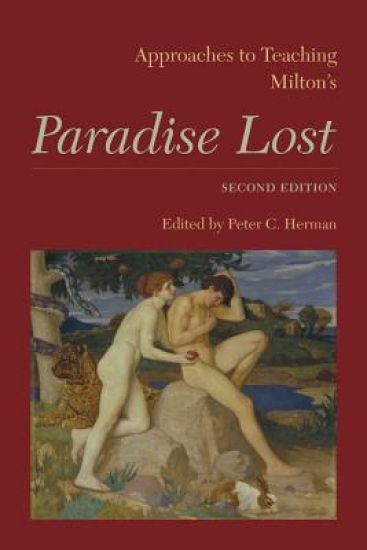
This second edition of Approaches to Teaching Milton’s Paradise Lost addresses Milton in the light of the digital age, new critical approaches to his poem, and his continued presence in contemporary culture. It aims to help instructors enliven the teaching of Paradise Lost and address the challenges presented to students by the poem—the early modern syntax and vocabulary, the political and theological contexts, and the abounding classical references. The first part of the volume, “Materials,” evaluates the many available editions of the poem, points to relevant reference works, recommends additional reading, and outlines useful audiovisual and online aids for teaching Milton’s epic poem. The essays in the second part, “Approaches,” are grouped by several themes: literary and historical contexts, characters, poetics, critical approaches, classrooms, and performance. The essays cover epic conventions and literary and biblical allusions, new approaches such as ecocriticism and masculinity studies, and reading Milton on the Web, among other topics.
The "Virgin Most Powerful: 3 Powerful Marian devotions that will change your life" is a Marian devotional book as well an inspirational book. It will influence and change your life. The book is not an entire treatise on all Marian titles and devotions. It is centered on 3 powerful Marian devotions that have helped many receive miraculous helps, and others had their difficult situations turned around.The "Virgin Most Powerful: 3 Powerful Marian devotions that will change your life" is also an intercessory book, full of divine wisdom and Marian teachings, that would help you understand the paths that the Mother of Jesus had played, and is still playing, in our salvation and redemption. Get this book of divine and miraculous ends and your life will never remain the same.
This novel book bridges the gap between the energetic and species approaches to studying food webs, addressing many important topics in ecology. Species, matter, and energy are common features of all ecological systems. Through the lens of complex adaptive systems thinking, the authors explore how the inextricable relationship between species, matter, and energy can explain how systems are structured and how they persist in real and model systems. Food webs are viewed as open and dynamic systems. The central theme of the book is that the basis of ecosystem persistence and stability rests on the interplay between the rates of input of energy into the system from living and dead sources, and the patterns in utilization of energy that result from the trophic interactions among species within the system. To develop this theme, the authors integrate the latest work on community dynamics, ecosystem energetics, and stability. In so doing, they present a unified ecology that dispels the categorization of the field into the separate subdisciplines of population, community, and ecosystem ecology. stability. Energetic Food Webs is suitable for both graduate level students and professional researchers in the general field of ecology. It will be of particular relevance and use to those working in the specific areas of food webs, species dynamics, material and energy cycling, as well as community and ecosystem ecology.
This novel book bridges the gap between the energetic and species approaches to studying food webs, addressing many important topics in ecology. Species, matter, and energy are common features of all ecological systems. Through the lens of complex adaptive systems thinking, the authors explore how the inextricable relationship between species, matter, and energy can explain how systems are structured and how they persist in real and model systems. Food webs are viewed as open and dynamic systems. The central theme of the book is that the basis of ecosystem persistence and stability rests on the interplay between the rates of input of energy into the system from living and dead sources, and the patterns in utilization of energy that result from the trophic interactions among species within the system. To develop this theme, the authors integrate the latest work on community dynamics, ecosystem energetics, and stability. In so doing, they present a unified ecology that dispels the categorization of the field into the separate subdisciplines of population, community, and ecosystem ecology. Energetic Food Webs is suitable for both graduate level students and professional researchers in the general field of ecology. It will be of particular relevance and use to those working in the specific areas of food webs, species dynamics, material and energy cycling, as well as community and ecosystem ecology.
**Selected for Doody’s Core Titles® 2024 in Plastic and Reconstructive Surgery** Comprehensive and fully up to date, the six-volume Plastic Surgery remains the gold standard text in this complex area of surgery. Completely revised to meet the demands of both the trainee and experienced surgeon, Principles, Volume 1 of Plastic Surgery, 5th Edition, features new, full-color clinical photos, procedural videos, lectures, and authoritative coverage of hot topics in the field. Editor-narrated video presentations offer a step-by-step audio-visual walkthrough of techniques and procedures. New chapters cover value-based healthcare, health services research in plastic surgery, education and teaching in plastic surgery, and gender-affirming surgery; coverage throughout includes new, pioneering translational work shaping the future of plastic surgery New digital video preface by Dr. Peter C. Neligan addresses the changes across all six volumes New treatment and decision-making algorithms added to chapters where applicable New video lectures and editor-narrated slide presentations offer a step-by-step audiovisual walkthrough of techniques and procedures Evidence-based advice from an expanded roster of international experts allows you to apply the very latest advances in plastic surgery and ensure optimal outcomes Purchase this volume individually or own the entire set, with the ability to search across all six volumes online! An eBook version is included with purchase. The eBook allows you to access all of the text, figures and references, with the ability to search, customize your content, make notes and highlights, and have content read aloud
A history of Norfolk. It tells the story of America's biggest maritime port from the first contact between a Spanish sailor and a Chiskiack man in 1561 to the city's late-20th-century concerns, including pollution, urban development, racial tensions and traffic in illegal guns.
This nuts and bolts book addresses specific waste minimization and pollution prevention techniques that work in specific types of laboratories for specific wastestreams. Concepts in the book may be directly applied to laboratory operations. In addition, the book illustrates other approaches to laboratory pollution prevention, such as reducing wastewater discharges and fume hood emissions. A wide range of waste types, including hazardous, infectious, medical, PCB, and radioactive, are discussed. This book helps you to develop a broad, institutional framework to plan and set priorities for pollution prevention. It responds to your laboratory's critical need to have readily available techniques and concepts for waste minimization and pollution prevention.