Kirjojen hintavertailu. Mukana 12 016 292 kirjaa ja 12 kauppaa.

Kirjahaku

Etsi kirjoja tekijän nimen, kirjan nimen tai ISBN:n perusteella.

1000 tulosta hakusanalla Phil Rowe

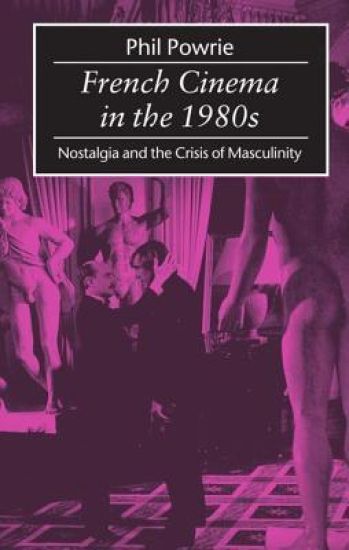
French Cinema in the 1980s

French Cinema in the 1980s

Phil Powrie

Clarendon Press
1997
nidottu
French Cinema in the 1980s is a set of critical essays on films which help to focus on a particular theme whose roots are in the 1970s, and which extends beyond the 1980s into the 1990s: the crisis of masculinity in contemporary French culture, and its interrelationship with nostalgia. After an introduction which gives a brief overview both of the crisis in the French film industry during the 1980s, and of the socio-political crisis of masculinity in the wake of 1970s feminism, there are three sections: the retro-nostalgic film, which emerged during the 1980s, and two more popular genres, the polar, or police thriller, and the comic film. Each section begins with a brief preface which highlights the major issues for the genre during the 1980s. The films discussed have all been distributed outside France, and are in many cases commercially available. The nostalgia section covers Un amour de Swann, Un dimanche à la campagne, Jean de Florette/Manon des Sources, and Coup de foudre. The section on the police thriller begins with Truffaut's last film, Vivement dimanche!, and includes a chapter on three thrillers by a variety of directors (La Balance, Police, Détective). Its main focus, however, is on thrillers by the directors of the cinéma du look (Diva, Subway, Mauvais sang). The last section on the comic film looks at three films which were successful both in France and abroad: Trois hommes et un couffin (remade in Hollywood as Three Men and a Baby), La Vie est un long fleuve tranquille and, finally, Depardieu's gamble at cross-dressing, Tenue de soirée.
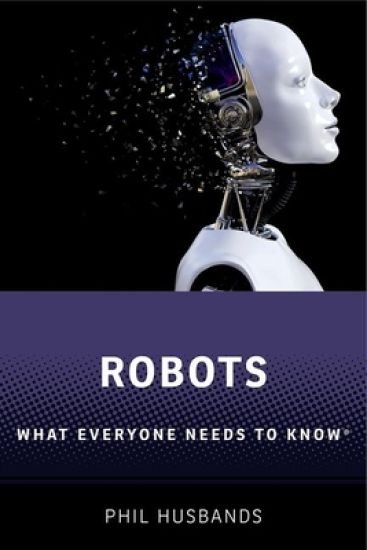
Robots

Robots

Phil Husbands

Oxford University Press
2021
sidottu
A concise, accessible introduction to robots, what they can do, what they can't, and what their increasing encroachment into our lives might mean for us. Since the turn of the millennium a quiet revolution has been underway. Millions of autonomous robots with some level of intelligence are now in domestic use, mainly as vacuum cleaners. Driverless cars - which are nothing less than autonomous robots - are starting to appear on our streets. There is a huge effort underway in industry and universities to develop the next generation of more intelligent, autonomous, mobile robots. Accompanying these arrivals has been a steady stream of inflammatory articles in the media raising concerns over the impending spectre of super-intelligent robots, along with stories about how most jobs will soon be lost to robots. Here, using the Question-and-Answer format, Phil Husbands gives a balanced and broad introduction to robotics and the current state of the field, analysing where it has come from, and where it might go in the future. He begins with the history of robotics and its complex relationship with popular culture, and then moves on to discuss the technology underlying robots in an engaging, non-technical way, exploring the limits of what robots can actually do now and what they might be able to do in the future. Naturally these machines, which often seem to display life-like properties, are attracting great attention. Do they pose a threat or an unprecedented opportunity? And although the 'singularity' may not be something to worry about, there are certainly ethical issues needing consideration as robots with some intelligence are used increasingly across many sectors. Husbands considers both these ethical problems and also the wider socio-political challenges that robots are already creating, and the larger ones they might bring in the future.
Robots

Robots

Phil Husbands

Oxford University Press
2021
nidottu
A concise, accessible introduction to robots, what they can do, what they can't, and what their increasing encroachment into our lives might mean for us Since the turn of the millennium a quiet revolution has been underway. Millions of autonomous robots with some level of intelligence are now in domestic use, mainly as vacuum cleaners. Driverless cars - which are nothing less than autonomous robots - are starting to appear on our streets. There is a huge effort underway in industry and universities to develop the next generation of more intelligent, autonomous, mobile robots. Accompanying these arrivals has been a steady stream of inflammatory articles in the media raising concerns over the impending spectre of super-intelligent robots, along with stories about how most jobs will soon be lost to robots. Here, using the Question-and-Answer format, Phil Husbands gives a balanced and broad introduction to robotics and the current state of the field, analysing where it has come from, and where it might go in the future. He begins with the history of robotics and its complex relationship with popular culture, and then moves on to discuss the technology underlying robots in an engaging, non-technical way, exploring the limits of what robots can actually do now and what they might be able to do in the future. Naturally these machines, which often seem to display life-like properties, are attracting great attention. Do they pose a threat or an unprecedented opportunity? And although the 'singularity' may not be something to worry about, there are certainly ethical issues needing consideration as robots with some intelligence are used increasingly across many sectors. Husbands considers both these ethical problems and also the wider socio-political challenges that robots are already creating, and the larger ones they might bring in the future.
Policing a Diverse Society

Policing a Diverse Society

Phil Clements

Oxford University Press
2008
nidottu
Policing a Diverse Society (Second Edition) is a one-stop, practical resource covering all the major issues associated with policing diversity. Policing in the UK is essentially about policing diversity; diversity issues affect every aspect of the police officer's role and are key to the successful training of police officers. Whilst taking due account of the theoretical perspectives on policing diversity, this text supports and encourages the development of the relevant practical skills required to respond to diversity effectively. This text takes into account the wide range of diversity issues that police officers will need to address in their work. The text has been completely revised to incorporate a number of important developments that have occurred since the first edition was written, such as: recent developments of the newly established combined body, the Commission for Equality and Human Rights; the July 7th Report; the Copenhagen cartoons and the Jean Charles de-Menezes investigation. The second edition also boasts an additional chapter dealing with the six diversity strands that form the focus of police training (race, gender, age, faith, sexuality and disability). This very practical book is written to support the knowledge required by the National Occupational Standards (NOS) on diversity and the Integrated Competency Framework (ICF). Using this book will ensure students achieve these standards. Case studies, exercises, diagrams, reflect on practice boxes and chapter summaries are used to help students understand the material, consolidate their knowledge and apply the concepts to their every day professional work. The book's interactive, accessible style makes it suitable for student police officers working through the IPLDP, those in Higher Education studying for Foundation Degrees and other Policing degrees, as well as anyone engaged in delivering police training in diversity issues.
EU Intervention in Domestic Labour Law

EU Intervention in Domestic Labour Law

Phil Syrpis

Oxford University Press
2007
sidottu
This book investigates the extent to which the European Union intervenes, and should intervene, in domestic labour law. It examines the stated and potential rationales for EU intervention, and argues that there are considerable merits to be derived from separating out the integrationist, economic and social arguments which have been deployed in defence of EU intervention. It critically considers the competence of the EU to act in this field, and seeks to demonstrate that proper regard for the subsidiarity and proportionality principles can contribute to the legitimacy of the EU. The book is informed by the ongoing debate on governance in Europe, and aims to provide insights into the implications of shifts in policy-making technique. From the governance perspective, labour law is a particularly useful focus of study, given the range of traditional and new approaches to governance which have been attempted, from harmonisation through framework measures to the open method of coordination, and the range of actors involved in the policy making process. The intention is not to provide an exhaustive account of European intervention in the labour law arena. Instead it provides a framework to enable the reader to think about the role that the EU has, and should, play in this field, and argues that European level intervention can make a valuable contribution to the making of labour law in European Member States.
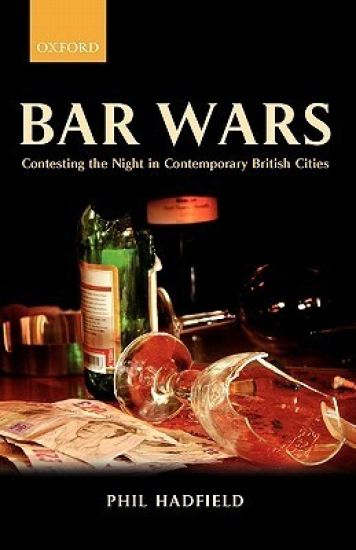
Bar Wars

Bar Wars

Phil Hadfield

Oxford University Press
2006
sidottu
In Britain today, if you are in the business of fighting crime, then you have to be in the business of dealing with alcohol. 'Binge drinking' culture is intrinsic to urban leisure and has come to pose a key threat to public order. Unsurprisingly, a struggle is occurring. Pub and club companies, local authorities, central government, the police, the judiciary, local residents, and revellers, all hold variously competing notions of night-time social order and the uses and meanings of public and private space. Bar Wars explores the issue of contestation within and between these groups. Located within a long tradition of urban ethnography, the book offers unique and hard-hitting analyses of social control in bars and clubs, courtroom battles between local communities and the drinks industry, and street-level policing, These issues go the heart of contemporary debates on anti-social behaviour and were hotly debated during the development of the Licensing Act 2003 and its contentious passage through parliament. The book presents a controversial critique of recent shifts in national alcohol policy. It uses historical, documentary, interview, and observational methods to chart the emergence of the 'night-time high street,' a social environment set aside for the exclusive purposes of mass hedonistic consumption, and describes the political and regulatory struggles that help shape important aspects of urban life. The book identifies the adversarial licensing trial as a key arena of contestation and describes how leisure corporations and their legal champions circumvent regulatory control in with subordinate opponents. The author's experiences as an expert witness to the licensing courts provide a unique perspective, setting his work apart from other academic commentators. Bar Wars takes the study of the night-time economy to a new level of sophistication, making it essential reading for all those wishing to understand the governance of crime and social order in contemporary cities.
Bar Wars

Bar Wars

Phil Hadfield

Oxford University Press
2006
nidottu
In Britain today, if you are in the business of fighting crime, then you have to be in the business of dealing with alcohol. 'Binge-drinking' culture is intrinsic to urban leisure and has come to pose a key threat to public order. Unsurprisingly, a struggle is occurring. Pub and club companies, local authorities, central government, the police, the judiciary, local residents, and revellers, all hold variously competing notions of night-time social order and the uses and meanings of public and private space. Bar Wars explores the issue of contestation within and between these groups. Located within a long tradition of urban ethnography, the book offers unique and hard-hitting analyses of social control in bars and clubs, courtroom battles between local communities and the drinks industry, and street-level policing, These issues go the heart of contemporary debates on anti-social behaviour and were hotly debated during the development of the Licensing Act 2003 and its contentious passage through parliament. The book presents a controversial critique of recent shifts in national alcohol policy. It uses historical, documentary, interview, and observational methods to chart the emergence of the 'night-time high street,' a social environment set aside for the exclusive purposes of mass hedonistic consumption, and describes the political and regulatory struggles that help shape important aspects of urban life. The book identifies the adversarial licensing trial as a key arena of contestation and describes how leisure corporations and their legal champions circumvent regulatory control in courtroom duels with subordinate opponents. The author's experiences as an expert witness to the licensing courts provide a unique perspective, setting his work apart from other academic commentators. Bar Wars takes the study of the night-time economy to a new level of sophistication, making it essential reading for all those wishing to understand the governance of crime and social order in contemporary cities.
Angina and Heart Attack

Angina and Heart Attack

Phil Jevon

Oxford University Press
2012
nidottu
Millions of people throughout the world suffer from Coronary Heart Disease (CHD). Angina is a symptom of CHD, but the condition can ultimately lead to a heart attach - often fatal. Steps can be taken to help prevent CHD getting worse, thus reducing the risk of a heart attack. Many patients who have a heart attack die before reaching hospital. However, once in hospital, modern day treatment and intervention can improve the prognosis considerably, particularly if the patient presents within hours of the symptoms starting. This book will help patients and their families understand what angina is, the causes, risk factors, symptoms, treatment and how to manage and live with it. It provides the reader with the appropriate level of information that they will need to understand what a heart attack is and what to do in the event that someone suffers from one, including the recognition of the symptoms, ensuring early admission to hospital. Treatment, and on-going management and rehabilitation, is also described in detail.
Non-equilibrium Thermodynamics and Statistical Mechanics
`Non-equilibrium Thermodynamics and Statistical Mechanics: Foundations and Applications' builds from basic principles to advanced techniques, and covers the major phenomena, methods, and results of time-dependent systems. It is a pedagogic introduction, a comprehensive reference manual, and an original research monograph. Uniquely, the book treats time-dependent systems by close analogy with their static counterparts, with most of the familiar results of equilibrium thermodynamics and statistical mechanics being generalized and applied to the non-equilibrium case. The book is notable for its unified treatment of thermodynamics, hydrodynamics, stochastic processes, and statistical mechanics, for its self-contained, coherent derivation of a variety of non-equilibrium theorems, and for its quantitative tests against experimental measurements and computer simulations. Systems that evolve in time are more common than static systems, and yet until recently they lacked any over-arching theory. 'Non-equilibrium Thermodynamics and Statistical Mechanics' is unique in its unified presentation of the theory of non-equilibrium systems, which has now reached the stage of quantitative experimental and computational verification. The novel perspective and deep understanding that this book brings offers the opportunity for new direction and growth in the study of time-dependent phenomena. 'Non-equilibrium Thermodynamics and Statistical Mechanics' is an invaluable reference manual for experts already working in the field. Research scientists from different disciplines will find the overview of time-dependent systems stimulating and thought-provoking. Lecturers in physics and chemistry will be excited by many fresh ideas and topics, insightful explanations, and new approaches. Graduate students will benefit from its lucid reasoning and its coherent approach, as well as from the chem12physof mathematical techniques, derivations, and computer algorithms.
Philosophical Dilemmas

Philosophical Dilemmas

Phil Washburn

Oxford University Press Inc
2015
nidottu
Philosophical Dilemmas: A Pro and Con Introduction to the Major Questions and Philosophers, Fourth Edition, outlines the classic arguments made by philosophers through the ages. It features sixty-three brief topical essays by author Phil Washburn organized around thirty-one fundamental philosophical questions like "Does God exist?" "Is morality relative?" and "Are we free?" Each essay takes a definite stand and promotes it vigorously, creating a sharp contrast between the two positions and giving each abstract theory a more personal and believable "voice." The accessible writing style and conflicting answers encourage students to examine the different positions and to think carefully about which essay makes the stronger case. This fourth edition, a major revision, now enriches the discussion of each philosophical question by adding fifty-four brief essays--two in each chapter--on great philosophers who held conflicting viewpoints on the issues covered. Additionally, the chapters have been rearranged so that these essays and the philosophers discussed appear in approximate chronological order, from Plato and Protagoras to Wittgenstein and Searle. The text is enhanced by numerous pedagogical features including an introduction to each issue, key terms, chapter summaries, study questions after each essay, chronologies, a glossary, and an appendix on how to write an essay. A Companion Website at www.oup.com/us/washburn contains online sources and self-test questions for students and numerous instructor resources: introductions to the issues; summaries of the topical essays; summary points, PowerPoint-based slides, and test questions for the historical essays; answers to the critical questions that follow each essay; test questions on the topical essays; suggestions for class discussions; and a list of online resources.
The Nonreligious

The Nonreligious

Phil Zuckerman; Luke W. Galen; Frank L. Pasquale

Oxford University Press Inc
2016
nidottu
The number of non-religious men and women has increased dramatically over the past several decades. Yet scholarship on the non-religious is severely lacking. In response to this critical gap in knowledge, The Nonreligious provides a comprehensive summation and analytical discussion of existing social scientific research on the non-religious. The authors present a thorough overview of existing research, while also drawing on ongoing research and positing ways to improve upon our current understanding of this growing population. The findings in this book stand out against the corpus of secular writing, which is comprised primarily of polemical rants critiquing religion, personal life-stories/memoirs of former believers, or abstract philosophical explorations of theology and anti-theology. By offering the first research- and data-based conclusions about the non-religious, this book will be an invaluable source of information and a foundation for further scholarship. Written in clear, jargon-free language that will appeal to the increasingly interested general readers, this book provides an unbiased, thorough account of all relevant existing scholarship within the social sciences that bears on the lived experience of the non-religious.
The Nonreligious

The Nonreligious

Phil Zuckerman; Luke W. Galen; Frank L. Pasquale

Oxford University Press Inc
2016
sidottu
The number of non-religious men and women has increased dramatically over the past several decades. Yet scholarship on the non-religious is severely lacking. In response to this critical gap in knowledge, The Nonreligious provides a comprehensive summation and analytical discussion of existing social scientific research on the non-religious. The authors present a thorough overview of existing research, while also drawing on ongoing research and positing ways to improve upon our current understanding of this growing population. The findings in this book stand out against the corpus of secular writing, which is comprised primarily of polemical rants critiquing religion, personal life-stories/memoirs of former believers, or abstract philosophical explorations of theology and anti-theology. By offering the first research- and data-based conclusions about the non-religious, this book will be an invaluable source of information and a foundation for further scholarship. Written in clear, jargon-free language that will appeal to the increasingly interested general readers, this book provides an unbiased, thorough account of all relevant existing scholarship within the social sciences that bears on the lived experience of the non-religious.
Gold’s Rounds

Gold’s Rounds

Phil Gold

MCGILL-QUEEN'S UNIVERSITY PRESS
2023
sidottu
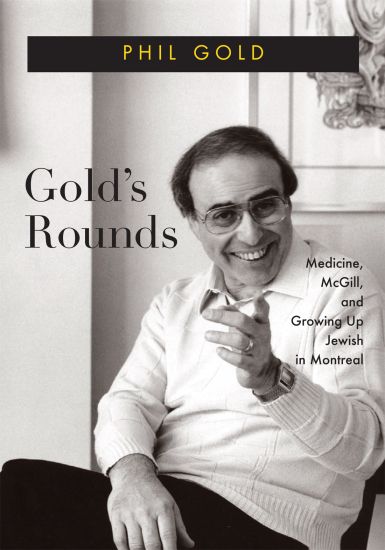
Growing up on St Lawrence Boulevard, Phil Gold never aspired to be a doctor. But working as an encyclopedia salesman, a bottle washer at Molson, and a fur-coat schlepper in textile factories helped him realize and embrace his parents’ desire for him to follow that path.Looking back at his short wander from the Main to nearby McGill University and the Montreal General Hospital, Gold coins a new word, fortunome, to evoke his sense of a lucky life: “Our genome comes from our parents; our environment or epigenome shapes the expression of who we are; but without a good fortunome, life’s odds turn against us.” A born storyteller, Gold recounts the sights and sounds of a bygone era – horse-drawn milk carts, Yiddish neighbourhoods full of Holocaust survivors, furniture chopped up to keep the home fires burning, sacks of grain lugged off ships in the harbour, antisemitism and ethnic street-fighting, the padlocked doors of the Red Scare, his father’s first car. Gold tells the story of dating and marrying the love of his life, Evelyn, studying under the brilliant Sir Arnold Burgen, and his discovery of CEA (carcinoembryonic antigen) in a clear, fast-moving narrative that grips and fascinates. Gold’s Rounds also includes unforgettable stories from six decades of treating patients at the General, scenes from the founding of the famous Goodman Cancer Institute, and reflections on the physician's role and the meaning of a good death. By turns funny, wise, and heartrending, Gold’s memoir of a life well lived will be cherished by both medical professionals and general readers.
Ravens on the Red Road

Ravens on the Red Road

Phil L'Hirondelle; John Wisdomkeeper

BWL Publishing Inc.
2024
pokkari
A M tis police liaison and two M tis elders hold a ceremony in the Vancouver Remand Centre that sets off alarm bells and becomes a prelude to a series of vicious and heartless crimes.When an Indigenous girl is murdered and dumped in Stanley Park, fears of a witch hunt against the Indigenous community push homicide detective Mark Hanson to enlist the aid of Dez Pallaton and Martine LaChance from the Vancouver Friendship Centre. They'd assisted Mark before in unconventional ways to uncover truth hidden within their community. The truth in this case is disturbing and dangerous and Martine ends up the unwitting target of a psychopath.The ink isn't dry on the final report of the Stanley Park incident when Mark finds himself faced with an unthinkable crime connected to the escape of three potential killers from the Vancouver Remand Centre. This crime is so closely connected and devastating that the shaken homicide detective has no idea where to turn for help.What do Phil and Wisdomkeeper see in their visions and will they be able to intercede with the Spirit World for help in stopping the desperate killers and preventing even more horrific murders.
Toxic Exposures

Toxic Exposures

Phil Brown; Lois Gibbs

Columbia University Press
2007
sidottu
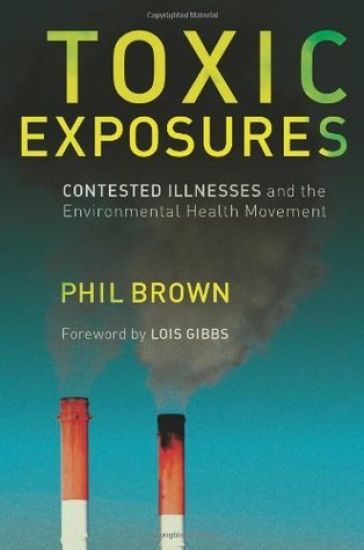
The increase in environmentally induced diseases and the loosening of regulation and safety measures have inspired a massive challenge to established ways of looking at health and the environment. Communities with disease clusters, women facing a growing breast cancer incidence rate, and people of color concerned about the asthma epidemic have become critical of biomedical models that emphasize the role of genetic makeup and individual lifestyle practices. Likewise, scientists have lost patience with their colleagues' and government's failure to adequately address environmental health issues and to safeguard research from corporate manipulation. Focusing specifically on breast cancer, asthma, and Gulf War-related health conditions-"contested illnesses" that have generated intense debate in the medical and political communities-Phil Brown shows how these concerns have launched an environmental health movement that has revolutionized scientific thinking and policy. Before the last three decades of widespread activism regarding toxic exposures, people had little opportunity to get information. Few sympathetic professionals were available, the scientific knowledge base was weak, government agencies were largely unprepared, laypeople were not considered bearers of useful knowledge, and ordinary people lacked their own resources for discovery and action. Brown argues that organized social movements are crucial in recognizing and acting to combat environmental diseases. His book draws on environmental and medical sociology, environmental justice, environmental health science, and social movement studies to show how citizen-science alliances have fought to overturn dominant epidemiological paradigms. His probing look at the ways scientific findings are made available to the public and the changing nature of policy offers a new perspective on health and the environment and the relationship among people, knowledge, power, and authority.
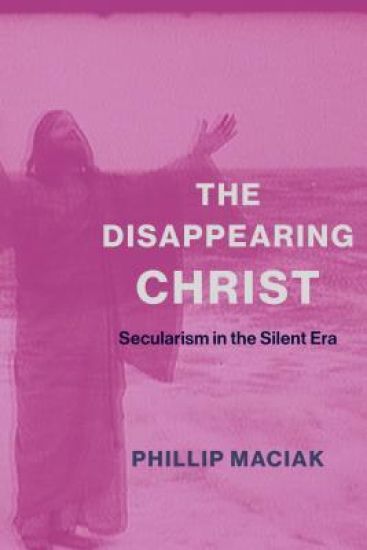
The Disappearing Christ

The Disappearing Christ

Phil Maciak

Columbia University Press
2019
sidottu
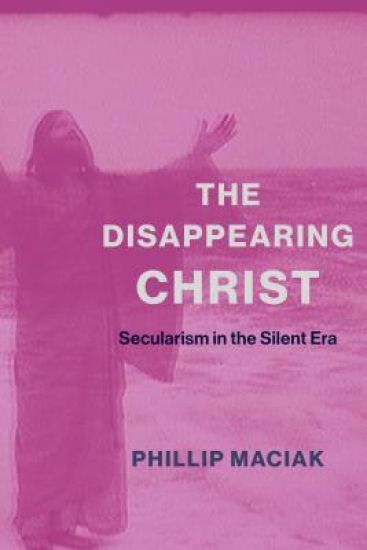
At the turn of the twentieth century, American popular culture was booming with opportunities to see Jesus Christ. From the modernized eyewitness gospel of Ben-Hur to the widely circulated passion play films of Edison, Lumière, and Pathé; from D. W. Griffith’s conjuration of a spectral white savior in Birth of a Nation to W. E. B. Du Bois’s “Black Christ” story cycle, Jesus was constantly and inventively visualized across media, and especially in the new medium of film. Why, in an era traditionally defined by the triumph of secular ideologies and institutions, were so many artists rushing to film Christ’s miracles and use his story and image to contextualize their experiences of modernity?In The Disappearing Christ, Phillip Maciak examines filmic depictions of Jesus to argue that cinema developed as a model technology of secularism, training viewers for belief in a secular age. Negotiating between the magic trick and the documentary image, the conflicting impulses of faith and skepticism, the emerging aesthetic of film in this period visualized the fraught process of secularization. Cinematic depictions of an appearing and disappearing Christ became a powerful vehicle for Americans to navigate a rapidly modernizing society. Studying these films alongside a multimedia, interdisciplinary archive of novels, photographs, illustrations, and works of theology, travel writing, and historiography, The Disappearing Christ offers a new narrative of American cultural history at the intersection of cinema studies and religious studies.
The Disappearing Christ

The Disappearing Christ

Phil Maciak

Columbia University Press
2019
pokkari
At the turn of the twentieth century, American popular culture was booming with opportunities to see Jesus Christ. From the modernized eyewitness gospel of Ben-Hur to the widely circulated passion play films of Edison, Lumière, and Pathé; from D. W. Griffith’s conjuration of a spectral white savior in Birth of a Nation to W. E. B. Du Bois’s “Black Christ” story cycle, Jesus was constantly and inventively visualized across media, and especially in the new medium of film. Why, in an era traditionally defined by the triumph of secular ideologies and institutions, were so many artists rushing to film Christ’s miracles and use his story and image to contextualize their experiences of modernity?In The Disappearing Christ, Phillip Maciak examines filmic depictions of Jesus to argue that cinema developed as a model technology of secularism, training viewers for belief in a secular age. Negotiating between the magic trick and the documentary image, the conflicting impulses of faith and skepticism, the emerging aesthetic of film in this period visualized the fraught process of secularization. Cinematic depictions of an appearing and disappearing Christ became a powerful vehicle for Americans to navigate a rapidly modernizing society. Studying these films alongside a multimedia, interdisciplinary archive of novels, photographs, illustrations, and works of theology, travel writing, and historiography, The Disappearing Christ offers a new narrative of American cultural history at the intersection of cinema studies and religious studies.
Beyond the Zone System

Beyond the Zone System

Phil Davis

Focal Press
1998
nidottu
This fourth edition of Beyond the Zone System makes the science of photographic sensitometry both accessible and useful to interested photographers. It will appeal to any serious photographer interested in knowing how the materials and processes of black-and-white photography work. Instead of describing rote procedures to be followed blindly, this book provides the basis for understanding what needs to be done and why. This book relates theory to practice in a way that promotes a true partnership of science and art. Beyond the Zone System bridges the gap between the more theoretical aspects of the photographic process and the popular empirical procedures used by many photographers in the attempt to predict and control the quality of their photographs in practice.This book is intended primarily for photographers who use large-format cameras and black-and-white sheet film, but the basic information about how the B&W photographic materials and processes work will be useful to users of any B&W film format.Beyond the Zone System, 4th ed. will appeal to any serious photographer interested in knowing how the materials and processes of black-and-white photography work. Instead of describing rote procedures to be followed blindly, this book provides the basis for understanding what needs to be done and why. This book relates theory to practice in a way that promotes a true partnership of science and art.