Kirjojen hintavertailu. Mukana 12 291 150 kirjaa ja 12 kauppaa.

Kirjahaku

Etsi kirjoja tekijän nimen, kirjan nimen tai ISBN:n perusteella.

1000 tulosta hakusanalla Philip Perry

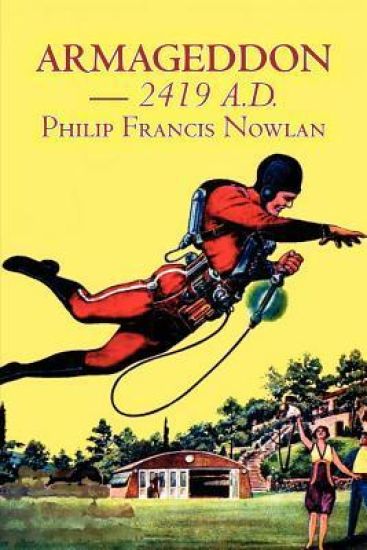
Armageddon -- 2419 A.D. by Philip Francis Nowlan, Science Fiction, Fantasy
We have rarely printed a story in this magazine that for scientific interest, as well as suspense, could hold its own with this particular story. We prophesy that this story will become more valuable as the years go by. It certainly holds a number of interesting prophecies, of which no doubt, many will come true. For wealth of science, it will be hard to beat for some time to come. It is one of those rare stories that will bear reading and re-reading many times. This story has impressed us so favorably, that we hope the author may be induced to write a sequel to it soon.-- from an editorial note in Amazing Stories, August 1928A sequel to Armageddon 2419 A.D. called The Airlords of Han was published in the March 1929 issue of Amazing Stories.In the 1960s, Nowlan's two novellas were combined by editor Donald A. Wollheim into one paperback novel, titled Armageddon 2419 A.D.
Armageddon -- 2419 A.D. by Philip Francis Nowlan, Science Fiction, Fantasy
We have rarely printed a story in this magazine that for scientific interest, as well as suspense, could hold its own with this particular story. We prophesy that this story will become more valuable as the years go by. It certainly holds a number of interesting prophecies, of which no doubt, many will come true. For wealth of science, it will be hard to beat for some time to come. It is one of those rare stories that will bear reading and re-reading many times. This story has impressed us so favorably, that we hope the author may be induced to write a sequel to it soon.-- from an editorial note in Amazing Stories, August 1928A sequel to Armageddon 2419 A.D. called The Airlords of Han was published in the March 1929 issue of Amazing Stories.In the 1960s, Nowlan's two novellas were combined by editor Donald A. Wollheim into one paperback novel, titled Armageddon 2419 A.D.
Mr. Spaceship by Philip K. Dick, Science Fiction, Fantasy, Adventure
The story is set in the distant future, where humanity is at war with "Yuks", an alien life form which does not use mechanical spaceships nor constructions. Instead, it relies on life forms. The war has been going on for a long time, and humanity has not been able to come up with a solution against the life-form based ships and mines that the Yuks use. A human brain-controlled spacecraft would mean mechanical perfection. This was accomplished, and something unforeseen: a strange entity called . . . Mr. Spaceship
Philip Pendleton Cooke

Philip Pendleton Cooke

Allen John D.

The University of North Carolina Press
2018
nidottu
Philip Pendleton Cooke, a typical Virginia gentleman farmer and lawyer, realized a creditable achievement in lyric poetry, in critical essays marked by vigorous good sense, and in the historical tales to which he returned. His work received recognition from leading literary men of his day, and his writing merits attention in any consideration of Southern literature. Originally published in 1942. A UNC Press Enduring Edition - UNC Press Enduring Editions use the latest in digital technology to make available again books from our distinguished backlist that were previously out of print. These editions are published unaltered from the original, and are presented in affordable paperback formats, bringing readers both historical and cultural value.
Philip II of Spain and the Wider World

Philip II of Spain and the Wider World

Laura Fernández–González

Routledge
2023
sidottu
During the sixteenth-century, the Monarchia Hispanica ruled by Philip II of Spain was Europe’s most powerful composite monarchy, with an empire that stretched from Europe to the Americas and South-East Asia. This power rested not simply upon wealth and military might, but was bolstered by an array of social, cultural and religious tools that were employed to legitimize, strengthen and build the king’s authority. Developing and exploring an important facet of this 'soft power', this book investigates ideas of empire and imperialism in the architecture, urbanism and culture of the Iberian Peninsula. It explores these ideas of empowerment through a number of case studies that reflect the way the ’centre’ of the empire was affected by the Universal Monarchy in line with scholarly works on Atlantic studies. Adopting a global - rather than a European-centred - perspective the book employs four case studies to reveal how Spain’s imperial expansion during the sixteenth century allowed Philip to project and communicate an image of himself as the monarch of a worldwide empire through art and architecture. Beginning with an introductory chapter outlining Philip II’s appreciation of art and architecture within the context the notion of empire developed at his court, the work is then divided into four sections. Part 1 ’Urban utopia’ looks at Madrid and the wider world, domestic architecture and Spanish imperial authority in the sixteenth century. Part 2. ’Ruling an empire through paper’ addresses the Simancas archive and the Habsburg network of information and archival repositories in Europe and beyond. Part 3 ’The Global Empire’ explores the Iberian Union and Philip II as Dominae Totis Orbis. Part 4 ’The Hall of Battles at El Escorial’ covers visual chronicles of warfare and the fame of the Universal Monarch. In all the book provides a substantial contribution to the field, charting the development of an image of empire and supremacy during Phili
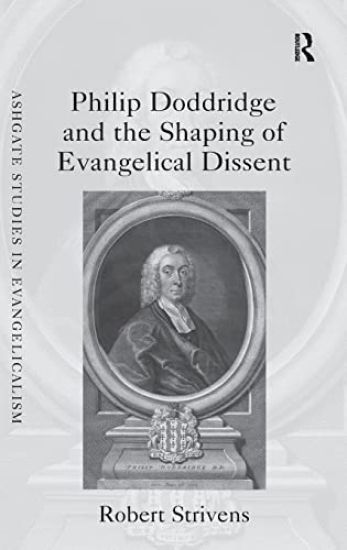
Philip Doddridge and the Shaping of Evangelical Dissent
Evangelical Dissent in the early eighteenth century had to address a variety of intellectual challenges. How reliable was the Bible? Was traditional Christian teaching about God, humanity, sin and salvation true? What was the role of reason in the Christian faith? Philip Doddridge (1702-51) pastored a sizeable evangelical congregation in Northampton, England, and ran a training academy for Dissenters which prepared men for pastoral ministry. Philip Doddridge and the Shaping of Evangelical Dissent examines his theology and philosophy in the context of these and other issues of his day and explores the leadership that he provided in evangelical Dissent in the first half of the eighteenth century. Offering a fresh look at Doddridge’s thought, the book provides a criticial examination of the accepted view that Doddridge was influenced in his thinking primarily by Richard Baxter and John Locke. Exploring the influence of other streams of thought, from John Owen and other Puritan writers to Samuel Clarke and Isaac Watts, as well as interaction with contemporaries in Dissent, the book shows Doddridge to be a leader in, and shaper of, an evangelical Dissent which was essentially Calvinistic in its theology, adapted to the contours and culture of its times.