This book is a discussion of the nature and import of Richard Rorty's philosophy, particularly as it relates to his reevaluation of American pragmatism. Rorty's thinking is assessed within the context of both modern and postmodern intellectual trends, and his thought is contrasted with that of his principal contemporaries in America and Europe, including Donald Davidson, W. V. O. Quine, Jürgen Habermas, Michel Foucault, Martin Heidegger, and Jacques Derrida.
The complex man at the center of America's most self-destructive presidency In this provocative and revelatory assessment of the only president ever forced out of office, the legendary Washington journalist Elizabeth Drew explains how Richard M. Nixon's troubled inner life offers the key to understanding his presidency. She shows how Nixon was surprisingly indecisive on domestic issues and often wasn't interested in them. Turning to international affairs, she reveals the inner workings of Nixon's complex relationship with Henry Kissinger, and their mutual rivalry and distrust. The Watergate scandal that ended his presidency was at once an overreach of executive power and the inevitable result of his paranoia and passion for vengeance. Even Nixon's post-presidential rehabilitation was motivated by a consuming desire for respectability, and he succeeded through his remarkable resilience. Through this book we finally understand this complicated man. While giving him credit for his achievements, Drew questions whether such a man--beleaguered, suspicious, and motivated by resentment and paranoia--was fit to hold America's highest office, and raises large doubts that he was.
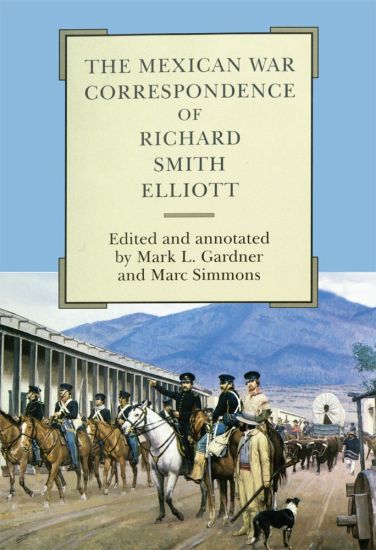
When General Stephen Watts Kearny's Army of the West marched into Santa Fe, New Mexico, on August 18, 1846, Richard Smith Elliott, a young Missouri volunteer, was included in its ranks. In addition to Lieutenant Elliott's duties in the Laclede Rangers, he served as a regular correspondent to the St. Louis Reveille. An entertaining and educated observer, Elliott provided readers back home with an account of the grueling march over the famous Santa Fe Trail, the triumphant entry of the army into Santa Fe, the U.S. occupation of New Mexico, and the volunteers' eventual return to St. Louis.Noted southwestern scholars Mark L. Gardner and Marc Simmons present here, for the first time, all of Elliott's letters published in the Reveille under his nom-de-plume, John Brown, using passages from his autobiography for the same period to fill in a break resulting from a few missing letters. Also included are Elliott's literary sketches, drawn from his Mexican War experiences and the people he met and served with.
In these journals, Colonel Richard Irving Dodge, a well-known chronicler of western history and an authority on Plains Indians, provides an important account of conditions in Indian Territory from 1878 to 1880, a period of rapid transition.The Cheyenne-Arapaho reservation in present-day western Oklahoma was the center of Dodge's activity. His writings offer a firsthand record of the 1878 retreat of the Northern Cheyenne, the conditions endured by Indians who remained on the reservation, and the jurisdictional conflicts between Army personnel and representatives of the Office of Indian Affairs.These journals also provide insight into Dodge's character, with reports of his official duties as a military man and of several landmark events in his family life. Extensive commentaries and notes by Wayne R. Kime provide further detail, including a history of Cantonment North Fork Canadian River, a six-company post Dodge established and commanded in the region.
In summer 1883, General William Tecumseh Sherman took Colonel Richard Irving Dodge, his former aide-de-camp, with him on a 10,000-mile inspection tour across the northern tier of territories, on to the Pacific Northwest, south through California, and east through the Southwest to Denver. Dodge had no idea his journals would ever become public, so he wrote openly about his companions and their interactions, terrain and natural wonders, conditions of military posts, life in civilian communities, and what the future seemed to hold for the region and its changing population.
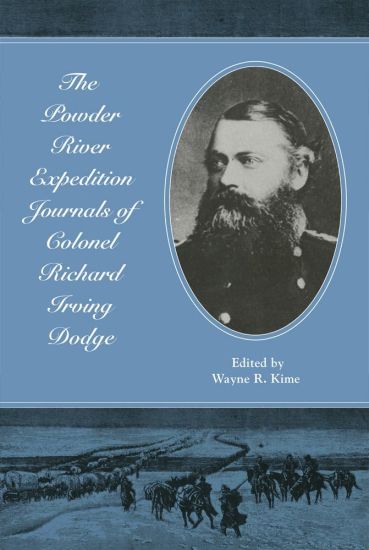
Lt. Col. Richard Irving Dodge's journals, written with utter candor for his eyes only, are the fullest firsthand account we possess of Gen. George Crook's Powder River Expedition against the Sioux and Cheyenne Indians, which culminated in Col. Ranald S. Mackenzie's resounding destruction of Dull Knife's forces on November 25, 1876. Editor Wayne R. Kime, with his customary flair, has transcribed the journals from Dodge's pocket-size notebooks and has provided a pertinent introduction and well-crafted, thoroughly illuminating annotations.Dodge's journals will clearly prove useful to specialists in U.S. -Indian relations and the Great Sioux War, but they will also appeal to a variety of readers because of Dodge's lively style and his range of subject matter. With vigorous intelligence, he describes such topics as General Crook as a military leader and strategist, the merits of infantry versus cavalry against the Plains Indians, the effects of subzero weather in Wyoming on a large army far from its sources of supply, and of course, the elusiveness of military glory.
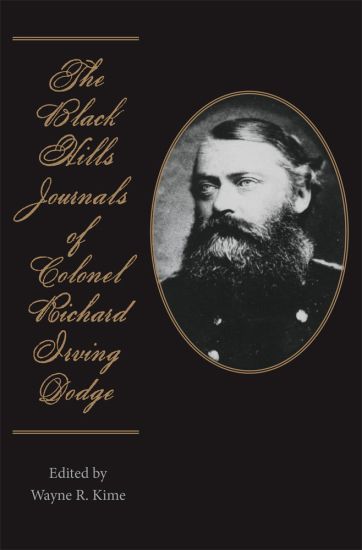
In the spring and summer of 1875, Lt. Col. Richard Irving Dodge escorted the scientific expedition of geologist Walter P. Jenney into the Black Hills of the Dakotas to determine the truth of rumors of gold started by Gen. George Armstrong Custer the previous summer. The five-month trek north from Cheyenne, Wyoming, challenged Dodge's 452 men with their wagons and animals, but in many respects it was ""a delightful picnic (without the ladies),"" as Dodge described it.Colonel Dodge wrote his journals daily in the field, and in their variety, discursiveness, and detail they convey clearly the pleasure he took in what he said was ""the most delightful summer of my life."" Yet he used only a small fraction of what he recorded in his subsequent official communications and published works. If it were not for this well-annotated and illustrated edition by Wayne R. Kime, readers would not have access to Dodge's experiences with such characters as the stowaway Calamity Jane or the eccentric mountain man and backwoods philosopher California Joe, who was hired to guide the expedition. Dodge's particular interests in hunting, fishing, and fine scenery also enliven his narrative, as do the politics dividing the miners from the Indians, and the soldiers from the scientists on the expedition.Black Hills Journals of Colonel Richard Irving Dodge is by far the most detailed account yet available of the conflicting claims, interests, and populations that converged on the Black Hills during the key transitional period before the Great Sioux War of 1876.
When General Stephen Watts Kearny's Army of the West marched into Santa Fe, New Mexico, on August 18, 1846, Richard Smith Elliott, a young Missouri volunteer, was included in its ranks. In addition to Lieutenant Elliott's duties in the Laclede Rangers, he served as a regular correspondent to the St. Louis Reveille. An entertaining and educated observer, Elliott provided readers back home with an account of the grueling march over the famous Santa Fe Trail, the triumphant entry of the army into Santa Fe, the U.S. occupation of New Mexico, and the volunteers' eventual return to St. Louis.Noted southwestern scholars Mark L. Gardner and Marc Simmons present here, for the first time, all of Elliott's letters published in the Reveille under his nom-de-plume, John Brown, using passages from his autobiography for the same period to fill in a break resulting from a few missing letters. Also included are Elliott's literary sketches, drawn from his Mexican War experiences and the people he met and served with.
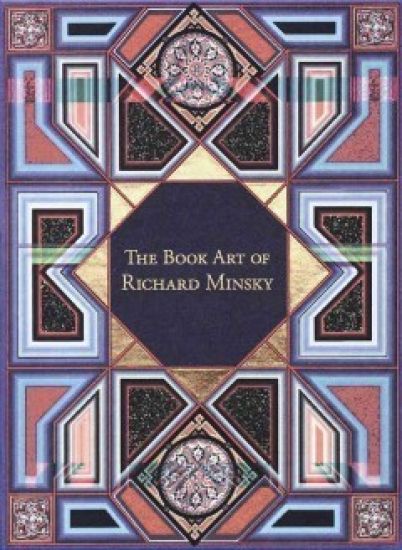
Richard Minsky, founder of the Center for Book Arts in New York City, is known for his conceptual approach to hand bookbinding and his commitment to changing the perception of the book arts from craft to fine art. He combines a background in economics with an innovative use of traditional methods and new materials to create sculptural, often political, bookworks. Minsky's blending of an eclectic mix of interests, from musical and theatre performance to social issues and virtual worlds, remains a hallmark of his career. This collection showcases his editioned (non-commissioned) bookworks alongside selections from the Richard Minsky Archive, which documents the history of his career and his working process.
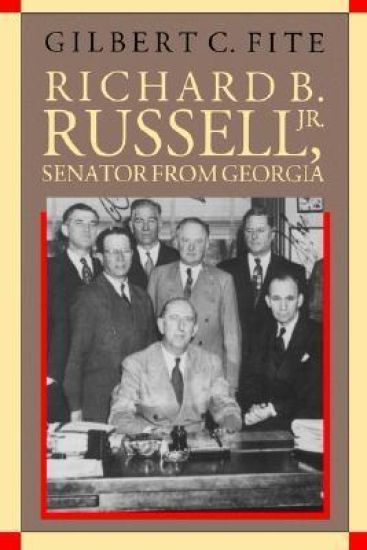
Richard B. Russell, Jr., represented Georgia in the United States Senate from 1933 to 1971, a period of sweeping social change. Russell (1879-1971) was regarded by his fellow senators as the quintessential member of the Senate's establishment, and they dubbed him ""a Senator's Senator"" and ""the Georgia Giant."" So great was his popularity in Congress that Lyndon B. Johnson once said, ""If the membership of the Senate were to cast a secret vote on the man they believed best qualifies to be president of the United States, they would choose Richard Russell."" Gilbert Fite's masterful biography begins with Russell's upbringing in an elite Georgia family. The highly stratified and class-conscious society of his early years would later influence Russell's legislative agenda. In 1920, Russell was elected to the Georgia General Assembly, and in 1931 he became governor of Georgia. He held that office until 1933, when he began his thirty-eight years of service in the U.S. Senate. During Russell's long senatorial career, he was deeply involved in many of the most important episodes of our national life: the New Deal, World War II, the MacArthur investigation, the foreign aid debate, and the Warren Commission inquiry. His greatest contribution, according to Fite, was his fierce determination to maintain a strong national defense during the Cold War; in his sixteen years as chairman of the Armed Services Committee, he emerged as the acknowledged leader in Congress on defense matters. A career-long member of the Senate Appropriations Committee, Russell also became one of the nation's strongest advocates of farm price supports. Under his sponsorship, the Senate enacted legislation establishing the school lunch program and distribution of food to the needy. But Russell never abandoned his dedication to the South's traditional values, and he became the leader of the Southern Bloc that staunchly fought to defeat civil rights legislation and maintain the structures of segregation. Russell's unwillingness to compromise on civil rights, says Fite, meant that his career was ultimately one of regional rather than national leadership.
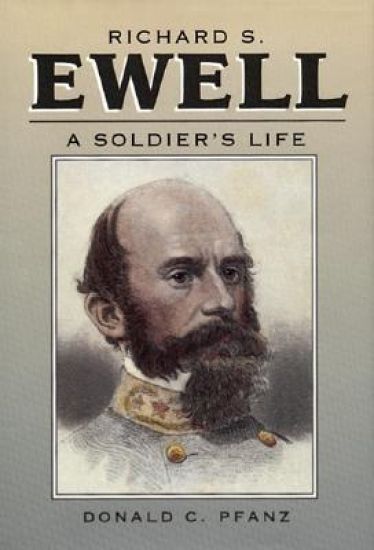
General Richard Stoddert Ewell holds a unique place in the history of the Army of Northern Virginia. For four months, Ewell was Stonewall Jackson's most trusted subordinate; when Jackson died, Ewell took command of the Second Corps, leading it at Gettysburg, the Wilderness Campaign, and Spotsylvania Court House. By the end of the war, he was in charge of the defense of Richmond. With this book, Donald Pfanz provides more than just a military biography. He also examines Ewell's life before and after the Civil War, offering an exceptionally detailed portrait of one of the South's most important leaders.
Conlon's edition usefully places Le Romant de Richart and Corrozet's prose adaptation Richart sans peour into one text. This composition allows Conlon to explore the connections between the first prose adaptation and its epic source, hypothesizing the rationales for each of their creations. Conlon's introduction to the edition includes information on Richard Duke of Normandy, on later prose editions, on Corrozet, and on sources. It also provides a plot summary of both texts and linguistic commentary. He concludes his edition with an appendix of names and places, glossaries, and a bibliography.
"The Classics of Western Spirituality™ Series promises to be one of the most important and valuable tools for the teaching of western spiritual traditions in coming years." Bernard McGinn Professor of Historical Theology and History of Christianity, The University of Chicago Divinity School, Chicago, Illinois Richard of St. Victor: The Book of the Patriarchs, The Mystical Ark, Book Three of the Trinity translation and introduction by Grover A. Zinn, preface by Jean Chatillon "Contemplation is free and clear vision of the mind fixed upon the manifestation of wisdom in suspended wonder...." Richard of St. Victor (?—1173) One of the great mystics of the Christian Tradition, Richard is the link between the early tradition of Pseudo-Dionysius and the great mystical awakening in Medieval Europe. For his genius in bringing together both the Latin and Greek Traditions all contemplatives owe him a great debt. Born in twelfth century Scotland, he joined the Abbey of St. Victor in Paris where he became Superior and Prior. The Twelve Patriarchs (or Benjamin Minor) is his preparation of the soul for contemplation. The framework is a scriptural allegory based on the story of Jacob. Richard uses the meaning of the names and the elements of the story to illustrate a unified view of the person and the relationship between contemplation and action. His Mystical Ark ( or Benjamin Major) completes this study. In his Book Three of the Trinity we see Richard's doctrinal basis for the spiritual conclusions of his earlier work. Richard can teach us about the discipline and the dangers of the mystical quest. He can enlighten us concerning the relevance of symbols and symbolic structures as modes of communication. Jean Chatillon, of the University of Paris, who wrote the preface, is the world's Victorine scholar. †
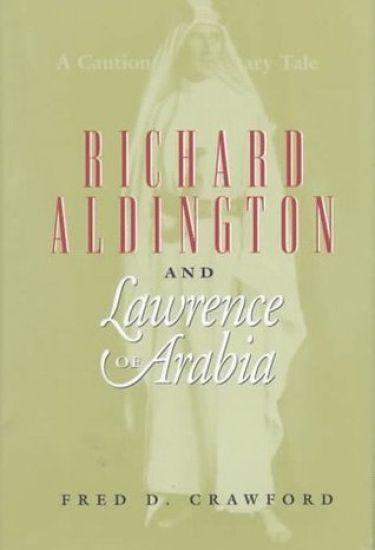
This is an examination of the parties embroiled in the controversy generated by Richard Aldington's 1955 biography of Lawrence of Arabia. It shows how Aldington discovered that Lawrence had conspired with others to maintain the "Lawrence legend", and how others surpressed Aldington's findings.
Richard Barr: The Playwright’s Producer is a biography of producer Richard Barr (1917-1989), who worked on Broadway, off-Broadway at the Cherry Lane Theatre, and off-off-Broadway at the Playwrights Unit. Crespy’s research material includes nearly sixty interviews with actors, directors, designers, stage managers, and fellow producers who worked with Barr; the producer’s personal papers; and Barr’s own unpublished memoirs.