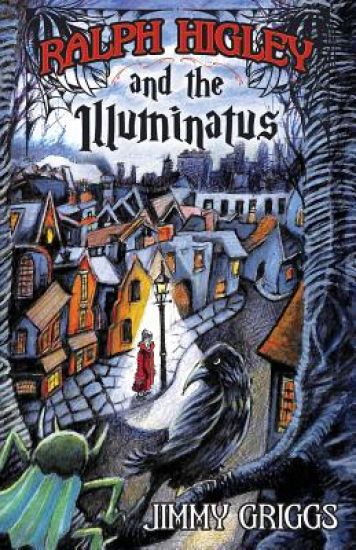
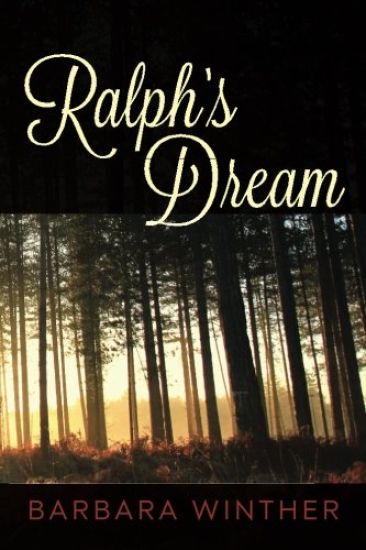
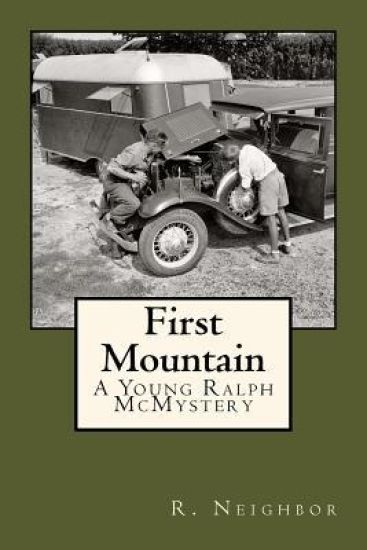
Ralph Higley always knew he was different. He sees things no one else can. As an invisible creature threatens his life, taking his best friend away, all seems lost. When a strange man rescues him, the great adventure begins. Joining "the Binders", he enters a secret world. Desperate to save his friend, he searches for a long lost Ghost Door. Giant rats, lethal machines are but a few of the dangers lying ahead. A friendship breaks; enemies draw near. Now the sinister woman in the red coat is out to stop him. But rumour has it Ralph Higley is special... he is a "Twister".
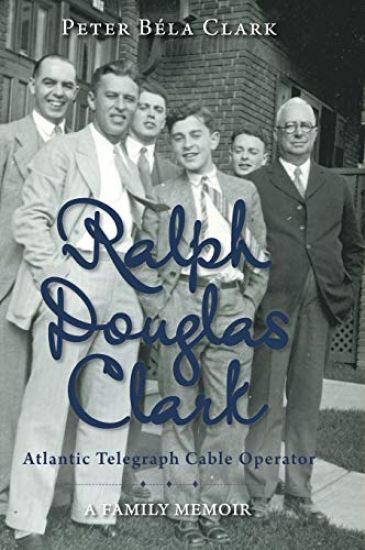
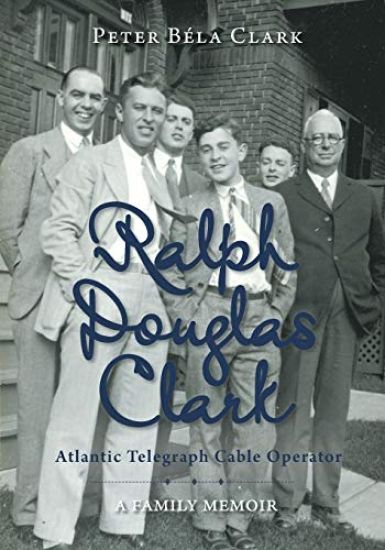
This heart-felt narrative, profusely illustrated with historical images and detailed captions, chronicles highlights in the life of Ralph Douglas Clark whose career as an Atlantic telegraph cable operator began in the tiny Nova Scotia seaport of Canso taking him to Panama, Ottawa, the Western Front in 1916, Halifax, Miami and Montreal. Drawing on the childhood recollections of his brother Mowbray, Doug Clark's "memory box", and data from notable historians, the author provides a vital addition to the library of anyone interested in a rural, seaside childhood, military history, and telecommunications....
This heart-felt narrative, profusely illustrated with historical images and detailed captions, chronicles highlights in the life of Ralph Douglas Clark whose career as an Atlantic telegraph cable operator began in the tiny Nova Scotia seaport of Canso taking him to Panama, Ottawa, the Western Front in 1916, Halifax, Miami and Montreal. Drawing on the childhood recollections of his brother Mowbray, Doug Clark's "memory box", and data from notable historians, the author provides a vital addition to the library of anyone interested in a rural, seaside childhood, military history, and telecommunications....
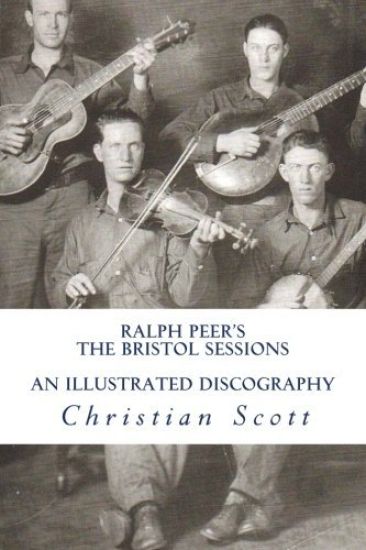
Bristol, Tennessee July 25 - August 5, 1927In 1925 Peer left OKEH records, and in 1926 he went over to talk with Victor records. He approached them with the idea that he would work for nothing - in return he would control the copyrights to the songs he recorded, VICTOR records agreed and in the summer of 1927 Ralph Peer went on his first recording trip for The Victor Talking Machine Company. His first stop was Bristol, Tennessee. Between July 25 and August 5 Peer would record what would become known as the "Big Bang" of "Country" Music. He didn't know at that time, but by recording so much quality material from unknown artists during July and August of 1927 in Bristol, Tennessee he (Ralph Peer) and all the artists would have an enormous impact on the future of "Country" Music.The Recording Artists Included - Ernest Stoneman, Jimmie Rodgers, The Carter Family, Ernest Phipps & His Holiness Quartet, Uncle Eck Dunford, Blue Ridge Corn Shuckers, Johnson Brothers, Blind Alfred Reed, El Watson, B.F. Shelton, The Shelor Family, Alfred G. Karnes, Bull Mountain Moonshiners, Henry Whitter, Dad Blackard's Moonshiners and others....
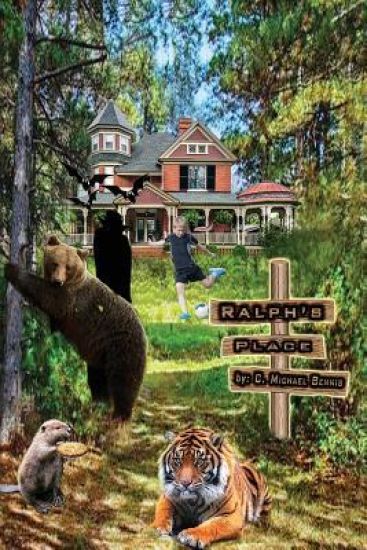
Ridiculed in school because of her intelligence, Melissa takes comfort only in her ailing parents, who she cares for daily. As they approach death, they introduce her to Ralph's Place, a land full of mysterious creatures and experiences that children can only enter through their dreams. Melissa grows to become a professor at the Massachusetts Institute of Technology, where she teaches mathematics. Despite her success, she can't forget her childhood and continues to seek the physical location of Ralph's Place. Eventually, a magician with the ability to teleport people decides to help Melissa with her search. And together, they are able to turn Ralph's Place into an enchanted experience for a family with an only child. Ralph Creston, a fourteen-year-old boy, moves with his parents outside of the city after his dad accepts a new job. There he meets another boy named Ralph, who has an unusual request: tell the three-legged dog named Sam that he will be missed. And with that, Ralph is propelled into a series of adventures as he moves into a mansion full of possibility and promise. Both children and adults will love Ralph's Place, a coming-of-age fantasy by author C. Michael Bennis.
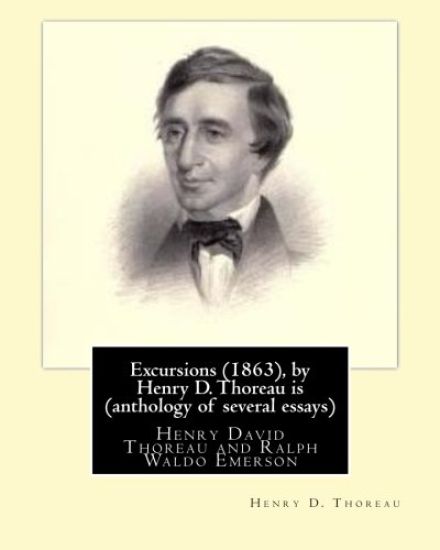
Excursions is an 1863 anthology of several essays by American transcendentalist Henry David Thoreau. The anthology contains an introduction entitled "Biographical Sketch" in which fellow transcendentalist Ralph Waldo Emerson provides a description of Thoreau.he book, other than R. W. Emerson's biography of Thoreau, contains nine of Thoreau's essays: Natural History of Massachusetts, A Walk to Wachusett, The Landlord, A Winter Walk, The Succession of Forest Trees, Walking, Autumnal Tints, Wild Apples, and Night and Moonlight. Henry David Thoreau (see name pronunciation; July 12, 1817 - May 6, 1862) was an American author, poet, philosopher, abolitionist, naturalist, tax resister, development critic, surveyor, and historian. A leading transcendentalist, Thoreau is best known for his book Walden, a reflection upon simple living in natural surroundings, and his essay Resistance to Civil Government (also known as Civil Disobedience), an argument for disobedience to an unjust state. Thoreau's books, articles, essays, journals, and poetry total over 20 volumes. Among his lasting contributions are his writings on natural history and philosophy, where he anticipated the methods and findings of ecology and environmental history, two sources of modern-day environmentalism. His literary style interweaves close natural observation, personal experience, pointed rhetoric, symbolic meanings, and historical lore, while displaying a poetic sensibility, philosophical austerity, and "Yankee" love of practical detail. He was also deeply interested in the idea of survival in the face of hostile elements, historical change, and natural decay; at the same time he advocated abandoning waste and illusion in order to discover life's true essential needs... Ralph Waldo Emerson (May 25, 1803 - April 27, 1882), known professionally as Waldo Emerson, was an American essayist, lecturer, and poet who led the Transcendentalist movement of the mid-19th century. He was seen as a champion of individualism and a prescient critic of the countervailing pressures of society, and he disseminated his thoughts through dozens of published essays and more than 1,500 public lectures across the United States. Emerson gradually moved away from the religious and social beliefs of his contemporaries, formulating and expressing the philosophy of Transcendentalism in his 1836 essay, "Nature". Following this ground-breaking work, he gave a speech entitled "The American Scholar" in 1837, which Oliver Wendell Holmes Sr. considered to be America's "Intellectual Declaration of Independence". Emerson wrote most of his important essays as lectures first, then revised them for print. His first two collections of essays Essays: First Series and Essays: Second Series, published respectively in 1841 and 1844-represent the core of his thinking, and include such well-known essays as "Self-Reliance", "The Over-Soul", "Circles", "The Poet" and "Experience". Together with "Nature", these essays made the decade from the mid-1830s to the mid-1840s Emerson's most fertile period.