Kirjojen hintavertailu. Mukana 11 244 527 kirjaa ja 12 kauppaa.

Kirjahaku

Etsi kirjoja tekijän nimen, kirjan nimen tai ISBN:n perusteella.

1000 tulosta hakusanalla Random House

Random Circulant Matrices

Random Circulant Matrices

Arup Bose; Koushik Saha

CRC Press
2020
nidottu
Circulant matrices have been around for a long time and have been extensively used in many scientific areas. This book studies the properties of the eigenvalues for various types of circulant matrices, such as the usual circulant, the reverse circulant, and the k-circulant when the dimension of the matrices grow and the entries are random. In particular, the behavior of the spectral distribution, of the spectral radius and of the appropriate point processes are developed systematically using the method of moments and the various powerful normal approximation results. This behavior varies according as the entries are independent, are from a linear process, and are light- or heavy-tailed. Arup Bose obtained his B.Stat., M.Stat. and Ph.D. degrees from the Indian Statistical Institute. He has been on its faculty at the Theoretical Statistics and Mathematics Unit, Kolkata, India since 1991. He is a Fellow of the Institute of Mathematical Statistics, and of all three national science academies of India. He is a recipient of the S.S. Bhatnagar Prize and the C.R. Rao Award. He is the author of three books: Patterned Random Matrices, Large Covariance and Autocovariance Matrices (with Monika Bhattacharjee) and U-Statistics, M_m-Estimators and Resampling (with Snigdhansu Chatterjee). Koushik Saha obtained a B.Sc. in Mathematics from Ramakrishna Mission Vidyamandiara, Belur and an M.Sc. in Mathematics from Indian Institute of Technology Bombay. He obtained his Ph.D. degree from the Indian Statistical Institute under the supervision of Arup Bose. His thesis on circulant matrices received high praise from the reviewers. He has been on the faculty of the Department of Mathematics, Indian Institute of Technology Bombay since 2014.
Random Acts of Medicine: The Hidden Forces That Sway Doctors, Impact Patients, and Shape Our Health
Does timing, circumstance, or luck impact your health care? This groundbreaking book reveals the hidden side of medicine and how unexpected--but predictable--events can profoundly affect our health. - Is there ever a good time to have a heart attack? Why do kids born in the summer get diagnosed more often with A.D.H.D.? How are marathons harmful for your health, even when you're not running? "Fantastically entertaining and deeply thought-provoking." --Emily Oster, New York Times bestselling author of The Family Firm, Cribsheet, and Expecting Better "Random Acts of Medicine shows that the ingenious use of natural experiments can improve medicine and save lives." --Wall Street Journal As a University of Chicago-trained economist and Harvard medical school professor and doctor, Anupam Jena is uniquely equipped to answer these questions. And as a critical care doctor at Massachusetts General who researches health care policy, Christopher Worsham confronts their impact on the hospital's sickest patients. In this singular work of science and medicine, Jena and Worsham show us how medicine really works, and its effect on all of us. Relying on ingeniously devised natural experiments--random events that unknowingly turn us into experimental subjects--Jena and Worsham do more than offer readers colorful stories. They help us see the way our health is shaped by forces invisible to the untrained eye. Is there ever a good time to have a heart attack? Do you choose the veteran doctor or the rookie? Do you really need the surgery your doctor recommends? These questions are rife with significance; their impact can be life changing. Addressing them in a style that's both animated and enlightening, Random Acts of Medicine empowers you to see past the white coat and find out what really makes medicine work--and how it could work better.
Random Number Generation and Monte Carlo Methods

Random Number Generation and Monte Carlo Methods

James E. Gentle

Springer-Verlag New York Inc.
2003
sidottu
Monte Carlo simulation has become one of the most important tools in all fields of science. Simulation methodology relies on a good source of numbers that appear to be random. These "pseudorandom" numbers must pass statistical tests just as random samples would. Methods for producing pseudorandom numbers and transforming those numbers to simulate samples from various distributions are among the most important topics in statistical computing. This book surveys techniques of random number generation and the use of random numbers in Monte Carlo simulation. The book covers basic principles, as well as newer methods such as parallel random number generation, nonlinear congruential generators, quasi Monte Carlo methods, and Markov chain Monte Carlo. The best methods for generating random variates from the standard distributions are presented, but also general techniques useful in more complicated models and in novel settings are described. The emphasis throughout the book is on practical methods that work well in current computing environments. The book includes exercises and can be used as a test or supplementary text for various courses in modern statistics. It could serve as the primary test for a specialized course in statistical computing, or as a supplementary text for a course in computational statistics and other areas of modern statistics that rely on simulation. The book, which covers recent developments in the field, could also serve as a useful reference for practitioners. Although some familiarity with probability and statistics is assumed, the book is accessible to a broad audience. The second edition is approximately 50% longer than the first edition. It includes advances in methods for parallel random number generation, universal methods for generation of nonuniform variates, perfect sampling, and software for random number generation.
Random Fields and Geometry

Random Fields and Geometry

R. J. Adler; Jonathan E. Taylor

Springer-Verlag New York Inc.
2007
sidottu
Since the term “random ?eld’’ has a variety of different connotations, ranging from agriculture to statistical mechanics, let us start by clarifying that, in this book, a random ?eld is a stochastic process, usually taking values in a Euclidean space, and de?ned over a parameter space of dimensionality at least 1. Consequently, random processes de?ned on countable parameter spaces will not 1 appear here. Indeed, even processes on R will make only rare appearances and, from the point of view of this book, are almost trivial. The parameter spaces we like best are manifolds, although for much of the time we shall require no more than that they be pseudometric spaces. With this clari?cation in hand, the next thing that you should know is that this book will have a sequel dealing primarily with applications. In fact, as we complete this book, we have already started, together with KW (Keith Worsley), on a companion volume [8] tentatively entitled RFG-A,or Random Fields and Geometry: Applications. The current volume—RFG—concentrates on the theory and mathematical background of random ?elds, while RFG-A is intended to do precisely what its title promises. Once the companion volume is published, you will ?nd there not only applications of the theory of this book, but of (smooth) random ?elds in general.
Random Effect and Latent Variable Model Selection
Random Effect and Latent Variable Model Selection In recent years, there has been a dramatic increase in the collection of multivariate and correlated data in a wide variety of ?elds. For example, it is now standard pr- tice to routinely collect many response variables on each individual in a study. The different variables may correspond to repeated measurements over time, to a battery of surrogates for one or more latent traits, or to multiple types of outcomes having an unknown dependence structure. Hierarchical models that incorporate subje- speci?c parameters are one of the most widely-used tools for analyzing multivariate and correlated data. Such subject-speci?c parameters are commonly referred to as random effects, latent variables or frailties. There are two modeling frameworks that have been particularly widely used as hierarchical generalizations of linear regression models. The ?rst is the linear mixed effects model (Laird and Ware , 1982) and the second is the structural equation model (Bollen , 1989). Linear mixed effects (LME) models extend linear regr- sion to incorporate two components, with the ?rst corresponding to ?xed effects describing the impact of predictors on the mean and the second to random effects characterizing the impact on the covariance. LMEs have also been increasingly used for function estimation. In implementing LME analyses, model selection problems are unavoidable. For example, there may be interest in comparing models with and without a predictor in the ?xed and/or random effects component.
Random Coefficient Autoregressive Models: An Introduction

Random Coefficient Autoregressive Models: An Introduction

D.F. Nicholls; B.G. Quinn

Springer-Verlag New York Inc.
1982
nidottu
In this monograph we have considered a class of autoregressive models whose coefficients are random. The models have special appeal among the non-linear models so far considered in the statistical literature, in that their analysis is quite tractable. It has been possible to find conditions for stationarity and stability, to derive estimates of the unknown parameters, to establish asymptotic properties of these estimates and to obtain tests of certain hypotheses of interest. We are grateful to many colleagues in both Departments of Statistics at the Australian National University and in the Department of Mathematics at the University of Wo110ngong. Their constructive criticism has aided in the presentation of this monograph. We would also like to thank Dr M. A. Ward of the Department of Mathematics, Australian National University whose program produced, after minor modifications, the "three dimensional" graphs of the log-likelihood functions which appear on pages 83-86. Finally we would like to thank J. Radley, H. Patrikka and D. Hewson for their contributions towards the typing of a difficult manuscript. IV CONTENTS CHAPTER 1 INTRODUCTION 1. 1 Introduction 1 Appendix 1. 1 11 Appendix 1. 2 14 CHAPTER 2 STATIONARITY AND STABILITY 15 2. 1 Introduction 15 2. 2 Singly-Infinite Stationarity 16 2. 3 Doubly-Infinite Stationarity 19 2. 4 The Case of a Unit Eigenvalue 31 2. 5 Stability of RCA Models 33 2. 6 Strict Stationarity 37 Appendix 2. 1 38 CHAPTER 3 LEAST SQUARES ESTIMATION OF SCALAR MODELS 40 3.
Random Sums and Branching Stochastic Processes

Random Sums and Branching Stochastic Processes

Ibrahim Rahimov

Springer-Verlag New York Inc.
1995
nidottu
The aim of this monograph is to show how random sums (that is, the summation of a random number of dependent random variables) may be used to analyse the behaviour of branching stochastic processes. The author shows how these techniques may yield insight and new results when applied to a wide range of branching processes. In particular, processes with reproduction-dependent and non-stationary immigration may be analysed quite simply from this perspective. On the other hand some new characterizations of the branching process without immigration dealing with its genealogical tree can be studied. Readers are assumed to have a firm grounding in probability and stochastic processes, but otherwise this account is self-contained. As a result, researchers and graduate students tackling problems in this area will find this makes a useful contribution to their work.
Random Discrete Structures

Random Discrete Structures

Springer-Verlag New York Inc.
1995
sidottu
The articles in this volume present the state of the art in a variety of areas of discrete probability, including random walks on finite and infinite graphs, random trees, renewal sequences, Stein's method for normal approximation and Kohonen-type self-organizing maps. This volume also focuses on discrete probability and its connections with the theory of algorithms. Classical topics in discrete mathematics are represented as are expositions that condense and make readable some recent work on Markov chains, potential theory and the second moment method. This volume is suitable for mathematicians and students.
Random Heterogeneous Materials

Random Heterogeneous Materials

Salvatore Torquato

Springer-Verlag New York Inc.
2001
sidottu
The interdisciplinary subject of random heterogeneous materials has experienced remarkable growth since the publication of the well-known monograph Statistical Con­ tinuum Theories by Beran ( 1968). Many of these advances, especially those concerning the statistical characterization of the microstructure and its effect on the physical prop­ erties of the material, have not been treated fully in any book. One of the intents of the present book is to fill this gap. This book also distinguishes itself in that it provides a unified rigorous framework to characterize the microstructures and macroscopic properties of the widely diverse types of heterogeneous materials found in nature and synthetic products. Emphasis is placed on providing foundational theoretical methods that can simultaneously yield results of practical utility. This book treats a wide breadth of topics, but the choice of subjects naturally reflects my own interests. The sheer enormity of the field has prevented me from covering many important topics. I apologize to those colleagues, known and unknown, who may not find enough of their own work cited in the ensuing pages.
Random Sets

Random Sets

Springer-Verlag New York Inc.
1997
sidottu
This IMA Volume in Mathematics and its Applications RANDOM SETS: THEORY AND APPLICATIONS is based on the proceedings of a very successful 1996 three-day Summer Program on "Application and Theory of Random Sets." We would like to thank the scientific organizers: John Goutsias (Johns Hopkins University), Ronald P.S. Mahler (Lockheed Martin), and Hung T. Nguyen (New Mexico State University) for their excellent work as organizers of the meeting and for editing the proceedings. We also take this opportunity to thank the Army Research Office (ARO), the Office ofNaval Research (0NR), and the Eagan, MinnesotaEngineering Center ofLockheed Martin Tactical Defense Systems, whose financial support made the summer program possible. Avner Friedman Robert Gulliver v PREFACE "Later generations will regard set theory as a disease from which one has recovered. " - Henri Poincare Random set theory was independently conceived by D.G. Kendall and G. Matheron in connection with stochastic geometry. It was however G.
Random and Quasi-Random Point Sets

Random and Quasi-Random Point Sets

Springer-Verlag New York Inc.
1998
nidottu
This volume is a collection of survey papers on recent developments in the fields of quasi-Monte Carlo methods and uniform random number generation. We will cover a broad spectrum of questions, from advanced metric number theory to pricing financial derivatives. The Monte Carlo method is one of the most important tools of system modeling. Deterministic algorithms, so-called uniform random number gen­ erators, are used to produce the input for the model systems on computers. Such generators are assessed by theoretical ("a priori") and by empirical tests. In the a priori analysis, we study figures of merit that measure the uniformity of certain high-dimensional "random" point sets. The degree of uniformity is strongly related to the degree of correlations within the random numbers. The quasi-Monte Carlo approach aims at improving the rate of conver­ gence in the Monte Carlo method by number-theoretic techniques. It yields deterministic bounds for the approximation error. The main mathematical tool here are so-called low-discrepancy sequences. These "quasi-random" points are produced by deterministic algorithms and should be as "super"­ uniformly distributed as possible. Hence, both in uniform random number generation and in quasi-Monte Carlo methods, we study the uniformity of deterministically generated point sets in high dimensions. By a (common) abuse oflanguage, one speaks of random and quasi-random point sets. The central questions treated in this book are (i) how to generate, (ii) how to analyze, and (iii) how to apply such high-dimensional point sets.
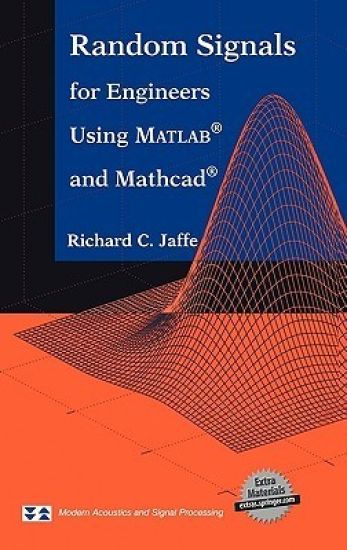
Random Signals for Engineers Using MATLAB® and Mathcad®

Random Signals for Engineers Using MATLAB® and Mathcad®

Richard C. Jaffe

Springer-Verlag New York Inc.
2000
sidottu
This introduction to random variables and signals is intended to provide engineering students with the analytical and computational tools for processing random signals using linear systems. It presents the underlying theory as well as examples and applications using computational aids throughout, in particular, computer-based symbolic computation programs are used for performing the analytical manipulations and the numerical calculations. Intended for a one-semester course for advanced undergraduates or beginning graduate students, the book covers such topics as: set theory and an introduction to probability; random variables, distributions, and processes; deterministic signals, spectral properties, and transformations; and filtering, and detection theory. The large number of worked examples together with the programming aids provided on the CD make the book eminently suited for self study as well as classroom use.
Random Probability Measures on Polish Spaces
In this monograph the narrow topology on random probability measures on Polish spaces is investigated in a thorough and comprehensive way. As a special feature, no additional assumptions on the probability space in the background, such as completeness or a countable generated algebra, are made. One of the main results is a direct proof of the random analog of the Prohorov theorem, which is obtained without invoking an embedding of the Polish space into a compact space. Further, the narrow topology is examined and other natural topologies on random measures are compared. In addition, it is shown that the topology of convergence in law-which relates to the "statistical equilibrium"-and the narrow topology are incompatible. A brief section on random sets on Polish spaces provides the fundamentals of this theory. In a final section, the results are applied to random dynamical systems to obtain existence results for invariant measures on compact random sets, as well as uniformity results in the individual ergodic theorem. This clear and incisive volume is useful for graduate students and researchers in mathematical analysis and its applications.
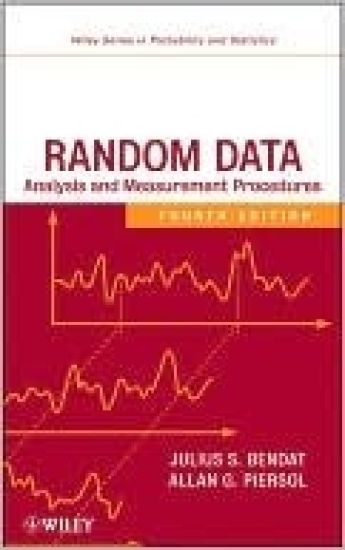
Random Data

Random Data

Julius S. Bendat; Allan G. Piersol

John Wiley Sons Inc
2010
sidottu
RANDOM DATA A TIMELY UPDATE OF THE CLASSIC BOOK ON THE THEORY AND APPLICATION OF RANDOM DATA ANALYSIS First published in 1971, Random Data served as an authoritative book on the analysis of experimental physical data for engineering and scientific applications. This Fourth Edition features coverage of new developments in random data management and analysis procedures that are applicable to a broad range of applied fields, from the aerospace and automotive industries to oceanographic and biomedical research. This new edition continues to maintain a balance of classic theory and novel techniques. The authors expand on the treatment of random data analysis theory, including derivations of key relationships in probability and random process theory. The book remains unique in its practical treatment of nonstationary data analysis and nonlinear system analysis, presenting the latest techniques on modern data acquisition, storage, conversion, and qualification of random data prior to its digital analysis. The Fourth Edition also includes: A new chapter on frequency domain techniques to model and identify nonlinear systems from measured input/output random dataNew material on the analysis of multiple-input/single-output linear modelsThe latest recommended methods for data acquisition and processing of random dataImportant mathematical formulas to design experiments and evaluate results of random data analysis and measurement proceduresAnswers to the problem in each chapter Comprehensive and self-contained, Random Data, Fourth Edition is an indispensible book for courses on random data analysis theory and applications at the upper-under-graduate and graduate level. It is also an insightful reference for engineers and scientists who use statistical methods to investigate and solve problems with dynamic data.
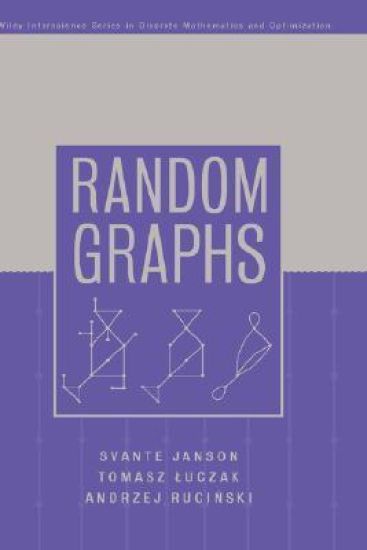
Random Graphs

Random Graphs

Svante Janson; Tomasz Luczak; Andrzej Rucinski

John Wiley Sons Inc
2000
sidottu
A unified, modern treatment of the theory of random graphs-including recent results and techniques Since its inception in the 1960s, the theory of random graphs has evolved into a dynamic branch of discrete mathematics. Yet despite the lively activity and important applications, the last comprehensive volume on the subject is Bollobas's well-known 1985 book. Poised to stimulate research for years to come, this new work covers developments of the last decade, providing a much-needed, modern overview of this fast-growing area of combinatorics. Written by three highly respected members of the discrete mathematics community, the book incorporates many disparate results from across the literature, including results obtained by the authors and some completely new results. Current tools and techniques are also thoroughly emphasized. Clear, easily accessible presentations make Random Graphs an ideal introduction for newcomers to the field and an excellent reference for scientists interested in discrete mathematics and theoretical computer science. Special features include:*A focus on the fundamental theory as well as basic models of random graphs*A detailed description of the phase transition phenomenon*Easy-to-apply exponential inequalities for large deviation bounds*An extensive study of the problem of containing small subgraphs*Results by Bollobas and others on the chromatic number of random graphs*The result by Robinson and Wormald on the existence of Hamilton cycles in random regular graphs*A gentle introduction to the zero-one laws*Ample exercises, figures, and bibliographic references
Random Graphs for Statistical Pattern Recognition

Random Graphs for Statistical Pattern Recognition

David J. Marchette

John Wiley Sons Inc
2004
sidottu
A timely convergence of two widely used disciplines Random Graphs for Statistical Pattern Recognition is the first book to address the topic of random graphs as it applies to statistical pattern recognition. Both topics are of vital interest to researchers in various mathematical and statistical fields and have never before been treated together in one book. The use of data random graphs in pattern recognition in clustering and classification is discussed, and the applications for both disciplines are enhanced with new tools for the statistical pattern recognition community. New and interesting applications for random graph users are also introduced. This important addition to statistical literature features: *Information that previously has been available only through scattered journal articles *Practical tools and techniques for a wide range of real-world applications *New perspectives on the relationship between pattern recognition and computational geometry *Numerous experimental problems to encourage practical applications With its comprehensive coverage of two timely fields, enhanced with many references and real-world examples, Random Graphs for Statistical Pattern Recognition is a valuable resource for industry professionals and students alike.
Random Processes

Random Processes

Lonnie C. Ludeman

John Wiley Sons Inc
2003
sidottu
An understanding of random processes is crucial to many engineering fields–including communication theory, computer vision, and digital signal processing in electrical and computer engineering, and vibrational theory and stress analysis in mechanical engineering. The filtering, estimation, and detection of random processes in noisy environments are critical tasks necessary in the analysis and design of new communications systems and useful signal processing algorithms. Random Processes: Filtering, Estimation, and Detection clearly explains the basics of probability and random processes and details modern detection and estimation theory to accomplish these tasks. In this book, Lonnie Ludeman, an award-winning authority in digital signal processing, joins the fundamentals of random processes with the standard techniques of linear and nonlinear systems analysis and hypothesis testing to give signal estimation techniques, specify optimum estimation procedures, provide optimum decision rules for classification purposes, and describe performance evaluation definitions and procedures for the resulting methods. The text covers four main, interrelated topics: *Probability and characterizations of random variables and random processes *Linear and nonlinear systems with random excitations *Optimum estimation theory including both the Wiener and Kalman Filters *Detection theory for both discrete and continuous time measurements Lucid, thorough, and well-stocked with numerous examples and practice problems that emphasize the concepts discussed, Random Processes: Filtering, Estimation, and Detection is an understandable and useful text ideal as both a self-study guide for professionals in the field and as a core text for graduate students.
Random Graphs

Random Graphs

John Wiley Sons Inc
1992
sidottu
Presents refereed papers by international experts regarding such diverse areas of interest as: random mappings and permutations, quasirandom graphs, random walks on trees, degree sequences, random matroids, central limit theorems, percolations and random subgraphs of the n-cube. Features an appendix of open problems from the conference.