Kirjojen hintavertailu. Mukana 12 019 778 kirjaa ja 12 kauppaa.

Kirjahaku

Etsi kirjoja tekijän nimen, kirjan nimen tai ISBN:n perusteella.

1000 tulosta hakusanalla Robert L. Perry

Revolutionary

Revolutionary

Robert L. O'Connell

Ballantine Books Inc.
2019
sidottu
In a bold reappraisal of Washington as a young soldier destined to be a legendary general, an acclaimed military historian brings to life the man who took on the British and through his leadership came to define the American character. How did George Washington become an American icon? Robert O'Connell, bestselling author of Fierce Patriot: The Tangled Lives of William Tecumseh Sherman, introduces us to Washington before he was Washington: a young soldier, champing at the bit for a commission in the British army, frustrated by his position as a minor Virginia aristocrat. Fueled by ego, he led a disastrous expedition in the Seven Years War, but then the commander grew up. We witness George Washington take up politics and join Virginia's colonial governing body, the House of Burgesses, where he became ever more attuned to the injustices of life under the British Empire and the paranoid, revolutionary atmosphere of the colonies. When war seemed inevitable, he was the right man--the only man--to lead the nascent American army. We would not be here without George Washington, and O'Connell proves that General Washington was at least as significant to the founding of the United States as Washington the president. He emerges here as cunning and manipulative, a subtle puppeteer among intimates and a master cajoler--but all in the cause of rectitude and moderation. Washington became the embodiment of the Revolution itself. He draped himself over the Revolutionary process and tamped down its fires. As O'Connell writes, the war was decisive because Washington managed to stop a cycle of violence with the force of personality and personal restraint. In his trademark conversational, witty style, Robert O'Connell has written a compelling reexamination of General Washington and his revolutionary world. He cuts through enigma surrounding Washington to show how the general made all the difference and became a new archetype of revolutionary leader in the process.
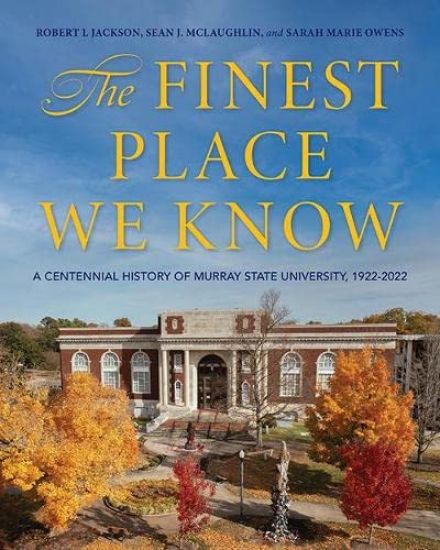
The Finest Place We Know

The Finest Place We Know

Robert L Jackson; Sean J McLaughlin; Sarah Marie Owens

THE UNIVERSITY PRESS OF KENTUCKY
2022
sidottu
"The work of this institution has only begun I want to see this faculty continue to develop in not only teaching ability, but heart power—the ability to lead and inspire I want to see the fullest opportunities furnished to students I want to see young men and women who will become effective leaders I want to see all of these things and more" – Dr. John W. Carr, First President of Murray State University, April 1, 1926 When Murray State University was founded shortly after World War I, it was a modest, one-building teachers' college with a mandate to prepare better-trained educators for schools in the Jackson Purchase area of Western Kentucky. Now Murray State has grown to become a major university with nearly (or approximately) 10,000 students from all over the world. Over the past century, this institution has indelibly shaped the lives of generations of talented young people who went on to enjoy remarkable careers at NASA, the Kentucky Supreme Court, in Hollywood, the NBA, and elsewhere. In The Finest Place We Know, authors Robert L Jackson, Sarah Marie Owens, and Sean J. McLaughlin celebrate the 100-year story of Murray State University by looking back on the people, places, and events which have shaped the institution's history. This comprehensive, pictorial history features hundreds of images from the Progue Special Collections Library and is accompanied by stories that explore everything from the school's first student-produced weekly newspaper The College News that began publication on June 24, 1927, the hiring of Ernest T. Brooks, its first Black professor, in 1970, and the appointment of Dr. Kala Stroup, the first woman president of any Kentucky university. This work – equal parts history and celebration – presents an in depth account of one of Kentucky's prosperous public universities.
Evolutionism In Cultural Anthropology

Evolutionism In Cultural Anthropology

Robert L. Carneiro

Westview Press Inc
2003
nidottu
Evolutionism in Cultural Anthropologytraces the interaction of evolutionary thought and anthropological theory from Herbert Spencer to the twenty-first century. It is a focused examination of how the idea of evolution has continued to provide anthropology with a master principle around which a vast body of data can be organized and synthesized. Erudite and readable, and quoting extensively from early theorists (such as Edward Tylor, Lewis Henry Morgan, John McLennan, Henry Maine, and James Frazer) so that the reader might judge them on the basis of their own words, Evolutionism in Cultural Anthropology is useful reading for courses in anthropological theory and the history of anthropology.
Military Leadership

Military Leadership

Robert L. Taylor; William E. Rosenbach; Eric B. Rosenbach

Westview Press Inc
2008
nidottu
The sixth edition of this classic text continues its popular interdisciplinary approach to the topic of leadership by examining fundamental elements of military leadership: the 'process' of leadership, the dynamic personal interactions between leader and followers, and the individual and organizational values that foster effective military leadership. Military Leadership provides a thoroughly reconsidered and greatly expanded mix of classic and contemporary articles as well as original essays, with authors representing all of the services. Incisive introductory essays to each section highlight themes and connections. Eric B. Rosenbach joins the editorial team for this edition, helping infuse the text with fresh perspectives. The essays of the sixth edition confront the kudos and criticisms that surround military leadership today, offer international viewpoints, and relate military leadership to contemporary leadership theory and approaches.
The Next Agenda

The Next Agenda

Robert L. Borosage; Roger Hickey

Westview Press Inc
2001
nidottu
In The Next Agenda, editors Robert Borosage and Roger Hickey of the Campaign for America's Future have gathered essays written by some of America's most progressive thinkers and activists that lay out ideas and reforms to address the serious issues facing us today. They argue that the economic prosperity of the last decade can only be sustained if it is more widely shared. And they call for a new progressive movement to forge new rules for the global economy just as the Progressives of the last century tamed the excesses of America's national economy.Each of the fourteen essays in The Next Agenda detail the context that makes fundamental reform both necessary and possible and outlines the policy proposals that are vital to begin meeting the challenge. David Moberg, reporter for In These Times, writes about reforming labor law to empower workers whose voices have been drowned out by globalization. Richard Rothstein, education columnist for the New York Times, writes of the growing shortage of classrooms and teachers and suggests reform initiatives for public education. Ted Marmor of the Yale School of Management, and Jon Oberlander, of the University of North Carolina-Chapel Hill, provide a plan to make affordable, comprehensive health care available to everyone. Carl Pope of The Sierra Club and a leader of the environmental movement joins with labor leader Robert Wages, of PACE International, to lay out elements of a Green Growth agenda, detailing how labor and environmentalists can combine in promoting sensible investments for sustainable growth. These forward-thinking essays serve as a springboard for national debate and provide an ambitious agenda for the next administration.
The Environmental Endgame

The Environmental Endgame

Robert L. Nadeau

Rutgers University Press
2006
sidottu
For decades, scholars have warned of an impending global environmental crisis. Yet politicians, particularly in the United States, have consistently shown that they are not taking the threat seriously. Initiatives aimed at protecting the planet are commonly seen as belonging to a category unto themselves-the preserve of scientists and environmental enthusiasts.In this groundbreaking book, Robert L. Nadeau warns that we have moved menacingly close to a global environmental catastrophe and that to evade this fate we must stop drawing a distinction between issues that are "environmental" or "scientific" and those that reside in the sphere of "real life." Although scientists have attempted to bring ecological concerns to the forefront of global issues, problems are rarely communicated in ways that can be readily understood by those outside the scientific community.Bringing together perspectives from a variety of disciplines, including economics, politics, biology, and the history of science, The Environmental Endgame articulates the concerns of scientists in a way that they become the real-life, tangible concerns of people around the world. Nadeau asserts that we have entered a new phase of human history that cannot be one of separation and division but must be one of cooperation and mutual goals.Nadeau demonstrates that our current governmental and financial institutions, based on neoclassical economics, lack the mechanisms for implementing viable solutions to large-scale crises. Such steps cannot be taken without moving beyond the power politics of the nation-state system. The book concludes with a call to view the natural world as part of humanity, not separate from it. This unifying worldview would be a catalyst for implementing the international government organizations necessary to resolving the crisis.The Environmental Endgame is an ambitious and timely book that will change the way we think about our economy, our government, and the environment. It should be read by everyone who cares about the pervasive neglect and abuse of planet Earth and wants to know what can be done about it.
Finding the Right Psychiatrist

Finding the Right Psychiatrist

Robert L. Taylor

Rutgers University Press
2014
nidottu
Choosing a psychiatrist is complicated. If a person doesn’t know what to look for and the questions to ask, finding the right psychiatrist can be daunting.The goal is to find one who, while remaining a competent physician, is as comfortable and capable working with problems of the mind as he or she is prescribing psychiatric medications. Combining over forty years of experience as a practicing psychiatrist with an insider’s perspective of current psychiatric practice, Dr. Robert Taylor provides invaluable guidance to persons considering psychiatric treatment or contemplating a change of doctor in an effort to find better treatment. Cautioning readers against settling for a psychiatrist who views psychodrugs as the treatment, Dr. Taylor provides specific suggestions for avoiding the growing number of psychiatrists who write scripts automatically.In recent decades, psychiatric care has been overly reliant on psychodrugs. Patient diagnoses are being seriously questioned. Finding the Right Psychiatrist encourages people to seek care from a complete psychiatrist—one able and willing to pursue matters of mind and brain/body, rather than settling on psychodrugs as the main treatment. Throughout the book, readers learn about the proper uses and limits of psychiatric diagnosis. Dr. Taylor carefully outlines an individualized approach to psychiatric care guided more by a patient’s particular problems and situation than by diagnoses that often mislead more than help. He provides a realistic appraisal of psychiatric medications: what they can and cannot do as well, a discussion of mind work tools, traits of effective psychiatrists, suggestions for how to deal with common insurance company obstacles, and an explanation of the confusing politics of psychiatry.An indispensable resource for anyone seeking psychiatric help or tasked with advising someone of what to look for in a doctor, Finding the Right Psychiatrist gives hope and guidance to those searching for complete and personalized care. View a three minute video of Dr. Robert L. Taylor speaking about Finding the Right Psychiatrist.
Finding the Right Psychiatrist

Finding the Right Psychiatrist

Robert L. Taylor

Rutgers University Press
2014
sidottu
Choosing a psychiatrist is complicated. If a person doesn’t know what to look for and the questions to ask, finding the right psychiatrist can be daunting.The goal is to find one who, while remaining a competent physician, is as comfortable and capable working with problems of the mind as he or she is prescribing psychiatric medications. Combining over forty years of experience as a practicing psychiatrist with an insider’s perspective of current psychiatric practice, Dr. Robert Taylor provides invaluable guidance to persons considering psychiatric treatment or contemplating a change of doctor in an effort to find better treatment. Cautioning readers against settling for a psychiatrist who views psychodrugs as the treatment, Dr. Taylor provides specific suggestions for avoiding the growing number of psychiatrists who write scripts automatically.In recent decades, psychiatric care has been overly reliant on psychodrugs. Patient diagnoses are being seriously questioned. Finding the Right Psychiatrist encourages people to seek care from a complete psychiatrist—one able and willing to pursue matters of mind and brain/body, rather than settling on psychodrugs as the main treatment. Throughout the book, readers learn about the proper uses and limits of psychiatric diagnosis. Dr. Taylor carefully outlines an individualized approach to psychiatric care guided more by a patient’s particular problems and situation than by diagnoses that often mislead more than help. He provides a realistic appraisal of psychiatric medications: what they can and cannot do as well, a discussion of mind work tools, traits of effective psychiatrists, suggestions for how to deal with common insurance company obstacles, and an explanation of the confusing politics of psychiatry.An indispensable resource for anyone seeking psychiatric help or tasked with advising someone of what to look for in a doctor, Finding the Right Psychiatrist gives hope and guidance to those searching for complete and personalized care. View a three minute video of Dr. Robert L. Taylor speaking about Finding the Right Psychiatrist.
Managing Your Mouth

Managing Your Mouth

Robert L. GENUA

Amacom
2007
nidottu
This helpful resource helps businesspeople master the many aspects of one-on-one communication and keep their feet on the ground--where they belong.Foot-in-mouth syndrome may sound like a joke, but the result can be disastrous in the workplace.This valuable guide starts you off with an in-depth personal assessment and then explains how they can:use verbal skills to move up the corporate laddersay the right thing at the right timejudge personality and its influence on behaviorevaluate the role of nonverbal cues and meaningsManaging Your Mouth will help you handle the most trying communication scenarios, including controversy, bad news, networking, gossip, company secrets, proprietary information, meetings, and interviews.
Let Ministry Teach

Let Ministry Teach

Robert L. Kinast

Liturgical Press
1996
pokkari
Relating theology to the practice of ministry is one of the most elusive goals in pastoral training. Drawing upon seventeen years of experience in theology, Doctor Kinast describes a step-by-step approach to help students and experienced ministers learn what their ministry teaches. Through examples, practical suggestions, and principles grounded in process theology, readers of Let Ministry Teach explore the full range of resources needed for meaningful theological reflection.Let Ministry Teach strikes a clear balance between a very broad and detailed presentation of a theological reflection method so that it is neither too simplistic nor too hard to handle. Each chapter describes a fundamental step in the method with the help of an illustration and commentary. Chapters conclude with a list of practical suggestions and a short description of the theoretical background and its main points.The challenge of theological reflection is to keep theology in the authentic experience of God's presence in our midst. Let Ministry Teach places this reflection in context: in a small group - where it works best; as a meaningful experience - one that has an impact, and initiates discussion; as a faith-theological perspective reflecting on experience from many points of view; as a practical outcome where a person is in a better position to guide events according to one's beliefs; and as a continuous process - a skill which must be practiced.In Let Ministry Teach, Doctor Kinast develops a successful way of doing theological reflection, which includes: selecting an experience - focusing on the meaningful moments; describing an experience - making it available for reflection; entering an experience - learning what it has to teach; learning from an experience - grasping what it teaches by relating it to what a person already knows and what the experience suggests is yet to be learned, and enacting the learning - incorporating the learning into a pattern of living and theological reflection.The true basis of theological reflection - a full, deep, meaningful embrace of life - is learned from one's own experience. Respectful of the full range of theological resources available for reflection, and mindful of the primary goal of recognizing God's presence and responding to it, theological reflection weaves experience and theology together into a way of life that continues the journey begun when Jesus first appeared. Let Ministry Teach is offered as a companion for those on that journey.Robert L. Kinast, a pastoral theologian, specializes in the field of theological reflection. Through the publications and services of the Center for Theological Reflection, Indian Rocks Beach, Florida, he contributes to the ministry training programs of many denominations in the United States and Canada. He is the author of the Vatican II: Act II series and Mirror Meditations: Praying with the Images of Vatican II, published by Liturgical Press.
Making Faith-Sense

Making Faith-Sense

Robert L. Kinast

Liturgical Press
1999
pokkari
Making faith-sense is a new term for an ancient practice. It is what the early Christians called mystical or wisdom theology: understanding life in the light of God's participation recorded in the Gospels, recognizing the signs of God's presence in everyday events and shaping one's life accordingly. In Making Faith-Sense, Robert Kinast shows all who seek to unify their life experience around their belief in God how to follow that ancient practice. Drawing upon the award-winning process he has used with students for the ministry, Father Kinast explains how to make sense of family, work, and cultural experience from the perspective of Christian faith. Each chapter contains numerous real-life examples and practical guidelines that can be used privately or with a group.Making Faith-Sense begins with a discussion of wisdom theology and its revival in modern times, highlighting the turn to experience" that characterizes feminist, liberation, and inculturated theologies. The methods for making faith-sense embrace three main components: experience, reflection, and action. The first section describes what is meant by experience, the value of narrating it, how to analyze it, and what to pay attention to so that experience will reveal its theological meaning. The second section explains the role of reflection, its similarity to prayer, techniques for connecting experience to theological tradition, and the most useful theological resources for making faith-sense. The third section affirms the importance of putting reflection into practice, of ensuring that action flows from reflection, of planning and evaluating the effect of one's practice, and of using practice as the starting point for continuing the process of making faith-sense. Examples from work, family, and cultural life are used throughout to provide illustrations of these general points. A concluding chapter summarizes the reemergence of practical theology since the 1980s as an effort of church communities to make faith-sense of their collective lives.Chapters are *What Is Faith-Sense? - *How to Make Faith-Sense: Getting Started, - *How to Make Faith-Sense: The Heart of the Matter, - and *Enacting Faith-Sense: The Culmination of the Process. -Robert L. Kinast, PhD, is a pastoral theologian specializing in the field of theological reflection. Through the publications and services of the Center for Theological Reflection, Indian Rocks Beach, Florida, he contributes to the ministry training programs of many denominations in the United States and Canada. Father Kinast is the author of the Vatican II: Act II series and Let Ministry Teach, published by Liturgical Press.
Berit Olam

Berit Olam

Robert L. Cohn

Liturgical Press
2000
sidottu
Opening with the prophet Elijah's ascent into heaven and closing with the people of Judah's descent to Babylonia, 2 Kings charts the story of the two Israelite kingdoms until their destruction. This commentary unfolds the literary dimensions of 2 Kings, analyzes the strategies through which its words create a world of meaning, and examines the book's tales of prophets, political intrigue, royal apostasy, and religious reform as components of larger patterns.2 Kings pays attention to the writers' methods of representing human character and of twisting chronological time for literary purposes. It also shows how the contests between kings and prophets are mirrored in the competing structures of regnal synchronization and prophecy-fulfillment. Much more than a common chronicle of royal achievements and disasters, 2 Kings emerges as a powerful history that creates memories and forges identities for its Jewish readers.2 Kings is divided into four parts including Part One The Story of Elisha: 2 Kings 1:1-8:6"; Part Two "Revolutions in Aram, Israel, and Judah: 2 Kings 8:7-13:25"; Part Three "Turmoil and Tragedy for Israel: 2 Kings 14-17"; and Part Four "Renewal and Catastrophe for Judah: 2 Kings 18-25."Robert L. Cohn is professor of religion and holds the Philip and Muriel Berman Chair in Jewish studies at Lafayette College. Under the auspices of the American Jewish Committee, he lectured on Jewish interpretations of the Bible as the first American Jewish-scholar-in-residence at four Roman Catholic seminaries in Poland.
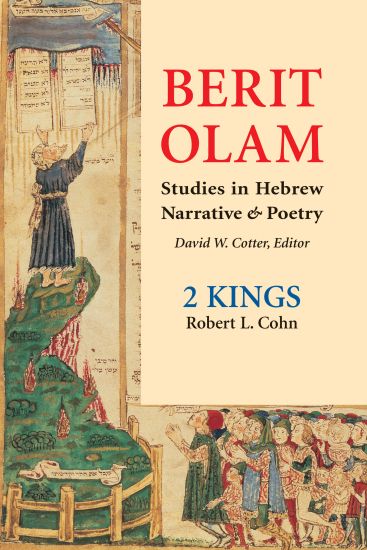
Berit Olam

Berit Olam

Robert L. Cohn

Liturgical Press
2018
pokkari
Opening with the prophet Elijah's ascent into heaven and closing with the people of Judah's descent to Babylonia, 2 Kings charts the story of the two Israelite kingdoms until their destruction. This commentary unfolds the literary dimensions of 2 Kings, analyzes the strategies through which its words create a world of meaning, and examines the book's tales of prophets, political intrigue, royal apostasy, and religious reform as components of larger patterns.2 Kings pays attention to the writers' methods of representing human character and of twisting chronological time for literary purposes. It also shows how the contests between kings and prophets are mirrored in the competing structures of regnal synchronization and prophecy-fulfillment. Much more than a common chronicle of royal achievements and disasters, 2 Kings emerges as a powerful history that creates memories and forges identities for its Jewish readers.2 Kings is divided into four parts including Part One The Story of Elisha: 2 Kings 1:1-8:6"; Part Two "Revolutions in Aram, Israel, and Judah: 2 Kings 8:7-13:25"; Part Three "Turmoil and Tragedy for Israel: 2 Kings 14-17"; and Part Four "Renewal and Catastrophe for Judah: 2 Kings 18-25."Robert L. Cohn is professor of religion and holds the Philip and Muriel Berman Chair in Jewish studies at Lafayette College. Under the auspices of the American Jewish Committee, he lectured on Jewish interpretations of the Bible as the first American Jewish-scholar-in-residence at four Roman Catholic seminaries in Poland.
Henryson and the Medieval Arts of Rhetoric

Henryson and the Medieval Arts of Rhetoric

Robert L. Kindrick

CRC Press Inc
1993
sidottu
First published in 1993. Volume 8 in the 9-volume set of Studies in Medieval Literature, a series of interpretative and analytic studies of the Western European literatures of the Middle Ages. This volume extends the canon of works to be read and studied by providing a new framework for understanding that will inspire students and scholars to look anew at Robert Henryson's poetry. The reader will find it rewarding to read the mainline exposition but will also find a second reward in the knowledge accumulated to support that exposition.
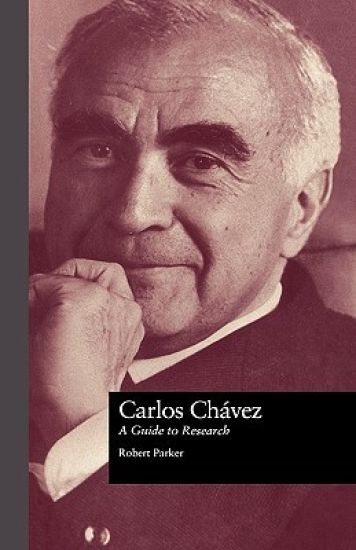
Carlos Chavez

Carlos Chavez

Robert L. Parker

CRC Press Inc
1998
sidottu
This book is the first extensive guide to the life, music, and writings of Carlos Ch vez (1899-1978), Mexico's most influential musician of the 20th century. The chapter on biography also presents a characterization of his compositional styles. This work provides a comprehensive listing of Ch vez's compositions and arrangements by genre and performance medium, and reviews the composer's own abundant writings on a broad range of musical subjects. Subsequent chapters address other authors' writings about his multi-faceted career as composer, conductor, teacher, and arts administrator that contributed to his international reputation. A chapter on Research Aids includes annotations of pertinent general reference works, catalogs, and collections of letters that will assist both the general reader and the music specialist.Introductory narratives illuminate the bibliographic entries in each section, and cross references facilitate access to literature that extends beyond a single relevant topic. The book includes three indexes, which cover compositions and arrangements, authors and titles, and subjects.
Gods in Granite

Gods in Granite

Robert L. McGrath

Syracuse University Press
2001
sidottu
A survey of the topographic and metaphoric landscape of New Hampshire's White Mountains through the artistic and tourist life of the region as it appears in paintings and illustrations. Extending from the late-18th to the late-20th century, it includes a large collection of pictorial works.
Leadership Abroad Begins at Home

Leadership Abroad Begins at Home

Robert L. Paarlberg

Brookings Institution
1995
nidottu
What's good for the United States may well turn out to be good for international economic policy coordination. In this post-cold war era marked by pressing domestic social concerns and fiscal deficits, Robert L. Paarlberg says that the U.S. government should take an inward-first approach to global economic policy. Unless the domestic front is secured, he believes that international initiatives cannot succeed for lack of domestic support.It's a contrary view. The outward-first approach has dominated U.S. policy in the post-war and cold war eras. Paarlberg holds that the period was exceptional in the longer history of the nation and its relations with other nations. In the future, this sort of policymaking will be increasingly difficult to sustain.The U.S. economy is not as strong as it once was in relation to other economies. The security imperatives of the cold war have largely evaporated. And Congress is certainly no longer deferential to the executive branch. Under these new circumstances, outward-first international conferences, international negotiations, and international agreements may not work as a starting point for international economic cooperation.In this highly readable book, part of the Brookings Integrating National Economies Series, Paarlberg offers an in-dept examination of the merits of an inward-first approach to economic policy leadership. He contends that this approach should not be equated with protectionism, because it refers only to policy sequence, not to content. To the extent that inward-first is unilateral, he maintains that unilateral action at home can pave the way for cooperative actions abroad. He tests his argument with more detailed studies in several different policy arenas?including international fiscal policy coordination and discipline, agricultural policy reform, and global environmental policy.Leadership Abroad Begins at Home presents an instructive survey of American political and policymaking institutions, and of America's changing position in the world.A volume of Brookings' Integrating National Economies Series
Beyond Tiananmen

Beyond Tiananmen

Robert L. Suettinger

Brookings Institution
2004
nidottu
"It has been thirteen years since soldiers of the Chinese People's Liberation Army (PLA) raced into the center of Beijing, ordered to recover ""at any cost"" the city's most important landmark, Tiananmen Square, from student demonstrators. The U.S. and other Western countries recoiled in disgust after the horrific incident, and the relationship between the U.S. and China went from amity and strategic cooperation to hostility, distrust, and misunderstanding. Time has healed many of the wounds from those terrible days of June 1989, and bilateral strains have been eased in light of the countries' joint opposition to international terrorism. Yet China and U.S. remain locked in opposition, as strategic thinkers and military planners on both sides plot future conflict scenarios with the other side as principal enemy. Polls indicate that most Americans consider China an ""unfriendly"" country, and anti-American sentiment is growing in China. According to Robert Suettinger, the calamity in Tiananmen Square marked a critical turning point in U.S.-China affairs. In Beyond Tiananmen, Suettinger traces the turbulent bilateral relationship since that time, with a particular focus on the internal political factors that shaped it. Through a series of candid anecdotes and observations, Suettinger sheds light on the complex and confused decision-making process that affected relations between the U.S. and China between 1989 and the end of the Clinton presidency in 2000. By illuminating the way domestic political ideas, beliefs, and prejudices affect foreign policymaking, Suettinger reveals policy decisions as outcomes of complex processes, rather than the results of grand strategic trends. He also refutes the view that strategic confrontation between the superpowers is inevitable. Suettinger sees considerable opportunity for cooperation and improvement in what is likely to be the single most important bilateral relationship of the twenty-first century. He cautions, however, that routine misperceptions of goals and policies between the two countries—unfortunate legacies of Tiananmen—could lead to an increasing level of hostility, with tragic consequences."