
Kirjahaku
Etsi kirjoja tekijän nimen, kirjan nimen tai ISBN:n perusteella.
1000 tulosta hakusanalla Roger Ascham
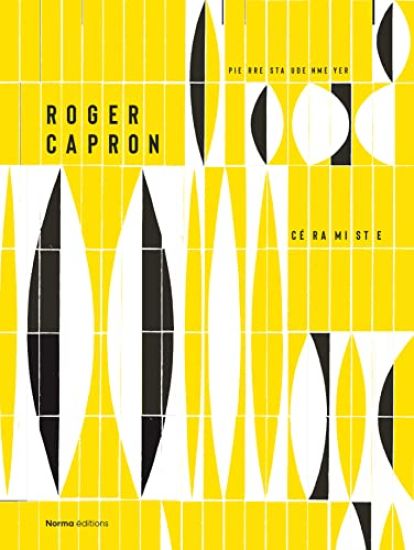
A vastly expanded reprint of the 2003 edition, this richly illustrated monograph looks back at the career of Roger Capron (1922-2006), the only French ceramist of his time to have both produced a major body of artistic work and founded a leading one-man business. After studying under the decorator René Gabriel, Capron set up the Callis ceramics workshop in Vallauris with Robert Picault in 1946, contributing to the renaissance of ceramics and making beauty accessible to all. It was at this time that the emblematic shapes and representations of his work appeared, such as stylised figures, animal inspirations and suns. In 1952, he bought a disused pottery and began his industrial adventure, producing glazed tiles, occasional furniture and decorative panels. At the end of the '50s, the commission for a 174 m2 fresco for the Cannes ferry terminal introduced him to architectural ceramics, which he would use in other productions such as the stoneware dance floor at the Byblos hotel in Saint Tropez. Finally, in the 1980s, Capron embarked on a new line of work, producing unique pieces akin to sculpture. Based on the original text by Pierre Staudenmeyer, this version is enriched by an exclusive interview between Jacotte Capron and Flavien Gaillard, a specialist in the decorative arts of the 20th century, as well as by an abundant iconography. Text in French.


Roger Bacon and the Incorruptible Human, 1220-1292
Meagan S. Allen
Springer International Publishing AG
2023
sidottu
This book examines the Franciscan alchemist Roger Bacon’s (1220-1292) interest in the role of alchemy in medicine, and how this interest connected with the thirteenth-century milieu in which he was writing. Though twelfth-century Latin alchemy had largely been concerned with transmuting base metals into noble ones, Bacon believed that the natural principles taught in alchemy would be better used in medicine. In an age where many physicians were theorizing about ways to prevent the effects of aging, Bacon held that combining alchemy and humoral medicine would allow one to extend their life by decades, even centuries. By examining Bacon’s alchemical, medical, and mathematical works, this book argues that Bacon combined a number of sources to create a unique plan for prolonging human life. His understanding of disease and aging was ultimately Galenic in nature, and his understanding of how pharmaceuticals work can be traced back to his mathematical theories, especially that of the multiplication of species. The book provides a new system for organizing Bacon’s alchemically-produced medicines, and explains what Bacon saw as the difference between each, and how they could have different physiological effects. Bacon is situated within the thirteenth-century contexts in which he was writing – that of the university-educated and newly professionalized medical practitioners, who were invested in finding ways to extend human life; and the Franciscan order, with their understanding of the innate goodness of the physical body, the resurrection, and corporeal union with God. Filling a major lacuna in scholarship on the history of medieval medical writings, this book provides vital reading for historians of medicine, pre- and early modern European science, and medieval philosophy and religion.
Roger Bacon and the Incorruptible Human, 1220-1292
Meagan S. Allen
Springer International Publishing AG
2024
nidottu
This book examines the Franciscan alchemist Roger Bacon’s (1220-1292) interest in the role of alchemy in medicine, and how this interest connected with the thirteenth-century milieu in which he was writing. Though twelfth-century Latin alchemy had largely been concerned with transmuting base metals into noble ones, Bacon believed that the natural principles taught in alchemy would be better used in medicine. In an age where many physicians were theorizing about ways to prevent the effects of aging, Bacon held that combining alchemy and humoral medicine would allow one to extend their life by decades, even centuries. By examining Bacon’s alchemical, medical, and mathematical works, this book argues that Bacon combined a number of sources to create a unique plan for prolonging human life. His understanding of disease and aging was ultimately Galenic in nature, and his understanding of how pharmaceuticals work can be traced back to his mathematical theories, especially that of the multiplication of species. The book provides a new system for organizing Bacon’s alchemically-produced medicines, and explains what Bacon saw as the difference between each, and how they could have different physiological effects. Bacon is situated within the thirteenth-century contexts in which he was writing – that of the university-educated and newly professionalized medical practitioners, who were invested in finding ways to extend human life; and the Franciscan order, with their understanding of the innate goodness of the physical body, the resurrection, and corporeal union with God. Filling a major lacuna in scholarship on the history of medieval medical writings, this book provides vital reading for historians of medicine, pre- and early modern European science, and medieval philosophy and religion.

Roger Fry’s ‘Difficult and Uncertain Science’
Adrianne Rubin
Peter Lang AG, Internationaler Verlag der Wissenschaften
2013
nidottu
This new study traces the development and evolution of the writings of Roger Fry (1866-1934), a highly influential art critic who introduced modern French painting to Britain in the early twentieth century. Through close analysis of his writings, the author examines the role that emerging psychological theories played in the formulation and expression of Fry’s aesthetic theories. She also discusses aspects of physiological psychology, Gestalt theory, psychoanalysis and adaptive psychology, arguing that detailed analyses of aesthetic perception comprise the core of Fry’s writings. Though he has rarely been credited with this goal, this volume shows that Fry sought to make art accessible to a wide audience and that highlighting the universal aspects of aesthetic perception was a means to this end. The book offers a chronological study of select essays and lectures, both published and unpublished, written by Roger Fry between the 1890s and his death in 1934. Where relevant his writings are juxtaposed with those of other art critics and theorists to identify factors that shaped his thinking and his use of terminology and to clarify the critical context in which he was working. Since Fry’s work as a visual artist ran alongside his critical thinking, some attention is given to his paintings as a method of illustrating his practical experimentation with aesthetic principles, particularly formalist concepts.
Roger Boltshauser - Response
Park Books
2023
pokkari
Zurich-based Boltshauser Architekten, which also runs a branch office in Munich, is one of most successful and idiosyncratic Swiss design firms. Text in English, German, and French.
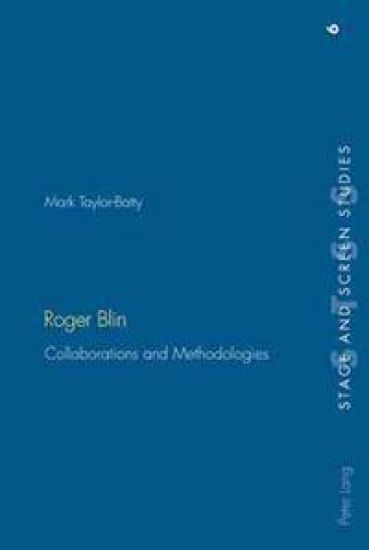
Roger Blin's career in the Arts was woven inextricably into the fabric of the Twentieth-Century French Avant-Garde. First appearing in the films of Abel Gance, Marcel Carne and Jean Cocteau, his acting career led him to a close friendship and association with Antonin Artaud, for whom he performed the function of assistant director. He championed Samuel Beckett's "En attendant Godot," otherwise rejected unanimously by the French theatrical establishment, was Jean Genet's director of choice and was long associated with artists and practitioners as diverse as Arthur Adamov, Jean-Louis Barrault and Jacques Prevert. Marxist in outlook, Blin also sought to apply rigorous humanist principles to his art and delighted in the opportunities he enjoyed to disrupt and upturn the attitudes and complacencies of certain of his audiences. This book surveys all aspects of Blin's artistic output to consider and clarify his motivations, his ambitions and his aesthetic preferences. In doing so, the author hopes to offer perspectives on the methodologies that Blin employed and define the influence his work and his legacy has exerted on the French and World stage."




Roger Rättel und die heißeste Detektivschule der Welt - Ein Loch in der Wüste
Andreas Hüging
Penguin Junior
2024
sidottu

Roger Hunt is an unchanged, high-quality reprint of the original edition of 1892. Hansebooks is editor of the literature on different topic areas such as research and science, travel and expeditions, cooking and nutrition, medicine, and other genres. As a publisher we focus on the preservation of historical literature. Many works of historical writers and scientists are available today as antiques only. Hansebooks newly publishes these books and contributes to the preservation of literature which has become rare and historical knowledge for the future.



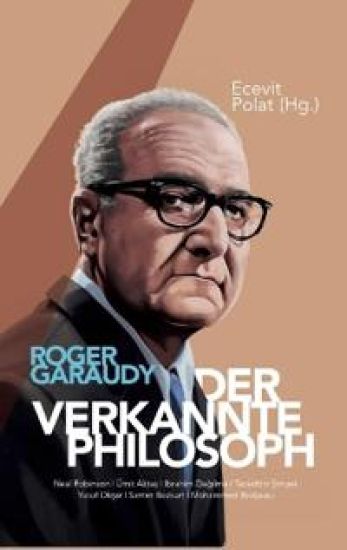
In der Weltgeschichte traten nicht wenige namhafte Gelehrte/Denker auf der Weltb hne auf, deren geistreicher und wertvoller Einsatz f r den Dienst an den Zivilisationen bis heute nicht geb hrend gew rdigt worden ist. War es im 9. Jahrhundert der arabische Philosoph Al-Kindi (gest. 873), der - obwohl er den Beinamen "failasuf al-arab" (dt. Philosoph der Araber) erhielt - aufgrund von diversen Hintergr nden ber die Jahrhunderte hinweg verkannt wurde, so ist das ad quate Schicksal j ngst auch dem franz sischen Philosophen Roger Garaudy beschieden worden. R ckblickend war Garaudy im 20. Jahrhundert der f hrende Denker des Eurokommunismus gewesen, dessen Werke und Vortr ge internationales Aufsehen erregten. Erst drei Tage nach seinem Ableben, am 15. Juni 2012, meldete die S ddeutsche Zeitung folgende Zeilen ber ihn: "Garaudy schrieb im Laufe seines Lebens unz hlige Essays, Romane und politisch-wissenschaftliche Werke. Seine Vortr ge wurden vom Publikum, darunter vielen Jugendlichen, oft regelrecht gest rmt. Mit seinen Ver ffentlichungen sorgte er ber die Jahrzehnte f r zahlreiche internationale Kontroversen. Im Zuge seiner Israel- u erungen wurden nicht zuletzt die arabischen bersetzungen von Garaudys Werken zu Verkaufserfolgen."
Reimpresi n del original, primera publicaci n en 1878.
Reimpresi n del original, primera publicaci n en 1878.