

Kirjahaku
Etsi kirjoja tekijän nimen, kirjan nimen tai ISBN:n perusteella.
1000 tulosta hakusanalla Samuel Butler; Henry Festing Jones
Posthumous Works In Prose And Verse
Samuel Butler; Sir Roger L'Estrange
KESSINGER PUBLISHING CO
2008
pokkari
The Iliad & The Odyssey
Samuel Butler; Homer
Createspace Independent Publishing Platform
2014
nidottu
Coleridge's Ancient Mariner and Select Poems (annotated)
Samuel Butler Coleridge
Createspace Independent Publishing Platform
2015
nidottu
Coleridge's Ancient Mariner and Select Poems is a classic poetry collection by Samuel Taylor Coleridge. Coleridge lived in what may safely be called the most momentous period of modern history. In the year following his birth Warren Hastings was appointed first governor-general of India, where he maintained English empire during years of war with rival nations, and where he committed those acts of cruelty and tyranny which called forth the greatest eloquence of the greatest of English orators, in the famous impeachment trial at Westminster, when Coleridge was a sixteen-year-old schoolboy in London. The Rime of the Ancient Mariner (originally The Rime of the Ancyent Marinere) is the longest major poem by the English poet Samuel Taylor Coleridge, written in 1797-98 and published in 1798 in the first edition of Lyrical Ballads. Some modern editions use a revised version printed in 1817 that featured a gloss. citation needed] Along with other poems in Lyrical Ballads, it is often considered a signal shift to modern poetry and the beginning of British Romantic literature. The Rime of the Ancient Mariner relates the experiences of a sailor who has returned from a long sea voyage. The mariner stops a man who is on the way to a wedding ceremony and begins to narrate a story. The wedding-guest's reaction turns from bemusement to impatience to fear to fascination as the mariner's story progresses, as can be seen in the language style: Coleridge uses narrative techniques such as personification and repetition to create a sense of danger, the supernatural, or serenity, depending on the mood in different parts of the poem. The mariner's tale begins with his ship departing on its journey. Despite initial good fortune, the ship is driven south by a storm and eventually reaches Antarctic waters. An albatross appears and leads them out of the ice jam where they are stuck, but even as the albatross is praised by the ship's crew, the mariner shoots the bird: The crew is angry with the mariner, believing the albatross brought the south wind that led them out of the Antarctic. However, the sailors change their minds when the weather becomes warmer and the mist disappears: 'Twas right, said they, such birds to slay, That bring the fog and mist. They soon find that they made a grave mistake in supporting this crime, as it arouses the wrath of spirits who then pursue the ship "from the land of mist and snow"; the south wind that had initially led them from the land of ice now sends the ship into uncharted waters near the equator, where it is becalmed. Day after day, day after day, We stuck, nor breath nor motion; As idle as a painted ship Upon a painted ocean. Water, water, every where, And all the boards did shrink; Water, water, every where, Nor any drop to drink. The very deep did rot - Oh Christ That ever this should be. Yea, slimy things did crawl with legs, Upon the slimy sea. The sailors change their minds again and blame the mariner for the torment of their thirst. In anger, the crew forces the mariner to wear the dead albatross about his neck, perhaps to illustrate the burden he must suffer from killing it, or perhaps as a sign of regret.
"The Iliad," attributed to Homer, stands as a cornerstone of Western literature and a captivating journey into the heart of the Trojan War. This epic poem, rooted in Greek mythology, explores themes of war, honor, and the human condition with unparalleled power. Experience the intensity of the battles, the wrath of the gods, and the struggles of heroes in this timeless classic. "The Iliad" immortalizes the siege of Troy, bringing to life the legendary events that have resonated through the ages. Within its verses, explore the complexities of Achilles and other iconic figures whose destinies are intertwined with the fate of a civilization. This meticulously prepared print edition offers readers an opportunity to immerse themselves in the enduring legacy of Homer's masterpiece. A vital piece of historical and literary heritage, "The Iliad" remains a powerful testament to the enduring nature of storytelling.This work has been selected by scholars as being culturally important, and is part of the knowledge base of civilization as we know it.This work is in the public domain in the United States of America, and possibly other nations. Within the United States, you may freely copy and distribute this work, as no entity (individual or corporate) has a copyright on the body of the work.Scholars believe, and we concur, that this work is important enough to be preserved, reproduced, and made generally available to the public. We appreciate your support of the preservation process, and thank you for being an important part of keeping this knowledge alive and relevant.
"The Iliad," attributed to Homer, stands as a cornerstone of Western literature and a captivating journey into the heart of the Trojan War. This epic poem, rooted in Greek mythology, explores themes of war, honor, and the human condition with unparalleled power. Experience the intensity of the battles, the wrath of the gods, and the struggles of heroes in this timeless classic. "The Iliad" immortalizes the siege of Troy, bringing to life the legendary events that have resonated through the ages. Within its verses, explore the complexities of Achilles and other iconic figures whose destinies are intertwined with the fate of a civilization. This meticulously prepared print edition offers readers an opportunity to immerse themselves in the enduring legacy of Homer's masterpiece. A vital piece of historical and literary heritage, "The Iliad" remains a powerful testament to the enduring nature of storytelling.This work has been selected by scholars as being culturally important, and is part of the knowledge base of civilization as we know it.This work is in the public domain in the United States of America, and possibly other nations. Within the United States, you may freely copy and distribute this work, as no entity (individual or corporate) has a copyright on the body of the work.Scholars believe, and we concur, that this work is important enough to be preserved, reproduced, and made generally available to the public. We appreciate your support of the preservation process, and thank you for being an important part of keeping this knowledge alive and relevant.

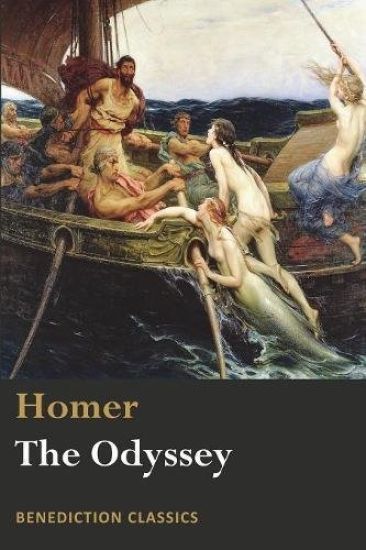
Homer's epic tale of Odysseus and his ten-year journey home after the Trojan war is one of the earliest and greatest works of literature. His influence on the Western imagination is immense; Plato calls him "the leader of Greek culture." Samuel Butler has beautifully rendered Homer's Greek verse into English prose. (Unabridged, with footnotes.)

Shakespeare's Sonnets Reconsidered - and in part rearranged with introductory chapters, notes, and a reprint of the original 1609 edition is an unchanged, high-quality reprint of the original edition of 1899. Hansebooks is editor of the literature on different topic areas such as research and science, travel and expeditions, cooking and nutrition, medicine, and other genres. As a publisher we focus on the preservation of historical literature. Many works of historical writers and scientists are available today as antiques only. Hansebooks newly publishes these books and contributes to the preservation of literature which has become rare and historical knowledge for the future.
Aeschyli Tragoediae Quae Supersunt
Aeschylus; Thomas Stanley; Samuel Butler
Hutson Street Press
2025
nidottu
Aeschyli Tragoediae Quae Supersunt presents the surviving tragedies of Aeschylus in their original Latin. This edition, complete with fragments and indices, offers scholars and enthusiasts alike a valuable resource for studying the foundational works of Greek tragedy. Aeschylus, one of the towering figures of classical literature, explores profound themes of justice, fate, and the human condition. This collection provides direct access to the language and structure of Aeschylus's enduring dramas. This version is carefully compiled for accuracy and clarity, ensuring an authoritative text for both academic study and personal enrichment. This work has been selected by scholars as being culturally important, and is part of the knowledge base of civilization as we know it. This work was reproduced from the original artifact, and remains as true to the original work as possible. Therefore, you will see the original copyright references, library stamps (as most of these works have been housed in our most important libraries around the world), and other notations in the work. This work is in the public domain in the United States of America, and possibly other nations. Within the United States, you may freely copy and distribute this work, as no entity (individual or corporate) has a copyright on the body of the work. As a reproduction of a historical artifact, this work may contain missing or blurred pages, poor pictures, errant marks, etc. Scholars believe, and we concur, that this work is important enough to be preserved, reproduced, and made generally available to the public. We appreciate your support of the preservation process, and thank you for being an important part of keeping this knowledge alive and relevant.

Cabinet Of Poetry V2
Abraham Cowley; Edward Waller; Samuel Butler
KESSINGER PUBLISHING CO
2009
pokkari


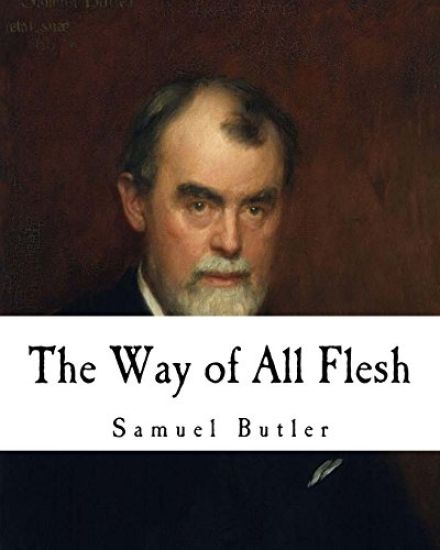
The Way of All Flesh
R. a. Streatfeild; Samuel Butler
Createspace Independent Publishing Platform
2018
nidottu
The Way of All Flesh by Samuel Butler. The Way of All Flesh (1903) is a semi-autobiographical novel by Samuel Butler that attacks Victorian-era hypocrisy. Samuel Butler began to write "The Way of All Flesh" about the year 1872, and was engaged upon it intermittently until 1884. It is therefore, to a great extent, contemporaneous with "Life and Habit," and may be taken as a practical illustration of the theory of heredity embodied in that book. He did not work at it after 1884, but for various reasons he postponed its publication. He was occupied in other ways, and he professed himself dissatisfied with it as a whole, and always intended to rewrite or at any rate to revise it. His death in 1902 prevented him from doing this, and on his death-bed he gave me clearly to understand that he wished it to be published in its present form. I found that the MS. of the fourth and fifth chapters had disappeared, but by consulting and comparing various notes and sketches, which remained among his papers, I have been able to supply the missing chapters in a form which I believe does not differ materially from that which he finally adopted. With regard to the chronology of the events recorded, the reader will do well to bear in mind that the main body of the novel is supposed to have been written in the year 1867, and the last chapter added as a postscript in 1882.
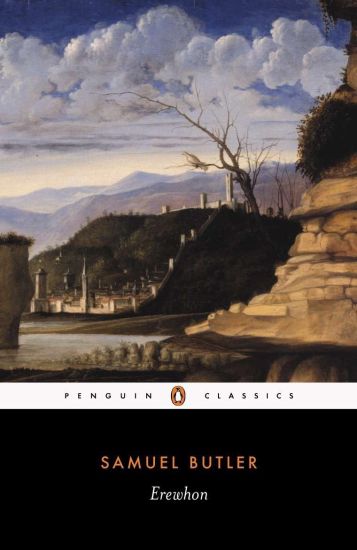
Setting out to make his fortune in a far-off country, a young traveller discovers the remote and beautiful land of Erewhon and is given a home among its extraordinarily handsome citizens. But their visitor soon discovers that this seemingly ideal community has its faults - here crime is treated indulgently as a malady to be cured, while illness, poverty and misfortune are cruelly punished, and all machines have been superstitiously destroyed after a bizarre prophecy. Can he survive in a world where morality is turned upside down? Inspired by Samuel Butler's years in colonial New Zealand and by his reading of Darwin's Origin of Species, Erewhon (1872) is a highly original, irreverent and humorous satire on conventional virtues, religious hypocrisy and the unthinking acceptance of beliefs.

Originally published in 1905 as part of the Cambridge English Classics series, this book contains the text of Hudibras by the satirical poet Samuel Butler (1613–80). The text is taken from the 1678 edition of the poem, and notes on the variations on the text found in previous versions are included at the back of the book. This book will be of value to anyone with an interest in English satire or Restoration literature.