Kirjojen hintavertailu. Mukana 12 016 292 kirjaa ja 12 kauppaa.

Kirjahaku

Etsi kirjoja tekijän nimen, kirjan nimen tai ISBN:n perusteella.

1000 tulosta hakusanalla Sean Howe

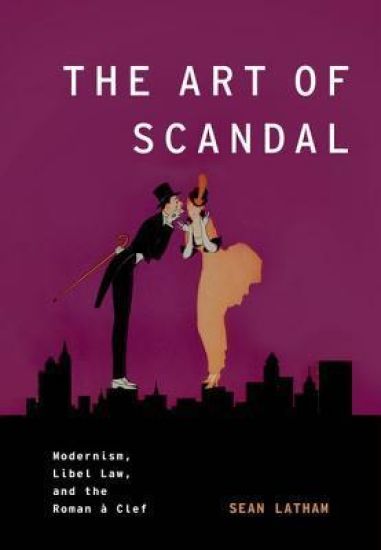
The Art of Scandal

The Art of Scandal

Sean Latham

Oxford University Press Inc
2012
nidottu
The Art of Scandal advances a relatively simple claim with far-reaching consequences for modernist studies: writers and readers throughout the early twentieth century revived the long-despised codes and habits of the roman á clef as a key part of that larger assault on Victorian realism we now call modernism. In the process, this resurgent genre took on a life of its own, reconfiguring the intricate relationship between literature, celebrity, and the law. Sean Latham summons cases of the novel's social notoriety--and the numerous legal scandals the form provoked--to articulate the material networks of reception and circulation through which modernism took shape, revealing a little explored popular history within its development. Producers as well as consumers used elements of the controversial roman á clef, a genre that challenges the idea of fiction as autonomous from the social and political world. In turn, this widespread practice provoked not only a generative aesthetic crisis, but also a gradually unfolding legal quandary that led Britain's highest courts to worry that fiction itself might be illegal. Modernism sat squarely, for a time, between literature and the law. With skillful close readings aided by extensive archival research, Latham illuminates the world of backbiting, gossip, litigation, and sensationalism through chapters on Oscar Wilde's trial, Joyce's Ulysses, celebrity salons, and Parisian bohemia. Original, colorful, and perceptive, The Art of Scandal both salvages the reputation of the roman á clef form and traces its curious itinerary through the early twentieth century. Seeking out the best new interdisciplinary work, this series explores the cultural bearings of literary modernism across multiple fields, geographies, symbolic forms, and media.
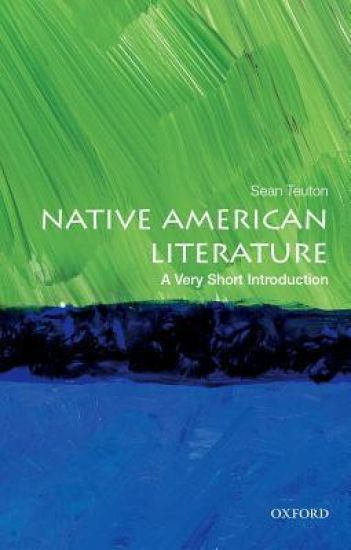
Native American Literature

Native American Literature

Sean Teuton

Oxford University Press Inc
2018
nidottu
In North America, the Indigenous literature we know today reaches back thousands of years to when the continent's original inhabitants first circled fires and shared tales of emergence and creation, journey and quest, heroism and trickery. Sean Teuton tells the story of Indigenous literature, from the time when oral narrative inspired the first Indigenous writers in English, through later writers' appropriation of genres to serve the creative and political needs of the times. In this lucid narrative he leads readers into the Indigenous worlds from which the literatures grows, where views about land and society and the role of humanity in the cosmos continue to enliven western understanding. In setting Indigenous literature in historical moments he elucidates its various purposes, from its ancient role in bringing rain or healing the body, to its later service in resisting European invasion and colonization, into its current place as a world literature that confronts dominance while it celebrates imagination and the resilience of Indigenous lives. Along the way readers encounter the diversity of Indigenous peoples who, owing to their differing lands, livelihoods, and customs, evolved literatures adapted to a nation's specific needs. While, in the nineteenth century, public lecture and journalism fortified eastern Indigenous writers against removal west, nearly a century later autobiography enabled western Indigenous authors to tell their side of the winning of the west. Throughout he treats Indigenous literature with such complexity. He describes the single-handed invention of a written Indigenous language, the first Indigenous language newspaper, and the literary occupation of Alcatraz Island. Returning to contemporary poetry, drama, and novel by authors such as D'Arcy McNickle, Leslie Silko, Sherman Alexie, Louise Erdrich, Craig Womack, Teuton demonstrates that, like Indigenous people, Indigenous literature survives because it adapts, honoring the past yet reaching for the future. ABOUT THE SERIES: The Very Short Introductions series from Oxford University Press contains hundreds of titles in almost every subject area. These pocket-sized books are the perfect way to get ahead in a new subject quickly. Our expert authors combine facts, analysis, perspective, new ideas, and enthusiasm to make interesting and challenging topics highly readable.
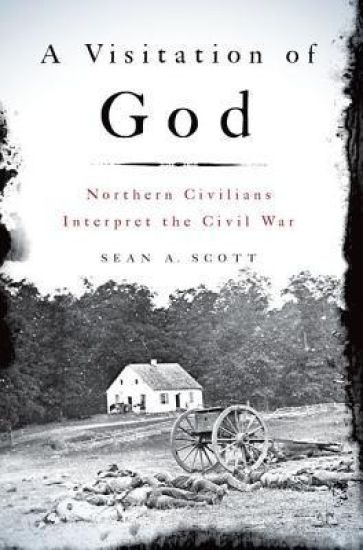
A Visitation of God

A Visitation of God

Sean A. Scott

Oxford University Press Inc
2013
nidottu
This book examines the Civil War from the perspective of the northern laity, those religious civilians whose personal faith influenced their views on politics and slavery, helped them cope with physical separation and death engendered by the war, and ultimately enabled them to discern the hand of God in the struggle to preserve the national Union. From Lincoln's election to his assassination, the book weaves together political, military, social, and intellectual history into a religious narrative of the Civil War on the northern home front. Packed with compelling human interest stories, this account draws on letters, diaries, newspapers and church records along with published sources to conclusively demonstrate that many devout civilians regarded the Civil War as a contest imbued with religious meaning. In the process of giving their loyal support to the government as individual citizens, religious Northerners politicized the church as a collective institution and used it to uphold the Union so the purified nation could promote Christianity around the world. Christian patriotism helped win the war, but the politicization of religion did not lead to the redemption of the state.
Human Work

Human Work

Sean Borodale

Vintage
2015
pokkari
Implicit in ingredients are the stories of matter itself: without food there can be no other stories. Like the poems of Bee Journal these poems started life in notebooks, in situ.
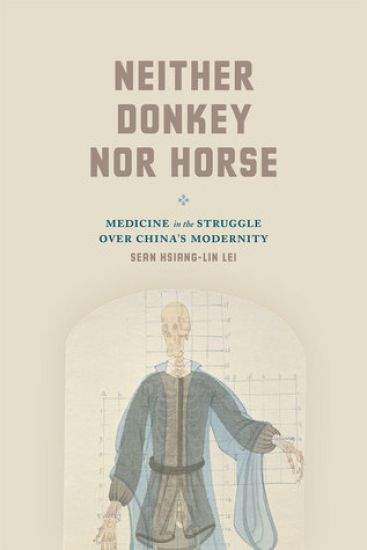
Neither Donkey nor Horse

Neither Donkey nor Horse

Sean Hsiang-lin Lei

University of Chicago Press
2014
sidottu
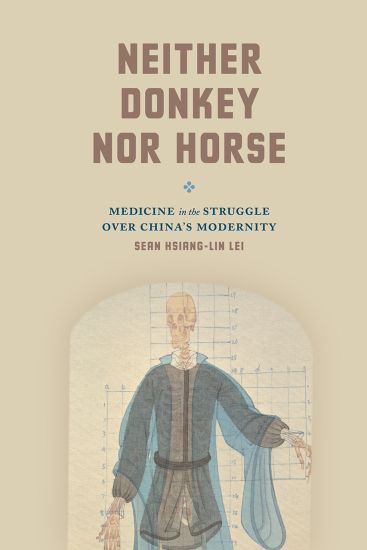
Neither Donkey nor Horse tells the story of how Chinese medicine was transformed from the antithesis of modernity in the early twentieth century into a potent symbol of and vehicle for China's exploration of its own modernity half a century later. Instead of viewing this transition as derivative of the political history of modern China, Scan Hsiang-lin Lei argues that China's medical history had a lite of its own, one that times directly influenced the ideological struggle over the meaning of China's modernity and the Chinese state. Far from being a remnant of China's premodern past, Chinese medicine in the twentieth century coevolved with Western medicine and the Nationalist state, undergoing a profound transformation-institutionally, epistemologically, and materially - that resulted in the creation of a modern Chinese medicine. This new medicine was derided as "neither donkey nor horse" because it necessarily betrayed both of the parental traditions and therefore was doomed to fail. Yet this hybrid medicine survived, through self-innovation and negotiation, thus challenging the conception of modernity that rejected the possibility of productive crossbreeding between the modern and the traditional. By exploring the production of modern Chinese medicine and China's modernity in tandem, Lei offers both a political history of medicine and a medical history of the Chinese state.
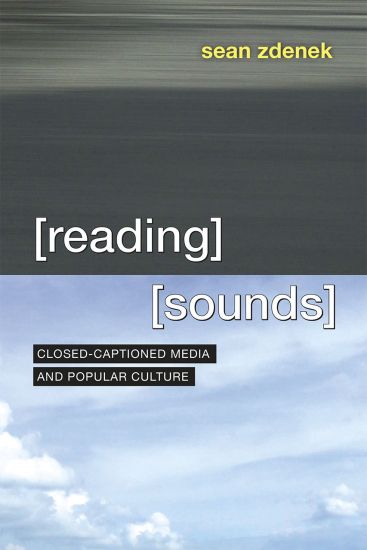
Reading Sounds

Reading Sounds

Sean Zdenek

University of Chicago Press
2015
sidottu
Imagine a common movie scene: a hero confronts a villain. Captioning such a moment would at first glance seem as basic as transcribing the dialogue. But consider the choices involved: How do you convey the sarcasm in a comeback? Do you include a henchman's muttering in the background? Does the villain emit a scream, a grunt, or a howl as he goes down? And how do you note a gunshot without spoiling the scene? These are the choices closed captioners face every day. Captioners must decide whether and how to describe background noises, accents, laughter, musical cues, and even silences. When captioners describe a sound-or choose to ignore it-they are applying their own subjective interpretations to otherwise objective noises, creating meaning that does not necessarily exist in the soundtrack or the script. Reading Sounds looks at closed-captioning as a potent source of meaning in rhetorical analysis. Through nine engrossing chapters, Sean Zdenek demonstrates how the choices captioners make affect the way deaf and hard of hearing viewers experience media. He draws on hundreds of real-life examples, as well as interviews with both professional captioners and regular viewers of closed captioning. Zdenek's analysis is an engrossing look at how we make the audible visible, one that proves that better standards for closed captioning create a better entertainment experience for all viewers.
Reading Sounds – Closed–Captioned Media and Popular Culture
Imagine a common movie scene: a hero confronts a villain. Captioning such a moment would at first glance seem as basic as transcribing the dialogue. But consider the choices involved: How do you convey the sarcasm in a comeback? Do you include a henchman's muttering in the background? Does the villain emit a scream, a grunt, or a howl as he goes down? And how do you note a gunshot without spoiling the scene? These are the choices closed captioners face every day. Captioners must decide whether and how to describe background noises, accents, laughter, musical cues, and even silences. When captioners describe a sound-or choose to ignore it-they are applying their own subjective interpretations to otherwise objective noises, creating meaning that does not necessarily exist in the soundtrack or the script. Reading Sounds looks at closed-captioning as a potent source of meaning in rhetorical analysis. Through nine engrossing chapters, Sean Zdenek demonstrates how the choices captioners make affect the way deaf and hard of hearing viewers experience media. He draws on hundreds of real-life examples, as well as interviews with both professional captioners and regular viewers of closed captioning. Zdenek's analysis is an engrossing look at how we make the audible visible, one that proves that better standards for closed captioning create a better entertainment experience for all viewers.
Neither Donkey nor Horse

Neither Donkey nor Horse

Sean Hsiang-lin Lei

University of Chicago Press
2016
nidottu
Neither Donkey nor Horse tells the story of how Chinese medicine was transformed from the antithesis of modernity in the early twentieth century into a potent symbol of and vehicle for China's exploration of its own modernity half a century later. Instead of viewing this transition as derivative of the political history of modern China, Sean Hsiang-lin Lei argues that China's medical history had a life of its own, one that at times directly influenced the ideological struggle over the meaning of China's modernity and the Chinese state. Far from being a remnant of China's premodern past, Chinese medicine in the twentieth century coevolved with Western medicine and the Nationalist state, undergoing a profound transformation-institutionally, epistemologically, and materially-that resulted in the creation of a modern Chinese medicine. This new medicine was derided as "neither donkey nor horse" because it necessarily betrayed both of the parental traditions and therefore was doomed to fail. Yet this hybrid medicine survived, through self-innovation and negotiation, thus challenging the conception of modernity that rejected the possibility of productive crossbreeding between the modern and the traditional. By exploring the production of modern Chinese medicine and China's modernity in tandem, Lei offers both a political history of medicine and a medical history of the Chinese state.
Automatic Architecture

Automatic Architecture

Sean Keller

University of Chicago Press
2018
sidottu
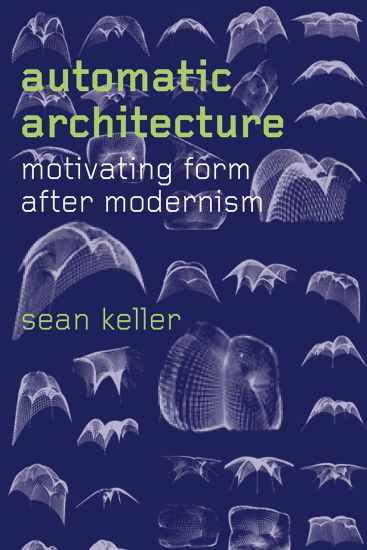
In the 1960s and '70s, architects, influenced by recent developments in computing and the rise of structuralist and poststructuralist thinking, began to radically rethink how architecture could be created. Though various new approaches gained favor, they had one thing in common: they advocated moving away from the traditional reliance on an individual architect's knowledge and instincts and toward the use of external tools and processes that were considered objective, logical, or natural. Automatic architecture was born. The quixotic attempts to formulate such design processes extended modernist principles and tried to draw architecture closer to mathematics and the sciences. By focusing on design methods, and by examining evidence at a range of scales from institutions to individual buildings Automatic Architecture offers an alternative to narratives of this period that have presented postmodernism as a question of style, as the methods and techniques traced here have been more deeply consequential than the many stylistic shifts of the past half century. Sean Keller closes the book with an analysis of the contemporary condition, suggesting future paths for architectural practice that work through, but also beyond, the merely automatic.
Constellations of Inequality

Constellations of Inequality

Sean T. Mitchell

University of Chicago Press
2017
sidottu
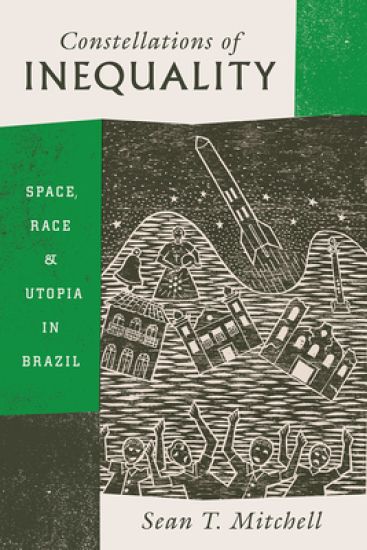
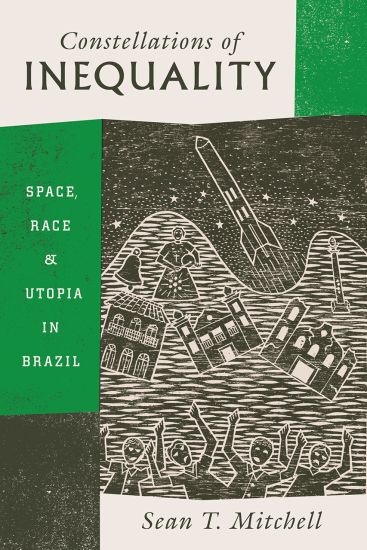
In 1982, the Brazilian Air Force arrived on the Alcantara peninsula to build a state-of-the-art satellite launch facility. They displaced some 1,500 Afro-Brazilians from coastal land to inadequate inland villages, leaving many more threatened with displacement. The project was a vast undertaking, and the decades since its 1990 completion have seen it mired in controversy. Constellations of Inequality tells that story, offering a uniquely insightful ethnography of Brazil's inequality politics. Sean T. Mitchell analyzes conflicts over land, ethnoracial identity, mobilization among descendants of escaped slaves, failures and military-civilian conflict in the launch program, and international intrigue. Throughout, he illuminates inequality and political consciousness. How people conceptualize and act upon the unequal conditions in which they find themselves, he shows, is as much a cultural and historical matter a material one. Deftly broadening our understanding of STS, economic issues, and consciousness on local, national, and global levels, Constellations of Inequality paints a portrait of struggles over race, technology, development, and inequality that will interest a broad spectrum of readers.
Constellations of Inequality

Constellations of Inequality

Sean T. Mitchell

University of Chicago Press
2017
nidottu
In 1982, the Brazilian Air Force arrived on the Alcantara peninsula to build a state-of-the-art satellite launch facility. They displaced some 1,500 Afro-Brazilians from coastal land to inadequate inland villages, leaving many more threatened with displacement. The project was a vast undertaking, and the decades since its 1990 completion have seen it mired in controversy. Constellations of Inequality tells that story, offering a uniquely insightful ethnography of Brazil's inequality politics. Sean T. Mitchell analyzes conflicts over land, ethnoracial identity, mobilization among descendants of escaped slaves, failures and military-civilian conflict in the launch program, and international intrigue. Throughout, he illuminates inequality and political consciousness. How people conceptualize and act upon the unequal conditions in which they find themselves, he shows, is as much a cultural and historical matter a material one. Deftly broadening our understanding of STS, economic issues, and consciousness on local, national, and global levels, Constellations of Inequality paints a portrait of struggles over race, technology, development, and inequality that will interest a broad spectrum of readers.
Bulls Markets

Bulls Markets

Sean Dinces

University of Chicago Press
2018
sidottu
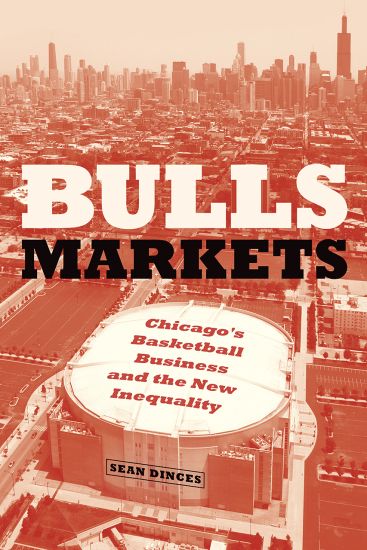
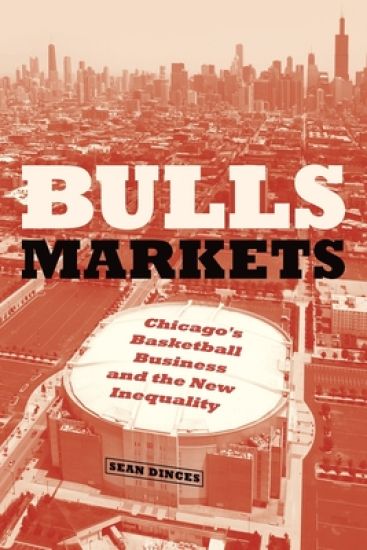
An unvarnished look at the economic and political choices that reshaped contemporary Chicago—arguably for the worse. ? The 1990s were a glorious time for the Chicago Bulls, an age of historic championships and all-time basketball greats like Scottie Pippen and Michael Jordan. It seemed only fitting that city, county, and state officials would assist the team owners in constructing a sparkling new venue to house this incredible team that was identified worldwide with Chicago. That arena, the United Center, is the focus of Bulls Markets, an unvarnished look at the economic and political choices that forever reshaped one of America’s largest cities—arguably for the worse. Sean Dinces shows how the construction of the United Center reveals the fundamental problems with neoliberal urban development. The pitch for building the arena was fueled by promises of private funding and equitable revitalization in a long-blighted neighborhood. However, the effort was funded in large part by municipal tax breaks that few ordinary Chicagoans knew about, and that wound up exacerbating the rising problems of gentrification and wealth stratification. In this portrait of the construction of the United Center and the urban life that developed around it, Dinces starkly depicts a pattern of inequity that has become emblematic of contemporary American cities: governments and sports franchises collude to provide amenities for the wealthy at the expense of poorer citizens, diminishing their experiences as fans and—far worse—creating an urban environment that is regulated and surveilled for the comfort and protection of that same moneyed elite.
Prohibition, the Constitution, and States' Rights

Prohibition, the Constitution, and States' Rights

Sean Beienburg

University of Chicago Press
2019
sidottu
Colorado’s legalization of marijuana spurred intense debate about the extent to which the Constitution preempts state-enacted laws and statutes. Colorado’s legal cannabis program generated a strange scenario in which many politicians, including many who freely invoke the Tenth Amendment, seemed to be attacking the progressive state for asserting states’ rights. Unusual as this may seem, this has happened before—in the early part of the twentieth century, as America concluded a decades-long struggle over the suppression of alcohol during Prohibition. Sean Beienburg recovers a largely forgotten constitutional debate, revealing how Prohibition became a battlefield on which skirmishes of American political development, including the debate over federalism and states’ rights, were fought. Beienburg focuses on the massive extension of federal authority involved in Prohibition and the passage of the Eighteenth Amendment, describing the roles and reactions of not just Congress, the presidents, and the Supreme Court but political actors throughout the states, who jockeyed with one another to claim fidelity to the Tenth Amendment while reviling nationalism and nullification alike. The most comprehensive treatment of the constitutional debate over Prohibition to date, the book concludes with a discussion of the parallels and differences between Prohibition in the 1920s and debates about the legalization of marijuana today.
Prohibition, the Constitution, and States' Rights

Prohibition, the Constitution, and States' Rights

Sean Beienburg

University of Chicago Press
2019
nidottu
Colorado’s legalization of marijuana spurred intense debate about the extent to which the Constitution preempts state-enacted laws and statutes. Colorado’s legal cannabis program generated a strange scenario in which many politicians, including many who freely invoke the Tenth Amendment, seemed to be attacking the progressive state for asserting states’ rights. Unusual as this may seem, this has happened before—in the early part of the twentieth century, as America concluded a decades-long struggle over the suppression of alcohol during Prohibition. Sean Beienburg recovers a largely forgotten constitutional debate, revealing how Prohibition became a battlefield on which skirmishes of American political development, including the debate over federalism and states’ rights, were fought. Beienburg focuses on the massive extension of federal authority involved in Prohibition and the passage of the Eighteenth Amendment, describing the roles and reactions of not just Congress, the presidents, and the Supreme Court but political actors throughout the states, who jockeyed with one another to claim fidelity to the Tenth Amendment while reviling nationalism and nullification alike. The most comprehensive treatment of the constitutional debate over Prohibition to date, the book concludes with a discussion of the parallels and differences between Prohibition in the 1920s and debates about the legalization of marijuana today.
Bulls Markets

Bulls Markets

Sean Dinces

THE UNIVERSITY OF CHICAGO PRESS
2022
nidottu
An unvarnished look at the economic and political choices that reshaped contemporary Chicago—arguably for the worse. ? The 1990s were a glorious time for the Chicago Bulls, an age of historic championships and all-time basketball greats like Scottie Pippen and Michael Jordan. It seemed only fitting that city, county, and state officials would assist the team owners in constructing a sparkling new venue to house this incredible team that was identified worldwide with Chicago. That arena, the United Center, is the focus of Bulls Markets, an unvarnished look at the economic and political choices that forever reshaped one of America’s largest cities—arguably for the worse. Sean Dinces shows how the construction of the United Center reveals the fundamental problems with neoliberal urban development. The pitch for building the arena was fueled by promises of private funding and equitable revitalization in a long-blighted neighborhood. However, the effort was funded in large part by municipal tax breaks that few ordinary Chicagoans knew about, and that wound up exacerbating the rising problems of gentrification and wealth stratification. In this portrait of the construction of the United Center and the urban life that developed around it, Dinces starkly depicts a pattern of inequity that has become emblematic of contemporary American cities: governments and sports franchises collude to provide amenities for the wealthy at the expense of poorer citizens, diminishing their experiences as fans and—far worse—creating an urban environment that is regulated and surveilled for the comfort and protection of that same moneyed elite.
City of Dignity

City of Dignity

Sean T. Dempsey

THE UNIVERSITY OF CHICAGO PRESS
2022
sidottu
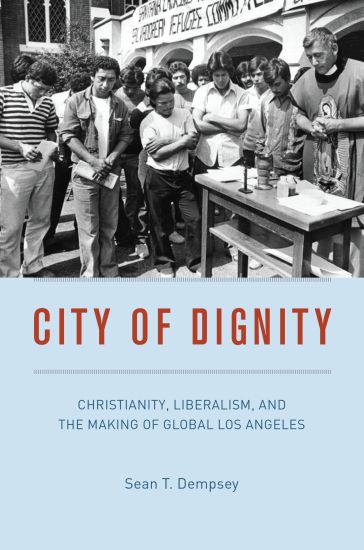
City of Dignity illuminates how liberal Protestants quietly, yet indelibly, shaped the progressive ethics of postwar Los Angeles. Contemporary Los Angeles is commonly seen as an American bulwark of progressive secular politics, a place that values immigration, equity, diversity, and human rights. But what accounts for the city’s embrace of such staunchly liberal values, which are more hotly contested in other parts of the country? The answer, Sean Dempsey reveals, lies not with those frequent targets of credit and blame—Democrats in Hollywood—but instead with liberal Protestants and other steadfast religious organizations of the postwar era. As the Religious Right movement emerged in the 1970s, progressive religious activists quietly began promoting an ethical vision that made waves worldwide but saw the largest impact in its place of origin: metropolitan Los Angeles. At the center of this vision lay the concept of human dignity—entwining the integral importance of political and expressive freedom with the moral sanctity of the human condition—which suffused all of the political values that arose from it, whether tolerance, diversity, or equality of opportunity. The work of these religious organizations birthed such phenomena as the Sanctuary Movement—which provided safe haven for refugees fleeing conflict-torn Central America—and advocacy for the homeless, both of which became increasingly fraught issues amid the rising tides of neoliberalism and conservatism. City of Dignity explores how these interwoven spiritual and theological strands found common ground—and made common impacts—in the humanitarian ecosystem of one of America’s largest and most dynamic metro areas.
Company Men

Company Men

Sean Thomas Delehanty

THE UNIVERSITY OF CHICAGO PRESS
2025
sidottu
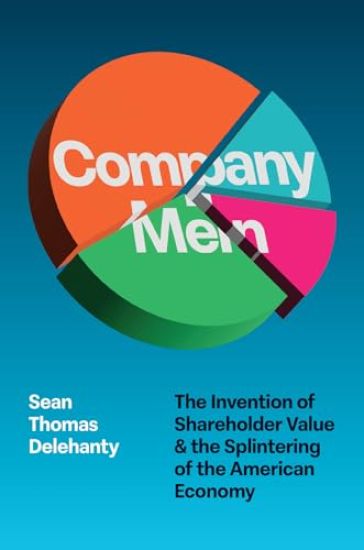
How an esoteric economic theory—and its most devout believers—changed the world forever. In the modern economy, stock price is king. The value of a corporation is measured in how it enriches its shareholders, even when doing so subtracts from long-term growth or social good. Greed, in the last half-century of corporate practice, has become very good. Company Men is a sweeping intellectual history of how shareholder value rose from the lesser-known edges of academic theory to the vanguard of corporate practice. Historian Sean Delehanty marshals archival resources to reveal how a group of motivated consultants, activist investors, and academic economists successfully branded shareholder value as the antidote to problems of management and economic stagnation in the 1970s. In their success, they created a class of well-heeled managers who executed shareholder-value theory as an everyday practice—and at the expense of most everything else. Delehanty’s history of the modern American corporation is a sobering account of the business regime that would rule the world and produce no shortage of regrets—even amongst those who championed it. Company Men is intellectual history at its most vital, offering a surprising origin story of our economy’s discontents.
Watching Vesuvius

Watching Vesuvius

Sean Cocco

University of Chicago Press
2012
sidottu
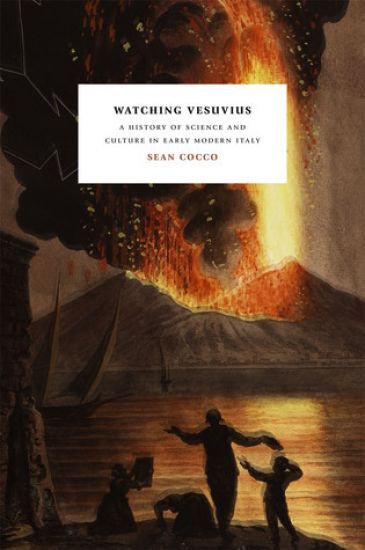
Mount Vesuvius has been famous ever since its eruption in 79 CE, when it destroyed and buried the Roman cities of Pompeii and Herculaneum. But less well-known is the role it played in the science and culture of early modern Italy, as Sean Cocco reveals in this ambitious and wide-ranging study. Humanists began to make pilgrimages to Vesuvius during the early Renaissance to experience its beauty and study its history, but a new tradition of observation emerged in 1631 with the first great eruption of the modern period. Seeking to understand the volcano's place in the larger system of nature, Neapolitans flocked to Vesuvius to examine volcanic phenomena and to collect floral and mineral specimens from the mountainside. In "Watching Vesuvius", Cocco argues that this investigation and engagement with Vesuvius was paramount to the development of modern volcanology. He then situates the native experience of Vesuvius in a larger intellectual, cultural, and political context and explains how later eighteenth-century representations of Naples - of its climate and character - grew out of this tradition of natural history. Painting a rich and detailed portrait of Vesuvius and those living in its shadow, Cocco returns the historic volcano to its place in a broader European culture of science, travel, and appreciation of the natural world.
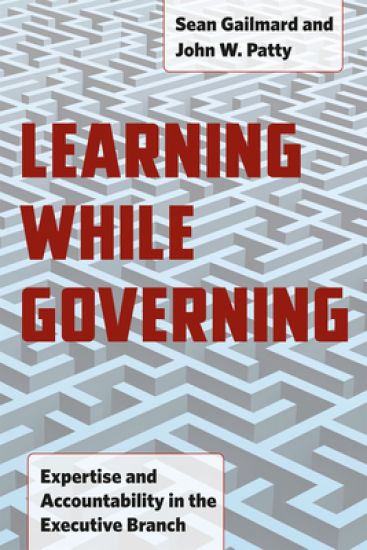
Learning While Governing

Learning While Governing

Sean Gailmard; John W. Patty

University of Chicago Press
2012
sidottu
Although their leaders and staff are not elected, bureaucratic agencies have the power to make policy decisions that carry the full force of the law. In this groundbreaking book, Sean Gailmard and John W. Patty explore an issue central to political science and public administration: How do Congress and the president ensure that bureaucratic agencies implement their preferred policies? The assumption has long been that bureaucrats bring to their positions expertise, which must then be marshaled to serve the interests of a particular policy. In "Learning While Governing", Gailmard and Patty overturn this conventional wisdom, showing instead that much of what bureaucrats need to know to perform effectively is learned on the job. Bureaucratic expertise, they argue, is a function of administrative institutions and interactions with political authorities that collectively create an incentive for bureaucrats to develop expertise. The challenge for elected officials is therefore to provide agencies with the autonomy to do so while making sure they do not stray significantly from the administration's course. To support this claim, the authors analyze several types of information-management processes. "Learning While Governing" speaks to an issue with direct bearing on power relations between Congress, the president, and the executive agencies, and it will be a welcome addition to the literature on bureaucratic development.
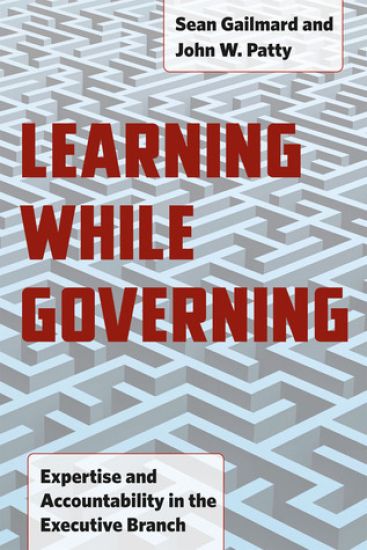
Learning While Governing

Learning While Governing

Sean Gailmard; John W. Patty

University of Chicago Press
2012
nidottu
Although their leaders and staff are not elected, bureaucratic agencies have the power to make policy decisions that carry the full force of the law. In this groundbreaking book, Sean Gailmard and John W. Patty explore an issue central to political science and public administration: How do Congress and the president ensure that bureaucratic agencies implement their preferred policies? The assumption has long been that bureaucrats bring to their positions expertise, which must then be marshaled to serve the interests of a particular policy. In "Learning While Governing", Gailmard and Patty overturn this conventional wisdom, showing instead that much of what bureaucrats need to know to perform effectively is learned on the job. Bureaucratic expertise, they argue, is a function of administrative institutions and interactions with political authorities that collectively create an incentive for bureaucrats to develop expertise. The challenge for elected officials is therefore to provide agencies with the autonomy to do so while making sure they do not stray significantly from the administration's course. To support this claim, the authors analyze several types of information-management processes. "Learning While Governing" speaks to an issue with direct bearing on power relations between Congress, the president, and the executive agencies, and it will be a welcome addition to the literature on bureaucratic development.