Computer users often find occasion to ask how two files differ. Perhaps one file is a newer version of the other file. Or maybe the two files started out as identical copies but were changed by different people. You can use the diff command to show differences between two files, or each corresponding file in two directories. diff outputs differences between files line by line in any of several formats, selectable by command line options. This set of differences is often called a diff or patch. For files that are identical, diff normally produces no output; for binary (non-text) files, diff normally reports only that they are different. You can use the cmp command to show the byte and line numbers where two files differ. cmp can also show all the bytes that differ between the two files, side by side. A way to compare two files character by character is the Emacs command M-x compare-windows. See Section "Other Window" in The GNU Emacs Manual, for more information on that command. You can use the diff3 command to show differences among three files. When two people have made independent changes to a common original, diff3 can report the differences between the original and the two changed versions, and can produce a merged file that contains both persons' changes together with warnings about conflicts. You can use the sdiff command to merge two files interactively. You can use the set of differences produced by diff to distribute updates to text files (such as program source code) to other people. This method is especially useful when the differences are small compared to the complete files. Given diff output, you can use the patch program to update, or patch, a copy of the file. If you think of diff as subtracting one file from another to produce their difference, you can think of patch as adding the difference to one file to reproduce the other. This manual first concentrates on making diffs, and later shows how to use diffs to update files.
Do teachers have a right to dress as they wish? Can Social Studies Teachers be prohibited from discussing controversial issues? When can copyrighted works be copied without permission? If you’ve ever pondered these or other questions of law, you need to know the right answers! In School Law: What Every Educator Should Know, A User-Friendly Guide, David Schimmel, Louis Fischer, and Leslie Stellman demystify educational law one question at a time and provide clarity to hundreds of topics that affect teachers today—NCLB, Vouchers, School Choice, Discipline, Academic Freedom, Liability for Student Injuries, Due Process, Search and Seizure, Dress and Grooming, to Harassment and Child Abuse—encompassing law established by state and federal statutes, constitutions, and court decisions. The authors offer friendly translations of legal jargon into everyday English, empowering educators to take the law constructively into their own hands and use it as a source of guidance and protection to improve their schools and classrooms. School Law: What Every Educator Should Know, A User-Friendly Guide is a powerful reference every educator can use and is a perfect resource for seminars and courses in Education Foundations, Introduction to Educational Psychology, School Counseling, Field Experience, Student Teaching Practicum, and Classroom Management, where knowledge of core legal concepts is important. Make the law work for you… “With its question/answer format, [this] book provides a general overview of how the legal system applies to the practice of education, considering many questions one might not think to ask.” —Meghan M. Reilly, Andover High School, Andover, MA “There is an excellent balance of legal citations in contrast with specific examples that almost every instructor can relate to in their experience as a classroom teacher.” —Thomas J. Little Jr., Kokomo-Center Schools, Kokomo, IN
This history of the Corning glass industry is a rich storehouse of information for anyone trying to identify pieces of cut or engraved glass. It combines a study of craftsmen and technique in Corning from 1868 to the present with hitherto unpublished catalogue material from the Corning archives.
This work has been selected by scholars as being culturally important and is part of the knowledge base of civilization as we know it.This work is in the public domain in the United States of America, and possibly other nations. Within the United States, you may freely copy and distribute this work, as no entity (individual or corporate) has a copyright on the body of the work.Scholars believe, and we concur, that this work is important enough to be preserved, reproduced, and made generally available to the public. To ensure a quality reading experience, this work has been proofread and republished using a format that seamlessly blends the original graphical elements with text in an easy-to-read typeface.We appreciate your support of the preservation process, and thank you for being an important part of keeping this knowledge alive and relevant.
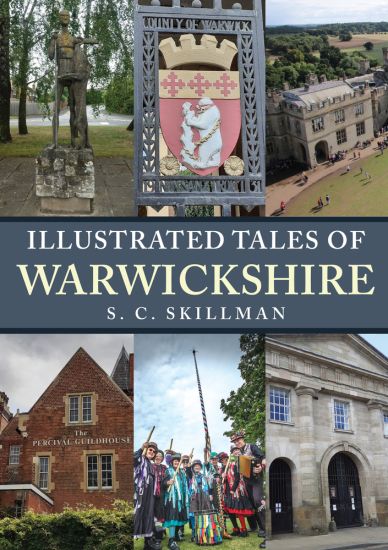
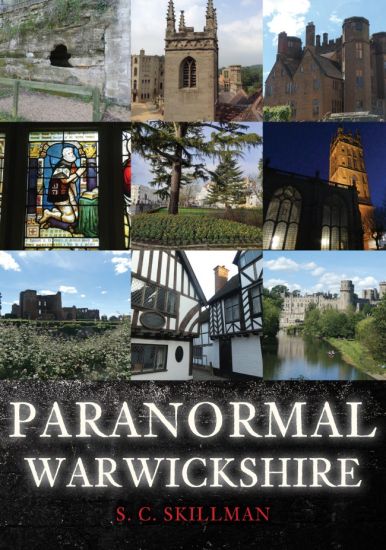
Warwickshire, often known as Shakespeare’s County, has a host of strange and mysterious tales ranging from ancient legends and stories of the supernatural to more modern documented cases. Curious beliefs and customs were once widespread in Warwickshire’s towns and villages, some of which still flourish today. These strange and spooky stories include the quirky death of the Roundhead commander who owned Warwick Castle, the association of the great author J. R. R. Tolkien with the town, and the story of the hand of glory obtained at Warwick hangings. The historic buildings of Stratford-upon-Avon have witnessed many strange events over the centuries and more recently the Crackley Wood sprite has been sighted at Kenilworth. Other stories include the Wroth Silver at Knightlow Cross, an 800-year-old violent ball game played annually at Atherstone on Shrove Tuesday, and the unresolved mystery of the 1945 murder at Lower Quinton associated with witchcraft, along with other strange tales from the surrounding towns and villages. These stories are accompanied by the author’s photographs in this hugely entertaining book.
The county town of Warwick is famous for its magnificent castle rising above the River Avon but there is much more to this historic town. Although many medieval houses were destroyed by the Great Fire of 1694, buildings from an earlier age can still be found, including its oldest hostelry, The Roebuck, and Lord Leycester Hospital. Local historic characters include Warwick the Kingmaker, world champion boxer Randolph Turpin and socialite and campaigner Daisy, Countess of Warwick, as well as the ichthyosaur in the Market Hall Museum, and the town’s many events include a Victorian evening and annual folk festival. A–Z of Warwick reveals the history behind the town, its streets and buildings, businesses and the people connected with it. Alongside the famous historical connections are unusual characters, tucked-away places and unique events that are less well known. Fully illustrated throughout, this book will appeal to all those with an interest in this historic Warwickshire town.
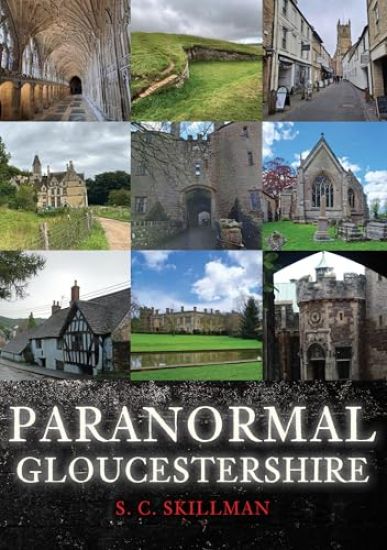
Gloucestershire is a county rich in beauty, history, and a high level of spiritual, mysterious, and paranormal activity. With a profusion of haunted inns, castles, houses and landscape features, the presence of the past is absorbed into the fabric of places as diverse as the Neolithic burial chamber of Belas Knapp Long Barrow, the prisons at Gloucester and Littledean, and the 12th century Ancient Ram Inn at Wotton under Edge. Hauntings have been reported at Sudeley Castle, Chavenage House, St Briavels Castle, Woodchester Mansion and Owlpen Manor and many report unsettling experiences at the Abbeys in Gloucester and Tewkesbury, the villages of Prestbury and Arlingham, and in the Montpelier and Pittville areas of Cheltenham. In this book author S. C. Skillman visits eerie locations around Gloucestershire to unearth a selection of chilling tales about them and explores the strangeness of the hauntings of this fascinating county. Paranormal Gloucestershire takes the reader into the world of ghosts and spirits in the county, following their footsteps into the unknown. These tales of haunted places, supernatural happenings and weird phenomena will delight the ghost hunters, and fascinate and intrigue everybody who knows Gloucestershire.
Warwickshire is a county steeped in the supernatural, as befits the county of Shakespeare and the many ghosts and spirits that he conjured up in his works. The towns and villages of Warwickshire, its castles, houses, churches, theatres, inns and many other places both grand and everyday have rich and complex stories to tell of paranormal presences. In this book author S. C. Skillman investigates the rich supernatural heritage of this county at the heart of England in places such as Guy’s Cliffe House, the Saxon Mill, Kenilworth Castle, Warwick Castle, St Mary’s Church in Warwick, Nash’s House and the Royal Shakespeare Theatre in Stratford-upon-Avon, and Stoneleigh Abbey, as well as in the towns of Rugby, Nuneaton and Leamington Spa. She explores the spiritual resonance of each location, recounting the tales of paranormal activity associated with it and examining the reasons for this within the history of the place. Paranormal Warwickshire takes the reader into the world of ghosts and spirits in the county, following their footsteps into the unknown. These tales of haunted places, supernatural happenings and shadowy presences will delight the ghost hunters, and fascinate and intrigue everybody who knows Warwickshire.
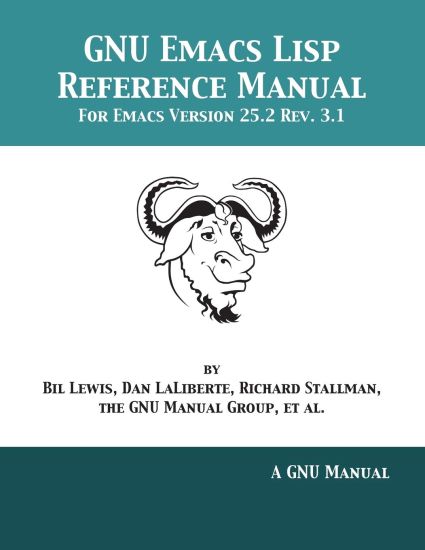
This manual attempts to be a full description of Emacs Lisp. This manual presumes considerable familiarity with the use of Emacs for editing. Most of the GNU Emacs text editor is written in the programming language called Emacs Lisp. You can write new code in Emacs Lisp and install it as an extension to the editor. However, Emacs Lisp is more than a mere extension language; it is a full computer programming language in its own right. You can use it as you would any other programming language. Generally speaking, the earlier chapters describe features of Emacs Lisp that have counterparts in many programming languages, and later chapters describe features that are peculiar to Emacs Lisp or relate specically to editing. This is edition 3.1 of the GNU Emacs Lisp Reference Manual, corresponding to Emacs version 25.2. This manual is available online for free at gnu.org. This manual is printed in grayscale.
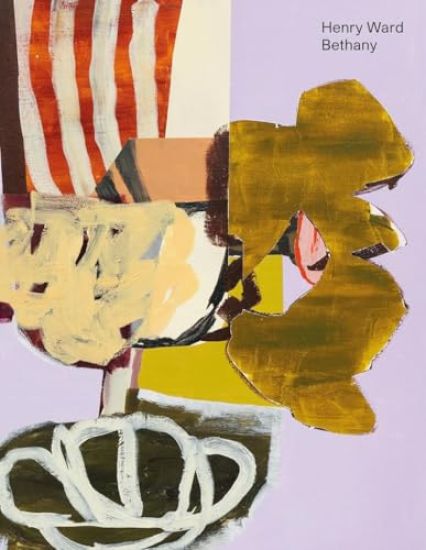
Henry Ward (b.1971) is an artist, educator and writer based in London. This monograph documents a major new body of work created during and following a residency at the Josef & Anni Albers Foundation in Bethany, Connecticut, in 2023, and a subsequent residency in the Morvan, Burgundy, in summer 2024. Ward is interested in line, shape, form and colour relationships. He works primarily as a painter, but also makes drawings and small sculptures. He explores the language of paint by investigating the threshold between abstraction and representation. During the two months he spent at the Albers Foundation, Ward took advantage of the vast studio space and began pinning together cut painted pieces to make assemblages. While there, he produced fifteen paintings on canvas and wood, forty paintings on paper, sixty drawings, twenty ‘cut-outs’ and a full sketchbook. Exclusively working with acrylic paints, he began experimenting, using masking tape and mixing in different mediums so that he could ‘push the paint around’. The publication includes reproductions of many the works Ward made during his stay at the Albers Foundation, organised into ‘Paintings’, ‘Works on Paper’ and ‘Drawings’. The final section, ‘After Bethany’, brings together twenty-two acrylic paintings on canvas that the artist created the following year, including during a two-week residency in France. In his foreword, Fritz Horstman, Education Director of the Albers Foundation, sets the scene in Bethany, detailing the studio buildings and the rural winter landscape, as well as Ward’s ‘exciting path of exploration and growth’ during his time there. While in residence, Ward travelled to nearby New York to meet the artist Amy Sillman in her Brooklyn studio. An edited transcript of their conversation is included here, in which they discuss their individual approaches to painting, writing and language. In his essay, the curator and writer Jonathan Watkins charts Ward’s thirty-year career as an artist and teacher, drawing out his belief that ‘art is, by its very nature, educational’. In her contribution, Jenni Lomax interviewed Ward in his Woolwich studio about the works he created during both residencies, and the lasting impact they have had on his practice. Edited by Matt Price and designed by Joe Gilmore, the book is published by Anomie Publishing, London. Henry Ward (b.1971) is an artist, educator and writer based in London. Ward has exhibited nationally and internationally for over thirty years. He was shortlisted for the Trinity Buoy Wharf Drawing Prize in 2018, 2019 and 2022 and was included in the Wells Art Contemporary in both 2020 and 2024. Ward has shown in numerous group exhibitions including with Flowers Gallery, London, Messums London and Sid Motion Gallery, London. In 2024 his solo exhibition Medusa & Other Stories, with Kittoe Contemporary, won the Artlogic best exhibition award at the London Art Fair.
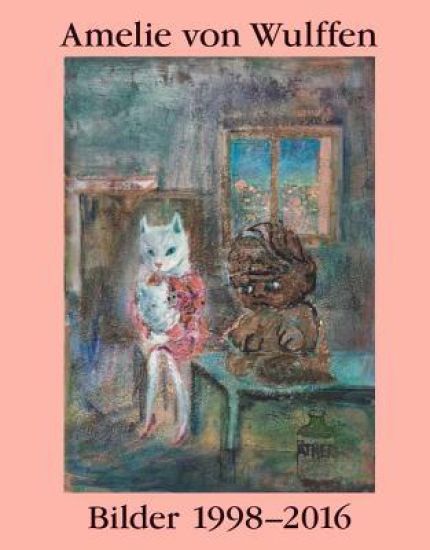
A monograph on the German painter Amelie von Wulffen (born 1966) has long been overdue.For more than 20 years, the artist has been developing a formally and stylistically diverse oeuvre (including collages, installations, animated films, drawings, sculptures and paintings) that possesses a remarkable thematic consistency. Amelie von Wulffen: Works 1998-2016 shows the artist returning again and again to the process of coming to terms with the repercussions of German cultural history. These heavy themes are lightened by an acid humor, most obvious in Wulffen's drawings and comics, which spares no sacred cows. Richly illustrated with texts by Bernhart Schwenk and Amy Sillman, Amelie von Wulffen: Works 1998-2016 presents the painter as a role model for a younger generation of artists.