
Kirjahaku
Etsi kirjoja tekijän nimen, kirjan nimen tai ISBN:n perusteella.
611 tulosta hakusanalla Stowell Robin
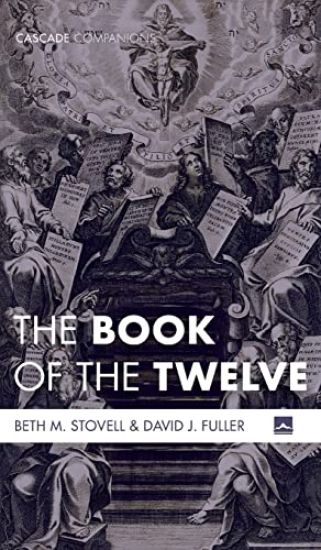
This book provides a concise guide to the group of biblical books commonly called "The Book of the Twelve Prophets" or simply "The Twelve." In the past twenty years, scholars have explored how reading this set of books as a unified "Book of the Twelve" creates new avenues for understanding and depth. This Cascade Companion introduces the key questions, themes, and topics related to the Twelve in an accessible way. Starting with a discussion of why scholars call these books "The Twelve," the book explores the major themes that orient the Twelve. The book addresses recent topics impacting the Twelve, including the relationship between wisdom literature and the Twelve, the rise of linguistic and literary approaches, and the impact of editorial theories in the study of the Twelve. As such, this book allows readers to learn what gives the Twelve its unique shape and flavor.
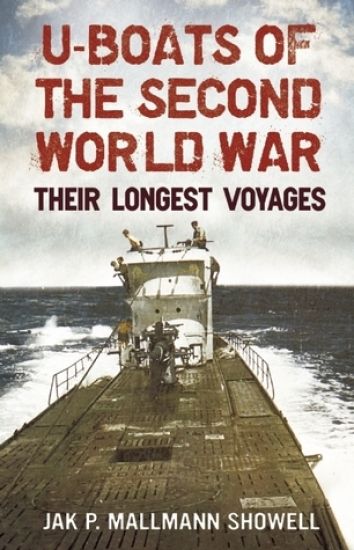
Ocean-going U-boats, each one not much longer than four European articulated lorries with up to sixty men inside them, sailed the far-off seas to reap havoc in hot inhospitable waters. The air forces and navies from Britain, the United States and other colonial countries followed to make this a daring and death-threatening venture. The facts of what the U-boats achieved against massive odds have been told before, but U-Boats of the Second World War: Their Longest Voyages is different. It concentrates more on how it was done. How the men survived, how they lived and died and how they still found time to carry out their orders. The book is based on masses of previously unpublished documents from the German U-boat Museum, many of them written during or shortly after the war by men who survived this bitter conflict. This is the story of how specially built long-range ocean-going U-boats started out one step ahead of the Allied navies and air power, how they fell one step behind and how they finally vanished into the depths of the biggest and deepest oceans. This is a remarkable story of endurance, courage and comradeship that terrified the world for the most critical period of the Second World War. The author, Jak P. Mallmann Showell, is the son of a U-boat diesel mechanic who disappeared in those warm waters two months before the author was born.






With members of four generations deeply involved in music and dancing, the Christensen Brothers are indisputably the United States' closest equivalent to the European tradition of dance dynasties. Their story sheds light on the history of ballet in twentieth-century America, both through their accomplishments as dancers, teachers, and company directors, and through their association with some of the most significant figures of the dance world such as Lincoln Kirstein, George Balanchine, Sol Hurok, and the Ford Foundation's W. McNeil Lowry. This triple biography encompasses the brothers' Mormon pioneer heritage, the circumstances that led them to enter vaudeville with a ballet act, and the rise and fall especially in the American West of companies with which they were associated for over six decades of their lives. This book provides an alternative to the New York-oriented volumes that so often pass as histories of American dance.Debra Hickenlooper Sowell received the De la Torre Bueno Special Ci

Homer & the Iliad; an essay to determine the scope and character of the original poem
Florence Melian Stawell
Alpha Edition
2020
pokkari

The book "" Fairies I Have Met, has been considered important throughout the human history, and so that this work is never forgotten we have made efforts in its preservation by republishing this book in a modern format for present and future generations. This whole book has been reformatted, retyped and designed. These books are not made of scanned copies and hence the text is clear and readable.

Early Settlers and Indian Fighters of Southwest Texas, Volume #1
A J Sowell
Southern Historical Press
2025
pokkari

Early Settles and Indian Fighters of Southwest Texas, Volume #2
A J Sowell
Southern Historical Press
2025
pokkari
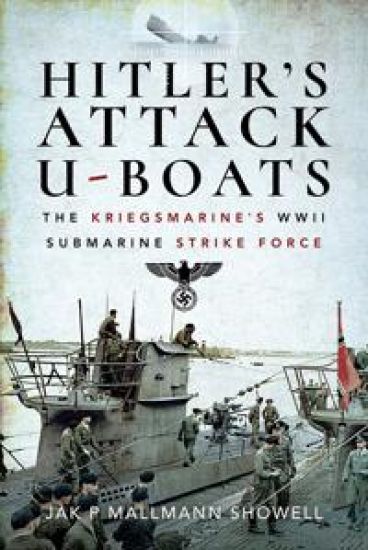
The success of German submarines during the First World War in almost cutting off Britain's vital imports had not been forgotten by Adolf Hitler and when, in March 1935, he repudiated the Treaty of Versailles, Britain, magnanimously, signed up to an Anglo-German Naval Agreement. This allowed the Germans to build their submarine strength up to one third of the British Royal Navy's tonnage. When war broke out in 1939, German U-boats went quickly into action, but with only four years of production and development, the main armament of these submarines was considerably weaker than equivalent boats in other navies and many of the other main features, such as living and the fighting conditions, were also significantly inferior. Nevertheless, the German U-boat onslaught against British merchant ships during the autumn of 1940 was highly successful because the attacks were made on the surface at night and from such close range that a single torpedo would sink a ship. Soon, though, Allied technology was able to detect U-boats at night, and new convoy techniques, combined with powerfully-armed, fast modern aircraft searching the seas, meant that by 1941 it was clear that Germany was losing the war at sea. Something had to be done. The new generation of attack U-boats that had been introduced since Hitler came to power needed urgent improvement. This is the story of the Types II, VII and IX that had already become the workhorse' of the Kriegsmarine's submarine fleet and continued to put out to sea to attack Allied shipping right up to the end of the war. The Type II was a small coastal boat that struggled to reach the Atlantic; the Type VII was perfectly at home there, but lacked the technology to tackle well protected convoys; whilst the Type IX was a long-range variety that was modified so that it could operate in the Indian Ocean. In this latest book by the renowned Kriegsmarine historian Jak Mallmann Showell, these attack U-boats are explored at length. This includes details of their armament, capabilities, crew facilities, and just what is was like to operate such a vessel, and of course the story of their development and operational history.

This is That
Carolyn D Showell; Andrew Newberg; Paul C Archibald
Independently Published
2026
pokkari

My life in poetry, then free flows, things from my head. Some good, some bad. Just me.

It's the early 1800s and Michael Fitton, now a Lieutenant in the Royal Navy, has command of the 10-gun schooner Gipsy, which he uses to capture the enemy privateers who disrupt the trade between the British held Caribbean islands. Despite his successes the largest and most profitable privateer ship, the Spanish Senora, still remains at large and all Fitton's hopes rest on tracking her down and taking her. Instead, he is obliged by his orders to accompany the new Governor of St Lucia to his appointed island.However, far from being the dull duty that he imagines the journey proves to be more adventurous than Fitton had anticipated. Rescuing the attractive Comtesse de Regmy, the former French Governor of St Lucia's widow, leads Fitton to concoct a hazardous plan as he discovers that St Lucia is in the hands of the Senora pirates. Secretly landing on the island Fitton and his men must execute a night attack to recapture the gun battery above the town, the key to possession of St Lucia, before confronting the Senora in an exhilarating sea chase.First published in 1997 Lieutenant Fitton continues the adventures of Michael Fitton.

First published in 1993 Mr Fitton's Prize follows the adventures of sailor Michael Fitton.When Michael Fitton joins the HMS Fortitude as master's mate all he wants is a chance to prove himself a loyal member of the new crew and earn a much-longed for promotion. But Fitton's loyalty to the ship is severely tested when his captain refuses to help struggling French Royalists, including the beautiful and captivating Denise de Charignay, defend their stronghold against the revolutionaries. A chance to command his own expedition leads Fitton into a daring night seizure of a French brig and the opportunity to sail to the Royalists aid. Relying purely on nerve and skill Fitton must battle revolutionaries in order to save Denise and her uncle the Comte, friend of the Comte d'Artois, brother to the executed French King Louis XVI, now a refugee in England and heir presumptive to the French throne. Facing capture and execution as he races across the sea back to the shores of England, where he may face a court-martial for his actions, Fitton must find a way to outwit a larger, faster and better equipped vessel captained by his old nemesis, the French privateer Captain Dorimond.

It's 1799 and Michael Fitton joins the crew of the HMS Abergavenny as acting-lieutenant. Volunteering to command the armed launch bought by Abergavenny's crew to cruise the seas searching for prizes, Fitton must set sail with unknown soldiers who haven't seen action in months. With the threat of mutiny and desertion it's imperative that the venture succeeds.However, Fitton and his crew are lucky and before long they are renowned in the Caribbean for their many successes. Capturing a French barque Fitton learns from the captain that a secret plot by the British to attack Dutch held Curacao is known by the Dutch and Spanish. A counter-attack is planned that will certainly lead to the demise of the British forces. Can Fitton and his crew reach the island in time to stop this from happening?On the brink of finally receiving his commission as a lieutenant Fitton must use all his resources and courage to help the British at Curacao, find the treasure of the pirate Van Horn and, above all, lead his crew back to the safety of the British held port in Kingston. A Sword for Mr Fitton was first published in 1975.

Discharged from active duty after the signing of the peace treaty with France in 1801 Michael Fitton is married and eking out a living as a farmer when he is called back into service with the Royal Navy as Britain embarks on war with France once more. Hoping to be sent into active service in the Mediterranean or the Channel - where the possibility of earning his Lieutenant's commission is high - Fitton is disappointed when he is sent instead back to the West Indies where he is placed in command of the schooner Gipsy. However, never one to turn his back on his duty, Fitton embraces life at sea again and soon finds himself back capturing privateer ships and engaging in daring sea battles.Putting all his knowledge, skills and courage to the test Fitton once again proves himself to be a master seaman. Surely, this time, he will finally earn that longed for commission to become Lieutenant Fitton? Mr Fitton's Commission was first published in 1977.