Kirjojen hintavertailu. Mukana 12 355 219 kirjaa ja 12 kauppaa.

Kirjahaku

Etsi kirjoja tekijän nimen, kirjan nimen tai ISBN:n perusteella.

1000 tulosta hakusanalla T Butler King

T Singer

T Singer

Dag Solstad

New Directions Publishing Corporation
2018
nidottu
T Singer begins with thirty-four-year-old Singer graduating from library school and traveling by train from Oslo to the small town of Notodden, located in the mountainous Telemark region of Norway. There he plans to begin a deliberately anonymous life as a librarian. But Singer unexpectedly falls in love with the ceramicist Merete Saethre, who has a young daughter from a previous relationship. After a few years together, the couple is on the verge of separating, when a car accident prompts a dramatic change in Singer's life. The narrator of the novel specifically states that this is not a happy story, yet, as in all of Dag Solstad's works, the prose is marked by an unforgettable combination of humor and darkness. Overall, T Singer marks a departure more explicitly existential than any of Solstad's previous works.

T-34 in Action

T-34 in Action

Artem Drabkin; Oleg Sherem

Stackpole Books
2008
nidottu
This pioneering book offers a compelling inside view of armoured warfare in World War II, from the perspective of the Soviet soldiers who went to war in the T-34, one of the most famous and effective tanks of the war. These first-person accounts evoke the shocking and bloody reality of combat, from terrifying confrontations with German panzers to the perils of close infantry support and bombardment from German artillery and aircraft.
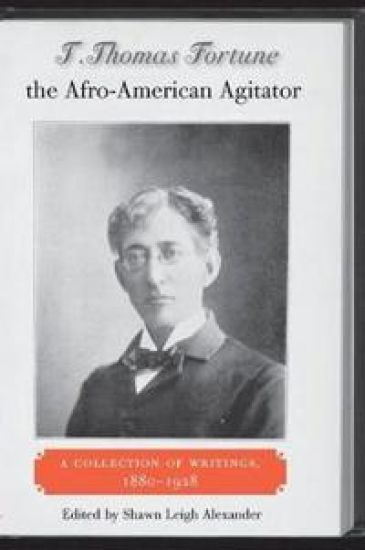
T. Thomas Fortune, the Afro-American Agitator

T. Thomas Fortune, the Afro-American Agitator

T. Thomas Fortune

University Press of Florida
2008
sidottu
Born into slavery, T. Thomas Fortune was known as the dean of African American journalism by the time of his death in the early twentieth century. The editorship of three prominent black newspapers - the ""New York Globe"", ""Freeman"", and ""Age"" - provided Fortune with a platform to speak against racism and injustice.For nearly five decades his was one of the most powerful voices in the press. Contemporaries such as Ida B. Wells, W.E.B. Du Bois, and Booker T. Washington considered him an equal, if not a superior, in social and political thought. Today's histories often pass over his writings, in part because they are so voluminous and have rarely been reprinted. Shawn Leigh Alexander's anthology will go a long way towards rectifying that situation, demonstrating the breadth of Fortune's contribution to black political thought at a key period in American history.
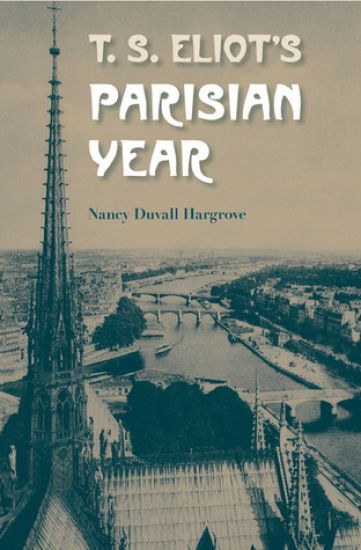
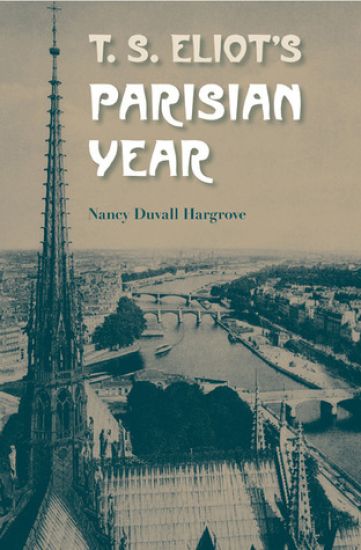
T. S. Eliot's Parisian Year

T. S. Eliot's Parisian Year

Nancy Duvall Hargrove

University Press of Florida
2009
sidottu
After graduating from Harvard in 1910, T. S. Eliot spent a year in Paris, and his experiences there had a profound and lasting influence upon his life and his work. Even so, most scholars and biographers ignore it, mention it only in passing, or, in rare cases, dismiss it as a typical post-graduation year any wealthy student of the time could have had. Nancy Hargrove sets the record straight on just how vitally important this period was for the young man. She meticulously re-creates the city and discusses in detail how pre-war Parisian culture influenced the works Eliot later produced. Hers is the first in-depth study of this crucial but largely overlooked year in the life of the artist, and reveals the complex repercussions it had on his literary career.
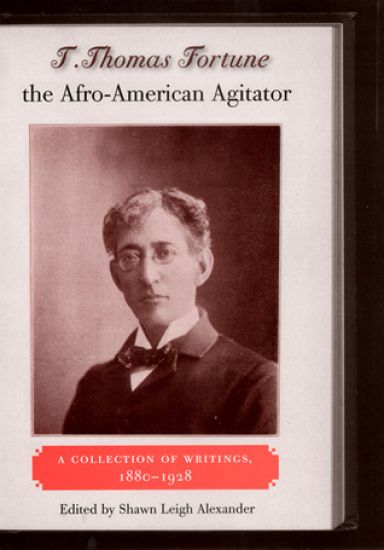
T. Thomas Fortune, the Afro-American Agitator
"Alexander's important documentary edition restores T. Thomas Fortune's central place in African American thought and activism during the age of Jim Crow. His well-executed edition is essential for all college, university, and public library collections."--John David Smith, University of North Carolina, Charlotte "Fortune is one of the most significant figures in American history, not just African American history. Alexander has created a reader that permits all of us to hear from one of the most remarkable and contemporary-sounding voices black America has produced."--James P. Danky, University of Wisconsin Born into slavery, T. Thomas Fortune was known as the dean of African American journalism by the time of his death in the early twentieth century. The editorship of three prominent black newspapers--the New York Globe, New York Freeman, and New York Age--provided Fortune with a platform to speak against racism and injustice. For nearly five decades his was one of the most powerful voices in the press. Contemporaries such as Ida B. Wells, W.E.B. Du Bois, and Booker T. Washington considered him an equal, if not a superior, in social and political thought. Today's histories often pass over his writings, in part because they are so voluminous and have rarely been reprinted. Shawn Leigh Alexander's anthology will go a long way toward rectifying that situation, demonstrating the breadth of Fortune's contribution to black political thought at a key period in American history. Shawn Leigh Alexander is an assistant professor in the department of African and African American studies at the University of Kansas.
T. S. Eliot'S Parisian Year

T. S. Eliot'S Parisian Year

Nancy Duvall Hargrove

University Press of Florida
2010
nidottu
"Research reveals the rich and varied cultural and intellectual experiences available to an eager young Thomas Stearns Eliot during the year he spent in Paris: Wagnerian opera, the Ballets Russes, music of Stravinsky and Beethoven, Bergson's philosophy, exhibits of Cubist paintings, the intellectual ferment in the pages of La Nouvelle Revue Francaise. This is a remarkable work of intellectual biography and cultural history."--Benjamin G. Lockerd Jr., Grand Valley State University"Hargrove has demonstrated beyond refutation the formative significance of the year Eliot spent in Paris, and she has done so with a wealth of documentation that will enable other scholars to build on her achievements."--Cyrena N. Pondrom, University of WisconsinMadisonAfter graduating from Harvard in 1910, T. S. Eliot spent a year in Paris, and his experiences there had a profound and lasting influence upon his life and his work. Even so, most scholars and biographers ignore it, mention it only in passing, or, in rare cases, dismiss it as a typical post-graduation year any wealthy student of the time could have had.Nancy Hargrove sets the record straight on just how vitally important this period was for the young man. She meticulously re-creates the city and discusses in detail how pre-war Parisian culture influenced the works Eliot later produced. Hers is the first in-depth study of this crucial but largely overlooked year in the life of the artist, and reveals the complex repercussions it had on his literary career.Nancy Duvall Hargrove, author of Landscape as Symbol in the Poetry of T. S. Eliot, is William L. Giles Distinguished Professor Emerita of English at Mississippi State University.
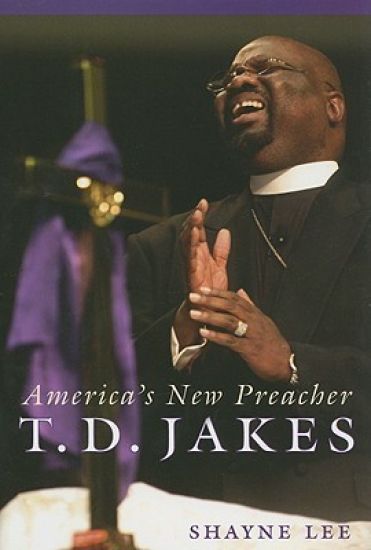
T.D. Jakes

T.D. Jakes

Shayne Lee

New York University Press
2005
sidottu
Examines the rise of one of the most prolific spiritual leader of modern times T.D. Jakes has emerged as one of the most prolific spiritual leaders of our time. He is pastor of one of the largest churches in the country, CEO of a multimillion dollar empire, the host of a television program, author of a dozen bestsellers, and the producer of two Grammy Award-nominated CDs and three critically acclaimed plays. In 2001 Time magazine featured Jakes on the cover and asked: Is Jakes the next Billy Graham? T.D. Jakes draws on extensive research, including interviews with numerous friends and colleagues of Jakes, to examine both Jakes's rise to prominence and proliferation of a faith industry bent on producing spiritual commodities for mass consumption. Lee frames Jakes and his success as a metaphor for changes in the Black Church and American Protestantism more broadly, looking at the ramifications of his rise—and the rise of similar preachers—for the way in which religion is practiced in this country, how social issues are confronted or ignored, and what is distinctly "American" about Jakes's emergence. While offering elements of biography, the work also seeks to shed light on important aspects of the contemporary American and African American religious experience. Lee contends that Jakes's widespread success symbolizes a religious realignment in which mainline churches nationwide are in decline, while innovative churches are experiencing phenomenal growth. He emphasizes the "American-ness" of Jakes's story and reveals how preachers like Jakes are drawing followers by delivering therapeutic and transformative messages and providing spiritual commodities that are more in tune with postmodern sensibilities. As the first work to critically examine Bishop Jakes's life and message, T.D. Jakes is an important contribution to contemporary American religion as well as popular culture.
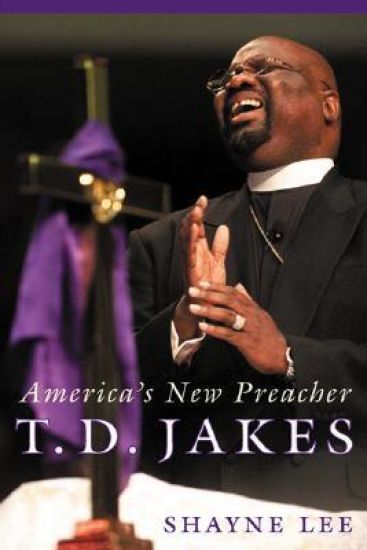
T.D. Jakes

T.D. Jakes

Shayne Lee

New York University Press
2007
pokkari
Examines the rise of one of the most prolific spiritual leader of modern times T.D. Jakes has emerged as one of the most prolific spiritual leaders of our time. He is pastor of one of the largest churches in the country, CEO of a multimillion dollar empire, the host of a television program, author of a dozen bestsellers, and the producer of two Grammy Award-nominated CDs and three critically acclaimed plays. In 2001 Time magazine featured Jakes on the cover and asked: Is Jakes the next Billy Graham? T.D. Jakes draws on extensive research, including interviews with numerous friends and colleagues of Jakes, to examine both Jakes's rise to prominence and proliferation of a faith industry bent on producing spiritual commodities for mass consumption. Lee frames Jakes and his success as a metaphor for changes in the Black Church and American Protestantism more broadly, looking at the ramifications of his rise—and the rise of similar preachers—for the way in which religion is practiced in this country, how social issues are confronted or ignored, and what is distinctly "American" about Jakes's emergence. While offering elements of biography, the work also seeks to shed light on important aspects of the contemporary American and African American religious experience. Lee contends that Jakes's widespread success symbolizes a religious realignment in which mainline churches nationwide are in decline, while innovative churches are experiencing phenomenal growth. He emphasizes the "American-ness" of Jakes's story and reveals how preachers like Jakes are drawing followers by delivering therapeutic and transformative messages and providing spiritual commodities that are more in tune with postmodern sensibilities. As the first work to critically examine Bishop Jakes's life and message, T.D. Jakes is an important contribution to contemporary American religion as well as popular culture.
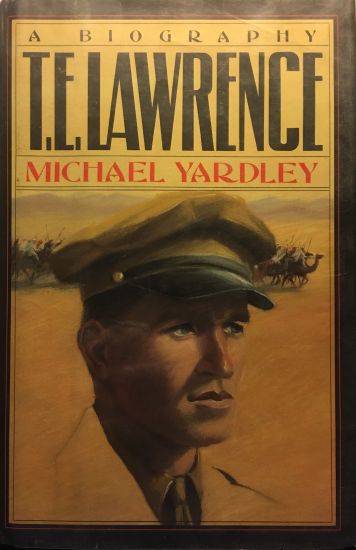
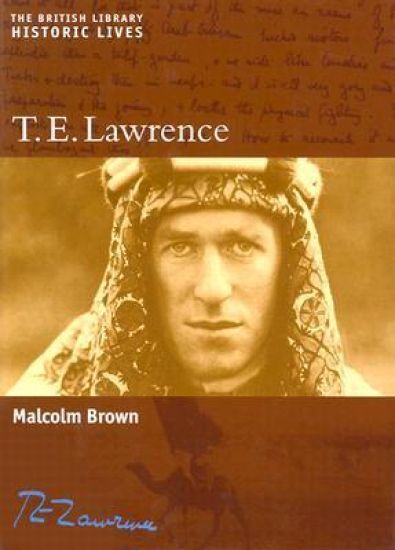
T.E. Lawrence

T.E. Lawrence

Malcolm Brown

New York University Press
2003
sidottu
T.E. Lawrence (1888-1935)--known worldwide as Lawrence of Arabia-- was many people in one: scholar, archaeologist, intelligence officer, guerrilla leader, diplomat, aspiring writer, and ordinary serviceman hiding under aliases from the celebrity he had first largely created and then come to despise. Illegitimate, but with aristocratic connections, an outsider yet also at ease with, and much admired by, many of his finest contemporaries, he was a man forever on the run, whether as a youth searching for fresh experience and fame, or a middle-aged figure seeking sanctuary both from his reputation and from a sense of guilt, resulting from wartime experiences from which he could never break free. Deeply religious by background, sexually ambiguous and always on the edge, he craved for peace, but was also convinced he deserved punishment. This new biography by Malcolm Brown, a well-known authority on Lawrence, is part fast-moving adventure story, part modern morality tale, and places special emphasis on the years of the Arab revolt: the period that both made Lawrence and broke him.Thoroughly illustrated with portraits, a rich range of photographs, letters in Lawrence's hand and extracts from his writings, T.E. Lawrence presents a compelling portrait of a remarkable man.
T.S. Eliot's Orchestra
First Published in 2000. Nearly everyone who addresses T. S. Eliot's imaginative and critical work must acknowledge the importance of music in thematic and formal terms. This collection of original essays thoroughly explores this aspect of his work from a number of perspectives.
T.H. Green

T.H. Green

CRC Press Inc
2017
sidottu
This volume collects a range of the most important published critical essays on T.H. Green's political philosophy. These essays consider Green's ethical and political philosophy, his accounts of freedom, rights, political obligation and property and the location of his political theory in the discourses of Victorian liberalism. It concludes with a selection of essays that provide comparative discussions of aspects of Green's political philosophy with positions advanced by Sidgwick, Rousseau, Kant and Hegel, and with both conservative and liberal responses to his ideas that emerged in late nineteenth and early twentieth century Japan.
T.C. Murray, Dramatist

T.C. Murray, Dramatist

Albert J De Giacomo

Syracuse University Press
2003
sidottu
Drawing on archives of libraries in Dublin, New York City and Boston, DeGiacomo assesses T.C. Murray's contribution to the Irish dramatic movement. One of the ""Cork Realists"" of the Abbey Theatre, Murray wrote 17 plays in one, two or three acts. A prominent national teacher and a seemingly apolitical playwright in the Irish Literary Revival, Murray expressed nationalistic aspirations in his peasant tragedies. His characters' drive for self-determination and their religious consciousness mark Murray's dramatic landscape. Murray reveals his life in voluminous correspondence with friends, family members and the glitterati of Dublin. A Roman Catholic, Murray tells his ""outsider"" story of the Abbey Theatre, ruled by members of the Protestant, Anglo-Irish ascendancy. W.B. Yeats, Lady Gregory and Lennox Robinson fill his world, as do later figures like Ernest Blythe. Murray's association with the amateur dramatic societies reveals yet another dimension of his commitment to Irish drama. This text, largely a work of theatre history, spans Murray's life and career from 1878 to 1959, and highlights Murray's plays on Abbey tours of America from 1911 to 1935.
T.S. Eliot - American Writers 8

T.S. Eliot - American Writers 8

Unger Leonard

UNIVERSITY OF MINNESOTA PRESS
1961
nidottu
T.S. Eliot - American Writers 8 was first published in 1961. Minnesota Archive Editions uses digital technology to make long-unavailable books once again accessible, and are published unaltered from the original University of Minnesota Press editions.
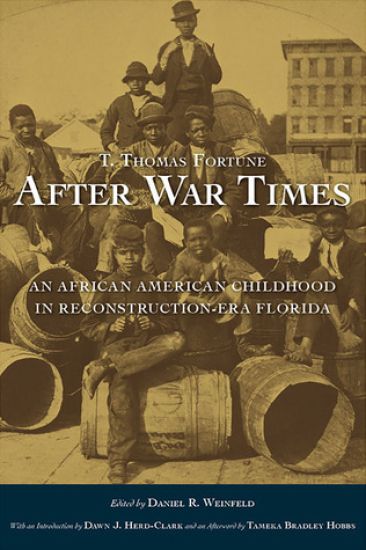
T. Thomas Fortune's “After War Times”

T. Thomas Fortune's “After War Times”

T. Thomas Fortune; Tameka Bradley Hobbs

The University of Alabama Press
2014
sidottu
T. Thomas Fortune was a leading African American publisher, editor, and journalist of the late nineteenth and early twentieth centuries, who was born a slave in antebellum Florida lived through emancipation, and rose to become a literary lion of his generation. In T. Thomas Fortune's “After War Times,” Daniel R. Weinfeld brings together a series of twenty-three autobiographical articles Fortune wrote about his formative childhood during Reconstruction and subsequent move to Washington, DC.By 1890 Fortune had founded a predecessor organization to the National Association for the Advancement of Colored People, known as the National Afro-American League, but his voice found its most powerful expression and influence in poetry, prose, and journalism. It was as a journalist that Fortune stirred national controversy by issuing a passionate appeal to African American southerners: “I propose to start a crusade,” he proclaimed in June 1900, “to have the negroes of the South leave that section and to come north or go elsewhere. It is useless to remain in the South and cry Peace! Peace! When there is no peace.” The movement he helped propel became known as “the Great Migration.”By focusing on Thomas’s ruminations about his disillusion with post–Civil War Florida, Weinfeld highlights the sources of Fortune’s deep disenchantment with the South, which intensified when the Reconstruction order gave way to Jim Crow–era racial discrimination and violence. Even decades after he left the South, Fortune’s vivid memories of incidents and personalities in his past informed his political opinions and writings. Scholars and readers interested in Southern history in the aftermath of the Civil War, especially the experiences of African Americans, will find much of interest in this vital collection of primary writings.
T.S. Stribling

T.S. Stribling

Edward J. Piacentino

University Press of America
1987
nidottu
This book examines the major southern novels of T.S. Stribling, a seminal figure in the development of the serious social novel in the South. In them he exploits themes, character types, satiric attitudes, and stylistic strategies that echo some of those of the midwestern iconoclasts; in so doing, he introduced important materials that some of the South's more talented writers would subsequently treat.
T. S. Eliot

T. S. Eliot

Marion Montgomery

University of Georgia Press
2008
pokkari
This brilliantly allusive and gracefully written study is focused on T. S. Eliot's developing commitment to Christianity, but the essay is by no means procrustean or reductive in its strategies, nor is it theological.Montgomery shows how Eliot's intellectual and emotional uneasiness in the early poems is reflected in such technical devices as point of view and imagery. The questions of the poem's voice and the poet's mask (which are often ironic in nature) become less pressing as time goes on, and finally Eliot comes to a dynamic stillness—a frozen point in the sea of change that is variously called nature, history, and society. This stillness embodies the poet's rendering of Christian incarnation—the Word within the word. The author finds too that Eliot's imagery grows richer during the progress of his spiritual journey. As the imagery becomes more religious it also grows more complex and more concrete.Eliot in the end decides the poet's personal struggle to know his world is more important than the poetry which "does not matter," as he says in East Coker. Paradoxically the poetry of T. S. Eliot takes on an increasingly classical quality as it steadily becomes more personal and Christian. Montgomery accordingly shows how Eliot ultimately arrives "where he started and sees the place for the first time."
T.S.Eliot and American Poetry

T.S.Eliot and American Poetry

Lee Oser

University of Missouri Press
1998
sidottu
A study of Eliot's major poetry, as well as an examination of what America means to its poets. Investigating Eliot's literary heritage through his familial traditions, the author addresses all phases of his career as a poet, and constructs a way of comparing Eliot to other American poets.
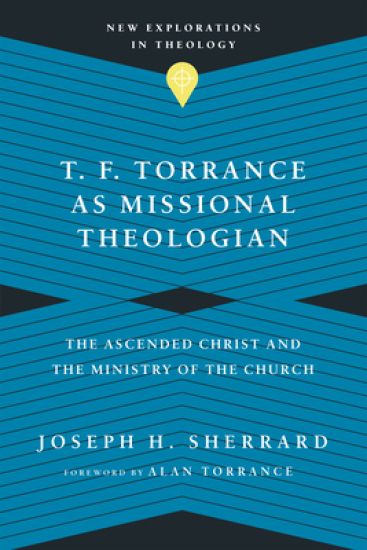
T. F. Torrance as Missional Theologian – The Ascended Christ and the Ministry of the Church
Christ has ascended. Yet his work continues. Much has been made of a "missional" view of the church in recent theological literature, but largely overlooked in this discussion has been the contribution that T. F. Torrance, the late Church of Scotland minister and theologian, can make to this discussion. Addressing this lacuna, theologian and pastor Joseph Sherrard considers how Torrance's theology can inform the church's understanding of its ministry and mission—in particular, his appeal to the church's participation in the ascended Christ's threefold office as king, prophet, and priest. Through the ministry of the church, Christ is still at work. Featuring new monographs with cutting-edge research, New Explorations in Theology provides a platform for constructive, creative work in the areas of systematic, historical, philosophical, biblical, and practical theology.
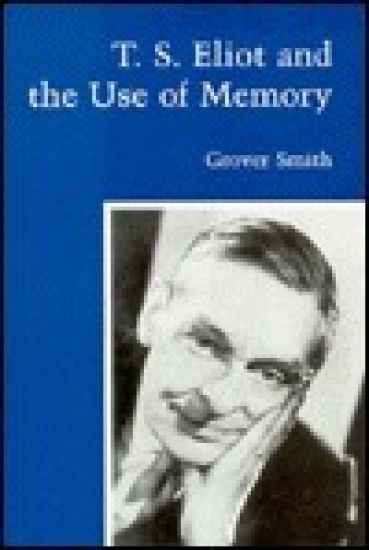
T S Eliot And Use Of Memory

T S Eliot And Use Of Memory

Grover Cleveland Smith

Bucknell University Press,U.S.
1996
sidottu
The "use of memory" in Grover Smith's chapters on tradition in Eliot's poetry refers to a dual function: the poet's awareness of a multiple cultural past and the transformation of its heritage into new and original art. This book makes major contributions, turning up diverse places and neglected thematic resources used by Eliot -- such as Poe's atmosphere of the charnel, the critically evolving personality of Hamlet, and so forth.