Kirjojen hintavertailu. Mukana 11 627 468 kirjaa ja 12 kauppaa.

Kirjahaku

Etsi kirjoja tekijän nimen, kirjan nimen tai ISBN:n perusteella.

575 tulosta hakusanalla Tami M. Jenkins

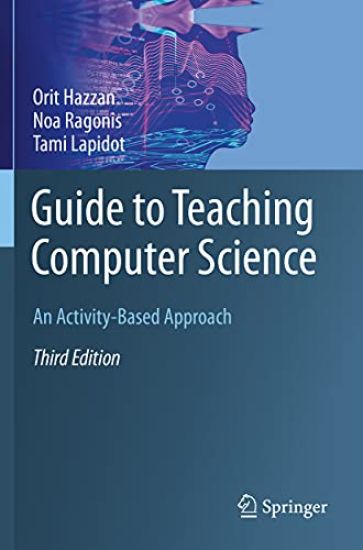
Guide to Teaching Computer Science

Guide to Teaching Computer Science

Orit Hazzan; Noa Ragonis; Tami Lapidot

Springer Nature Switzerland AG
2021
nidottu
This concise yet thorough textbook presents an active-learning model for the teaching of computer science. Offering both a conceptual framework and detailed implementation guidelines, the work is designed to support a Methods of Teaching Computer Science (MTCS) course, but may be applied to the teaching of any area of computer science at any level, from elementary school to university. This text is not limited to any specific curriculum or programming language, but instead suggests various options for lesson and syllabus organization.Fully updated and revised, the third edition features more than 40 new activities, bringing the total to more than 150, together with new chapters on computational thinking, data science, and soft concepts and soft skills. This edition also introduces new conceptual frameworks for teaching such as the MERge model, and new formats for the professional development of computer science educators.Topics and features:includes an extensive set of activities, to further support the pedagogical principles outlined in each chapter; discusses educational approaches to computational thinking, how to address soft concepts and skills in a MTCS course, and the pedagogy of data science (NEW); focuses on teaching methods, lab-based teaching, and research in computer science education, as well as on problem-solving strategies; examines how to recognize and address learners’ misconceptions, and the different types of questions teachers can use to vary their teaching methods; provides coverage of assessment, teaching planning, and designing a MTCS course; reviews high school teacher preparation programs, and how prospective teachers can gain experience in teaching computer science.This easy-to-follow textbook and teaching guide will prove invaluable to computer science educators within all frameworks, including university instructors and high school teachers, as well asto instructors of computer science teacher preparation programs.
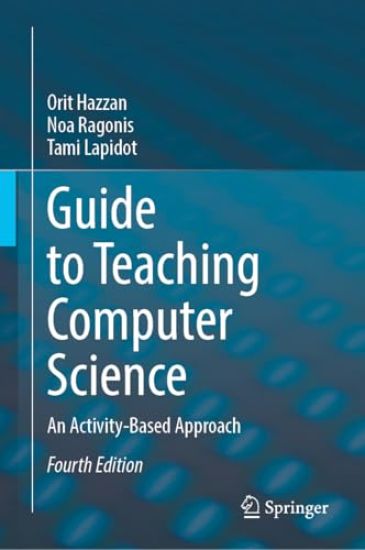
Guide to Teaching Computer Science

Guide to Teaching Computer Science

Orit Hazzan; Noa Ragonis; Tami Lapidot

Springer Nature Switzerland AG
2026
sidottu
This concise yet thorough textbook presents an active-learning model for the teaching of computer science. Offering both a conceptual framework and detailed implementation guidelines, the work is designed to support a Methods of Teaching Computer Science (MTCS) course, but may be applied to the teaching of any area of computer science at any level, from elementary school to university. This text is not limited to any specific curriculum or programming language, but instead suggests various options for lesson and syllabus organization. Fully updated and revised, the third edition features more than 40 new activities, bringing the total to more than 150, together with new chapters on computational thinking, data science, and soft concepts and soft skills. This edition also introduces new conceptual frameworks for teaching such as the MERge model, and new formats for the professional development of computer science educators. Topics and features: includes an extensive set of activities, to further support the pedagogical principles outlined in each chapter; discusses educational approaches to computational thinking, how to address soft concepts and skills in a MTCS course, and the pedagogy of data science (NEW);focuses on teaching methods, lab-based teaching, and research in computer science education, as well as on problem-solving strategies; examines how to recognize and address learners' misconceptions, and the different types of questions teachers can use to vary their teaching methods; provides coverage of assessment, teaching planning, and designing a MTCS course; reviews high school teacher preparation programs, and how prospective teachers can gain experience in teaching computer science.This easy-to-follow textbook and teaching guide will prove invaluable to computer science educators within all frameworks, including university instructors and high school teachers, as well asto instructors of computer science teacher preparation programs.

The Putt At The End Of The World

The Putt At The End Of The World

Abbott Lee K.; Barry Dave; Bausch Richard; Crumley James; Hall James W.; Hoag Tami; Tim O’Brien; Pearson Ridley; Standiford Les

LITTLE, BROWN COMPANY
2001
pokkari
Alfonso Zamora is an aging Mexican senior tour player who has discovered he's going blind. Rita Shaugnessy is a lusty, hard-drinking, down-on-her-luck golfer on the women's pro tour. Billy Sprague is a country club pro with the most beautiful golf swing - except when there's money on the line. All three receive an invitation from Philip Bates, the richest man in the world and the founder of Macrodyne Software, to play in a mysterious golf tounament held on a never-before-seen course in Scotland. There the three will play in what will be the golf match of all time and upon whose results rests the fate of the world.
INCOSE Needs and Requirements Manual

INCOSE Needs and Requirements Manual

Louis S. Wheatcraft; Michael J. Ryan; Tami Edner Katz

JOHN WILEY SONS INC
2024
sidottu
Complete and comprehensive manual for eliciting, defining, and managing needs and requirements, integration, verification, and validation across the lifecycle The INCOSE Needs and Requirements Manual presents product development and systems engineering practices, activities, and artifacts from the perspective of needs, requirements, verification, and validation across the system lifecycle. Composed of 16 chapters, this book provides practical guidance to help organizations understand the importance of lifecycle concepts, needs, requirements, verification, and validation activities, enabling them to successfully and effectively implement these activities during product development, systems engineering, and project management. The parent handbook published by Wiley, INCOSE Systems Engineering Handbook, divides the system lifecycle into a series of processes, with each process described in terms of a series of activities. This Manual provides more detail needed by practitioners to successfully implement these activities, with guidance and lessons learned from hundreds of years of collective experience of the authors, contributors, and reviewers. For example, while the Handbook mentions the need to define the problem statement, mission, goals, and objectives for a system, the Manual provides detailed guidance on doing so. Sample topics covered in the INCOSE Needs and Requirements Manual include: Defining the problem, opportunity, or threat and defining a mission statement, goals, objectives, and measures.Identifying external and internal stakeholders, eliciting stakeholder needs and requirements, defining drivers and constraints, and assessing risk.Performing lifecycle concept analysis and maturation and defining an integrated set of needs that represents the scope of the project.Transforming the integrated set of needs into well-formed design input requirements.Using attributes to manage needs and requirements across the lifecycle.Continuous integration, verification, and validation across the lifecycle.Moving between levels of the architecture, flow down and allocation of requirements, and budgeting performance, resource, and quality requirements.Defining the system verification and system validation success criteria, method, strategy, and responsible organizations.Planning and executing successful system verification and validation programs.Managing needs, requirements, verification, and validation across the lifecycle.Understanding the importance of an integrated, collaborative project team and effective communication between team members The INCOSE Needs and Requirements Manual is an essential accompanying reference to the INCOSE Systems Engineering Handbook for novice and seasoned system engineers, software engineers, project managers, product developers, tool vendors, course developers, educators, trainers, customers, suppliers, non-SE stakeholders , as well as researchers and students studying systems engineering and systems design.
Managing the Infosphere

Managing the Infosphere

Stephen D. McDowell; Philip E. Steinberg; Tami K. Tomasello

Temple University Press,U.S.
2008
sidottu
Drawing on their expertise in geography, political science, international relations, and communication studies, McDowell, Steinberg, and Tomasello investigate specific policy problems encountered as international organizations, corporations, and individual users try to "manage" a space that simultaneously contradicts and supports existing institutions and systems of governance, identity, and technology.
Managing the Infosphere

Managing the Infosphere

Stephen D. McDowell; Philip E. Steinberg; Tami K. Tomasello

Temple University Press,U.S.
2008
pokkari
Drawing on their expertise in geography, political science, international relations, and communication studies, McDowell, Steinberg, and Tomasello investigate specific policy problems encountered as international organizations, corporations, and individual users try to "manage" a space that simultaneously contradicts and supports existing institutions and systems of governance, identity, and technology.
Crafts, Trades, and Techniques of Early Cinema

Crafts, Trades, and Techniques of Early Cinema

Ian Christie; Priska Morrissey; Louis Pelletier; Valentine Robert; Jean-Pierre Sirois-Trahan; Tami Williams

Michigan Publishing Services
2024
nidottu
These proceedings of the 16th conference of the international society for the study of early cinema Domitor includes 26 studies and numerous rarely seen figures dealing with the often overlooked history of the crafts, trades and techniques of early cinema. By examining material culture and the institutionalization of practices into trades during the late 19th and early 20th centuries, this new investigation into the skills and the techniques that defined the cinema in its early decades aims to foster a better understanding of the medium in its varied industrial and professional aspects. The art and gestures of craftspersons—including performers, camera operators, editors, directors, designers, engineers, projectionists, programmers, and critics—, like those of the factory or laboratory workers, are considered for their emerging specificity, as well as in relation to existing cultural, material and technological forms. This book shows how the industrialization of cinema, the professionalization of workers, and the standardization of techniques led to the creation (or at times, subversion) of norms, and consequently legitimized certain skills, crafts and techniques at the expense of others. The intermedial approaches deployed in this collection bring into focus the influence of multiple professional worlds and cultural practices on the nascent film medium, as well as the necessary adaptations and transformations required by the latter. This circulatory dynamic concerns people and practices, studied in a non-diffusionist approach taking into account transcultural interactions. Chapters examine the mechanisms of professionalization and identity-building as they relate to professions such as filmmaker or colorist, as well as to more unexpected occupations such as accountant, censor, or chemical engineer. The notion of technique is broadly defined. Several of the volume’s chapters deal with cameras or special effects, as well as with new historical investigation into mysterious technical devices such as shutters, cue systems or working samples. Going beyond this preoccupation with materiality, the collected studies also approach technique as a human and cultural activity, and thus as a set of gestures, crafts, and expertise. The book more specifically opens up a reflection on the skills of screen performers and on the training that brought the institutionalization of body techniques and film acting. The book further illustrates to an unprecedented extent that the first film workers were frequently women. Several chapters are dedicated to the unconventional careers of specific film workers, with particular attention being given to the diversity and complexity of professional trajectories. Indeed, this book demonstrates that the invention of cinema was deeply enmeshed with the rise of international networks, which resulted in the standardization of technical practices within corporate and national contexts being ultimately shaped by globalization.
Tam i z powrotem: Jak mlodzi ludzie z Hiszpanii postrzegają mobilnośc
Swoboda przemieszczania się w UE to wyjątkowa konstrukcja, kt ra pozwala obywatelom UE podr żowac, mieszkac, studiowac, pracowac i przechodzic na emeryturę w dowolnym państwie czlonkowskim. Jednak kryzysy zadlużenia w r żnych krajach oraz nier wnomierny rozw j gospodarczy zwiększyly nier wności między poszczeg lnymi krajami europejskimi. W Hiszpanii trudna sytuacja gospodarcza, między innymi, sklonila wielu mlodych ludzi do emigracji. Imigracja z kraj w slabiej rozwiniętych gospodarczo spowodowala niezadowolenie z polityki otwartych granic w krajach czlonkowskich o stabilniejszej sytuacji gospodarczej. Niezadowolenie to ujawnilo się, gdy Wielka Brytania podjęla decyzję o opuszczeniu Unii w ramach brexitu. Wlaśnie w takich okolicznościach - pomiędzy nieograniczonymi możliwościami życia w dowolnym miejscu w UE a coraz bardziej krytycznymi opiniami - powstala niniejsza praca. M wiąc bardziej konkretnie, niniejsze badanie ma na celu ustalenie, jak mlodzi ludzie z Hiszpanii, kt rzy wyemigrowali do Wielkiej Brytanii, a następnie powr cili do Hiszpanii, postrzegają mobilnośc. Skupiono się przede wszystkim na osobistych doświadczeniach i odczuciach mlodych emigrant w związanych z opuszczeniem Hiszpanii, życiem w Wielkiej Brytanii, powrotem po pewnym czasie spędzonym za granicą oraz poczuciem przynależności, a także na tym, jak spos b, w jaki m wią o swoich przemieszczeniach, wpisuje się w szerszy dyskurs na temat mobilności.
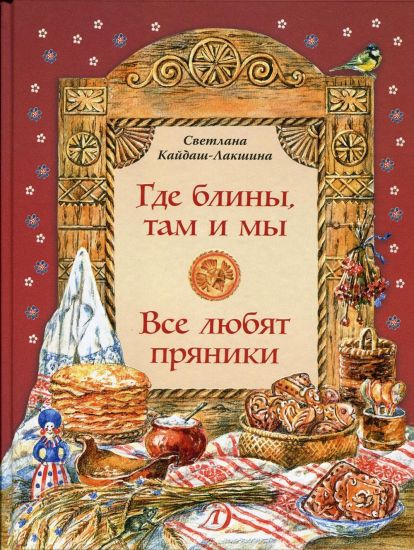
Gde bliny, tam i my.Vse ljubjat prjaniki

Gde bliny, tam i my.Vse ljubjat prjaniki

Galina Judina

Detskaja literatura
2018
sidottu
Krasochnaja poznavatelnaja kniga o vsemi ljubimykh lakomstvakh - blinakh, pirogakh i prjanikakh. Kto, gde i kogda pridumal sdelat iz zerna muku i ispech khleb? Ili sdelat testo zhidkim i nazharit blinov? Kak "pechatajut" prjaniki pechatnye? Chitatel uznaet, kak oni pojavilis na Rusi, kak nazyvajutsja i chem otlichajutsja ikh "sobratja" v drugikh stranakh, kakie obychai s nimi svjazany.V knige opisany traditsii, svjazannye s prazdnovaniem na Russkoj zemle Maslenitsy, svadeb i imenin, rasskazano, kak ustroena pech v russkoj izbe, chto i s chem pili i eli nashi predki v davnie vremena, kakie pirogi pekli, kak ustraivali chaepitija.Krome togo, v knige est neslozhnye retsepty, s pomoschju kotorykh mozhno prigotovit bliny i prjaniki samim.Dlja srednego shkolnogo vozrasta.
Mir bolshoj-bolshoj. Tam i tut

Mir bolshoj-bolshoj. Tam i tut

Anastasija Orlova

Labirint
2017
pahvisivuinen
Eti knizhki jarkie, nezhnye, smeshnye. S nimi malenkij chelovek otkryvaet bolshoj mir. Chem na dosuge zanimajutsja delfiny, flamingo, lamy i lenivtsy? Ob etom rasskazhut stikhi Anastasii Orlovoj. Igrat, poznavat, zapominat! Dlja detej do 3-kh let.Perevodchik: Orlova Anastasija AleksandrovnaKhudozhnik: Bakos Barbara
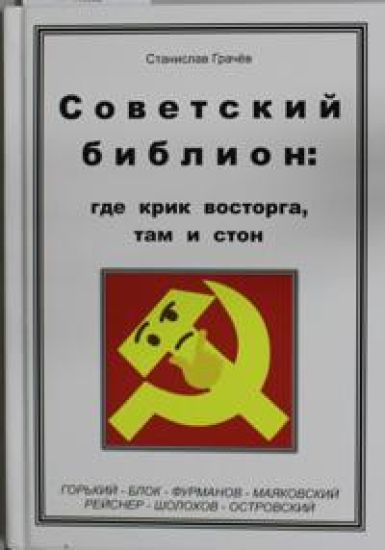
Sovetskij biblion: gde krik vostorga, tam i ston
Proizvedenija avtorov, o kotorykh povestvuetsja v knige, v Sovetskom Sojuze byli vesma pochitaemymi. Sovetskaja ideologija knigi etikh pisatelej i poetov vozvodila v obraztsy sotsialisticheskogo realizma. Geroi etikh knig veli samootverzhennuju borbu za svetloe buduschee vsego chelovechestva - sotsializm i kommunizm. Odnako pri vnimatelnom chtenii vyjasnjaetsja, chto v etikh proizvedenijakh nemalo takikh momentov, kotorye tolko ottorgajut chitatelja ot etogo samogo svetlogo buduschego.Kniga rasschitana na massovogo chitatelja, interesujuschegosja sovetskoj literaturoj, a takzhe mozhet sluzhit uchebnym posobiem dlja shkolnikov starshikh klassov, studentov gumanitarnykh fakultetov, shkolnykh uchitelej i prepodavatelej vuzov, ravno kak i dlja studentov-slavistov razlichnykh stran.
Sinie koty. Gde ryba, tam i kot. Kalendar nastennyj na 2026 god (300kh300 mm)
O serii: Nashi nastennye kalendari otlichajutsja vysokim kachestvom ispolnenija! Tschatelno podobrannye illjustratsii, napechatannye na gljantsevoj bumage vysochajshego kachestva, stanut nastojaschim ukrasheniem doma, a v kalendarnoj setke najdetsja mesto dlja vashikh planov: bolshie kletki pozvoljat delat zapisi i organizovat svoj god! V kalendare takzhe otmecheny vse gosudarstvennye prazdniki. O kalendare: Zabavnyj milyj kalendar s zarisovkami iz zhizni mnogodetnoj semi znamenitykh Sinikh Kotov, zavoevavshikh ljubov tysjach poklonnikov v razlichnykh internet-soobschestvakh. Rina Zenjuk - minskaja khudozhnitsa, geroi ee risunkov - veselye i sereznye, reshitelnye, mechtatelnye, ochen upitannye koty sinego tsveta - ponravjatsja ne tolko zajadlym ljubiteljam kotikov, no i tem, kto do etogo byl k nim ravnodushen. Svoj zhanr khudozhnitsa opredeljaet kak "kotizm". Sinie koty garantirovanno darjat khoroshee nastroenie i ne ostavjat ravnodushnym nikogo! Dlja kogo: Dlja vsekh poklonnikov tvorchestva Riny Zenjuk i ee zamechatelnykh sinikh kotov! Tekhnicheskie parametry: - Tip kalendarja - nastennyj perekidnoj. - God - 2026. - Kalendarnaja setka - s razbivkoj po mesjatsam. - Vid skreplenija - skrepka. - Shirina - 30 sm. - Vysota - 30 sm. - Vnutrennij blok - melovannaja bumaga 115 g/m2. - Podlozhka - plotnyj gofrokarton dlja podderzhanija formy. - Individualnaja upakovka v plotnyj tsellofanovyj paket.