Legendary Danish filmmaker Carl Theodor Dreyer (3 February 1889-20 March 1968) was born in Copenhagen to a single mother, Josefine Bernhardine Nilsson, a Swede. His Danish father, Jens Christian Torp, a married farmer, employed Nilsson as a housekeeper. After spending his first two years in orphanages, Dreyer was adopted by Carl Theodor Dreyer, a typographer, and his wife, Inger Marie Dreyer. He was given his adoptive father’s name. At age 16, he renounced his adoptive parents and worked his way into the film industry as a journalist, title card writer, screenwriter, and director. Throughout his career he concealed his birth name and the details of his upbringing and his adult private life, which included a period in which he explored his homosexual orientation and endured a nervous breakdown. Despite his relatively small output of fourteen feature films and seven documentary short films, 1919-64, he is considered one of the greatest filmmakers in history because of the diversity of his subjects, themes, techniques, and styles, and the originality of the bold visual grammar he mastered. In Cinematography of Carl Theodor Dreyer: Performative Camerawork, Transgressing the Frame, I argue: 1) that Dreyer, an anonymous orphan, an unsourced subject, manufactured his individuality through filmmaking, self-identifying by shrouding himself in the skin of film, and 2) that, as a screenwriter-director who blocked entire feature films in his imagination in advance—sets, lighting, photography, shot breakdowns, editing—and imposed his vision on camera operators, lighting directors, actors, and crews in production, he saw filmmaking essentially as camerawork and he directed in the style of a performative cinematographer.
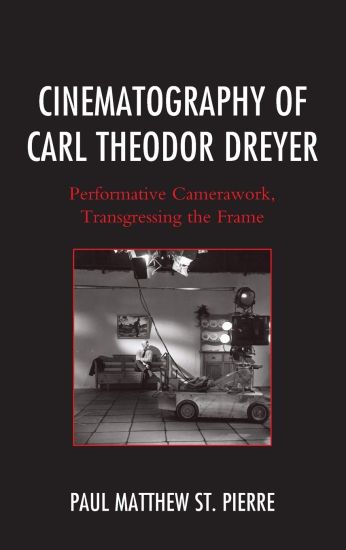
Legendary Danish filmmaker Carl Theodor Dreyer (3 February 1889-20 March 1968) was born in Copenhagen to a single mother, Josefine Bernhardine Nilsson, a Swede. His Danish father, Jens Christian Torp, a married farmer, employed Nilsson as a housekeeper. After spending his first two years in orphanages, Dreyer was adopted by Carl Theodor Dreyer, a typographer, and his wife, Inger Marie Dreyer. He was given his adoptive father’s name. At age 16, he renounced his adoptive parents and worked his way into the film industry as a journalist, title card writer, screenwriter, and director. Throughout his career he concealed his birth name and the details of his upbringing and his adult private life, which included a period in which he explored his homosexual orientation and endured a nervous breakdown. Despite his relatively small output of fourteen feature films and seven documentary short films, 1919-64, he is considered one of the greatest filmmakers in history because of the diversity of his subjects, themes, techniques, and styles, and the originality of the bold visual grammar he mastered. In Cinematography of Carl Theodor Dreyer: Performative Camerawork, Transgressing the Frame, I argue: 1) that Dreyer, an anonymous orphan, an unsourced subject, manufactured his individuality through filmmaking, self-identifying by shrouding himself in the skin of film, and 2) that, as a screenwriter-director who blocked entire feature films in his imagination in advance—sets, lighting, photography, shot breakdowns, editing—and imposed his vision on camera operators, lighting directors, actors, and crews in production, he saw filmmaking essentially as camerawork and he directed in the style of a performative cinematographer.
While Theodor Adorno has continued to be influential since his death in 1969, his very centrality has led to the left simplifying his ideas while the right placed him at the center of a myriad of wild conspiracy theories, all of them filed under the category of Cultural Marxism. Adorno has wrongly been blamed for everything from the Beatles to postmodernism, but he has continued to be read, if read badly. Stuart Walton's introduction to Adorno attempts to explain how this idiosyncratic thinker reframed elements of the Hegelian-Marxist dialectical in the fields of philosophy, sociology, politics and aesthetics and to rectify some of the major misunderstandings about Adorno and the Frankfurt School. When Walton began studying Adorno at Oxford in 1983 he felt that Adorno was nowhere in the English-speaking world, but that he should be everywhere. Now Adorno is everywhere, but hardly anywhere sufficiently or deeply understood.
This book discusses how from their different backgrounds and on different levels, the German philosopher, sociologist and musicologist,Theodor W. Adorno, (1903-1969) and the Irish playwright, Brian Friel,(1929-2015) came to the conclusion that the modern crisis rendered art’s affirmative essence, like all positivistic fixations, obsolete. Only a new conception of dialectics, based on the reciprocity of opposites, rather than on antitheses, is capable of healing modern dichotomies. Independent of Adorno’s Negative Dialectics and Critical Theory, Friel is aware that with the processual character of life this requires of the artist in particular an attitude both critical and conciliatory and a persistent readiness to change. Reality is in need of possibility, its dialectic other. Uncertainty, in Friel’s Theatre of Hope and Despair is no longer a defect of our time, but a source of creation in art as well as in life.
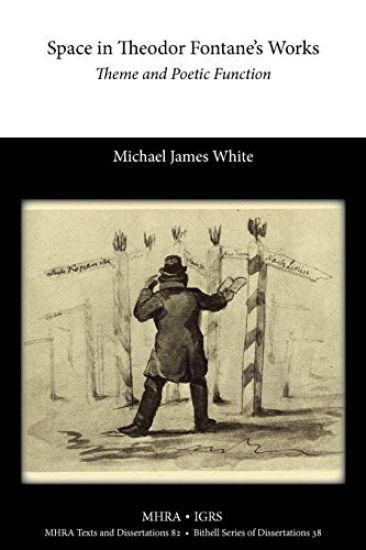
The novels of Theodor Fontane (1819-1898), Germany's most important Realist, have long been appreciated for the symbolism of their represented worlds. In this study, Michael White examines the significance of space and spatial experience across Fontane's oeuvre, providing analyses of non-fiction prose and less well-known novels, alongside major works and poetry. The study reveals not only a complex and varied spatial symbolism, but also that space itself is a thematic concern in Fontane's writing. His texts portray human beings' relationships with their worlds, and how and to what end they invest their environment with meaning. Fontane's novels and travel writings emerge as profoundly reflexive discourses on art and its function for the individual. Michael J. White completed his Ph.D. at St Andrews and now teaches German at the Institut de la formation des ma tres, Universit d'Artois.
Wem es - wie mir - zufallt, am Ende seiner eigenen chirurgischen Lauf- bahn an einigen beschaulichen Sommertagen so tief in das Auf und Nieder eines GroBen seines Faches Einblick zu gewinnen, der ist dem ungemein anregenden Verfasser fur das Privileg dieses Vorwortes dank- bar. Vieles las ich -toute 1?roportion gardee -mit seltsamer Betroffenheit in Erinnerung an eigene (fruhere!) Voreingenommenheiten und an Mo- mente ungeduldigen Vorwartsstrebens! 1st Kocher seinem wissenschaftlichen Biographen Trohler im Verlaufe der Quellenforschung zum Stein des AnstoBes geworden? So viel Sen- dungsbewuBtsein und securite dans l'erreuf durften fur den Medizin- historiker, der selber in der strengen wissenschaftlichen Tradition vor- si htigen statistischen Denkens aufgewachsen ist, schwer einzuordnen sem. Das Faszinierende an der Darstellung Trohlers ist die Kunst, Kocher in seine Zeit hineinzustellen, bewundert, gefordert und kritisiert durch seine Lehrer Langenbeck, Spencer Wells und Billroth, seinen Zeitgenossen Hal- sted, dem temporaren Schuler Cushing, sowie seinem internistischen Kri- tiker Sahli in Bern. Die Bilanz dieses Lebens, auch ohne die Verklarung durch den Nobel- preis, ist durch viele Kapitel hindurch positiv. Nicht zufallig ist die Dar- stellung der Schilddrusenforschung mit ihren Irrgangen und ihrer schlieB- lichen Korrektur bei aller Objektivitat romanhaft packend. Die Ruckschau auf Kochers langen Weg zur physiologischen Chirurgie laBt neben vielen Einzelheiten seiner Forschung seine Personlichkeit nie vergessen. Er erscheint in der Gegenuberstellung zu Billroth als der syste- matischere Tatmensch, erreicht aber nicht die warme menschliche Ur- sprunglichkeit und die musische Begabung Billroths. Kor er haftet im Gegensatz dazu ein gewisser Hauch von Kalte und pietistischer Enge an.
Gottfried Keller and Theodor Fontane are among the most important authors in Realism. A comparative reading of the two narrative writers reveals a multi-facetted interplay of similarities and differences. At the same time, an exemplary insight can be gained into the artistic positions and aesthetic processes of the time after 1848 up to the divergences of modernism around 1900. The volume presents the collected papers from the international symposium held in Zurich in 2006; the contributors include Peter von Matt, Hugo Aust, Michael Andermatt, Roland Berbig, Gabriele Radecke, Peter Utz and Karl Pestalozzi. This collected volume continues the Schriften der Theodor-Fontane-Gesellschaft (Publications of the Theodor Fontane Society) with a new editorial board and a new profile.
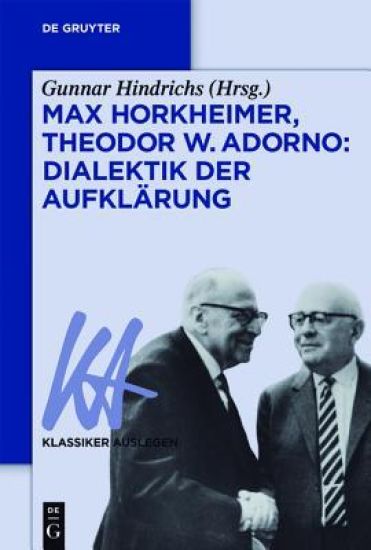
Horkheimer/Adornos im kalifornischen Exil verfasste Dialektik der Aufklärung untersucht das Scheitern menschlicher Befreiung und die Errichtung neuer Herrschaftsformen. Obgleich ein Schlüsseltext der philosophischen Zeitdiagnose, gab es bislang keinen Kommentar zu ihr.Der hier vorgelegte kooperative Kommentar geht der Dialektik der Aufklärung in zwei Durchgängen nach. Ein erster Durchgang kommentiert die einzelnen Abschnitte des Buches; ein zweiter Durchgang verfolgt Koordinaten seines theoretischen Horizonts (Kant, Hegel, Nietzsche, Freud). Abschließend gelangt die Wirkungsgeschichte des Textes zur Darstellung. Ein Gravitationstext der kritischen Theorie unserer Zeit findet damit erstmals eine kommentierende Auslegung.
Angesichts der Fülle von Beiträgen, die sich mit Theodor Fontanes Leben und Werk befassen, ist es erstaunlich, dass zur Landpartie bisher noch keine eigenständige Untersuchung vorliegt. Diese Studie widmet sich dem Thema erstmals umfassend und fokussiert es mit Blick auf sozial-, kultur- und medienhistorische Kontexte ebenso wie auf literatur- und kunsthistorische Perspektiven immer wieder neu. Leitend ist dabei die These, dass die Landpartie im Romanwerk Fontanes einen Topos konstituiert, der stets dieselben Ordnungs- und Strukturprinzipien aufweist. Dieses Erzählmuster wird in den einzelnen Texten allerdings sehr produktiv und variantenreich gestaltet. Kern der narrativen Gestaltung ist dabei stets eine Verknüpfung von Liebes- und Geselligkeitshandlung. Dies verleiht der Landpartie handlungsdynamisierendes Potential, weshalb ihr eine wichtige konzeptionelle Funktion für die Romane Fontanes zukommt.
Ausgehend vom ‚spatial turn‘ der Kulturwissenschaften fokussiert der Band das seither nur randständig behandelte Thema der Grenze bei Fontane. Untersucht wird die kontinuierliche Präsenz der Grenzüberschreitung in seinem Leben und Werk aus einem literatur- und sprachwissenschaftlichen sowie interkulturellen und intermedialen Blickwinkel, womit die vertiefenden Analysen neue Räume bezüglich der Interpretation von Fontanes Œuvre eröffnen.

![Ein Beitrag Zu Theodor Storm's Stimmungskunst [Microform]](/covers/9781248120750.jpg)