Kirjojen hintavertailu. Mukana 12 016 292 kirjaa ja 12 kauppaa.

Kirjahaku

Etsi kirjoja tekijän nimen, kirjan nimen tai ISBN:n perusteella.

1000 tulosta hakusanalla Victoria Ferrante
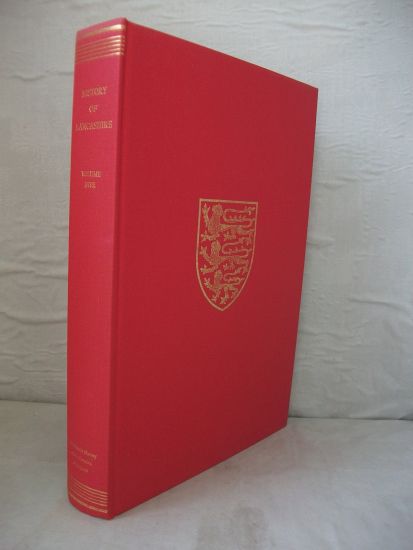
The Victoria History of the County of Lancaster
The volume contains histories of the eleven ancient parishes in Leyland hundred (Leyland, Penwortham, Brindle, Croston, Hesketh-with-Becconsall, Tarleton, Rufford, Chorley, Hoole, Eccleston, Standish) and of two of the five ancient parishes in Blackburn hundred (Blackburn parish and Whalley). Some very considerable places in the volume never achieved the status of ancient parish: Darwen was part of Blackburn parish, and Whalley included Accrington, Burnley, Clitheroe, Colne, and Nelson. In the Middle Ages the area was relatively poor, with extensive royal forests used for deer and, later, cattle and sheep farming. From the late 18th century the woollen industry gave way to cotton spinning and weaving in hundreds of factories, and the coalfield was exploited. Despite the growth of industry the area retains much undeveloped countryside, gentry houses in the lush pasture land of the Ribble Valley, and many oldfarmhouses on the slopes of the Pennine moorlandsand Pendle Hill.
The Victoria History of the County of Lancaster
The volume contains the histories of the three ancient parishes in Blackburn hundred north of the Ribble (Mitton, Chipping. and Ribchester) and of the eight ancient parishes in Amounderness hundred (Preston, Kirkham, Lytham, Poulton-le-Fylde, Bispham, part of Lancaster, St. Michael-on-Wyre, and Garstang). A very large part of Amoundernesshundred is the level area between the Ribble estuary and Cockerham Sands called the Fylde and one known as 'the wheatfield of Amounderness'. Some of the ancient parishes include places that have become larger, more populous, and better known than the old centres ofpopulation which gave the parishes their names. Poulton-le-Fylde includes Fleetwood, and Bispham is better known to the world as the seaside resort of Blackpool, which also extends into Poulton.
The Victoria History of the County of Oxford
The volume was originally published in 1954, and was the work of a team of distinguished historians. It broke new ground, for although separate histories of the university and its colleges had been written, it was the first comprehensive scholarly account of all those institutions. The opening chapter on the history of the university from its 12th-century beginnings to the mid 20th century is followed by chapters on the grammar schools of the medieval university and on the architectural and institutional history of the several university buildings. The greater portion of the book is devoted to the histories of the colleges and halls, each of which is the subject of a separate article. The articles are precise and fully referenced, telling of such matters as the foundation and buildings of the college, its estates, its religious and academic history, and its outstanding personalities. The many illustrationsinclude plates of old prints and drawings; there are also plans which carry forward the work of the Royal Commission on Historical Monuments. 'The book abounds in new and interesting information ... the result of research in muniments which have not before been so carefully and intelligently investigated.' (F. M. Powicke in English Historical Review).
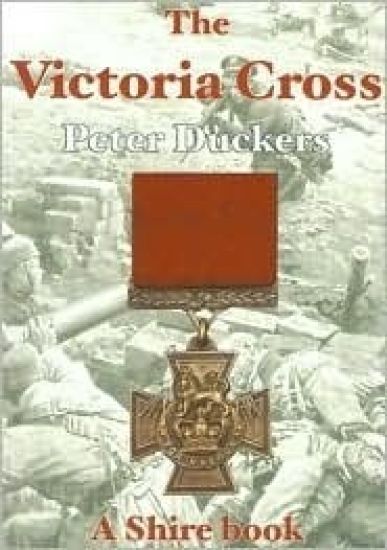
The Victoria Cross

The Victoria Cross

Peter Duckers

Shire Publications
2005
nidottu
Describes and illustrates many of the medals, including the Victoria Cross award, and the men and women who have been awarded them together with the award citations which are always remarkable and sometimes astounding.
Queen Victoria's Gene

Queen Victoria's Gene

D M Potts; W T W Potts

The History Press Ltd
1999
nidottu
Queen Victoria's son, Prince Leopold, died from haemophilia, but no member of the royal family before his generation had suffered from the condition. Medically, there are only two possibilities: either one of Victoria's parents had a 1 in 50,000 random mutation, or Victoria was the illegitimate child of a haemophiliac man. However the haemophilia gene arose, it had a profound effect on history. Two of Victoria's daughters were silent carriers who passed the disease to the Spanish and Russian royal families. The disease played a role in the origin of the Spanish Civil War; and the tsarina's concern over her only son's haemophilia led to the entry of Rasputin into the royal household, contributing directly to the Russian Revolution. Finally, if Queen Victoria was illegitimate, who should have inherited the British throne? The answer is astonishing.
Queen Victoria's Family

Queen Victoria's Family

Charlotte Zeepvat

Sutton Publishing Ltd
2001
sidottu
This album of Queen Victoria's family explores the lives, personalities, tastes and contributions of the Queen, her children and her children's children through four generations. Largely drawn from the author's own unique collection, it is arranged thematically and chronologically, each chapter having a brief introduction. Anecdotes and quotations add further interest to the captions, and capture the essence of the personalities and life stories captured by the lens. (Further detailed synopsis on reverse).
Queen Victoria's Family

Queen Victoria's Family

Charlotte Zeepvat

Sutton Publishing Ltd
2007
nidottu
This album of Queen Victoria's family explores the lives, personalities, tastes and contributions of the Queen, her children and her children's children through four generations. The beginning of the Queen's reign coincided almost exactly with the beginnings of photography so that, before her children had left the nursery, the first commercial photographs of the royal family were available on the streets and finding a ready market. Photography added a new dimension to people's perception of the monarchy: for the first time ordinary people could see exactly what the Queen looked like, and they became aware of her family as human beings who wore day clothes, not just gold and ermine; who were confident or shy before the camera; and whose children frowned, sulked or fidgeted. The Queen's grandchildren and great-grandchildren grew up accustomed to being photographed. Their fashions and hairstyles were emulated and it became customary to display royal photographs beside more humble subjects in the family album.
Princess Victoria Melita

Princess Victoria Melita

John Kiste

The History Press Ltd
2003
nidottu
Princess Victoria Melita played a colourful role from her birth in 1876. The second daughter of Alfred, Duke of Edinburgh, she made a brief and unhappy marriage at the age of 17 to her cousin, Ernest, Grand Duke of Hesse. In the face of strong opposition from her family she divorced him seven years later and married another cousin, Grand Duke Cyril of Russia, resulting in three years of exile. When revolution toppled the empire in 1917, the Grand Duke and Duchess and their children escaped to Finland, living in danger for three long years. Following the atrocities of the Bolsheviks at the time, including the murder of most of the Romanov family, the Grand Duke believed he was the senior surviving member of the imperial house, and proclaimed himself Tsar. However, they were never able to return to their homeland, and the Grand Duchess died in exile in 1936. Using previously unpublished correspondence from the Royal Archives and Astor papers, this is a portrait of the Princess, set against the imperial courst of the turn of the 20th century and inter-war Europe.
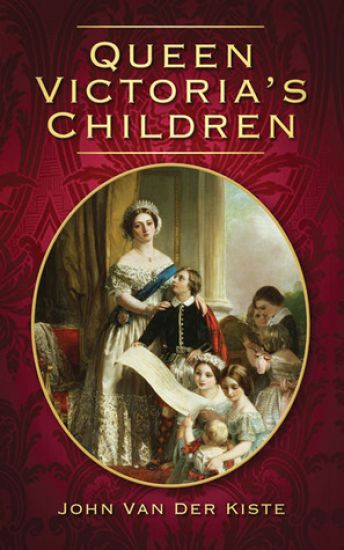
Queen Victoria's Children

Queen Victoria's Children

John Kiste

The History Press Ltd
1996
nidottu
Queen Victoria and Albert, Prince Consort had nine children who despite their very different characters, remained a close-knit family. Inevitably, as they married into European royal families their loyalties were divided and their lives dominated by political controversy. This is not only the story of their lives in terms of world impact, but also of their own personal achievements, their individual contributions to public life in Britain and overseas and in their roles as the children of Queen Victoria and the Prince Consort.
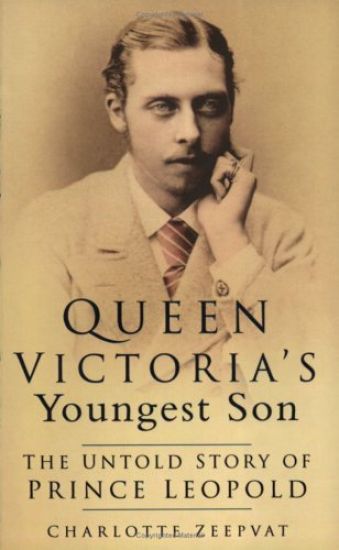
Queen Victoria's Youngest Son

Queen Victoria's Youngest Son

Charlotte Zeepvat

Sutton Publishing Ltd
2005
nidottu
Prince Leopold, Duke of Albany (1853-84), is acknowledged to have been the most intelligent and, in the words of one writer, 'by far and away the most interesting' of Queen Victoria's four sons. He was a strong-willed, attractive character, with an immense thirst for life. He was also, however, the first royal haemophiliac and suffered continual ill health: in addition to haemophilia, Leopold suffered from epilepsy. A compelling human story which also touches on the wider worlds of late nineteenth-century Oxford and of literature, art and politics in the Victorian period, it examines the question of haemophilia and the royal family from a new angle, at the first appearance of the condition. For example, when did the Queen and Prince Albert realise that their youngest son was ill and how much did they understand of his illness? The book also presents a full and balanced picture of Leopold's relationship with his mother, looking beyond snapshots of individual quarrels between mother and son. Finally, it examines Leopold's life at Oxford, the varied and interesting friendships he developed there with Lewis Carroll, John Ruskin and Oscar Wilde; his political views; and the importance of his work as unofficial secretary to the Queen.
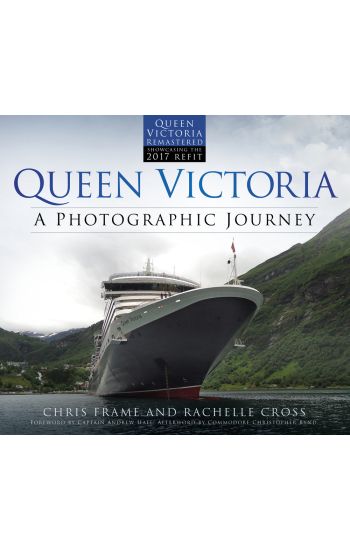
Queen Victoria: A Photographic Journey

Queen Victoria: A Photographic Journey

Chris Frame; Rachelle Cross; Andrew Hall; Christopher Rynd
The History Press Ltd
2018
nidottu
A fully remastered photographic journey around a perennially popular cruise ship.Queen Victoria was the first in a new breed of Cunard Ships: her unique design is enhanced to give her the ability to cross the North Atlantic and she represented a new era for the Cunard Line. Introduced to service in 2007, Queen Victoria has had a notable career with royal engagements, tandem Atlantic crossings and Gala-World Cruises where she has been welcomed with open arms.Illustrated with stunning colour photographs taken by the authors from every area of the ship, and fully updated after the extensive 2017 refit, this book provides a lasting memento of a voyage aboard Cunard's stately monarch.
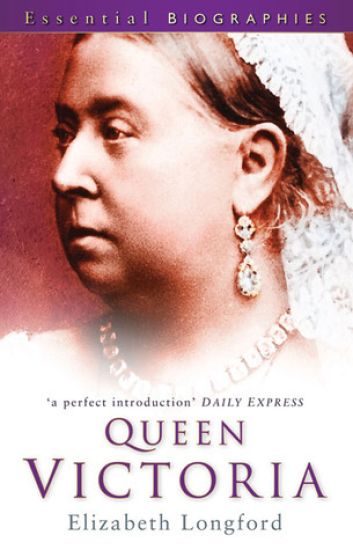
Queen Victoria: Essential Biographies

Queen Victoria: Essential Biographies

Elizabeth Longford

The History Press Ltd
2009
nidottu
Queen Victoria was the longest reigning monarch in British history. In this concise biography, Lady Longford, long recognised as an authority on the subject, gives a full account of Queen Victoria's life and provides her unique assessment of the monarch. Victoria ascended the throne in 1837 on the death of her uncle William IV. In 1840 she married her first cousin, Prince Albert of Saxe-Coburg-Gotha, and for the next twenty years they were inseparable. Their descendants were to succeed to most of the thrones of Europe. When Albert died in 1861 Victoria's overwhelming grief caused her to almost withdraw from public life for several years. This perceived dereliction of public duty, coupled with rumours about her relationship with her Scottish ghillie, John Brown, led to increasing criticism. Coaxed back into the public eye by Disraeli, she resumed her political and constitutional interest with vigour until her death in 1901.
Queen Victoria's Children

Queen Victoria's Children

John Kiste

The History Press Ltd
2009
nidottu
Queen Victoria and Albert, Prince Consort had nine children who despite their very different characters, remained a close-knit family. Inevitably, as they married into European royal families their loyalties were divided and their lives dominated by political controversy. This is not only the story of their lives in terms of world impact, but also of their own personal achievements, their individual contributions to public life in Britain and overseas and in their roles as the children of Queen Victoria and the Prince Consort.
Queen Victoria's Baggage

Queen Victoria's Baggage

Daniel A. Silverman

University Press of America
1999
sidottu
Queen Victoria's Baggage is a cross-disciplinary examination of why the organizational life experienced by millions of people in western culture is fraught with dysfunctionality and pain. To avoid a loss of perspective by focusing on the present cultural milieu the book utilizes anthropology, psychology, history and the study of technology and applies them to those who established the foundations for today's institutions during the reign of Queen Victoria from 1830-1901. The author uncovers the discontent found in current organizations in the nineteenth century cultures of America, Russia, and Vienna, the ancestral social roots that continue to disrupt the foundations of lives within organizations and analyzes both the depth and breadth of the remedial actions which need to be undertaken to undo what has been evolving for 150 years.
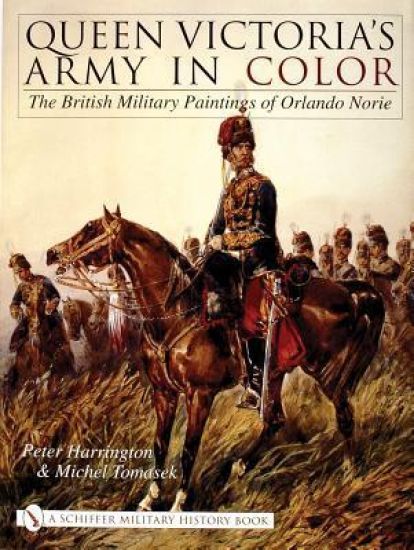
Queen Victoria’s Army in Color

Queen Victoria’s Army in Color

Peter Harrington

Schiffer Publishing Ltd
2003
sidottu
Orlando Norie is considered to have been one of the foremost illustrators of the British army in the 19th century, with thousands of watercolors to his credit in public and private collections. His pictures are highly sought after and command high prices. Yet his life remained a mystery that is only now being uncovered. Many of these wonderful pictures are revealed here for the first time. The Anne S.K. Brown Military Collection in Brown University Library, Providence, Rhode Island, USA, possesses one of the largest, if not the largest public collection of original military watercolors by Orlando Norie. The pictures in the Brown military collection range from single figure uniform studies or composites, to genre and battle scenes and at least one named portrait. These are published as a group for the first time along with Michel Tomasek’s masterful account of Norie’s life, including comments on the artist’s British pictures by Peter Harrington.