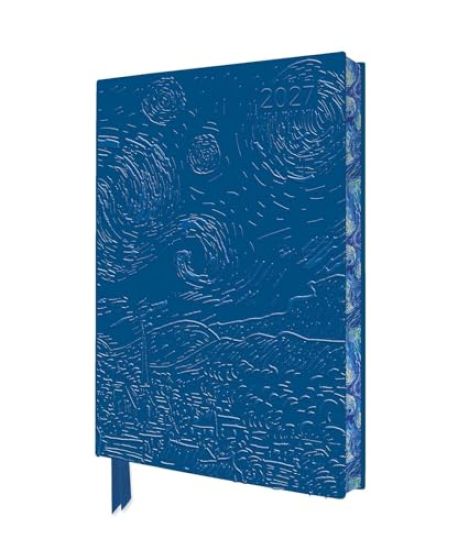
Artisan Art Diaries from Flame Tree come in a range of hues to suit the moment, with well-known art on the embossed cover and beautifully decorated edges. The standard format has a week to view on one page and a lined page opposite for note-taking. And, with flexible, soft touch vegan leather covers, they’re easy to slip into your bag and a pleasure to use. This diary features one of the works from Van Gogh's iconic The Starry Night series.
Artisan Art Diaries from Flame Tree come in a range of hues to suit the moment, with well-known art on the embossed cover and beautifully decorated edges. The standard format has a week to view on one page and a lined page opposite for note-taking. And, with flexible, soft touch vegan leather covers, they’re easy to slip into your bag and a pleasure to use. This diary features one of the works from Van Gogh's iconic Sunflowers series.
Pocket Artisan Art Diaries from Flame Tree come in a range of hues to suit the moment, with well-known art on the embossed cover and beautifully decorated edges. With a week to view, two bookmark ribbons and flexible, soft-touch vegan leather covers, they’re easy to slip into your bag and a pleasure to use. This diary features Van Gogh's beautiful Almond Blossom.
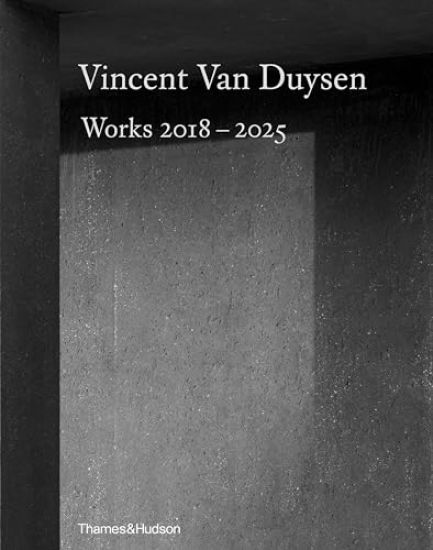
The third in a trilogy of monographs from Vincent Van Duysen, showcasing a range of product, architectural and interior design from the last seven years. Presenting the latest projects from prolific Belgian architect, interior and product designer Vincent Van Duysen, this book brings the trilogy of Van Duysen monographs up to the present day. It includes eleven homes in Europe and north America - among them his own house in Portugal - as well as boutiques, a hotel, a winery and a beach club, each featuring his signature muted style and exquisite finishing. Van Duysen's work is synonymous with modern minimalism and this volume demonstrates the refinement of his ideas since the last book. Each project is richly illustrated through photography, with accompanying plans and texts to explain the context and execution of the design. As in the previous books, residences, products and interior schemes are interleaved, to show the clear through line of Van Duysen's design thinking and resonance between all three. In each, the reader can discern his clever use of natural materials, and the importance of comfort in the completed scheme. Concrete, oak, marble, lava stone, dark bronze, and aluminium are finished to best highlight their innate qualities and to create an atmosphere of elegant relaxation, whether that be in a chair, hotel interior or a home.
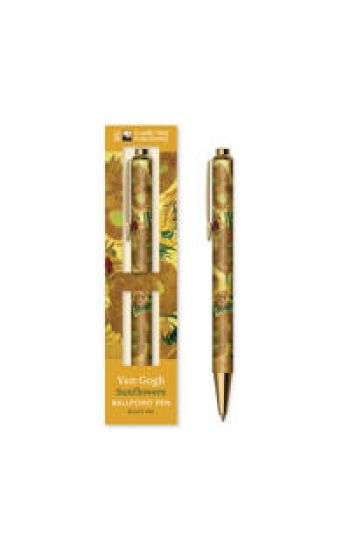
A FLAME TREE PEN. The ideal companion to Flame Tree Notebooks, the Boxed Decorative Ballpoint Pens combine Flame Tree’s reliable high-quality production with the magnificent art featured on our journals. Perfect as a gift, and an essential personal choice for writers and notetakers of all kinds. BEAUTIFULLY DESIGNED. Well-loved artworks wrap around the pen, accented by beautiful complementary metallic trim and an elegant clip. Housed in an eco-friendly FSC-certified box to stunning effect. PRACTICAL, EASY TO USE. The click-operated retractable nib means you are ready to go at a moment’s notice and don’t need to worry about losing a pesky lid or drying out the ink. The reassuringly solid barrel feels good in your hand and writes like a dream. The clip is super handy for attaching to your favourite Flame Tree notebook. Pen writes in black ink and accepts standard refills. THE ARTIST. Vincent van Gogh is one of the most famous and influential artists in modern history. He painted a series of pictures depicting sunflowers, having first been inspired by the yellow flowers in Paris when he saw them growing in the gardens of Montmartre. Sunflowers were symbolic of life and hope to the artist, and could also be associated with his concept of the sun – glowing, yellow and hopeful. THE FINAL WORD. As William Morris said, "Have nothing in your houses that you do not know to be useful, or believe to be beautiful."
A fascinating guide to Van Gogh's itinerant life, with vibrant images and stories about the many places where he lived and worked This exciting publication familiarizes readers of all ages with the many fascinating facets of Vincent van Gogh (1853--1890)—artist, correspondent, traveler, and modern explorer of Europe’s cities and countryside. Thanks to Van Gogh's wanderlust and the rapid expansion of the railway system in Europe in the late 19th century, Van Gogh covered thousands of miles in his lifetime. He lived and worked in more than twenty locations: from the peaceful countryside of the Netherlands and the south of France to the hustle and bustle of big cities such as London and Paris. Authors Nienke Denekamp and René van Blerk trace the artist’s route across Europe “from Z to A,” beginning in his birthplace of Zundert in the southern Netherlands and ending where he died, in Auvers-sur-Oise near Paris. Each location is described with lively and accessible texts, comprehensive timelines, city and country maps, contemporary photographs, and related artworks by Van Gogh. Featuring an eye-catching design, captivating excerpts from Van Gogh’s vast body of letters, and hundreds of color images, The Vincent van Gogh Atlas offers a truly unique version of the enduringly compelling story of Van Gogh and instills an appreciation of the many journeys—literal and figurative—that the artist made throughout his life.
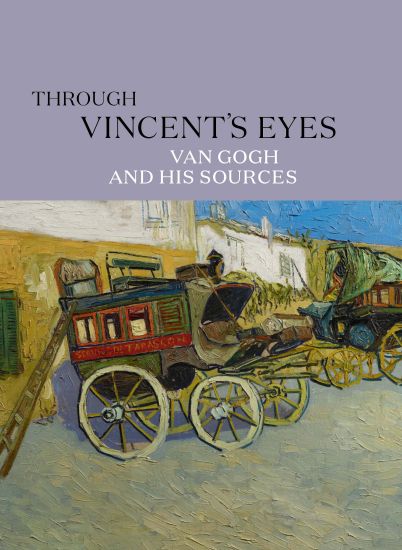
A revelatory resituation of Van Gogh’s familiar works in the company of the surprising variety of nineteenth-century art and literature he most revered Vincent van Gogh’s (1853–1890) idiosyncratic style grew out of a deep admiration for and connection to the nineteenth-century art world. This fresh look at Van Gogh’s influences explores the artist’s relationship to the Barbizon School painters Jean-François Millet and Georges Michel—Van Gogh’s self-proclaimed mentors—as well as to Realists like Jean-François Raffaëlli and Léon Lhermitte. New scholarship offers insights into Van Gogh’s emulation of Adolphe Monticelli, his absorption of the Hague School through Anton Mauve and Jozef Israëls, and his keen interest in the work of the Impressionists. This copiously illustrated volume also discusses Van Gogh’s allegiance to the colorism of Eugène Delacroix, as well as his alliance with the Realist literature of Charles Dickens and George Eliot. Although Van Gogh has often been portrayed as an insular and tortured savant, Through Vincent’s Eyes provides a fascinating deep dive into the artist’s sources of inspiration that reveals his expansive interest in the artistic culture of his time.Published in association with the Santa Barbara Museum of ArtPublished in association with the Santa Barbara Museum of ArtExhibition Schedule:Columbus Museum of Art (November 12, 2021–February 6, 2022)Santa Barbara Museum of Art (February 27–May 22, 2022)
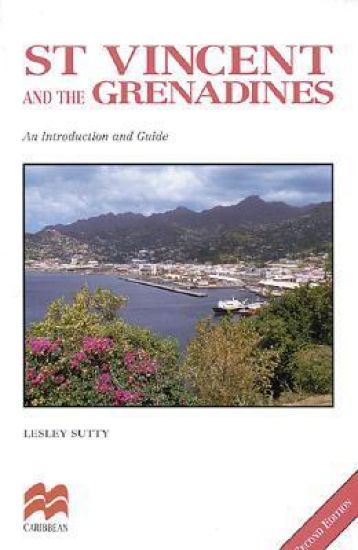
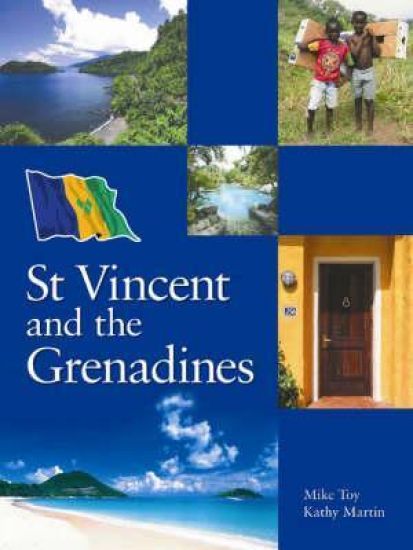
St Vincent and the Grenadine Islands can offer the visitor volcanic mountains, fertile valleys, archaeological sites and fishing villages. This book includes the area's history and information on sailing vacations.
St Vincent was the last island in the Caribbean to evolve after a series of volcanic eruptions. Together with the Grenadine islands, this is one of the most beautiful regions of the Eastern Caribbean. Photographer Mike Toy has toured the islands, and here he provides a photographic collection.
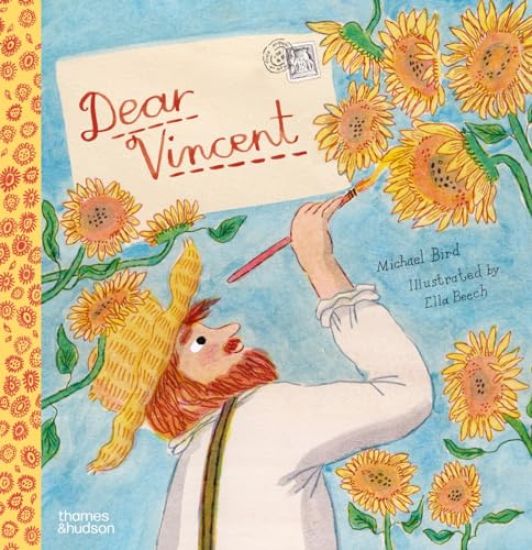
A Times Book of the Year 'An absolute gem ... Beech’s exquisite artwork is characterful and warm' Observer An exploration of the art and life of Vincent Van Gogh through the touching letters he exchanged with his brother Theo. Vincent is fed up with life in the grey city, but things are about to change! With the support of his loving brother Theo, Vincent sets off on a journey to the ‘Sunny South’. There he will discover new and inspiring places and make new friends. But will he be able to paint the picture of his dreams? A heart-warming snapshot of a happy and creative period in Van Gogh’s life, this story focuses on the bond between two brothers, and how Theo’s support and encouragement helped Vincent to reach his full artistic potential. Written by Michael Bird and illustrated by painter Ella Beech, this book will immerse young readers in Vincent’s world and reveal his unique perspective as an artist.
A fascinating guide to Van Gogh’s itinerant life, with vibrant images and stories about the many places he lived and worked. Vincent van Gogh travelled widely through various countries in Europe – on foot, by boat and, above all, by train. He wrote countless letters to his family as he went, and used the world around him as the subject for hundreds of drawings and paintings. And in his day, that world looked very different from ours. Brimming with colourful pictures, historic photographs, letters, detailed maps and other documents, this book enables readers to join Vincent on his journeys from Z to A: from Zundert in the southern Netherlands (where he was born), through London and Paris, to Auvers-sur-Oise in France (where he died). Offering a detailed introduction to Vincent’s personal quest and the contemporary world of his time, this book will immerse young readers in the history of the 19th century and the turbulent life of Vincent van Gogh, the artist and man.
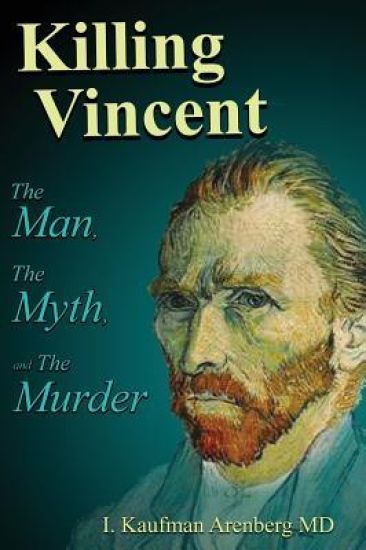
On July 27, 1890, Vincent van Gogh came stumbling into his room in the Ravoux Inn, in Auvers-sur-Oise, France, bleeding from a wound in his abdomen. Thirty hours later, Vincent was dead. THe common myth, which has prevailed for over one hundred years, is that the "mad" artist shot himself in a wheatfield after suffering from years of unhappiness and "insanity". But is that what really happened?Killing Vincent is meant as a historical analysis and expos of the most dastardly murder of Vincent van Gogh and the19th century, nefarious cover up of the world's most iconic artist's death. This is the biggest cold case in the annals of the art world. I have attempted to continue to explore the key questions that TIME magazine asked in its October 31, 2011, cover story: "Who killed Vincent van Gogh?" and "Was van Gogh's death really a suicide?" on the "Culture" Cover. I have attempted to answer both questions by adding in modern 21st century forensic analysis. This work is not meant as an academic treatise or dissertation, with every observation, thought, and detail requiring documentation. It is only an attempt as an expose', to seek the truth of what really happened on the day Vincent van Gogh was mortally wounded, and to best connect all the missing "dots". In the process, I will try to fit the best murder scenario into what little is really accepted, and why he was murdered....significantly changing art history This book attempts to explore all possible scenarios, no matter how likely or unlikely, or how relevant or irrelevant they may appear to be to this cold case at first glance. Which of several scenarios best puts all the facts, stories, and legends together and connects all these odd "dots" now in a persuasive manner? Sometimes the truth is more unbelievable than the reality it discloses.
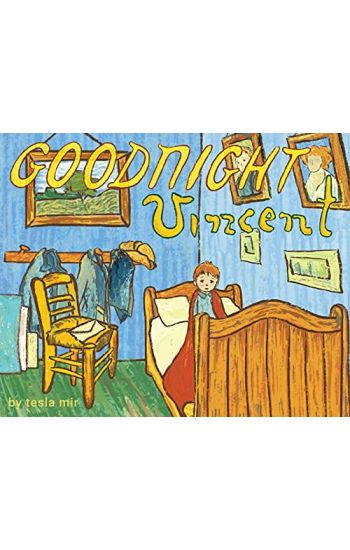
A van Gogh-inspired parody of the beloved children's classic. Includes some fun facts and history about Vincent van Gogh and his paintings -as well as dash of color theory. Illustrations are inspired by Vincent's paintings The Bedroom and Starry Night. The perfect book for fellow artists and dreamers of all ages.In the blue-hued roomThere was a gold straw hatAnd a sleepy catAnd a window to......a starry sky and glowing moon