Kirjojen hintavertailu. Mukana 12 390 323 kirjaa ja 12 kauppaa.

Kirjahaku

Etsi kirjoja tekijän nimen, kirjan nimen tai ISBN:n perusteella.

102 tulosta hakusanalla "Edvard Munch"

Edvard Munch

Edvard Munch

Patricia G. Berman; Melania Mazzucco; Hanne Ørstavik; Lasse Jacobsen; Emil Leth Meilvang

Munch Museum
2024
sidottu
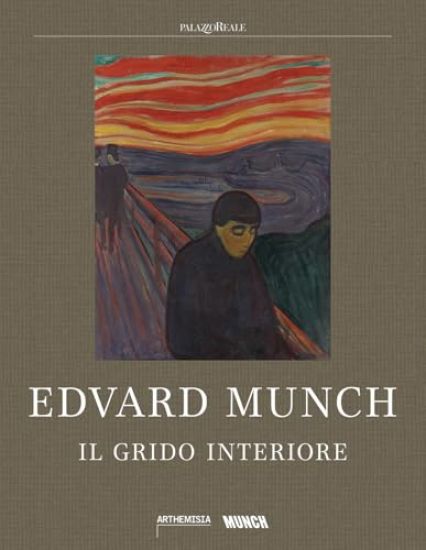
The jarring emptiness following the loss of a loved one, the expansive out-of-body sensation of sensual touch, the lassitude of melancholy and the ecstatic receptivity to sunshine. His ability to capture and convey sensation and feelings through the materials of art, places the Norwegian artist Edvard Munch (1863–1944) at the forefront of European art at the turn of the last century. Interestingly, Munch’s artistic exploration of perception, and his persistent questioning of the objectivity of vision, intersect with ideas that matured within the fields of psychology and experimental optics at the time. Edvard Munch: Il Grido Interiore examines these connections, demonstrating his continuing exploration of the conditions of sight. The essays in this catalogue examine this phenomenon while also probing a lesser-known aspect of the artist’s work: Munch’s relationship to Italy. The first essay, Lasse Jacobsen’s ‘Edvard Munch. Italian Impressions’, explores this connection explicitly, as part of a general overview of Munch’s life and work. The second text, ‘Reflections in Munch’s Inner Eye’ by Patricia G. Berman, charts the art historical context of Munch’s exploration of experience’s subjective dimension. Emil Leth Meilvang’s ‘Seeing without Sight. Munch’s Vision’, on its part, explores the relationship between Munch’s artistic development and simultaneous developments within the perceptual sciences. Edvard Munch:Il Grido Interiore includes essayistic pieces by authors Melania G. Mazzucco and Hanne Ørstavik: ‘I am a Romantic’ and ‘Who Am I’. Each demonstrates Munch’s continuing ability to light the inner fires of other artists. Text in Italian.
Edvard Munch's Mermaid

Edvard Munch's Mermaid

John Zarobell; Shelley Langdale

Pennsylvania State University Press
2005
pokkari
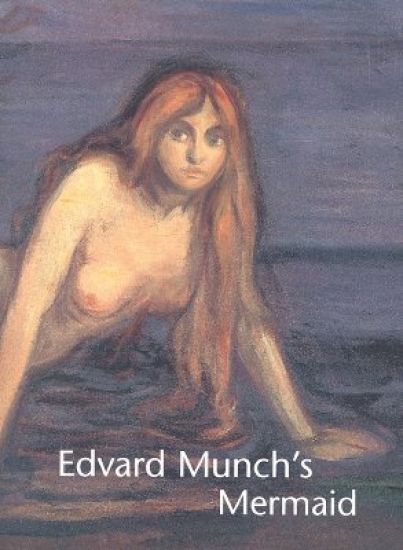
Edvard Munch (1863–1944) has attained lasting fame for paintings and prints—above all The Scream— that express the isolation and anxieties of the modern condition. Recently, the Philadelphia Museum of Art acquired a large Munch painting, Mermaid, little known outside a small circle of experts because it had never been displayed in museums or galleries. To introduce this important work to the public, the Museum has organized an exhibition that presents Mermaid alongside related paintings, drawings, and prints. Edvard Munch’s Mermaid, which accompanies the exhibition, provides the first comprehensive discussion of the painting’s history and significance. The Norwegian industrialist and collector Axel Heiberg commissioned Mermaid from Munch in 1896, when the artist was living in Paris, absorbing the city’s intellectual life, expanding his work as a printmaker, and extending his activities to new realms, such as designing the theater sets and program for Henrik Ibsen’s play Peer Gynt. The first two essays in this book from the Philadelphia Museum of Art situate Mermaid, Munch’s first decorative painting, within the rich ferment of this period in his life. The painting’s Norwegian imagery, Symbolist ethos, and Art Nouveau influences are explored even as its relationship to Munch’s printmaking of 1896–97 and other artistic activities is elucidated. Mermaid was removed from Heiberg’s house in 1938 and was converted by a restorer from a trapezoidal format to a standard rectangle. The final essay discusses the changes to the painting in light of Munch’s highly personal and complex views on the alteration of his works. Edvard Munch’s Mermaid reproduces all the prints, drawings, and paintings in the exhibition at the Philadelphia Museum of Art, September 24–December 31, 2005.
The Private Journals of Edvard Munch

The Private Journals of Edvard Munch

Edvard Munch; Frank Hoifodt

University of Wisconsin Press
2005
nidottu
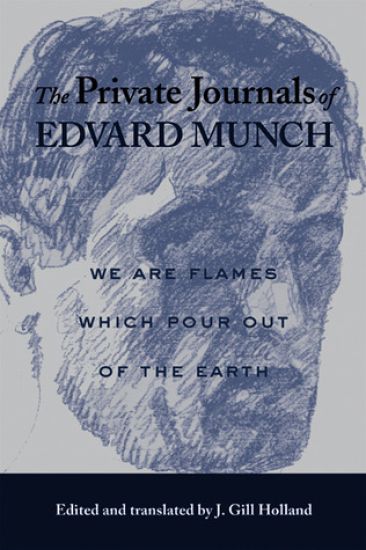
Scandinavia's most famous painter, the Norwegian Edvard Munch (1863-1944), is probably best known for his painting The Scream, a universally recognized icon of terror and despair. (A version of The Scream was stolen from the Edvard Munch Museum in Oslo, Norway, in August 2004, and has not yet been recovered.) But Munch considered himself a writer as well as a painter. Munch began painting as a teenager and, in his young adulthood, studied and worked in Paris and Berlin, where he evolved a highly personal style in paintings and works on paper. And in diaries that he kept for decades, he also experimented with reminiscence, fiction, prose portraits, philosophical speculations, and surrealism. Known as an artist who captured both the ecstasies and the hellish depths of the human condition, Munch conveys these emotions in his diaries but also reveals other facets of his personality in remarks and stories that are alternately droll, compassionate, romantic, and cerebral. This English translation of Edward Munch's private diaries, the most extensive edition to appear in any language, captures the eloquent lyricism of the original Norwegian text. The journal entries in this volume span the period from the 1880s, when Munch was in his twenties, until the 1930s, reflecting the changes in his life and his work. The book is illustrated with fifteen of Munch's drawings, many of them rarely seen before. Though excerpts from these diaries have been previously published elsewhere, no translation has captured the real passion and poetry of Munch's voice. This translation lets Munch speak for himself and evokes the primal passion of his diaries. J. Gill Holland's exceptional work adds a whole new level to our understanding of the artist and the depth of his scream.
Edvard Munch: love and angst
Edvard Munch (1863–1944) is best known today as a painter, but his reputation was in fact established through his prints, which were central to his creative process. His printmaking was experimental and innovative, and he continually revisited the subjects of his paintings in striking prints, in which he evoked a wide range of emotion and mood through the use of varied techniques. Munch’s early life in the industrial town of Kristiania (renamed Oslo in 1925) was marked by sickness and poverty. His first works centred on the expression of deep emotional experiences, specifically the deaths of his mother and teenage sister when he was growing up, as well as passionate yet unhappy love affairs of which his deeply religious father disapproved. Encouraged by his encounters with a Bohemian society of artists, writers and poets, he developed a visual landscape that was a radical deviation from the slick society portraits and grand Scandinavian landscapes then so much in vogue. His efforts attracted considerable attention and much criticism, and he practised with little financial success as a painter for ten years before he started to gain his reputation as a profoundly innovative printmaker. Written by a team of acknowledged experts, and with an interview by writer Karl Ove Knausgaard, this book will shed new light on the production of some of Munch’s most remarkable works.
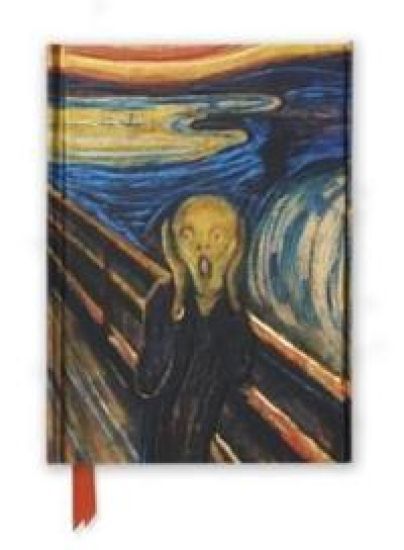
Edvard Munch: The Scream (Foiled Journal)
Part of a series of exciting and luxurious Flame Tree Notebooks. Combining high-quality production with magnificent fine art, the covers are printed on foil in five colours, embossed then foil stamped. And they’re powerfully practical: a pocket at the back for receipts and scraps, two bookmarks and a solid magnetic side flap. These are perfect for personal use and make a dazzling gift. This example features one of the most popular images in the world, Edvard Munch's The Scream. Munch's most famous painting exemplifies Norwegian Expressionism. The angst-ridden human condition has never been so superbly and unassailably conveyed as by the figure emitting a cry from the heart. Life, love and death are the themes which Munch endlessly explored in his paintings.
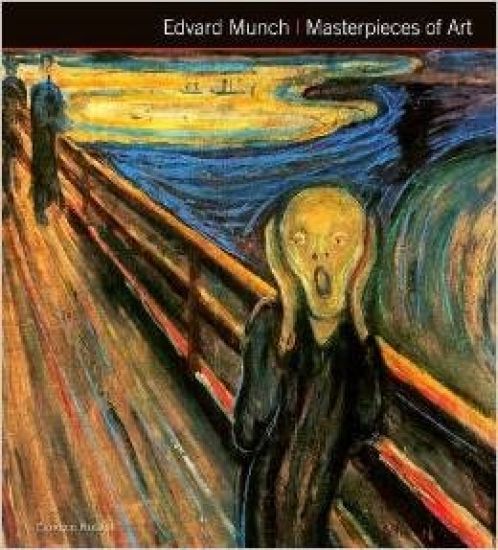
Edvard Munch Masterpieces of Art

Edvard Munch Masterpieces of Art

Candice Russell

Flame Tree Publishing
2015
sidottu
A beautiful new gift art book all about Edvard Munch, the Norwegian artist behind the first truly Expressionist picture The Scream. Absorbed by such motifs as love, life, death and anguish, Munch’s paintings captured the psychological feelings evoked by man. Beginning with a fresh and captivating introduction to Munch’s life and art, the book showcases several of his works in all their glory.
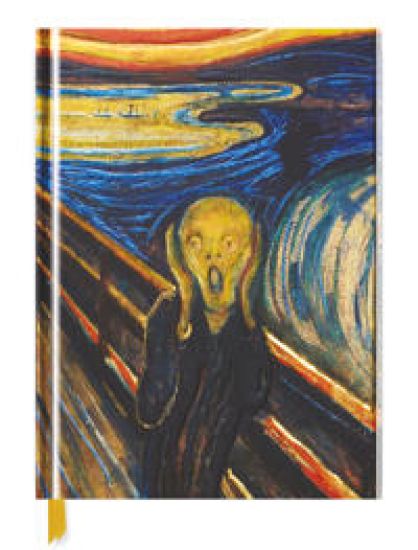
Edvard Munch: The Scream (Blank Sketch Book)
Part of a series of exciting and luxurious Flame Tree Sketch Books Combining high-quality production with magnificent fine art, the covers are printed on foil in five colours, embossed, then foil stamped. The thick paper stock makes them perfect for sketching and drawing. These are perfect for personal use and make a dazzling gift. This example features Munch's The Scream. Munch's most famous painting exemplifies Norwegian Expressionism. The angst-ridden human condition has never been so superbly and unassailably conveyed as by the figure emitting a cry from the heart. Life, love and death are the themes which Munch endlessly explored in his paintings.
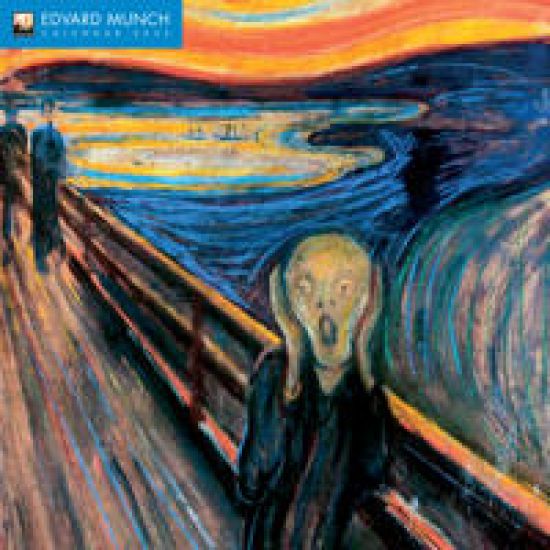
Edvard Munch Wall Calendar 2023 (Art Calendar)
This beautiful art calendar brings together 12 amazing paintings by Edvard Munch, the Norwegian artist behind the first truly Expressionist picture The Scream. Absorbed by such motifs as love, life, death and anguish, Munch’s paintings captured the psychological feelings evoked by man. Informative text accompanies each work and the datepad features previous and next month’s views. Printed on FSC-certified paper.
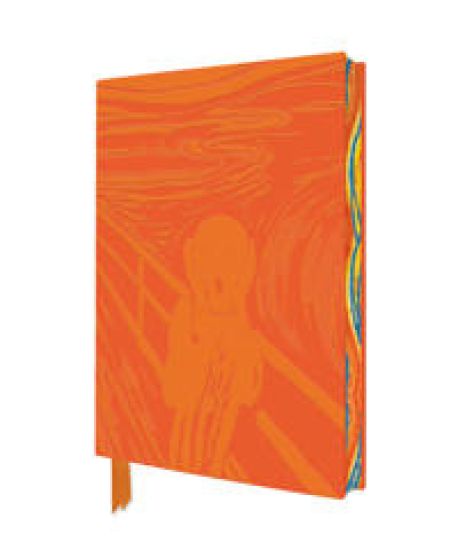
Edvard Munch: The Scream Artisan Art Notebook (Flame Tree Journals)
Artisan Art Notebooks, the new Journals from Flame Tree, come in a range of hues to suit the moment and are embellished with a wide variety of well-known art on their tactile, vegan leather covers. They’re carefully crafted with decorated page edges overflowing with petals, teasing vines and patterns. A unique blend of the practical and beautiful, with two ribbons and lined pages, the Artisan Art Notebooks are perfect for notes, creative writing, poetry, doodles and lists. And, with robust flexi covers, they’re easy to slip into your bag and a pleasure to use. Simply, they feel good! Munch's most famous painting, The Scream, exemplifies Norwegian Expressionism. The angst-ridden human condition has never been so superbly and unassailably conveyed as by the figure emitting a cry from the heart. Life, love and death are the themes which Munch endlessly explored in his paintings.
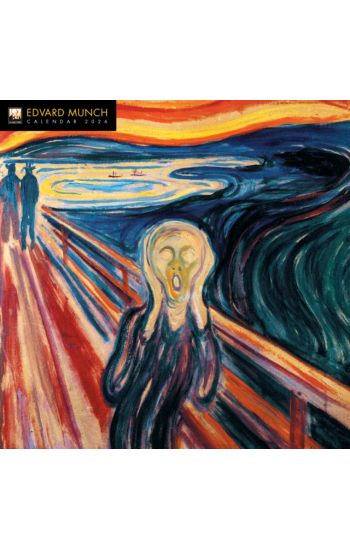
Edvard Munch Wall Calendar 2026 (Art Calendar)
This beautiful art calendar brings together 12 amazing paintings by Edvard Munch, the Norwegian artist behind the first truly Expressionist picture The Scream. Absorbed by such motifs as love, life, death and anguish, Munch’s paintings captured the psychological feelings evoked by man. Informative text accompanies each work and the datepad features previous and next month’s views. Printed on FSC-certified paper, with plastic-free packaging.
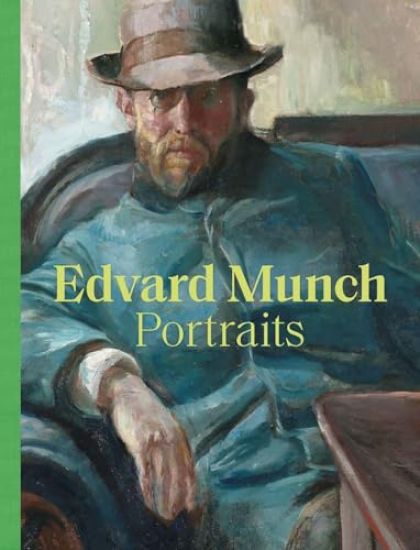
Edvard Munch Portraits

Edvard Munch Portraits

NATIONAL PORTRAIT GALLERY PUBLICATIONS
2025
sidottu
Edvard Munch Portraits brings together 80 of Munch’s most significant portraits, showcasing the wide array of styles, techniques and mediums that he employed. Edvard Munch (1863 – 1944) is widely regarded as one of the great artists of the nineteenth and twentieth centuries. Although he was lesser known for portraiture, his portraits were central to his art and vision. During the course of his long life he made hundreds of portraits of friends, patrons, models and above all himself, in a range of media that encompassed painting, drawing and print.Edvard Munch Portraits explores the range of portraits Munch created during his lifetime, and by placing his work in the cultural and historical background of his period, provides readers with a greater understanding of the time in which his works were produced. This publication gives deep insight into the artist's family and bohemian social circles, along with his German and Norwegian patrons and the friends who helped establish his reputation.