Kirjojen hintavertailu. Mukana 11 627 428 kirjaa ja 12 kauppaa.

Kirjahaku

Etsi kirjoja tekijän nimen, kirjan nimen tai ISBN:n perusteella.

1000 tulosta hakusanalla "Lawrence"

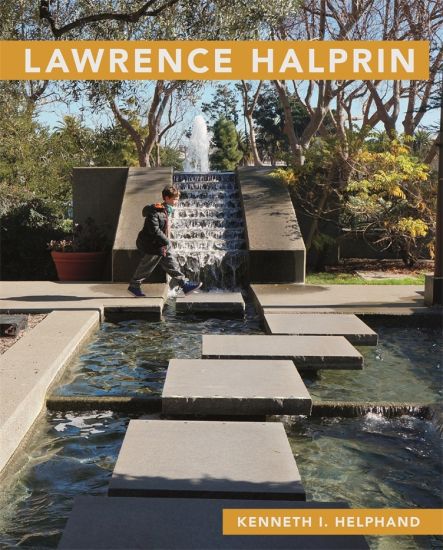
Lawrence Halprin

Lawrence Halprin

Kenneth I. Helphand

University of Georgia Press
2017
nidottu
During a career spanning six decades, Lawrence Halprin (1916–2009) became one of the most prolific and outspoken landscape architects of his generation. He took on challenging new project types, developing a multidisciplinary practice while experimenting with adaptive reuse and ecological designs for new shopping malls, freeways, and urban parks. In his lifelong effort to improve the American landscape, Halprin celebrated the creative process as a form of social activism.A native New Yorker, Halprin earned degrees from Cornell and the University of Wisconsin before completing his design degree at Harvard. In 1945 he joined Thomas Church’s firm, where he collaborated on the iconic Donnell Garden. He opened his own San Francisco office in 1949, where he initially focused on residential commissions in the Bay Area, completing close to three hundred in ten years’ time. By the 1960s the firm had gained recognition for significant urban renewal projects such as Ghirardelli Square in San Francisco (1962–68), Nicollet Mall in Minneapolis (1962–67), and Freeway Park in Seattle (1970–74). Halprin used his conception of a Sierra stream as the catalyst for the Portland Open Space Sequence, a series of parks featuring great fountains that linked housing and civic space in the inner city.A charismatic speaker and passionate artist, Halprin designed landscapes that reflected the democratic and participatory ethic characteristic of his era. He communicated his ideas as well in lectures, books, exhibits, and performances. Along with his contemporary Ian McHarg, Halprin was his generation’s great proselytizer for landscape architecture as environmental design. Throughout his long career, he strived to develop poetic and symbolic landscapes that, in his words, could “articulate a culture’s most spiritual values.”
Lawrence and the Arab Revolts

Lawrence and the Arab Revolts

David Nicolle

Osprey Publishing
1989
nidottu
The Great War of 1914-18 is often seen as one major battleground – the Western Front – with numerous 'side-shows'. The other battle zones were not side-shows to those involved, however, although the local inhabitants often fought for motives which remained a closed book to their European allies or foes. David Nicolle relates the story of the Arab revolts, and discusses just how important (or unimportant) was the role of T. E. Lawrence in the affair, in a fascinating text backed by a fine collection of contemporary photographs and eight full page colour plates by Richard Hook.
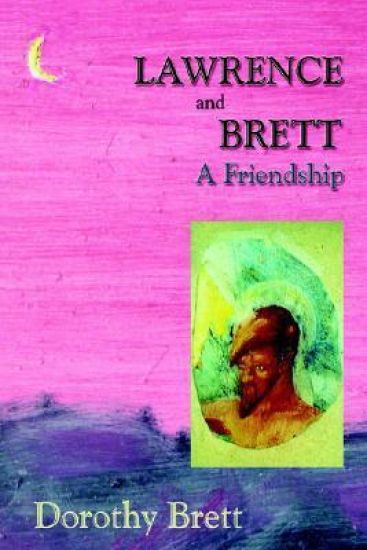
Lawrence and Brett (Softcover)

Lawrence and Brett (Softcover)

Dorothy Brett

Sunstone Press
2006
pokkari
In March of 1924, D. H. Lawrence, Frieda Lawrence and the Honorable Dorothy Brett went to Taos, New Mexico, to absorb the color and romance of what was to them a mysterious and compelling land. Dorothy Brett recreated those days in this fascinating first-hand account, and also writes of when she was the close friend of Aldous Huxley, Lytton Strachey, Katherine Mansfield, and other important literary and artistic figures. But more importantly, she focused on her relationship with Lawrence and the book was specifically addressed to him as if he were to read it, reminding him personally of her long-standing devotion.Such devotion was not rebuffed by Lawrence, it seems, but it was met differently by the two other women orbiting the famous writer: his wife, Frieda Lawrence, and Mabel Dodge Luhan. They were in turn cross and conciliatory to her. But it seems that she just accepted them as other intense admirers of Lawrence, took it all simply and wrote it all down with a minimum of comment. Dorothy Brett was well-known in her own right. The daughter of Viscount Esher Brett, confidant of Queen Victoria, she spent six years studying at the Slade School of Art in London and was a member of the Bloomsbury set in England, among whose many luminaries Brett moved when a young woman. She was also gaining recognition as an artist even before she arrived in the American Southwest. But it was there that her true artistic talents emerged and her works now hang in major museums as well as in private collections. When this book was first published in 1933, it was praised by critics as well as the general public. Alfred Stieglitz said: "It was a rare spiritual experience--no student of Lawrence can afford to miss this book.. There is an integrity in the book--a sense of the eternal--a sense of Light--which raises it above all the other books I have read about Lawrence." And, interestingly, Mabel Dodge Luhan called it "clearly and explicitly drawn." Here it all is again with additional material added by Dorothy Brett herself when the 1974 edition was first published by Sunstone Press.
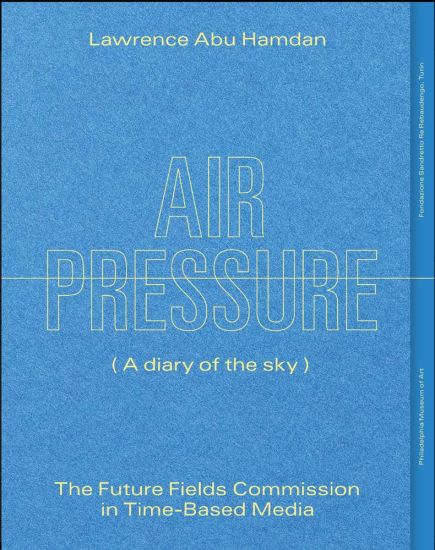
Lawrence Abu Hamdan: Air Pressure (A Diary of the Sky)
A close investigation of aerial war and atmospheric violence through artist Lawrence Abu Hamdan’s newly commissioned audio and video installation This publication documents the creation of a new work by artist Lawrence Abu Hamdan (b. 1985) for the Future Fields Commission in Time-Based Media. For this commission, Abu Hamdan has developed an ambitious multichannel sound installation and singular film derived from ongoing documentation and analysis of Israeli Air Force violations of Lebanese airspace. The film features narration in Arabic, presented in English in this volume, that elaborates on the artist’s research methodology while chronicling the details of these acts of aerial and aural trespass—a diary of the sounds, subjects, and powers that turn the air violent. The publication also includes a conversation between Abu Hamdan and Ghalya Saadawi that explores the tension inherent to a violence that is both exceptional and routine. An essay by Marina Peterson situates Abu Hamdan’s work within the broader artistic and scholarly study of noise, political violence, and air pollution. Contributions from Irene Calderoni and Amanda Sroka introduce the commission and detail other works in the artist’s larger Air Pressure project. Together these texts position the commission as a continuation of Abu Hamdan’s rigorous investigations into the political dimensions of listening and the role of sound as a tool that can be used to silence, suppress, or heal. Distributed for the Philadelphia Museum of Art Exhibition Schedule:Fondazione Sandretto Re Rebaudengo, Turin (November 3, 2022–February 26, 2023)Philadelphia Museum of Art (Spring 2024)
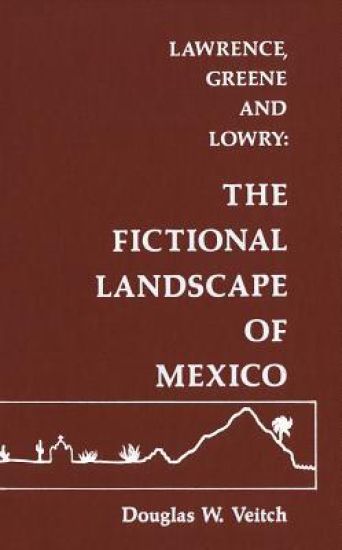
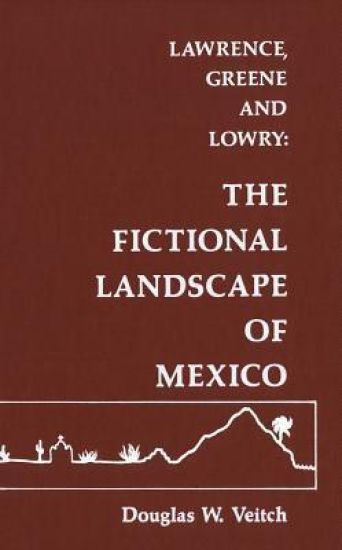
Lawrence, Greene and Lowry

Lawrence, Greene and Lowry

Veitch Douglas W.

WILFRID LAURIER UNIVERSITY PRESS
1979
sidottu
When writers go on journeys it is as often to explore the terra incognita of their own selves as to establish the identities of strange lands; in the case of many English novelists between the great wars it was certainly true, as Douglas Veitch remarks in the study I am introducing, that their work, "even as it essayed the exotic, cast an eye homeward and inward", and that they "roamed the world, seeking surcease from a prevailing malaise which doubted the values of Western Civilization." ... Mr. Veitch has taken this vital element in the three novelsâ The Plumed Serpent , The Power and the Glory and Under The Volcano âand has used it not merely to examine these works themselves but also to sketch out the ambivalent role which landscape plays in all fiction, as omnipresent background but also as a rich source of symbols and images reflecting the human drama which a book develops. He has, as he more than once makes clear, done more than read all the relevant literature; he has himself travelled to Mexico in order to see and experience the extraordinary terrain, and, as I can vouch on the basis of my own knowledge of that infinitely attractive and repellent country, he used his senses well while he was there. âfrom the Introduction by George Woodcock
Lawrence, Greene and Lowry

Lawrence, Greene and Lowry

Veitch Douglas W.

WILFRID LAURIER UNIVERSITY PRESS
1979
nidottu
When writers go on journeys it is as often to explore the terra incognita of their own selves as to establish the identities of strange lands; in the case of many English novelists between the great wars it was certainly true, as Douglas Veitch remarks in the study I am introducing, that their work, "even as it essayed the exotic, cast an eye homeward and inward", and that they "roamed the world, seeking surcease from a prevailing malaise which doubted the values of Western Civilization." ... Mr. Veitch has taken this vital element in the three novels--The Plumed Serpent, The Power and the Glory and Under The Volcano--and has used it not merely to examine these works themselves but also to sketch out the ambivalent role which landscape plays in all fiction, as omnipresent background but also as a rich source of symbols and images reflecting the human drama which a book develops. He has, as he more than once makes clear, done more than read all the relevant literature; he has himself travelled to Mexico in order to see and experience the extraordinary terrain, and, as I can vouch on the basis of my own knowledge of that infinitely attractive and repellent country, he used his senses well while he was there. --from the Introduction by George Woodcock