Kirjojen hintavertailu. Mukana 11 244 527 kirjaa ja 12 kauppaa.

Kirjahaku

Etsi kirjoja tekijän nimen, kirjan nimen tai ISBN:n perusteella.

1000 tulosta hakusanalla "Line"

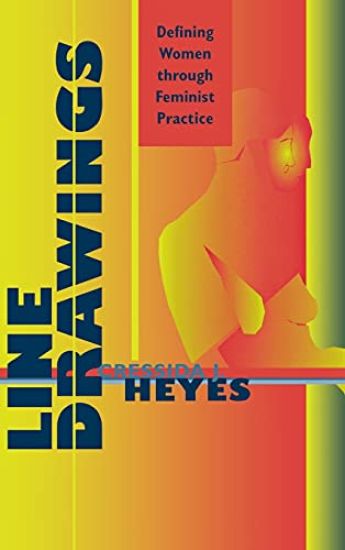
Line Drawings

Line Drawings

CORNELL UNIVERSITY PRESS
2000
sidottu
At the heart of feminist theory lies the seemingly intractable issue of essentialism. Feminism has thus far failed to transcend critiques of essentialism and currently offers only two inadequate positions against it. One response reifies the category "women," representing the experience of oppression of privileged women as archetypal for feminism, and the other denies the category because it unjustly overgeneralizes, thus undercutting the possibility of a robust theory of gender oppression. To spur anti-essentialist methods and practice around such issues as sexual violence, feminist theory crucially needs a constructive and politically powerful strategy for defining women.Cressida J. Heyes deftly elucidates and then travels beyond the essentialism debates to rescue the efficacy of feminist theory for activism and research. She offers a genealogy of essentialism, specifically as it applies to the work of Carol Gilligan and Catharine MacKinnon, and employs a Wittgensteinian approach to feminism that understands similarities between women as family resemblances and political decisions about inclusion and exclusion as contextual and purposive. Line Drawings argues for an anti-essentialist method that enables generalizing feminist discourse but insists on paying close attention to the operations of power in constructing claims about women. This is a fresh and vitally important step past stymied debate on what is arguably the most pressing issue in cross-disciplinary feminist theory.
Line Drawings

Line Drawings

Cressida Heyes

Cornell University Press
2000
pokkari
At the heart of feminist theory lies the seemingly intractable issue of essentialism. Feminism has thus far failed to transcend critiques of essentialism and currently offers only two inadequate positions against it. One response reifies the category "women," representing the experience of oppression of privileged women as archetypal for feminism, and the other denies the category because it unjustly overgeneralizes, thus undercutting the possibility of a robust theory of gender oppression. To spur anti-essentialist methods and practice around such issues as sexual violence, feminist theory crucially needs a constructive and politically powerful strategy for defining women. Cressida J. Heyes deftly elucidates and then travels beyond the essentialism debates to rescue the efficacy of feminist theory for activism and research. She offers a genealogy of essentialism, specifically as it applies to the work of Carol Gilligan and Catharine MacKinnon, and employs a Wittgensteinian approach to feminism that understands similarities between women as family resemblances and political decisions about inclusion and exclusion as contextual and purposive. Line Drawings argues for an anti-essentialist method that enables generalizing feminist discourse but insists on paying close attention to the operations of power in constructing claims about women. This is a fresh and vitally important step past stymied debate on what is arguably the most pressing issue in cross-disciplinary feminist theory.
Line Of Sight

Line Of Sight

Paul Arthur

University of Minnesota Press
2005
nidottu
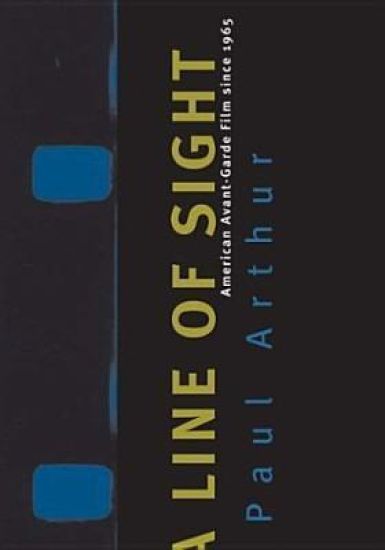
For three decades, Paul Arthur has been a leading observer and critic as well as a direct participant in America’s avant-garde cinema. In A Line of Sight, he provides a sweeping new account of the extravagant energies of American experimental cinema since 1965. Balancing close analysis of both major and lesser-known films with detailed examinations of their production, distribution, and exhibition, Arthur addresses the avant-garde’s cultural significance while offering a timely reconsideration of accepted critical categories and artistic options. Rather than treating American avant-garde cinema as a series of successive artistic breakthroughs, A Line of Sight emphasizes the importance of social and institutional networks, material exchanges, and historical disruptions and continuities. Throughout, Arthur pays close attention to themes and visual practices neglected or underrepresented in previous studies, scrutinizing portraiture as a vehicle for projecting dissident identities, highlighting the essay film and the contemporary city symphony, and assessing the contributions of regional and African American filmmaking to the avant-garde. He also explores thematic and formal questions that have been central to the avant-garde achievement: experimental film's relationship with mainstream narrative cinema and postwar American painting as well as the legacy of sixties’s counterculture; the uses and theoretical implications of found footage and the allegorizing of technology; and the schism between a poetic, expressive cinema and the antisubjective, rationalist bias of structural filmmaking. Amid the current resurgence of experimental filmmakers and the emergence of a new audience for their work, A Line of Sight reaffirms the extraordinary breadth and diversity of the avant-garde tradition in America.
Line Dancing

Line Dancing

Wanda Hurren

Peter Lang Publishing Inc
2000
nidottu
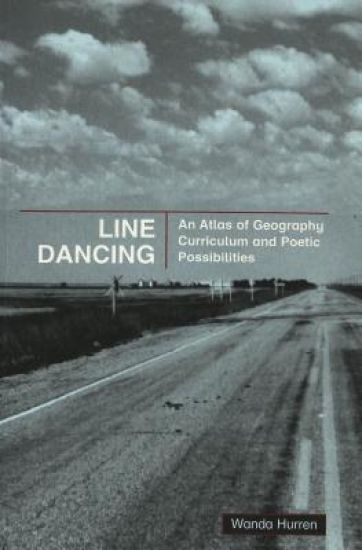
The underlying premise of Line Dancing is that how we write the world (through geography or curriculum) affects and reflects in the same instant how we understand and live in the world - our words and worlds perform a mingling dance of signification. Various textual practices in Line Dancing demonstrate the performative possibilities of words on a page. Poststructural semiotics, the blurring of the line between reading and writing, recent critiques within academic and curricular geography, and an inclusion of embodied knowing all play a part in the line dancing within this atlas. The words, legends, maps, postcards, and poems in Line Dancing present possibilities for embodied approaches to (re)writing the world of curriculum theory.
Line into Color, Color into Line
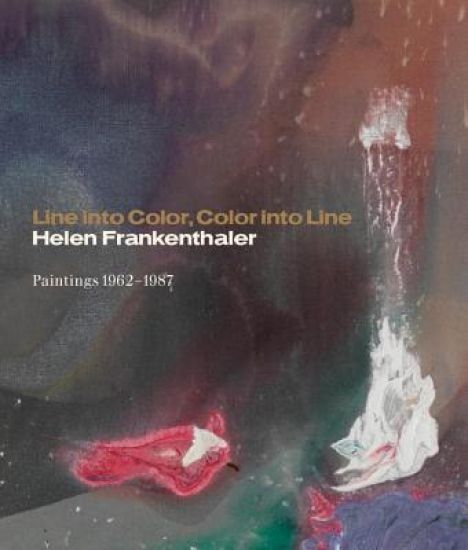
Showcasing eighteen of Frankenthaler s paintings, dating from 1962 to 1987, this beautiful book highlights the diverse relationship between drawing and painting evident in the artist s work. The book includes colour plates of all 18 works, as well as nine double-page spread details. Never-before-published documentary material appears throughout new and insightful texts by John Elderfield, Francine Prose, and Carol Armstrong. This book accompanies the 2016 exhibition of Frankenthaler s work at Gagosian Gallery Beverly Hills.
Line of Sight

Line of Sight

Michele Gibbs

West End Press
2004
nidottu
The creative impulse of Michele D Gibbs comes from many sources: her Chicago childhood as the daughter of Communist parents, her academic training, her political development during the Civil Rights struggle, her career as a Movement analyst and teacher, and her self-taught artistry in charcoal, painting, murals and sculpture. She has produced four volumes of poetry, including two early collections in the famed Broadside Press series edited by Dudley Randall in Detroit, and several critical essays, three of which are collected here. In recent years she has combined her energies with those of her husband George Colman in publishing an on-line magazine, 'From the Field', in Oaxaca, Mexico, where they both live. Whether mounting studio shows or producing public art, giving readings or featuring the work of other revolutionary artists in her magazine, Michele Gibbs reflects the spirit of the places she has lived and the people she has known: her 'view from the block' as a young writer, her work as a community organiser, and her participation in political struggle in the Caribbean during the eighties. She brings courage and determination to her efforts on behalf of creating a better world. Gibbs' artworks mine their African, African American, and Caribbean roots for their expression of folk culture resisting oppression. Her poetry gives voice to the dialects of her people and their neighbours around the world. Her writings on the page are meant to be chanted and sung. This book offers her complex and beautiful gift, a fusion of word, image, and spirit.
Line?: The Creative Way for Actors to Quickly Memorize Monologues and Dialogues
ATTENTION ACTORS If you've ever struggled to remember your lines, the creative memorization techniques taught in LINE? will help you break through your mental blocks and accelerate the line memorization process. Author Jared Kelner has applied his experience as an actor and acting teacher and combined that with his expertise as a memory improvement trainer and created an imagination and sensory based process for actors to use when memorizing lines. It's an innovative approach to line memorization that taps into the actor's imagination and acting training rather than relying on monotonous rote memorization methods like highlighting, recording and repeating lines over and over. By applying the creative memorization methods presented in LINE? you will instantly recall your lines. --- INDUSTRY ENDORSEMENTS "I have been teaching acting for over 50 years and I rarely come across innovations to the craft process that I believe in and support. Without hesitation, I fully endorse and recommend Jared Kelner's book LINE? The Creative Way for Actors to Quickly Memorize Monologues and Dialogues. Every actor must memorize lines and most actors look at the line memorization process as something outside of the craft of acting, but in fact, it is very much an integral part of the craft process and as such, actors need a craft technique to help them. In his book LINE?, Jared Kelner brings something inventive, innovate and important to the craft of acting. The technique of imaging that Jared teaches for line memorization mirrors imaging concepts I share in my book Acting, Imaging and the Unconscious. I am pleased to endorse Jared Kelner and his contribution to our craft. LINE? is a must read for every actor." Eric Morris: Actor, Acting Teacher and Author of "No Acting Please", "Being and Doing", "Irreverent Acting", "Acting From the Ultimate Consciousness", "Acting, Imaging and the Unconscious", "The Diary of a Professional Experiencer" and "Freeing the Actor" --- "I wish I had a dime for every actor who has told me their biggest fear was memorizing lines. So I was delighted when I discovered Jared Kelner and was able to introduce him to my students. The response to LINE? Was so positive. The actors felt they had received valuable tools to overcome their fears and move forward in their work with confidence. Jared's positive enthusiastic style is so encouraging it's a pleasure to be in the classroom with him." Valerie Adami: Owner/Director Weist Barron Acting for Film & TV --- "OK Actors, Quiet your mind and get this book. It will change your life for knowing your lines forever." Tim Phillips: Founder of The Tim Phillips Studio in Los Angeles and author of "Audition for Your Career, Not the Job: Mastering the On-camera Audition" --- "Bottom line, the memory techniques taught in LINE? work. Any actor who's ever struggled to remember their lines needs to buy this book and read it right away. I only wish I learned this memorization method years ago." Javier Molina: Associate Director of the Action Theatre Conservatory and Lifetime Member of the Actors Studio --- "Whether you're a novice cast in a community theatre production or a professional actor whose Teflon brain is causing you to lose jobs, LINE? will save your life. This is the best monologue and dialogue memorization system that I have ever come across. Jared Kelner breaks the process down into simple steps that will help you memorize your lines quickly and creatively. I am highly recommending this book to the students I teach and the actors I direct." Gerry Appel: Director of The Playhouse Acting Academy ---
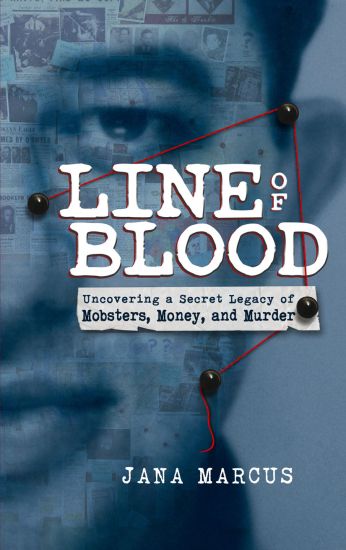
Line of Blood

Line of Blood

Jana Marcus

7 Angels Press
2020
pokkari
When a newspaper article about a murdered mobster from the 1940s is discovered in her grandmother's secret drawer, award-winning photographer and author Jana Marcus is launched into a decades-long quest to uncover her family's hidden history and solve a 75-year-old cold-case. But the search is a mere prologue to a far greater puzzle that takes her deep into the origins of her Jewish immigrant roots, corruption at the highest levels of New York's justice system, and a dark underworld of racketeers, gamblers, and self-made millionaires - all leading to one of the greatest unsolved murders in mob history.From lies and sealed records to mysterious phone calls and revelations, her labyrinthine journey examines the complexity of family, eerie messages from beyond the grave, and the greed that drives men to murder. Accompanied by a retired NYPD detective, a crime scene psychic, and a revolving door of characters, Marcus' search culminates in an explosive on-the-ground investigation, as she uncovers the shocking secrets of her father's family and threads together a history, not only of her clan, but of New York itself.
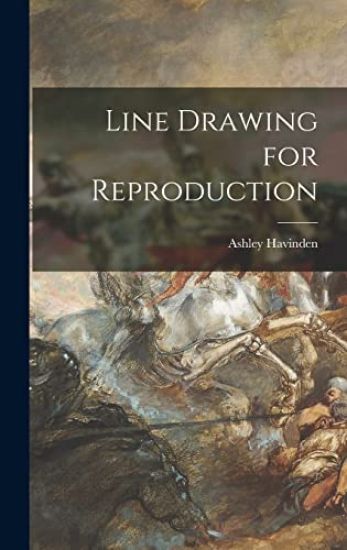
Line Drawing for Reproduction

Line Drawing for Reproduction

Ashley Havinden

Hassell Street Press
2021
sidottu
This work has been selected by scholars as being culturally important and is part of the knowledge base of civilization as we know it.This work is in the public domain in the United States of America, and possibly other nations. Within the United States, you may freely copy and distribute this work, as no entity (individual or corporate) has a copyright on the body of the work.Scholars believe, and we concur, that this work is important enough to be preserved, reproduced, and made generally available to the public. To ensure a quality reading experience, this work has been proofread and republished using a format that seamlessly blends the original graphical elements with text in an easy-to-read typeface.We appreciate your support of the preservation process, and thank you for being an important part of keeping this knowledge alive and relevant.
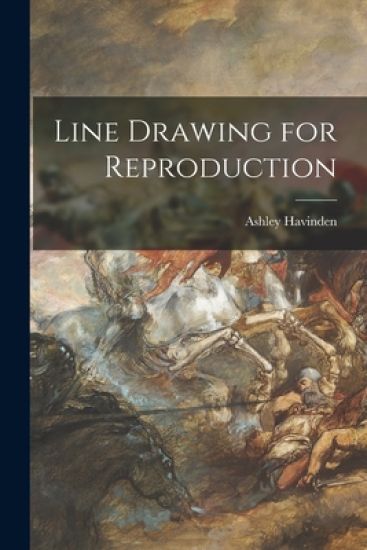
Line Drawing for Reproduction

Line Drawing for Reproduction

Ashley Havinden

Hassell Street Press
2021
nidottu
This work has been selected by scholars as being culturally important and is part of the knowledge base of civilization as we know it.This work is in the public domain in the United States of America, and possibly other nations. Within the United States, you may freely copy and distribute this work, as no entity (individual or corporate) has a copyright on the body of the work.Scholars believe, and we concur, that this work is important enough to be preserved, reproduced, and made generally available to the public. To ensure a quality reading experience, this work has been proofread and republished using a format that seamlessly blends the original graphical elements with text in an easy-to-read typeface.We appreciate your support of the preservation process, and thank you for being an important part of keeping this knowledge alive and relevant.