Kirjojen hintavertailu. Mukana 11 516 211 kirjaa ja 12 kauppaa.

Kirjahaku

Etsi kirjoja tekijän nimen, kirjan nimen tai ISBN:n perusteella.

991 tulosta hakusanalla "Meta"

Meta-Study of Qualitative Health Research

Meta-Study of Qualitative Health Research

Barbara L. Paterson; Sally E. Thorne; Connie Canam; Carol Jillings

SAGE Publications Inc
2001
nidottu
"This book is a superior achievement from a group of masterful scholars. The book shows the theoretical, ethical, and political complexity of qualitative study, and yet offers an illuminating and useful guide to how it can be accomplished with distinction. I highly recommend it." —MARGARETE SANDELOWSKI, PhD, RN, FAAN Professor, School of Nursing University of North Carolina at Chapel Hill In this book, Volume 3 of the Methods in Nursing Research series, Barbara Paterson and colleagues provide step-by-step directions for how to proceed in conducting a meta-study, as well as recommendations for tools and standards relating to the application of their approach. Drawing from their experience with meta-study research projects on chronic illness, the authors articulate and theorize the meta-analysis and meta-synthesis of qualitatively derived knowledge.

Meta-Analysis in Environmental Economics

Meta-Analysis in Environmental Economics

J.C. van den Bergh; Kenneth J. Button; Peter Nijkamp; G.C. Pepping

Springer
1997
sidottu
Meta-analysis is a formal synthesis of results and findings of scientific studies, which can assist in gaining new insights, explaining differences between results of similar studies, or determine useful directions of research. In this book we focus on the use of meta-analysis in environmental economics and related fields of study. The first part of the book covers the overall meta-approach methodology for social sciences and economics in particular. This is followed by technical and non-technical discussions of statistical and rough-set techniques for analysis. At appropriate places this is supplemented with reviews of applications in environmental economics and related fields. In the second part of the book a number of case studies show different aspects of the application of meta-analysis. The research areas considered include, among others, tourism multipliers, air pollution valuation, risk and value of life, pesticide price policy, travel time savings, and transport externality and policy issues. The benefits of the appropriate application of meta-analysis in environmental economics are a better use of existing information and knowledge, removal of some of the subjectivity from analysis and forecasting, and greater clarity as to where future efforts in environmental economic analysis can most gainfully be deployed.
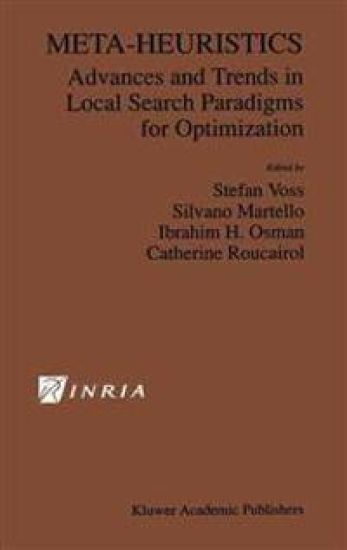
Meta-Heuristics
Meta-Heuristics: Advances and Trends in Local Search Paradigms for Optimizations comprises a carefully refereed selection of extended versions of the best papers presented at the Second Meta-Heuristics Conference (MIC 97). The selected articles describe the most recent developments in theory and applications of meta-heuristics, heuristics for specific problems, and comparative case studies. The book is divided into six parts, grouped mainly by the techniques considered. The extensive first part with twelve papers covers tabu search and its application to a great variety of well-known combinatorial optimization problems (including the resource-constrained project scheduling problem and vehicle routing problems). In the second part we find one paper where tabu search and simulated annealing are investigated comparatively and two papers which consider hybrid methods combining tabu search with genetic algorithms. The third part has four papers on genetic and evolutionary algorithms. Part four arrives at a new paradigm within meta-heuristics. The fifth part studies the behavior of parallel local search algorithms mainly from a tabu search perspective. The final part examines a great variety of additional meta-heuristics topics, including neural networks and variable neighbourhood search as well as guided local search. Furthermore, the integration of meta-heuristics with the branch-and-bound paradigm is investigated.
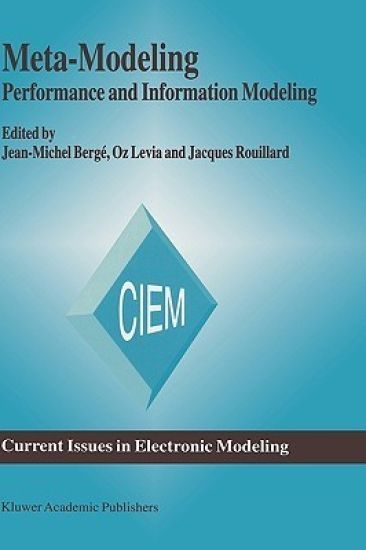
Meta-Modeling
Models in system design follow the general tendency in electronics in terms of size, complexity and difficulty of maintenance. While a model should be a manageable representation of a system, this increasing complexity sometimes forces current CAD-tool designers and model writers to apply modeling techniques to the model itself. Model writers are interested in instrumenting their model, so as to extract critical information before the model is complete. CAD tools designers use internal representations of the design at various stages. The complexity has also led CAD-tool developers to develop formal tools, theories and methods to improve relevance, completeness and consistency of those internal representations. Information modeling involves the representation of objects, their properties and relationships. Performance Modeling When it comes to design choices and trade-offs, performance is generally the final key. However performance estimations have to be extracted at a very early stage in the system design. Performance modeling concerns the set of tools and techniques that allow or help the designer to capture metrics relating to future architectures. Performance modeling encompasses the whole system, including software modeling. It has a strong impact on all levels of design choices, from hardware/software partitioning to the final layout. Information Modeling Specification and formalism have in the past traditionally played little part in the design and development of EDA systems, their support environments, languages and processes. Instead, EDA system developers and EDA system users have seemed to be content to operate within environments that are often extremely complex and may be poorly tested and understood. This situation has now begun to change with the increasing use of techniques drawn from the domains of formal specification and database design. This section of this volume addresses aspects of the techniques being used. In particular, it considers a specific formalism, called information modeling, which has gained increasing acceptance recently and is now a key part of many of the proposals in the EDA Standards Roadmap, which promises to be of significance to the EDA industry. In addition, the section looks at an example of a design system from the point of view of its underlying understanding of the design process rather than through a consideration of particular CAD algorithms. Meta-Modeling: Performance and Information Modeling contains papers describing the very latest techniques used in meta-modeling. It will be a valuable text for researchers, practitioners and students involved in Electronic Design Automation.
Meta-Heuristics
Meta-heuristics have developed dramatically since their inception in the early 1980s. They have had widespread success in attacking a variety of practical and difficult combinatorial optimization problems. These families of approaches include, but are not limited to greedy random adaptive search procedures, genetic algorithms, problem-space search, neural networks, simulated annealing, tabu search, threshold algorithms, and their hybrids. They incorporate concepts based on biological evolution, intelligent problem solving, mathematical and physical sciences, nervous systems, and statistical mechanics. Since the 1980s, a great deal of effort has been invested in the field of combinatorial optimization theory in which heuristic algorithms have become an important area of research and applications. This volume is drawn from the first conference on Meta-Heuristics and contains 41 papers on the state-of-the-art in heuristic theory and applications. The book treats the following meta-heuristics and applications: Genetic Algorithms, Simulated Annealing, Tabu Search, Networks & Graphs, Scheduling and Control, TSP, and Vehicle Routing Problems. It represents research from the fields of Operations Research, Management Science, Artificial Intelligence and Computer Science.
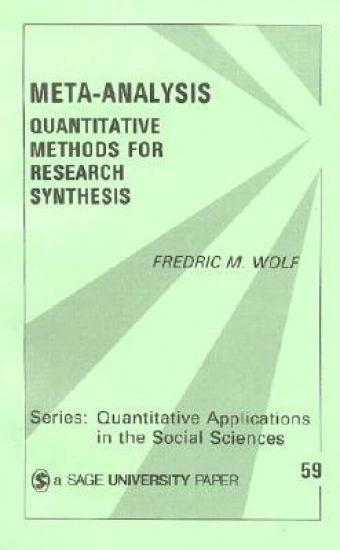
Meta-Analysis

Meta-Analysis

Fredric (Fred) M. Wolf

SAGE Publications Inc
1986
nidottu
Author Fredric M. Wolf explains how to use combined statistical tests and measures of effect size to synthesize the results of independent studies of a common research question.
Meta-Ethnography

Meta-Ethnography

George W. Noblit; R . Dwight Hare

SAGE Publications Inc
1988
sidottu
How can ethnographic studies be generalized, in contrast to concentrating on the individual case? Noblit and Hare propose a new method for synthesizing from qualitative studies: meta-ethnography. After citing the criteria to be used in comparing qualitative research projects, the authors define the ways these can then be aggregated to create more cogent syntheses of research. Using examples from numerous studies ranging from ethnographic work in educational settings to the Mead-Freeman controversy over Samoan youth, Meta-Ethnography offers useful procedural advice from both comparative and cumulative analyses of qualitative data. This provocative volume will be read with interest by researchers and students in qualitative research methods, ethnography, education, sociology, and anthropology. "After defining metaphor and synthesis, these authors provide a step-by-step program that will allow the researcher to show similarity (reciprocal translation), difference (refutation), or similarity at a higher level (lines or argument synthesis) among sample studies....Contain(s) valuable strategies at a seldom-used level of analysis." --Contemporary Sociology "The authors made an important contribution by reframing how we think of ethnography comparison in a way that is compatible with the new developments in interpretive ethnography. Meta-Ethnography is well worth consulting for the problem definition it offers." --The Journal of Nervous and Mental Disease "This book had to be written and I am pleased it was. Someone needed to break the ice and offer a strategy for summarizing multiple ethnographic studies. Noblit and Hare have done a commendable job of giving the research community one approach for doing so. Further, no one else can now venture into this area of synthesizing qualitative studies without making references to and positioning themselves vis-a-vis this volume." -Educational Studies
Meta-Ethnography

Meta-Ethnography

George W. Noblit; R . Dwight Hare

SAGE Publications Inc
1988
nidottu
How can ethnographic studies be generalized, in contrast to concentrating on the individual case? Noblit and Hare propose a new method for synthesizing from qualitative studies: meta-ethnography. After citing the criteria to be used in comparing qualitative research projects, the authors define the ways these can then be aggregated to create more cogent syntheses of research. Using examples from numerous studies ranging from ethnographic work in educational settings to the Mead-Freeman controversy over Samoan youth, Meta-Ethnography offers useful procedural advice from both comparative and cumulative analyses of qualitative data. This provocative volume will be read with interest by researchers and students in qualitative research methods, ethnography, education, sociology, and anthropology. "After defining metaphor and synthesis, these authors provide a step-by-step program that will allow the researcher to show similarity (reciprocal translation), difference (refutation), or similarity at a higher level (lines or argument synthesis) among sample studies....Contain(s) valuable strategies at a seldom-used level of analysis." --Contemporary Sociology "The authors made an important contribution by reframing how we think of ethnography comparison in a way that is compatible with the new developments in interpretive ethnography. Meta-Ethnography is well worth consulting for the problem definition it offers." --The Journal of Nervous and Mental Disease "This book had to be written and I am pleased it was. Someone needed to break the ice and offer a strategy for summarizing multiple ethnographic studies. Noblit and Hare have done a commendable job of giving the research community one approach for doing so. Further, no one else can now venture into this area of synthesizing qualitative studies without making references to and positioning themselves vis-a-vis this volume." -Educational Studies
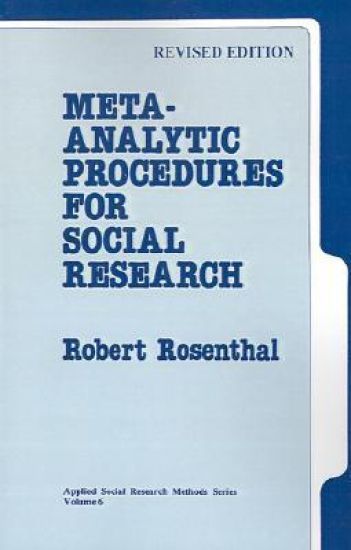
Meta-Analytic Procedures for Social Research

Meta-Analytic Procedures for Social Research

Robert Rosenthal

SAGE Publications Inc
1991
nidottu
"Meta-Analytic Procedures for Social Research contains a wealth of information on meta-analytic techniques. The excellent index and bibliography add to its usefulness." --The Library Quarterly "Now in its second edition, Robert Rosenthal's primer on meta-analysis is a 'must-have' tool for the research workbench of students and scholars in the social sciences. The revised volume 'makes readily accessible some newer meta-analytic procedures that have been developed since the 1984 edition' (p.1). In addition, the references in the 1991 edition have been updated to reflect the latest findings and thinking in this field. . . . This book will serve as a valuable resource to anyone interested in meta-analysis as a research technique. There are complete and thorough discussions of problem areas that have been regarded as questionable by critics of this technique. . . . Rosenthal's discussion and justification of the use of published studies is thorough and insightful from two vantage points. . . . Rosenthal's treatment of publication bias is just one example that emphasizes the value of this book to researchers. The second edition represents a wealth of information in one place which is clearly explained in understandable language. . . . Rosenthal's revised edition is a valuable source book for experienced meta-analysts as well as researchers new to the technique. As a teaching tool, the book is recommended as required reading in research methods courses at the doctoral level. Scholars in marketing and organizational behavior have made increasing use of meta-analysis since the 1980s, thus, doctoral students need exposure to and education on this topic. Rosenthal's second edition is a necessary tool for achieving this goal." --Elizabeth J. Wilson, Louisiana State University "It is well organized, and adequately describes the various procedures with illustrations. In sum, the book is valuable for individuals interested in the application of meta-analytic procedures." --The Accounting Review Praised in the first edition for its clarity in conceptualizing meta-analysis, Robert Rosenthal's newly revised edition covers the latest techniques and advances in the field. Included in this revised edition are chapters examining a new effect size indicator, new one-sample data, a new coefficient of robustness of replication, more procedures for combining and comparing effect sizes for multiple dependent variables, and current data on the magnitude of the problem of incomplete retrieval. In addition, results are provided on the social, psychological, economic, and medical importance of small effect sizes. Designed for use by students and professional researchers in the social and behavioral sciences, this book will prepare the reader not only to do meta-analysis but to evaluate meta-analyses more wisely.
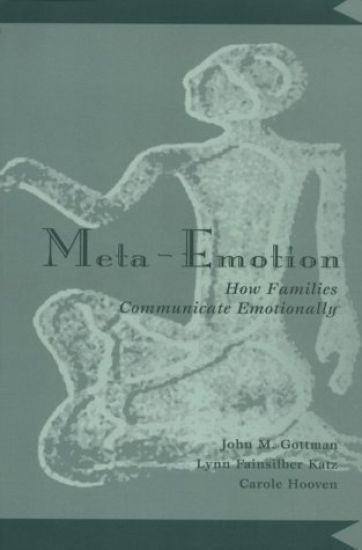
Meta-Emotion

Meta-Emotion

John Mordechai Gottman; Lynn Fainsilber Katz; Carole Hooven

Routledge Member of the Taylor and Francis Group
1997
sidottu
This book describes research on the emotional communication between parents and children and its effect on the children's emotional development. Inspired by the work, and dedicated to the memory of Dr. Haim Ginott, it presents the results of initial exploratory work with meta-emotion--feelings about feelings. The initial study of meta-emotion generated some theory and made it possible to propose a research agenda. Clearly replication is necessary, and experiments are needed to test the path analytic models which have been developed from the authors' correlational data. The authors hope that other researchers will find these ideas interesting and stimulating, and will inspire investigation in this exciting new area of a family's emotional life.
Meta-Emotion

Meta-Emotion

John Mordechai Gottman; Lynn Fainsilber Katz; Carole Hooven

Routledge Member of the Taylor and Francis Group
1997
nidottu
This book describes research on the emotional communication between parents and children and its effect on the children's emotional development. Inspired by the work, and dedicated to the memory of Dr. Haim Ginott, it presents the results of initial exploratory work with meta-emotion--feelings about feelings. The initial study of meta-emotion generated some theory and made it possible to propose a research agenda. Clearly replication is necessary, and experiments are needed to test the path analytic models which have been developed from the authors' correlational data. The authors hope that other researchers will find these ideas interesting and stimulating, and will inspire investigation in this exciting new area of a family's emotional life.
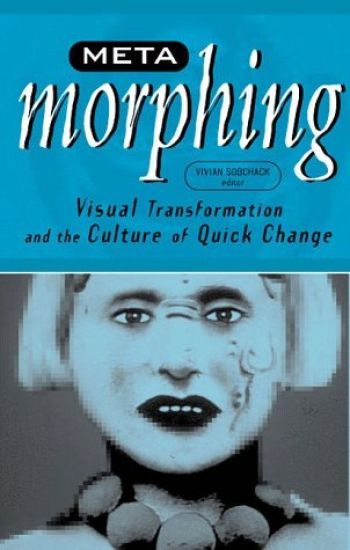
Meta-Morphing

Meta-Morphing

Vivian Sobchack

University of Minnesota Press
2000
nidottu
This volume explores what digital morphing means, both as a cultural practice specific to our times and as a link to a much broader history of images of human transformation.'
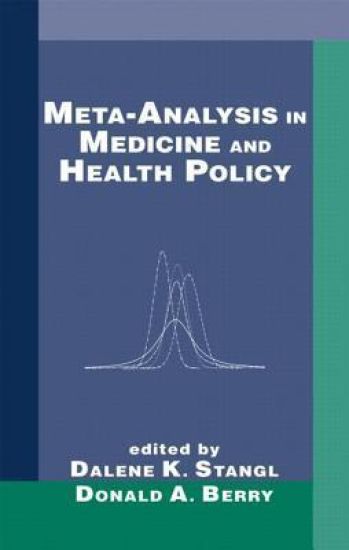
Meta-Analysis in Medicine and Health Policy
This remarkable text raises the analysis of data in health sciences and policy to new heights of refinement and applicability by introducing cutting-edge meta-analysis strategies while reviewing more commonly used techniques. Each chapter builds on sound principles, develops methodologies to solve statistical problems, and presents concrete applications used by experienced medical practitioners and health policymakers. Written by more than 30 celebrated international experts, Meta-Analysis in Medicine and Health Policy employs copious examples and pictorial presentations to teach and reinforce biostatistical techniques more effectively and poses numerous open questions of medical and health policy research.
Meta Final (Finish Line)

Meta Final (Finish Line)

Robert Wolgemuth

Portavoz
2024
nidottu
Enfrentar tu muerte f sica puede ser aterrador, pero no tiene por qu serlo. Es normal tener preguntas sobre c mo enfrentar bien la ltima etapa de nuestras vidas y, aunque anhelamos terminar nuestras vidas con gracia y gratitud, a veces sentimos miedo e incertidumbre. Robert Wolgemuth sabe lo que es enfrentar la muerte ya que perdi a su primera esposa y l mismo ha luchado contra el c ncer dos veces. En Meta final, Robert te ofrece sabidur a b blica y conocimiento pr ctico para ayudarte a: Soltar el pasado y encontrar la verdadera paz y tranquilidad sobre el final de la vida. Preparar y bendecir a tus seres queridos antes de morir. Comprender la verdad sobre el cielo y lo que Dios tiene preparado para sus seguidores en la pr xima vida. Aprender de las personas de la Biblia c mo deber a (y no deber a) ser cruzar la l nea de meta final. Ocuparte de aspectos espec ficos como la planificaci n de tu funeral, testamento y bienes. Meta final ofrece verdades sin adornos para consolar tu coraz n, ayuda pr ctica para tranquilizar tu mente y un recordatorio de las promesas de Dios para fortalecer tu esp ritu. Cruza la meta final de tu vida con paz y esperanza. Facing your ultimate death can be scary, but in light of God's promises, it doesn't have to be. It's normal to have questions about how to face the last season of our lives well, and though we long to end our lives with grace and gratitude, sometimes we feel fear and uncertainty instead.Robert Wolgemuth knows what it is like to face death, having lost his first wife of almost 45 years to cancer and battling cancer twice himself. Finish Line distills a lifetime of spiritual wisdom as Robert helps you: Find true peace and reassurance about the end of life Discover the things you can do to prepare those you love before you die Understand the truth about heaven and what God has for his followers in the next life Learn from people in the Bible about what crossing the finish line should--and shouldn't--look like Take care of specifics such as planning your funeral service, determining end-of-life issues, and preparing a will Let go of physical, relational, and emotional clutter Receive what God has for you in your final years
Meta Television

Meta Television

Erin Giannini

TAYLOR FRANCIS LTD
2024
sidottu
The idea of metatextuality is frequently framed as a recent television development and often paired with the idea that it represents genre exhaustion. US television, however, with its early “live” performances and set-bound sitcoms, always suggested an element of self-awareness that easily shaded into metatextuality even in its earliest days. Meta Television thus traces the general history of US television’s metatextuality throughout television’s history, arguing that TV’s self-awareness is nothing new—and certainly not evidence of a period of aesthetic exhaustion—but instead is woven into both its past and present practice, elucidated through case studies featuring series from the 1970s to the present day—many of which have not been critically analyzed before—and the various ways they deploy metatext to both construct and deconstruct their narratives. Further, Meta Television asserts that this re- and de-construction of narrative and production isn’t just a reward to the savvy and/or knowledgeable viewer (or consumer), but seeks to make broader points about the media we consume—and how we consume it.This book explores the ways in which the current metatextual turn, in both the usual genres in which it appears (horror and sci-fi/fantasy) and its movement into drama and sitcom, represents the next turn in television’s inherent self-awareness. It traces this element throughout television’s history, growing from the more modest reflexivity of programs’ awareness of themselves, as created objects in a particular medium, to the more significant breaking of the fictive illusion and therefore the perceived distance between the audience and the series. Erin Giannini shows how the increased currency of metatextual television in the contemporary era can be tied to a viewership well-versed in its stories and production as well as able and willing to “talk back” via social media. If television reflects culture to a certain extent, this increased reflexivity mirrors that “responsive” audience as a consequence of the lack of distance that metafiction embraces.As Robert Stam traced the use—and implications—of reflexivity in film and literature, this book does the same for television, further problematizing John Ellis’s glance theory in terms of both production and spectatorship.