Kirjojen hintavertailu. Mukana 11 342 296 kirjaa ja 12 kauppaa.

Kirjahaku

Etsi kirjoja tekijän nimen, kirjan nimen tai ISBN:n perusteella.

1000 tulosta hakusanalla "Polymers"

Polymers and Plastics

Polymers and Plastics

Chemical Publishing Co Inc.,U.S.
1987
nidottu
CONTENTS - Polymers and Plastics - Tradename Products and Generic Equivalents - Generic Chemical Synonyms and Cross References -Tradename Product Manufacturers - PREFACE - This compendium serves a unique function for those involved in the chemical industry-it provides the necessary information for making the decision as to which trademark chemical product is most suitable for a particular application. The chemicals included in this second book of the series have their major function as dispersants, solvents, and solubilizers, however, complete cross-referencing is provided for the multiple functions of all the chemicals. The first section which is the major portion of each volume contains the most common generic name of the chemicals as the main entry. All these generic entries are in alphabetical order. Synonyms for these chemicals are then listed. The CTFA name appears alongside the appropriate generic name. The structural and/or molecular formula of the chemical is listed whenever possible. The generic chemical is sold under various tradenames and these are listed here in alphabetical order for ease of reference along with their manufacturer in parentheses. The Category subheading lists all the possible functions that the chemical can serve. Because of differences in form, activity, etc., individual tradenames of the generic chemical are used in particular applications more frequently. These are delineated in the Applications section. The differences in properties. toxicity/handling. storage/handling, and standard packaging are specified in the subsequent sections wherever distinguishing characteristics are known. The second section of the volume TRADENAME PRODUCTS AND GENERIC EQUN ALENTS helps the user who only knows a chemical by one tradename to locate its main entry in section 1. The user can look up this tradename in this section of the book and be referred to the appropriate, main-entry, generic chemical name. The third section GENERIC CHEMICAL SYNONYMS AND CROSS REFERENCES provides a way of locating the main entries by knowing only one of the synonyms. If the generic chemical is not in the volume, it will refer you to the volume in which it is contained. The fourth section TRADENAME PRODUCT MANUFACTURERS lists the full addresses of the companies that manufacture or distribute the tradename products found in the first section.
Polymers in Particulate Systems
"Presents the latest research on the flow and structure of complex particulate sustemsions, the adsorption behavior of polymers, and the consolidation behavior and mechanical properties of films. Highlights recent advances in polymer functionality, conformation, and chemistry for biological, biomedical, and industrial applications."
Polymers as Rheology Modifiers

Polymers as Rheology Modifiers

American Chemical Society
1991
sidottu
Best known for their use as bulk materials, polymers when used in small amounts as rheology modifiers can convert simple fluids to high-performance materials. Such additives have found use in paints and coatings, fuels and lubricating oils, cosmetics and personal care products, and food. This 20-chapter book presents a strong mix of industrial and academic contributions that cover rheological concepts, gels and latices, associating polymers, polymer-polymer and polymer-solvent interactions, and deformation-related orientations.
Polymers for Energy Storage and Delivery

Polymers for Energy Storage and Delivery

Oxford University Press Inc
2013
sidottu
Polymeric materials have been and continue to be a focus of research in the development of materials for energy conversion, storage and delivery applications (fuel cells, batteries, photovoltaics, capacitors, etc.). Significant growth in this field started in the early 1990s and has continued to grow quite substantially since that time. Polymeric materials now have a prominent place in energy research. For polymers, particularly polyelectrolytes, being used in fuel cell and battery applications, the importance of chain microstructure, chain dynamics, and nanoscale morphology on the overall performance characteristics of these materials cannot be overstated. As further advancements are made in polymer chemistry, control of nanostructure and characterization, there is a necessity for organized forums that foster cross-fertilization of knowledge and ideas between experts in polymer chemistry, chemical engineering, and polymer physics. This volume is the result of such a forum. Most of the chapters in this book are based on a cross-section of the oral presentations in a symposium on Polymers for Energy Storage and Delivery held in March of 2011 as part of the 241st ACS National Meeting & Exposition (Anaheim, CA). The book contains 17 chapters presented in two parts. Part one focuses on polymers for battery applications and will cover theory and modeling, novel materials, and materials characterization. Professor Janna Maranas has provided an excellent review of the current state of understanding in polyelectrolytes as ion conductors in batteries. Part two will focus on polymers for fuel cells and will cover novel materials, transport, and materials characterization with a brief introduction into the history of polyelectrolytes for fuel cells and the classes of materials being pursued. Realizing the common role that nanostructure plays in both battery and fuel cell applications, Professor Moon Jeong Park and coworkers have also contributed a chapter demonstrating the role of nanostructured polyelectrolyte systems in energy storage and delivery. In addition, the editors are pleased to have a chapter-contributed by Professor Howard Wang and staff scientists of the NIST Center for Neutron Research-on the most state-of-art, in-situ neutron methods for studying lithium ion batteries.
Polymers in Therapeutic Delivery

Polymers in Therapeutic Delivery

Oxford University Press Inc
2021
sidottu
The delivery of genes and drugs remains an active research area, with new challenges arising from the need to deliver specialized cargo, including antibodies, peptides, proteins and oligonucleotides and the need of reaching desired release profiles. Polymer-based systems hold great promise, as polymers can be designed and modified to meet new challenges. Frontline investigators describe polymer systems, such as polyethylenimine, poly(thioether anhydrides), stimuli-responsive hydrogels, and metal-organic nanomaterials, to deliver specific therapeutics, such as genetic materials and anticancer drugs, in controlled manners. Polymer chemists, pharmaceutical scientists, material chemists, and other researchers will find this collection valuable for their research.
Polymers, Phosphors, and Voltaics for Radioisotope Microbatteries
Representing the collective effort of over 30 leading scientists in Russia and the United States, this is the first book written solely on the subject of nuclear batteries. It presents a rich historical discussion and original research on the conversion of nuclear materials into electrical power, which can then be harvested to make long-lasting, more energy efficient batteries. With this technology, power-matched supplies would last decades - even centuries - using safe, direct, long-life, stable, integrated electric power from the highest energy density source available. Polymers, Phosphors, and Voltaics for Radioisotope Microbatteries presents the state-of-the-art in interdisciplinary research in radiochemistry, tritium storage, semiconductor fabrication and characterization, nuclear battery fabrication and testing, integration into MEMS and other electronic devices, and much more. A key feature of this book is its discussion of construction materials for miniaturized radioisotope power supplies, since progress in nuclear battery technology depends on characterization of functionally radiation-stable components. Though substantial progress has been made to solve problems of using integrated radioisotope batteries for micro- and nanoelectronics, each author has provided an authoritative assessment and has indicated where development is needed. Research in this area has the potential to revolutionize the microelectronics industry by enabling MEMS and nanotechnology. Significant technological progress depends today on coordinated interdisciplinary research. Polymers, Phosphors, and Voltaics for Radioisotope Microbatteries contains diverse discussions of the problems of using radioactive material for microelectronic power needs and guides readers to future research in the area of long-life, high energy-density batteries.
Polymers for Dental and Orthopedic Applications
Recent advances not only in the creation of new polymers but also in their processing and production have ushered in huge strides in a variety of biomedical and clinical areas. Orthopedics and dentistry are two such areas that benefit immensely from developments in polymer science and technology. Polymers for Dental and Orthopedic Applications examines the most current topics in this expanding field with an emphasis on technological evolution and clinical impacts.Surveying major progress in polymer science and technology for dental, maxillofacial, and orthopedic applications, this book provides a unique illustration of the conceptual development of novel biomaterials and processes designed to meet targeted clinical needs. Two preeminent scientists lead a close-knit team of international experts with extensive experience in product development, bioengineering, education, and clinical applications. Ranging from polymeric materials for dental and maxillofacial application to joint repair and replacement, polymeric composites, and tissue engineering, the book also examines topics that are common to both dental and orthopedic fields, such as osseointegration and infection management. Explore the current status and future possibilities of polymeric biomaterials in Polymers for Dental and Orthopedic Applications. A unique blend of technical information and practical insight, this reference fosters the continued growth of a critically important field.
Polymers in Drug Delivery
Together, the nano explosion and the genomic revolution are ushering in a new frontier in drug delivery. In recent years we’ve seen how polymers can play a crucial role in controlling the rate of drug release, enhancing solubility and uptake, and limiting degradation and toxicity. In the very near future, they may well be used to deliver gene therapy.While Polymers in Drug Delivery offers much new insight for the veteran specialist, this work has been compiled with the non-specialist in mind. It includes contributions from many of the world’s leading drug delivery specialists, yet avoids jargon and presents background information that initiates the next generation of scientists into the amazing work going on at the frontiers of this rapidly evolving science. Targeting specific issues at the forefront of drug delivery today, this engaging volume— · Outlines the issues that must be considered when selecting a polymer for fabricating a drug delivery agent or other medical devices · Explains the more commonly used methods by which polymers may be characterized prior to use · Profiles polymer matrices that have been used in the formulation of solid oral dosage forms, drug delivery scaffolds, and hydrogels · Examines the issues surrounding the encapsulation of biologics within microspheres · Explores the use of nanoparticulates, especially solid nanoparticles and nanocapsules prepared from largely-water-insoluble cyanoacrylate polymers · Discusses polymeric micelles and investigates the potential of soluble polymer prodrugs and polymer nanomedicines · Details the contribution made by polymers and dendrimers to the gene delivery effort, which may one day lead to effective treatments for largely incurable diseases Noting a dramatic paradigm shift that is bridging the gap between materials science and life science, the editor’s have compiled this volume to paint an interdisciplinary portrait of drug delivery that will challenge young scientists to turn their attention and effort towards this critical branch of biomedicine. Containing state-of-the-art information for drug delivery scientists, it is also a great choice for medical and pharmaceutical students and others seeking an in-depth introduction to the field.
Polymers in Concrete

Polymers in Concrete

Satish Chandra; Yoshihiko Ohama

CRC Press Inc
1994
sidottu
This broad-based, introductory reference provides excellent discussions regarding the hydration of Portland cement, durability problems in concrete, mechanisms of concrete deterioration, and interaction of polymers in concrete. It also covers properties of concrete with added polymers and practical applications of polymers in concrete. The historic background of polymers in building materials is examined, and a comprehensive comparison of natural vs. synthetic polymers is provided and conveniently summarized in a tabular format.
Polymers for Controlled Drug Delivery

Polymers for Controlled Drug Delivery

Peter J. Tarcha

CRC Press Inc
1990
sidottu
Polymers for Controlled Drug Delivery addresses the challenges of designing macromolecules that deliver therapeutic agents that function safely and in concert with living organisms. The book primarily discusses classes of polymers and polymeric vehicles, including particulates, such as latexes, coacervates, ion-exchange resins, and liposomes, as well as non-particulate vehicles such as enteric coatings, mediators, and bioadhesives. Other topics discussed include diffusion; biodegradation-controlled delivery; animal model studies for toxicity, metabolism, and elimination testing; and FDA requirements for clinical studies. Drug delivery researchers will find this book to be an invaluable reference tool.
Polymers and the Environment

Polymers and the Environment

G Scott

Royal Society of Chemistry
1999
nidottu
As environmental performance becomes increasingly important, the development of man-made polymers and their associated benefits has been overshadowed by problems relating to their ultimate disposal. In the light of wider acceptance of polymers for use in high technology applications, Polymers and the Environment aims to redress the balance. The book reviews the properties and industrial applications of polymers and discusses their environmental benefits compared with traditional materials. It also addresses the issues of polymer durability, recycling processes to aid waste minimization and biodegradable polymers. This text is intended to introduce the non-specialist reader to the benefits and limitations of polymeric materials from an environmental viewpoint, and will prove a useful book for both students and professionals.
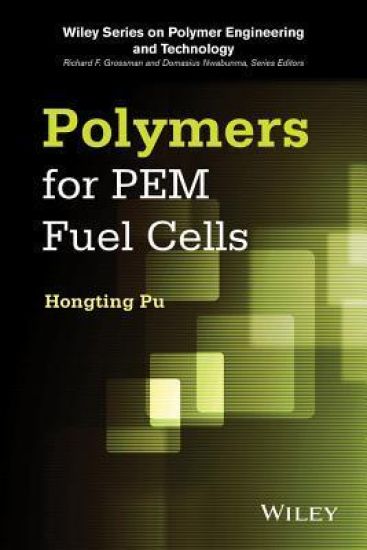
Polymers for PEM Fuel Cells

Polymers for PEM Fuel Cells

Hongting Pu

John Wiley Sons Inc
2014
sidottu
Including chemical, synthetic, and cross-disciplinary approaches; this book includes the necessary techniques and technologies to help readers better understand polymers for polymer electrolyte membrane (PEM) fuel cells. The methods in the book are essential to researchers and scientists in the field and will lead to further development in polymer and fuel cell technologies. • Provides complete, essential, and comprehensive overview of polymer applications for PEM fuel cells • Emphasizes state-of-the-art developments and methods, like PEMs for novel fuel cells and polymers for fuel cell catalysts • Includes detailed chapters on major topics, like PEM for direct liquid fuel cells and fluoropolymers and non-fluorinated polymers for PEM • Has relevance to a range of industries – like polymer engineering, materials, and green technology – involved with fuel cell technologies and R&D
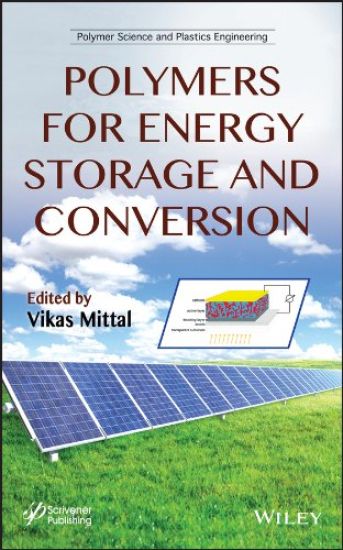
Polymers for Energy Storage and Conversion

Polymers for Energy Storage and Conversion

Vikas Mittal

John Wiley Sons Inc
2013
sidottu
One of the first comprehensive books to focus on the role of polymers in the burgeoning energy materials market Polymers are increasingly finding applications in the areas of energy storage and conversion. A number of recent advances in the control of the polymer molecular structure which allows the polymer properties to be more finely tuned have led to these advances and new applications. Polymers for Energy Storage and Conversion assimilates these advances in the form of a comprehensive text that includes the synthesis and properties of a large number of polymer systems for applications in areas such as lithium batteries, photovoltaics, and solar cells. Polymers for Energy Storage and Conversion: Introduces the structure and properties of polymer hydrogel with respect to its applications for low to intermediate temperature polymer electrolyte-based fuel cellsDescribes PVAc-based polymer blend electrolytes for lithium batteriesReviews lithium polymer batteries based on ionic liquidsProposes the concept of the solar cell with organic multiple quantum dots (MQDs)Discusses solvent effects in polymer-based organic photovoltaic devicesProvides an overview of the properties of the polymers that factor into their use for solar power, whether for niche applications or for large-scale harvestingReviews the use of macroporous organic polymers as promising materials for energy gas storage ReadershipMaterials scientists working with energy materials, polymer engineers, chemists, and other scientists and engineers working with photovoltaics and batteries as well as in the solar and renewable energy sectors.
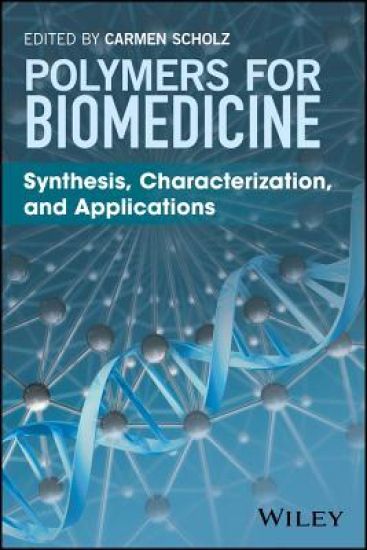
Polymers for Biomedicine

Polymers for Biomedicine

John Wiley Sons Inc
2017
sidottu
Highlighting dynamic developments in polymer synthesis, this book focuses on the chemical techniques to synthesize and characterize biomedically relevant polymers and macromolecules.• Aids researchers developing polymers and materials for biomedical applications• Describes biopolymers from a synthetic perspective, which other similar books do not do• Covers areas that include: cationically-charged macromolecules, pseudo-peptides, polydrugs and prodrugs, controlled radical polymerization, self-assembly, polycondensates, and polymers for surface modification
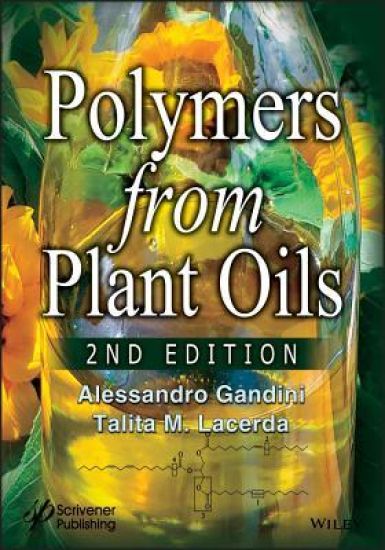
Polymers from Plant Oils

Polymers from Plant Oils

Alessandro Gandini; Talita M. Lacerda

John Wiley Sons Inc
2018
sidottu
Unique state-of-the-art book on an important topic in renewable materials The purpose of this monograph is to provide a thorough outlook on the topic related to the synthesis and characterization of original macromolecular materials derived from plant oils, an important part of the broader steadily growing discipline of polymers from renewable resources. The interest in vegetable oils as sources of biodiesel and materials has witnessed a remarkable growth of scientific and industrial interest since the beginning of the third millennium responding to the pressing drive to implement sustainability in the energy and materials sectors. The book highlights the most relevant strategies being pursued to elaborate polymers derived from a variety of common oils, by direct activation or through chemical modifications yielding novel monomers. Because glycerol is the main byproduct of biodiesel production, it is treated here as the other logical source of macromolecular synthesis. Each of the different approaches is illustrated by an introductory layout of the underlying chemical mechanisms, followed by examples of notable achievements in terms of the properties and potential applications of the ensuing materials, which span a wide range of structures and performances. In particular, original pathways involving click-chemistry reactions as thiol-ene and Diels-Alder couplings and metathesis polymerizations are discussed and shown to reflect the involvement of a growing number of research programs worldwide.
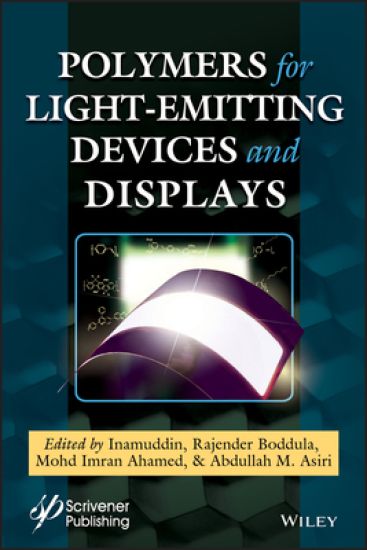
Polymers for Light-emitting Devices and Displays
Polymers for Light-Emitting Devices and Displays provides an in-depth overview of fabrication methods and unique properties of polymeric semiconductors, and their potential applications for LEDs including organic electronics, displays, and optoelectronics. Some of the chapter subjects include:• The newest polymeric materials and processes beyond the classical structure of PLED• Conjugated polymers and their application in the light-emitting diodes (OLEDs & PLEDs) as optoelectronic devices.• The novel work carried out on electrospun nanofibers used for LEDs.• The roles of diversified architectures, layers, components, and their structural modifications in determining efficiencies and parameters of PLEDs as high-performance devices.• Polymer liquid crystal devices (PLCs), their synthesis, and applications in various liquid crystal devices (LCs) and displays.• Reviews the state-of-art of materials and technologies to manufacture hybrid white light-emitting diodes based on inorganic light sources and organic wavelength converters.
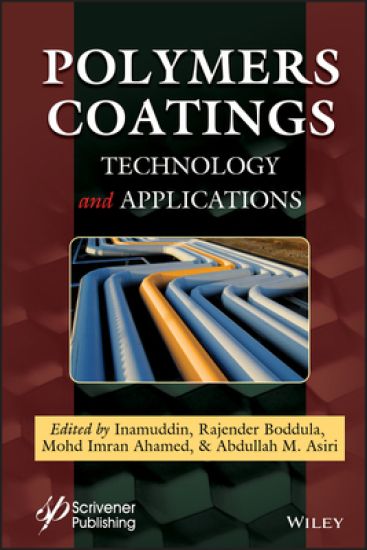
Polymers Coatings

Polymers Coatings

John Wiley Sons Inc
2020
sidottu
The explores the cutting-edge technology of polymer coatings. It discusses fundamentals, fabrication strategies, characterization techniques, and allied applications in fields such as corrosion, food, pharmaceutical, biomedical systems and electronics. It also discusses a few new innovative self-healing, antimicrobial and superhydrophobic polymer coatings. Current industrial applications and possible potential activities are also discussed.
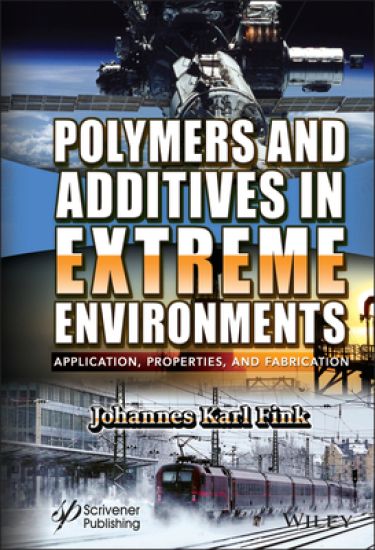
Polymers and Additives in Extreme Environments

Polymers and Additives in Extreme Environments

Johannes Karl Fink

John Wiley Sons Inc
2021
sidottu
POLYMERS AND ADDITVES IN EXTREME ENVIRONMENTS Uniquely catalogs polymers and additives for uses in extreme applications such as in high or low pressure, high or low temperature, deep water and other special applications. The book includes chapters on aqueous environments including polymeric membranes for water purification and wastewater treatment; extreme pressure environments such as oils and lubricants for combustion engines as well as materials used for deep drilling such as surfactants, scale inhibitors, foaming agents, defoamers, propellants, fracturing fluids; extreme temperatures is subdivided in high and low temperature applications including gasketing materials, fuel tank sealants, expulsion bladders, fuel cell materials, and on the other hand, cold weather articles and thermoregulatory textiles; electrical applications include solar cell devices, triboelectric generators, fuel cell applications, electrochromic materials and batteries; medical applications include polymers for contact lenses, materials for tissue engineering, sophisticated drug delivery systems; aerospace applications include outer space applications such as low temperature and pressure, also cosmic rays, outgassing, and atomic erosion, as well as materials for electrostactic dissipative coatings and space suits; a final chapter detailing materials that are used in other extreme environments, such as adhesives, and polymeric concrete materials. Audience Materials and polymer scientists working in manufacturing and plastics, civil and mechanical engineers in various industries such as automotive, aircraft, space, marine and shipping, electronics, construction, electrical, etc. will find this book essential. The book will also serve the needs of engineers and specialists who have only a passing contact with polymers and additives in industrial setting need to know more.
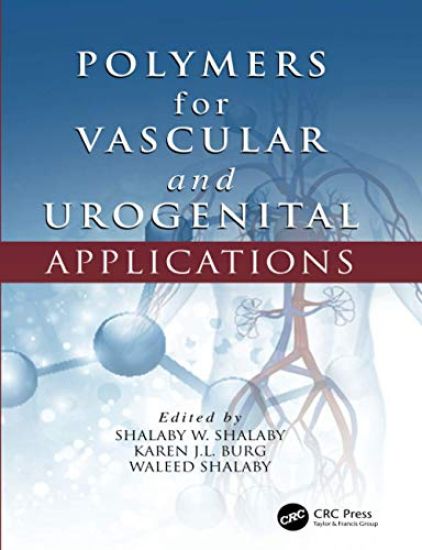
Polymers for Vascular and Urogenital Applications
In a carefully crafted, multidisciplinary, skillfully focused format, Polymers for Vascular and Urogenital Applications covers attributes of polymers used for vascular, urological, and gynecological materials. It provides a brief analysis of how the use of polymers in vascular and urogenital applications has evolved in the past five decades and outlines their common and specific functional requirements. The book provides a brief description of the evolving role of a particular family of materials and presents topics in highly integrated, well-balanced, authoritatively prepared segments on materials processing and in vitro and in vivo evaluation, complete with case studies. Features Includes contributions from authors representing a diverse technical group of clinicians with strong science or engineering backgrounds and research interests Supplies a comprehensive link between polymeric biomaterials and their application Provides a brief description of the evolving role of a particular family of materials Discusses recent developments in applications and the rationale for present and future clinical significanceThis book not only integrates clinical needs with current and future research responses but also provides a comprehensive overview to foster future innovation. It illustrates how two important and dissimilar areas in medicine can be interrelated by shared biomaterials and explores the clinical paradigm that establishes the driving force for innovation.