Kirjojen hintavertailu. Mukana 11 244 527 kirjaa ja 12 kauppaa.

Kirjahaku

Etsi kirjoja tekijän nimen, kirjan nimen tai ISBN:n perusteella.

422 tulosta hakusanalla "Tissue Engineering"

Tissue Engineering

Tissue Engineering

Prerna Agale; S Savita

Lap Lambert Academic Publishing
2024
pokkari
Tissue engineering has ushered in a new era for therapeutic medicine, rapidly progressing to encompass all tissues in the body. This progress relies on understanding embryonic development and stem cell biology. In oral tissues, replicating complex biological development remains a challenge due to the need for integrating multiple tissue types and interfaces. Recent advancements in tissue engineering are making significant strides in periodontal disease management, which is crucial given its link to systemic health issues. Current methods, like engineered cell-scaffold constructs, show promise but still face challenges in achieving predictable full periodontal regeneration. Research is also exploring craniofacial applications and the potential of biologically regenerating periodontal structures. Despite notable progress, translating these advances into consistent, clinically safe treatments remains a major focus, with ongoing efforts to enhance stem cell compatibility and scaffold development. The future looks promising, with expanding knowledge and innovations paving the way for more effective oral and craniofacial tissue repair.
Tissue Engineering

Tissue Engineering

Prerna Agale; S Savita

Verlag Unser Wissen
2024
pokkari
Das Tissue Engineering hat eine neue ra der therapeutischen Medizin eingel utet, die sich rasch auf alle Gewebe des K rpers ausdehnt. Dieser Fortschritt beruht auf dem Verst ndnis der Embryonalentwicklung und der Stammzellbiologie. Bei oralen Geweben ist die Nachbildung der komplexen biologischen Entwicklung nach wie vor eine Herausforderung, da mehrere Gewebetypen und Schnittstellen integriert werden m ssen. J ngste Fortschritte in der Gewebez chtung machen bedeutende Fortschritte bei der Behandlung von Parodontalerkrankungen, die angesichts ihrer Verbindung zu systemischen Gesundheitsproblemen von entscheidender Bedeutung sind. Aktuelle Methoden, wie z. B. die Entwicklung von Zellger stkonstrukten, sind vielversprechend, haben aber noch Probleme, eine vorhersagbare vollst ndige parodontale Regeneration zu erreichen. Die Forschung befasst sich auch mit kraniofazialen Anwendungen und dem Potenzial der biologischen Regeneration parodontaler Strukturen. Trotz beachtlicher Fortschritte bleibt die Umsetzung dieser Fortschritte in konsistente, klinisch sichere Behandlungen ein wichtiger Schwerpunkt, wobei die Kompatibilit t der Stammzellen und die Entwicklung von Ger sten weiter verbessert werden m ssen. Die Zukunft sieht vielversprechend aus, denn das wachsende Wissen und die Innovationen ebnen den Weg f r eine effektivere Reparatur von oralem und kraniofazialem Gewebe.
Tissue Engineering

Tissue Engineering

Ashok Kumar

Discovery Publishing House
2013
sidottu
The present title "Tissue Engineering" is a fast growing area of research from majors or carrers in physics, chemistry, mathematics and engineering as well as animal, plant, cell biology and medicine. The overall objective of this publication is to provide a professional level reference work with comprehensive coverage of the molecular basis of life and the application of that knowledge in genetics, biotechnology, medicine, and agriculture. Special emphasis has been concentrated on the fundament
Tissue Engineering
This book describes the state of the art on computational modeling and fabrication in Tissue Engineering. It is inspired by the ECCOMAS thematic conference, the European Committee on Computational Methods in Applied Sciences, on Tissue Engineering, held in Lisbon, Portugal, June 2-4, 2011. Tissue Engineering is a multidisciplinary field involving scientists from different fields. The development of mathematical methods is quite relevant to understand cell biology and human tissues as well to model, design and fabricate optimized and smart scaffolds. Emphasis is put on mathematical and computational modeling for scaffold design and fabrication. This particular area of tissue engineering, whose goal is to obtain substitutes for hard tissues such as bone and cartilage, is growing in importance.
Tissue Engineering
This book describes the state of the art on computational modeling and fabrication in Tissue Engineering. It is inspired by the ECCOMAS thematic conference, the European Committee on Computational Methods in Applied Sciences, on Tissue Engineering, held in Lisbon, Portugal, June 2-4, 2011. Tissue Engineering is a multidisciplinary field involving scientists from different fields. The development of mathematical methods is quite relevant to understand cell biology and human tissues as well to model, design and fabricate optimized and smart scaffolds. Emphasis is put on mathematical and computational modeling for scaffold design and fabrication. This particular area of tissue engineering, whose goal is to obtain substitutes for hard tissues such as bone and cartilage, is growing in importance.
Tissue Engineering of the Peripheral Nerve
This issue of International Review of Neurobiology brings together cutting-edge research on tissue engineering of the peripheral nerve. It reviews current knowledge and understanding, provides a starting point for researchers and practitioners entering the field, and builds a platform for further research and discovery.
Tissue Engineering Made Easy

Tissue Engineering Made Easy

Farhana Akter

Academic Press Inc
2016
nidottu
Tissue Engineering Made Easy provides concise, easy to understand, up-to-date information about the most important topics in tissue engineering. These include background and basic principles, clinical applications for a variety of organs (skin, nerves, eye, heart, lungs and bones), and the future of the field. The descriptions and explanations of each topic are such that those who have not had any exposure to the principles and practice of tissue engineering will be able to understand them, and the volume will serve as a source for self-teaching to get readers to a point where they can effectively engage with active researchers.
Tissue Engineering Using Ceramics and Polymers
Tissue Engineering Using Ceramics and Polymers, Third Edition is a valuable reference tool for both academic researchers and scientists involved in biomaterials or tissue engineering, including the areas of bone and soft-tissue reconstruction, repair and organ regeneration. With its distinguished editors and international team of contributors, this book reviews the latest research and advances in this thriving area and how they can be used to develop treatments for disease states. New sections cover nanobiomaterials, drug delivery, advanced imaging and MRI for tissue engineering, and characterization of vascularized scaffolds. Technology and research in the field of tissue engineering has drastically increased within the last few years to the extent that almost every tissue and organ of the human body could potentially be regenerated with the aid of biomaterials.
Tissue Engineering, Stem Cells, and Gene Therapies
Recent years have seen an upsurge of significant interest in cell-based technologies. A range of productive and lively debate have taken place relating to tissue engineering, namely the construction of tissues and whole organs using molecularly-designed resorbable biomaterials to create tissue de novo, the potential use of human embryonic stem cells for transplantation and regenerative medicine, with similar potential for adult-derived stem cells, and gene therapy, in relation to cell transplantation. New findings in biomimetic materials, cell signalling pathways, extracellular matrix receptors and ligands, growth factors, and the human genome project, all present particularly motivating sources for the development of research in the evergrowing biomedical field. The purpose of this book is to stimulate further the work in biomedicine and to make the issues of related scientific disciplines accessible to a wider readership by characterising the current state of research in the biomedical field. The lectures and a selection of the presentations from BlOMED 200- th The 9 International Symposium on Biomedical Science and Technology, held in September 2002 in Turkey- constitute the basis for the volume. Tissue engineering, stem cells, cell and gene therapies were the major topics presented and discussed in the symposium. This book is intended to serve as an up-to-date synopsis of the major developments of our area through the work reflected in BlOMED 2002, though not covering all aspects of the topics, due to the natural restrictions within a volume of this kind.
Tissue Engineering And Novel Delivery Systems
Essential to anyone working in the field, this reference focuses on latest advancements in tissue construction, repair and regeneration—focusing on developments in gene and drug therapy, the evolution of tissue-engineered products, and new technologies for the design of functional tissues and organ systems.
Tissue Engineering Strategies for Organ Regeneration
Tissue Engineering Strategies for Organ Regeneration addresses the existing and future trends of tissue engineering approaches for organ/tissue regeneration or repair. This book provides a comprehensive summary of the recent improvement of biomaterials used in scaffold-based tissue engineering, and the tools and different protocols needed to design tissues and organs. The chapters in this book provide the in-depth principles for many of the supporting and enabling technologies including the applications of BioMEMS devices in tissue engineering, and the combination of organoid formation and three dimensional (3D) bioprinting. The book also highlights the advances and strategies for regeneration of three-dimensional microtissues in microcapsules, tissue reconstruction techniques, and injectable composite scaffolds for bone tissue repair and augmentation. Key Features:Addresses the current obstacles to tissue engineering applicationsProvides the latest improvements in the field of integrated biomaterials and fabrication techniques for scaffold-based tissue engineeringShows the influence of microenvironment towards cell-biomaterials interactionsHighlights significant and recent improvements of tissue engineering applications for the artificial organ and tissue generationDescribes the applications of microelectronic devices in tissue engineeringDescribes different current bioprinting technologies
Tissue Engineering and Regenerative Medicine
The book emphasizes the technological advancements in tissue engineering related to biomaterials and biomanufacturing techniques. It further discusses important topics such as 3D bioprinting, process parameter optimization, Convolutional Neural Network (CNN) for stem cell imaging, diabetes risk prediction and Parkinson’s disease detection using machine learning, telehealth systems, acute pancreatitis, and data-driven monitoring of chronic diseases.This book:Explores the role of artificial intelligence in designing biomaterials, optimizing fabrication processes, and predicting tissue formationFocuses on technological advancements in tissue engineering related to biomanufacturing techniques, and biomaterialsDiscusses the denture base acrylic resins, brain tumor detection, CNN for stem cell imaging and machine learning for diabetes risk prediction and Parkinson’s disease detection.Covers acute myocardial infarction, post-operative urinary retention, telehealth systems, graph convolutional network, and acute pancreatitis.Explains the role of serum magnesium levels in febrile convulsions and Apache-II Score and Ranson Criteria with Modified CT Severity Index.It is primarily written for senior undergraduates, graduate students, and academic researchers in the fields of manufacturing engineering, biomedical engineering, materials science, biomaterials, mechanical engineering, and production engineering.
Tissue Engineering and Regeneration in Dentistry
Tissue Engineering and Regeneration in Dentistry: Current Strategies presents a thorough update on the current advances, methods and understanding in tissue engineering in dentistry. It offers invaluable tools, case studies, and methodologies for undertaking research, including important biological and practical considerations to facilitate successful migration of research from the bench to the clinic. Offers detailed coverage of the basic underlying principles and scientific evidence, and includes protocols to highlight practical applicationsWritten by an internationally renowned team of expert contributorsA must-have read for researchers and specialist clinicians in tissue engineering, oral biology, dental materials science, periodontology and oral surgery
Tissue Engineering Strategies for Organ Regeneration
Tissue Engineering Strategies for Organ Regeneration addresses the existing and future trends of tissue engineering approaches for organ/tissue regeneration or repair. This book provides a comprehensive summary of the recent improvement of biomaterials used in scaffold-based tissue engineering, and the tools and different protocols needed to design tissues and organs. The chapters in this book provide the in-depth principles for many of the supporting and enabling technologies including the applications of BioMEMS devices in tissue engineering, and the combination of organoid formation and three dimensional (3D) bioprinting. The book also highlights the advances and strategies for regeneration of three-dimensional microtissues in microcapsules, tissue reconstruction techniques, and injectable composite scaffolds for bone tissue repair and augmentation. Key Features:Addresses the current obstacles to tissue engineering applicationsProvides the latest improvements in the field of integrated biomaterials and fabrication techniques for scaffold-based tissue engineeringShows the influence of microenvironment towards cell-biomaterials interactionsHighlights significant and recent improvements of tissue engineering applications for the artificial organ and tissue generationDescribes the applications of microelectronic devices in tissue engineeringDescribes different current bioprinting technologies
Tissue Engineering and Regenerative Medicine
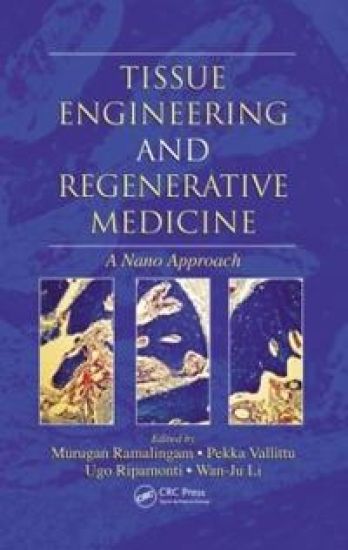
Through the integration of strategies from life science, engineering, and clinical medicine, tissue engineering and regenerative medicine hold the promise of new solutions to current health challenges. This rapidly developing field requires continual updates to the state-of-the-art knowledge in all of the aforementioned sciences. Tissue Engineering and Regenerative Medicine: A Nano Approach provides a compilation of the important aspects of tissue engineering and regenerative medicine, including dentistry, from fundamental principles to current advances and future trends.Written by internationally renowned scientists, engineers, and clinicians, the chapters cover the following areas:Nanobiomaterials and scaffolds—including nanocomposites and electrospun nanofibersTissue mechanicsStem cells and nanobiomaterialsOral and cranial implants and regeneration of boneCartilage tissue engineeringControlled release—DNA, RNA, and protein deliveryAnimal science and clinical medicineThe editors designed this textbook with a distinctive theme focusing on the utilization of nanotechnology, biomaterials science in tissue engineering, and regenerative medicine with the inclusion of important clinical aspects. In addition to injured veterans and other individuals, increased life expectancy in the industrialized world is creating a growing population that will require regenerative medicine, producing greater pressure to develop procedures and treatments to improve quality of life. This book bridges the gap between nanotechnology and tissue engineering and regenerative medicine, facilitating the merger of these two fields and the important transition from laboratory discoveries to clinical applications.
Tissue Engineering, Stem Cells, and Gene Therapies
Recent years have seen an upsurge of significant interest in cell-based technologies. A range of productive and lively debate have taken place relating to tissue engineering, namely the construction of tissues and whole organs using molecularly-designed resorbable biomaterials to create tissue de novo, the potential use of human embryonic stem cells for transplantation and regenerative medicine, with similar potential for adult-derived stem cells, and gene therapy, in relation to cell transplantation. New findings in biomimetic materials, cell signalling pathways, extracellular matrix receptors and ligands, growth factors, and the human genome project, all present particularly motivating sources for the development of research in the evergrowing biomedical field. The purpose of this book is to stimulate further the work in biomedicine and to make the issues of related scientific disciplines accessible to a wider readership by characterising the current state of research in the biomedical field. The lectures and a selection of the presentations from BlOMED 200- th The 9 International Symposium on Biomedical Science and Technology, held in September 2002 in Turkey- constitute the basis for the volume. Tissue engineering, stem cells, cell and gene therapies were the major topics presented and discussed in the symposium. This book is intended to serve as an up-to-date synopsis of the major developments of our area through the work reflected in BlOMED 2002, though not covering all aspects of the topics, due to the natural restrictions within a volume of this kind.
Tissue Engineering Research Trends

Tissue Engineering Research Trends

Nova Science Publishers Inc
2008
sidottu
Tissue engineering is the use of a combination of cells, engineering and materials methods, and suitable biochemical and physio-chemical factors to improve or replace biological functions. While most definitions of tissue engineering cover a broad range of applications, in practice the term is closely associated with applications that repair or replace portions of or whole tissues (i.e., bone, cartilage, blood vessels, bladder, etc.). Often, the tissues involved require certain mechanical and structural properties for proper function. The term has also been applied to efforts to perform specific biochemical functions using cells within an artificially-created support system (e.g. an artificial pancreas, or a bioartificial liver). The term regenerative medicine is often used synonymously with tissue engineering, although those involved in regenerative medicine place more emphasis on the use of stem cells to produce tissues.
Tissue Engineering in Regenerative Medicine
Over the past decade, significant advances in the fields of stem cell biology, bioengineering, and animal models have converged on the discipline of regenerative medicine. Significant progress has been made leading from pre-clinical studies through phase 3 clinical trials for some therapies. This volume provides a state-of-the-art report on tissue engineering toward the goals of tissue and organ restoration and regeneration. Examples from different organ systems illustrate progress with growth factors to assist in tissue remodeling; the capacity of stem cells for restoring damaged tissues; novel synthetic biomaterials to facilitate cell therapy; transplantable tissue patches that preserve three-dimensional structure; synthetic organs generated in culture; aspects of the immune response to transplanted cells and materials; and suitable animal models for non-human clinical trials.The chapters of this book are organized into six sections: Stem Cells, Biomaterials and the Extracellular Environment, Engineered Tissue, Synthetic Organs, Immune Response, and Animal Models. Each section is intended to build upon information presented in the previous chapters, and set the stage for subsequent sections. Throughout the chapters, the reader will observe a common theme of basic discovery informing clinical translation, and clinical studies in animals and humans guiding subsequent experiments at the bench.