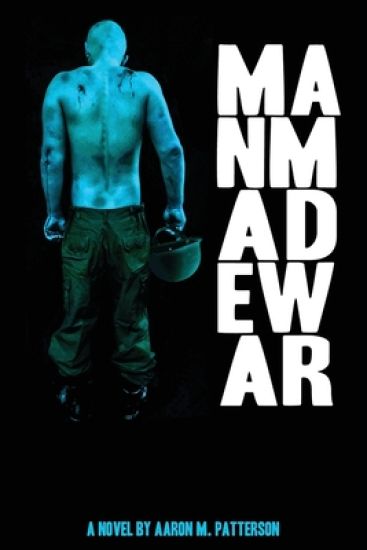
Why does dad cry? Why does he sing in his sleep? What happened in the war to make him shut off? Young Martin finally gets the answers he's desired for years, but with them comes far more, and the father's nightmares now belong to his son. The tale relayed from father to son is as much illuminating as it is devastating, but it has to be told.
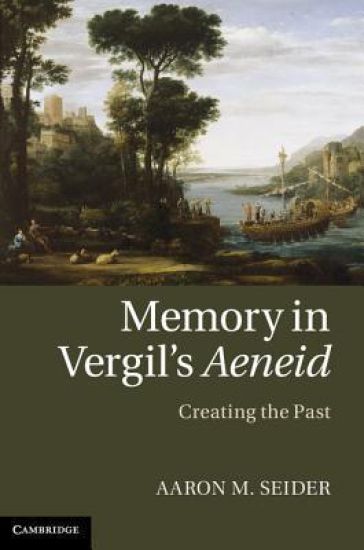
Tracing the path from Troy's destruction to Rome's foundation, the Aeneid explores the transition between past and future. As the Trojans struggle to found a new city and the narrator sings of his audience's often-painful history, memory becomes intertwined with a crucial leitmotif: the challenge of being part of a group that survives violence and destruction only to face the daunting task of remembering what was lost. This book offers a new reading of the Aeneid that engages with critical work on memory and questions the prevailing view that Aeneas must forget his disastrous history in order to escape from a cycle of loss. Considering crucial scenes such as Aeneas' reconstruction of Celaeno's prophecy and his slaying of Turnus, this book demonstrates that memory in the Aeneid is a reconstructive and dynamic process, one that offers a social and narrative mechanism for integrating a traumatic past with an uncertain future.
What are the problems to which materialist methodologies are posed as a solution? In this book, Aaron M. Kuntz maps the impact of materialism on contemporary practices of inquiry in education and the social sciences. Through this work, the author challenges readers to consider inquiry as a mode of ethically engaged citizenship with implications for resisting our contemporary moment towards a more equitable future.The author engages his own inquiry as radical cartographic work, drawing forth distinctions between dialectical and dialogic formations of materialism in order to develop what he terms relational materialism—an engaged orientation to living that dwells in the entangled relations of affirmative ethics and enduring practices of resistance and refusal. Drawing upon examples from higher education, contemporary culture, and normative assumptions of governance, the author considers the potential that we might generate living alternatives to the contemporary status quo; daily practices no longer dependent on binary division or standardized calculations of what "matters." As such, the author advocates for practices of virtuous inquiry (future-orientated ethical assertions of what one should do) that orient inquiry as materially ethical activity.Despite the often-overwhelming state of inequity and exploitation in our contemporary world, Kuntz generates an affirmative ethical stance that we can become relationally different, guided by a virtuous determination to articulate inquiry as the cartographic work of disruption and imagination. This text will prove valuable to graduate students and faculty who take inquiry seriously and seek the means to understand their work as engaged in the necessary challenge for material change.
What are the problems to which materialist methodologies are posed as a solution? In this book, Aaron M. Kuntz maps the impact of materialism on contemporary practices of inquiry in education and the social sciences. Through this work, the author challenges readers to consider inquiry as a mode of ethically engaged citizenship with implications for resisting our contemporary moment towards a more equitable future.The author engages his own inquiry as radical cartographic work, drawing forth distinctions between dialectical and dialogic formations of materialism in order to develop what he terms relational materialism—an engaged orientation to living that dwells in the entangled relations of affirmative ethics and enduring practices of resistance and refusal. Drawing upon examples from higher education, contemporary culture, and normative assumptions of governance, the author considers the potential that we might generate living alternatives to the contemporary status quo; daily practices no longer dependent on binary division or standardized calculations of what "matters." As such, the author advocates for practices of virtuous inquiry (future-orientated ethical assertions of what one should do) that orient inquiry as materially ethical activity.Despite the often-overwhelming state of inequity and exploitation in our contemporary world, Kuntz generates an affirmative ethical stance that we can become relationally different, guided by a virtuous determination to articulate inquiry as the cartographic work of disruption and imagination. This text will prove valuable to graduate students and faculty who take inquiry seriously and seek the means to understand their work as engaged in the necessary challenge for material change.
This book explores the rise and increased acceptance of gambling in America, particularly the growth of the game of poker, as a means for examining changes to the American Dream and the risk society. Poker both critiques and reinterprets the myth of the American Dream, putting greater emphasis on the importance of luck and risk management while deemphasizing the importance of honesty and hard work. Duncan discusses the history of gambling in America, changes to the rhetoric surrounding gambling, the depiction of poker in the Wild West as portrayed in film, its recent rise in popularity on television, its current place in post-modern America on the internet, and future implications.
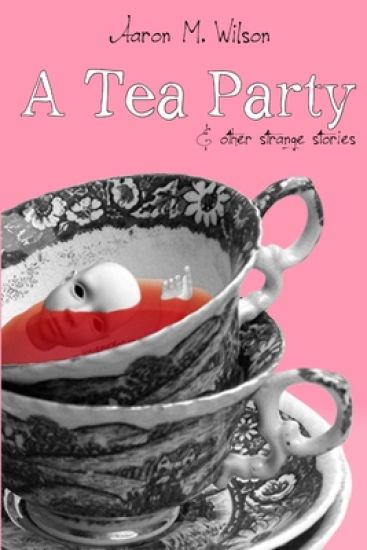
These thirteen strange stories will transport you into worlds both unique and horrifyingly familiar. They range from a disco fairytale to a dystopian immigration office in space. What binds these horrors together is a humanity desperately seeking hope, only to find a seemingly endless pit of cruelty. If it is not man being cruel to his fellow man then it is man's cruelty toward the natural world that brings to life vengeful and forgotten monsters.
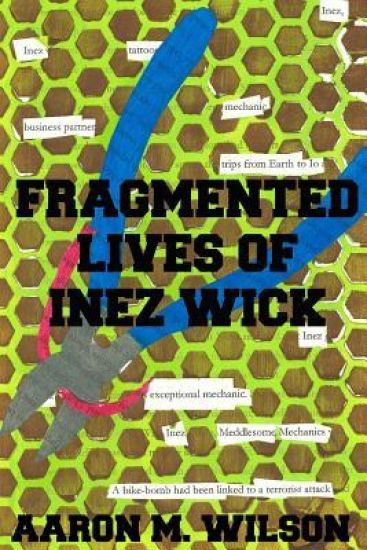
Inez Wick returns in these fragmented lives to fight against those who would destroy the environment, to travel into outer space, to dodge drone attacks, to practice yoga, and to ride and fix bikes.
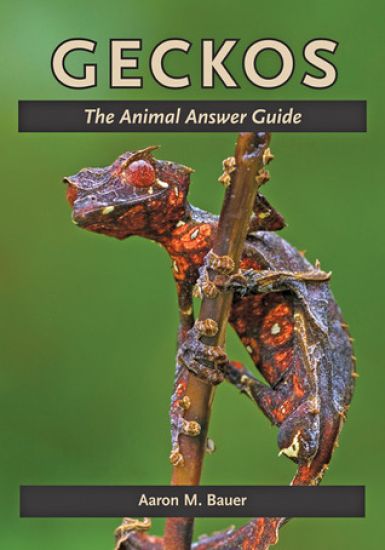
Q. How do geckos walk across ceilings? A: Millions of hair-like setae on each foot. Q: Where do geckos come from? A: Throughout the world. Usually where it's warm. Q: How many species of geckos are there? A: Close to 1,500 and counting! Q: What do they eat? A: Insects mostly. You can discover the biology, natural history, and diversity of geckos - the acrobatic little lizards made famous by a car insurance ad campaign. Lizard biologist and gecko expert Aaron Bauer answers deceptively simple questions with surprising and little-known facts. Readers can explore color photographs that reveal the natural wonder and beauty of the gecko form and are further informed by images of how geckos live in their natural habitats. Although written for nonexperts, "Geckos" also provides a carefully selected bibliography and a new list of all known species that will be of interest to herpetologists. Anyone who owns a gecko, has seen them in the wild, or has wondered about them will appreciate this gem of a book.
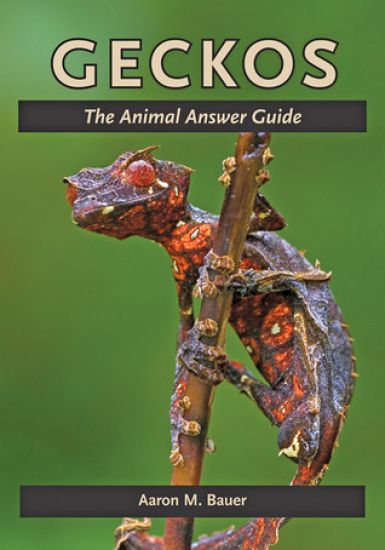
Q: How do geckos walk across ceilings? A: Millions of hair-like setae on each foot. Q: Where do geckos come from? A: Throughout the world. Usually where it's warm. Q: How many species of geckos are there? A: Close to 1,500 and counting! Q: What do they eat? A: Insects mostly. Discover the biology, natural history, and diversity of geckos - the acrobatic little lizards made famous by a car insurance ad campaign. Lizard biologist and gecko expert Aaron Bauer answers deceptively simple questions with surprising and little-known facts. Readers can explore color photographs that reveal the natural wonder and beauty of the gecko form and are further informed by images of how geckos live in their natural habitats. Although written for nonexperts, "Geckos" also provides a carefully selected bibliography and a new list of all known species that will be of interest to herpetologists. Anyone who owns a gecko, has seen them in the wild, or has wondered about them will appreciate this gem of a book.
How what we know about K–12 education can revolutionize learning in college.Honorable Mention in the Foreword INDIES Award for Education by FOREWORD Reviews, Winner of the 2021 Bronze IPPY Award for Education IIAmid the wide-ranging public debate about the future of higher education is a tension about the role of the faculty as instructors versus researchers and the role of teaching in the mission of a university. What is absent from that discourse is any clear understanding of what constitutes good teaching in college. In Convergent Teaching, masterful professors of education Aaron M. Pallas and Anna Neumann make the case that American higher education must hold fast to its core mission of fostering learning and growth for all people.Arguing that colleges and universities do this best through their teaching function, the book portrays teaching as a professional practice that teachers should actively hone. Drawing on rich research on K–12 classroom teaching, the authors develop the novel idea of convergent teaching, an approach that attends simultaneously to what students are learning and the personal, social, and cultural contexts shaping this process. Convergent teaching, they write, spurs teachers to join students' cognitions with the students' emotions and identities as they learn. Offering new ways to think about how college teachers can support and advance their students' learning of core disciplinary ideas, Pallas and Neumann outline targeted actions that campus administrators, public policy makers, and foundation leaders can take to propel such efforts. Vivid examples of instructors enacting three key principles—targeting, surfacing, and navigating—help bring the idea of convergent teaching to life.Full of research-based, practical ideas for better teaching and learning, Convergent Teaching presents numerous instances of successful campus-based initiatives. It also sets a bold agenda for disciplinary organizations, philanthropies, and the federal government to support teaching improvement. This book will challenge higher education students while motivating college administrators and faculty to enact change on their campuses.