Unlock the secrets of interstellar travel and clean energy with "I R 'Freestyle' Physics. This groundbreaking scientific physics book delves into the concept of warp dynamics and the potential for transfiguration in universal applications. Discover the revolutionary Dynamic Leverage of Angular Momentum (DLAM) Energy Theory, illustrated through real-world examples such as the kinetic and dynamic kinetic energy of a shopping cart in motion. "I R 'Freestyle' Physics" is a must-read for anyone interested in physics, energy, and the future of space travel.
The justice system is broken.The law is just a tool for the litigated powerful.Solution: The Law Doctor book is a revolutionary work that provides a framework for next-generation social justice, the first to ever be written from the perspective of the people who need it most: the oppressed. America is the most litigious nation in the world. But sadly, what is free to be gamed away in court is also inherently forced to be gamed away on the streets. From young human trafficking girls to helpless kid victims of parental alienation. Unfun fact: anyone can test this.This book outlines a new model of family law and parenting, based on the latest state-of-the-art scientific research on the genetics of families and parentingThe Law Doctor reveals some of the mysteries in both life and secret light-less energy in other monumentally places like physics. It's the book with a free multi-million dollar case wrapped up for you to use to fix your own county, while enabling real personal relief.This book is designed to make it easier for parents to navigate through family law versus law and parenting issues. This book is designed to help parents and children make wise choices for "families of the future.The Law Doctor: A genetically informed treatment of higher standards - Profitable Parenting 2.0 and Family Law 2.0.
The book "Old School Pet Care" is a follow-up to the author's previous work, "The Law Doctor," which dealt with high-conflict divorce and disability litigations. Unlike its predecessor, "Old School Pet Care" is based on the author's personal experiences and draws parallels with dystopian novels like "1984" and "Animal Farm." The book delves into the mistreatment of pets by a system that grinds them down even if they are well-behaved, and how innocent children who are attached to these pets are also negatively impacted. The book speaks out against oppression and highlights the importance of love in bridging divides.
The 2020 Family Bill - Sustaining Our Future thoughtfully explores critical issues surrounding family sustainability through authentic family law 2.0 with child safety files. Instead of the classical mechanisms processing family court cases and those rippling defects, it looks at parental merit. In other words, who prepares the healthiest meals, who dresses children the best, who gets children to school on time the most, and who helps with homework and works with teachers the best. It doesn't judge those inhumane mechanisms and procedures most people game to raise those children. It looks at parenting skills. Like on the show "World of Dance," it does take dancing to judge dance. This way, even the not so good parents, like the not so good dancers on the World of Dance, can improve their parenting skills for the next round. Its a win-win for family sustainability. It's finally a win for those children involved. Not a loose-loose for parenting and society. After all, on the World of Dance, whats better for performers and the audience, for dancers to dance, or for dancers to follow similar inhumane mechanisms and procedures which disallow dancing? A family sustainability platform does pivot the rules. But, that also allows dancers to dance, and now parents to parent. The "2020 Family Bill - Sustaining our Future." The next-generations will thank you
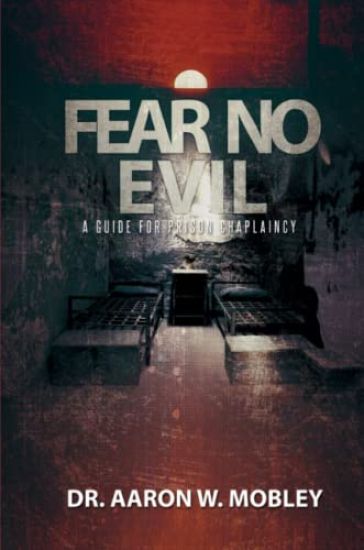
Prison ministry is a very challenging profession. The dangers, red-tape, bureaucracy, and legal ramifications are enormous. But God calls us to go into ALL nations. This does include the dangers behind razor wire. Prison is an intimidating place the first time you walk inside. It is full of enormous hazards and roadblocks. There are very dangerous individuals inside the prison fence. There are also some much-unexpected individuals locked away. On a daily basis there are in-mates who give me the stare of death. Their game is intimidation, power, and corruption. Yet, the darkness and evil of prison is exactly where Christians should be. We are called to be the light in the dark-ness. With Christ as our guide we should fear no evil!
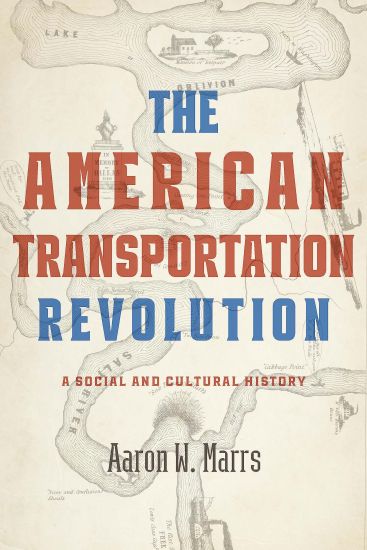
A history of steamboats and railroads in the United States prior to the Civil War.In the first half of the nineteenth century, transportation in the United States underwent an extraordinary transformation. Steamboats and railroads turned long-distance travel from an arduous undertaking into a regularized commodity: travel became something that people could purchase. Historians have long understood the economic and political ramifications of improved travel, but the social and cultural dimensions of early steam transit are less studied. In The American Transportation Revolution, Aaron W. Marrs explores the cultural influence of steamboats and railroads, which fascinated Americans across the country.Demonstrating the wide cultural reach of steam transit, Marrs draws from an eclectic set of sources, including children's books, comic almanacs, musical works, sermons, etiquette guides, cartoons, and employee rulebooks. This rich tapestry of cultural production helped "naturalize" steam technology for Americans before they ever encountered steam transit in person. Before ever seeing a railroad, Americans could read a novel that took place on a railroad, see an image of a train on currency, or purchase piano music imitating a train. These cultural artifacts made these new forms of transport feel familiar and natural.Marrs examines how cultural norms about travel emerged through the prescriptions of etiquette authors and the actions of travelers themselves, how enslaved people made innovative use of transportation networks to escape from slavery, and much more. Marrs convincingly demonstrates steam transportation's broad cultural impact on the United States, and how Americans, in turn, imprinted their own meaning on this new technology.
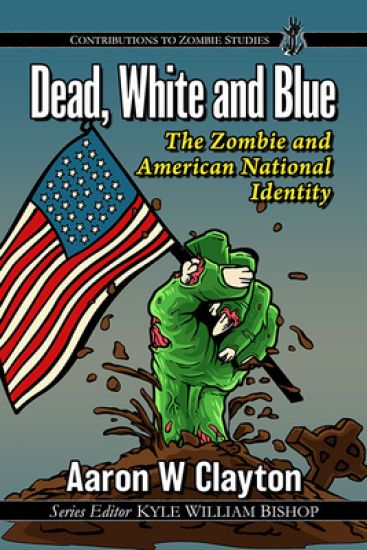
Science fiction and horror television shows predict how the world might be different if zombies were real, or if artificial intelligence could develop consciousness. Pop culture critics reveal that these not-quite humans are often proxies for race, and the post-apocalyptic landscapes set the stage for reimagining social and political institutions. This book advances horror scholarship by placing those stories within a long tradition of mythologizing U.S. history. It demonstrates how Disney's Zombies reenacts the civil rights movement, how The Walking Dead fulfills Thoreau's fantasy against the backdrop of founding a new nation, and how Westworld permits visitors to experience the Old West while bearing witness to Indian Removal. Each of these narratives imagines a future that retells the past. The chapters within look at that tradition in order to understand the present.
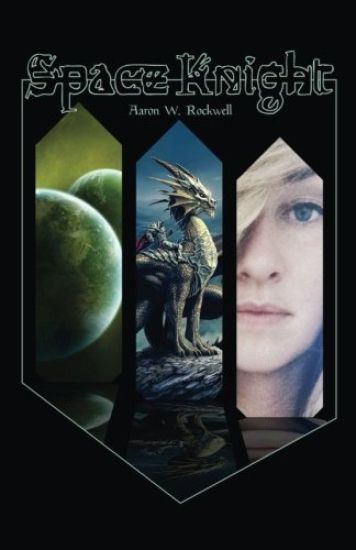
Unique Process of Writing: Written and glued together by over three hundred writers and editors from around the world. Each chapter was written and expanded by several authors, and then all the chapters were pieced together by different authors and editors. The whole work was tied together and edited through a touch of sorcery and insanity by Aaron W. Rockwell. Short Synopsis: Hailed as Stars Wars meets Dungeons and Dragons; Space Knight is set in a galaxy of impending darkness. The quest for answers pulls our alcoholic hero through all edges of the multiverse. In a mix of chaos theory and full throttle emotion, our Jacob encounters classic monsters, love, loss, new acquaintances, and old friends along the way. Akin to Space Knight: The Dark Tower Series by Steven King Dungeons and Dragons/Pathfinder meets Star Wars/Star Trek George R. R. Martin J. R. R. Tolkien J. K. Rowling Book Includes: Battle Axes, Castles, Depression, Drama, Death, Lots of Death, Empty Space, Forests, Future Technology, Garden of Legends, Gnome Institute, Half-Orcs, Half-Goblins, Half-Centaurs (humans ), Heaven's Courtroom, Ice Dragons, Indie Girl, King Orion's Round-table, Love, Magical Items, Medieval Valor, Monsters, Montages, Natural Disasters, Ogres, Paladins, Romance, Science Fiction, Space, Space Knights, Spaceships, Taverns, The Academy, The Multiverse, Time Travel, Titans, Tragedy, Vampires, Wild West, Wizards, Magi, Sorcerers. Aaron Q&As: How did you write Space Knight? Basically, I would hire contractors to write small chapters with a loose outline: a one sentence blurb of what's going on and a couple of characters descriptions. In total, the contractor would have three to four sentences to write a whole chapter. They were given near complete freedom; some contractors had difficulty with such an open task. I would then take the small chapters and have other contractors expand them to make up 3500 words per chapter. Next phase, I would take these chapters and have contractors tie two to four chapters together. Chapter's started flowing together and making more sense, the more contractors weaved, the more the story flowed. The final phase was to edit the book, which was done in chunks just like the writing. Who would have the rights of the work then? The first contractor wrote an amazing chapter, sent it to me, and then asked about the rights to the work. I assumed I would have them, but I did not specify before his contract so I paid him and deleted his chapter. From that point on, I would state in my contracts that I would retain all rights. Furthermore, the whole book would be edited and reedited so often it would be hard to even pinpoint who did what. Is the future of authorship going to be outsourced? It's the next step; almost every other facet in society operates on mass collaboration and peer sourcing. One person doesn't design entire cars or control the entire supply chain of a company. Why should books be written by only one author? Multiple authors make for a disruptive or novel that doesn't flow? Though individual writing styles are extremely different, the more and more editors smooth over the stories, the more of a baseline of readability occurs. So in a way, the evolution of multiple voices actually is in itself a voice.
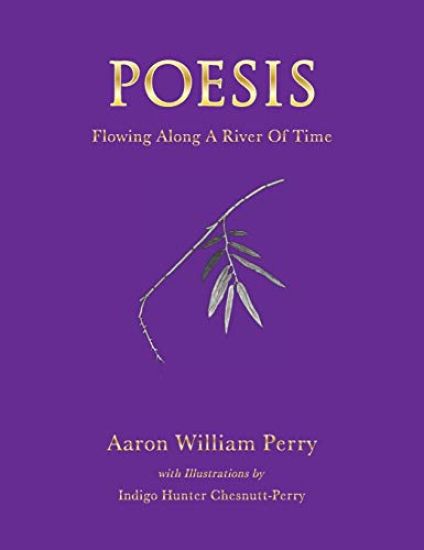
POESIS: flowing along a river of time is a collection of poetry written by Aaron William Perry and illustrated by his son Indigo Hunter Chesnutt-Perry. Covering a quarter century, from Aaron's adolescent years to his early forties, this collection of poems is a woven tapestry with many rich themes: nature, mysticism, love, culture, and travel. It reflects a deep appreciation for life, for Earth, for intimacy and sumptuous aesthetics. In this collection, you'll find references to poets like Gary Snyder (Japhy), musicians like John Coltrane, and commemorations of places like the desert southwest, the Rocky Mountains, Greenwich Village in New York City, the Adirondacks, the Puget Sound, the Austrian Alps, Paris, Florence, Corsica, and the Scottish heath. You'll also be granted a glimpse of some very intimate and emotional pieces related to romantic love, loss, and a deep, mystical connection with the life force and natural intelligence suffusing creation. The illustrations, created during his high school years, reveal Hunter's refined technical detail, eye for shape, color, composition, and visual flow, and combine a variety of themes, media, and stylistic expressions. His pieces range from detailed pencil to water color, and from colorful montage to stark monochromatic abstractions.This special project is a father-son collaboration, that celebrates their enduring love, their love of collaboration, and Hunter's high school graduation and transition into adulthood.