Kirjahaku
Etsi kirjoja tekijän nimen, kirjan nimen tai ISBN:n perusteella.
1000 tulosta hakusanalla Abraham Geiger





Einweihungsfeier der neuen Synagoge zu Wiesbaden
Abraham Geiger; Rabbiner Süsskind
Antigonos Verlag
2024
pokkari

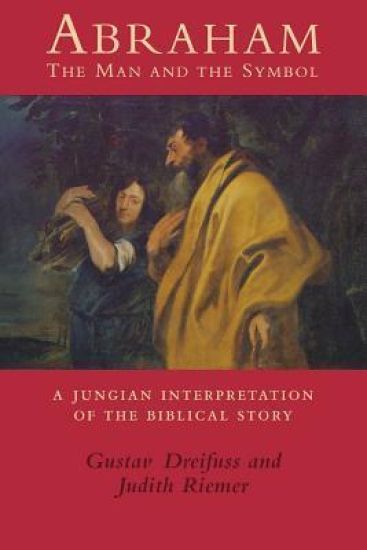
In this timely, provocative, and uplifting journey, the bestselling author of Walking the Bible searches for the man at the heart of the world's three monotheistic religions--and today's deadliest conflicts. At a moment when the world is asking "can the religions get along?" one figure stands out as the shared ancestor of Jews, Muslims, and Christians. One man holds the key to our deepest fears--and our possible reconciliation. Abraham is that man. Bruce Feiler set out on a personal quest to better understand our common patriarch. Traveling in war zones, climbing through caves and ancient shrines, and sitting down with the world's leading religious minds, Feiler uncovers fascinating, little known details of the man who defines faith for half the world. Both immediate and timeless, Abraham is a powerful, universal story, the first-ever interfaith portrait of the man God chose to be his partner. Thoughtful and inspiring, it offers a rare vision of hope that will redefine what we think about our neighbors, our future, and ourselves.
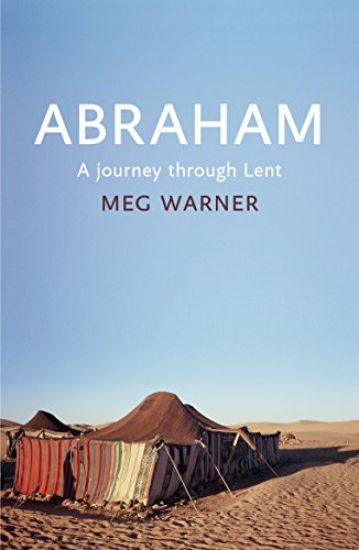
Introduces the life and significance of Abraham in a way that will enlighten both complete beginners and people who thought they knew all they needed to know about him. Abraham follows the biblical account of Abraham and his family in Genesis, while drawing out key points of reflection and action during Lent. Written by a brilliant new biblical scholar with a gift for communicating the very latest scholarship in ways that make sense to the non-expert. Abraham is a Lent book that takes the story of Abraham in Genesis as the basis for a series of six Lenten studies. There is a single chapter for each of the six weeks focusing on an extract from Genesis. Each chapter is followed by a set of questions arising from it, which could be used by groups or individuals, as well as suggested further reading. Each chapter begins and ends with discussion addressed to the reader and his or her own experience of moving through Lent. This discussion is related to the chosen passage from the Abraham narratives for that week, and will not assume any previous or background knowledge of biblical scholarship. In each chapter the reader is offered an interpretation of the chosen passage that is fresh and designed to resonate with their own personal experience. The book gently challenges some traditional ideas about Abraham and his presentation in the Bible.

The story of Abraham, the first Jew, portrayed as two lives lived by one person, paralleling the contradictions in Judaism throughout its history In this new biography of Abraham, Judaism’s foundational figure, Anthony Julius offers an account of the origins of a fundamental struggle within Judaism between skepticism and faith, critique and affirmation, thinking for oneself and thinking under the direction of another. Julius describes Abraham’s life as two separate lives, and as a version of the collective life of the Jewish people. Abraham’s first life is an early adulthood of questioning the polytheism of his home city of Ur Kasdim until its ruler, Nimrod, condemns him to death and he is rescued, he believes, by a miracle. In his second life, Abraham’s focus is no longer on critique but rather on conversion and on his leadership over his growing household, until God’s command that he sacrifice his son Isaac. This test, the Akedah (or “Binding”), ends with another miracle, as he believes, but as Julius argues, it is also a catastrophe for Abraham. The Akedah represents for him an unsurpassed horizon—and in Jewish life thereafter. This book focuses on Abraham as leader of the first Jewish project, Judaism, and the unresolvable, insurmountable crisis that the Akedah represents—both in his leadership and in Judaism itself.

Abraham, notes Cardinal Martini in this book dedicated to the figure of the great patriarch, is the father of faith on the move, a symbol of all those who seek God. He is our father 'not only in life as it is lived, in faith considered objectively' but also 'for his radical attitude of faith' which makes him 'the exemplary model of the human being in an attitude of acceptance and availability.'His setting out on the journey reminds us, of course, of the need to free ourselves from the ambiguity of a certain 'traditional belief'. In fact, Abraham would learn the heard way how unpredictable God is in his incredible irruption into history. He would learn this by going through fear and temptation, discovering how God's ways are capable of surprising and disturbing us. In the name of the promise he had received from God, Abraham would be capable of making great and free choices, moved by a social justice bearing the mark of availability, magnanimity and gift. his journey, like that of every human being, is not a straight one, but it does lead to the discovery of the true God.

Abraham is the story of a love triangle between a monk named Tom, a swashbuckling punk singer named Baby Doll, and you, Abraham. You have a large crack in the back of your head, and you can't remember how it got there. It has been inducing hallucinations and odd perceptions that you cannot explain. Tom tries to help you get better, but as your hold on reality begins to slip, you start to suspect that Tom has evil intentions. Cover illustration by Conor Reed @jazzrecordsanimation This is a fiction installment in a multimedia project called You Are Abraham. More components of the project can be found at www.youareabraham.com

In this discursive commentary Joseph Blenkinsopp explores the story of Abraham -- iconic ancestor of Judaism, Christianity, and Islam -- as told in Genesis 11-25. Presented in continuous discussion rather than in verse-by-verse form, Blenkinsopp's commentary focuses on the literary and theological artistry of the narrative as a whole.Blenkinsopp discussses a range of issues raised in the Abraham saga, including confirmation of God's promises, Isaac's sacrifice and the death of Jesus, and Abraham's other beloved son, Ishmael. Each chapter has a section called "Filling in the Gaps," which probes some of the vast amount of Jewish, Christian, and Islamic commentary that the basic Genesis text has generated through the ages.In an epilogue Blenkinsopp looks at Abraham in early Christianityand expresses his own views, as a Christian, on Abraham. Readers of Blenkinsopp's Abraham: The Story of a Life will surely come away with a deeper, richer understanding of this seminal ancient figure.


The father of many nations, Abraham was called the "friend of God". Yet his journey of faith was a difficult one. The study of Abraham's life reveals a man who trusted God against all odds, showing us what it means to live by faith.