In the United States, we now take our ability to pay with plastic for granted. In other parts of the world, however, the establishment of a "credit-card economy" has not been easy. In countries without a history of economic stability, how can banks decide who should be given a credit card? How do markets convince people to use cards, make their transactions visible to authorities, assume the potential risk of fraud, and pay to use their own money? Why should merchants agree to pay extra if customers use cards instead of cash? In Plastic Money, Akos Rona-Tas and Alya Guseva tell the story of how banks overcame these and other quandaries as they constructed markets for credit cards in eight postcommunist countries. We know how markets work once they are built, but this book develops a unique framework for understanding how markets are engineered from the ground up—by selecting key players, ensuring cooperation, and providing conditions for the valuation of a product. Drawing on extensive interviews and fieldwork, the authors chronicle how banks overcame these hurdles and generated a desire for their new product in the midst of a transition from communism to capitalism.
The Memoirs of the AMS is devoted to the publication of new research in all areas of pure and applied mathematics. The Memoirs is designed particularly to publish long papers of groups of cognate papers in book form, and is under the supervision of the Editorial Committee of the AMS journal Transactions of the American Mathematical Society. All papers are peer-reviewed.
This book discusses the P-graph framework for developing and understanding effective design tools for process systems engineering, and addresses the current state of its theory and applications. The book details the new philosophy of the axioms-based mathematical modelling of processing systems, the basic algorithms, areas of application, future directions, and the proofs of theorems and algorithms. Because of the rigorous foundation of the theory, the framework provides a firm basis for future research in mathematical modelling, optimization, and design of complex engineering systems. The various P-graph applications discussed include process network synthesis, reliability engineering, and systems resilience. The framework opens new avenues for research in complex systems including redundant operations for critical infrastructure, systems sustainability, and modelling tools for disaster engineering. Demonstration software is provided to facilitate the understanding of the theory. The book will be of interest to institutions, companies, and individuals performing research and R&D in process systems engineering.
This book discusses the P-graph framework for developing and understanding effective design tools for process systems engineering, and addresses the current state of its theory and applications. The book details the new philosophy of the axioms-based mathematical modelling of processing systems, the basic algorithms, areas of application, future directions, and the proofs of theorems and algorithms. Because of the rigorous foundation of the theory, the framework provides a firm basis for future research in mathematical modelling, optimization, and design of complex engineering systems. The various P-graph applications discussed include process network synthesis, reliability engineering, and systems resilience. The framework opens new avenues for research in complex systems including redundant operations for critical infrastructure, systems sustainability, and modelling tools for disaster engineering. Demonstration software is provided to facilitate the understanding of the theory. The book will be of interest to institutions, companies, and individuals performing research and R&D in process systems engineering.
Daniel Zarski; Ákos Horváth; Gergely Bernáth; Slawomir Krejszeff; János Radóczi; Katarzyna Palinska-Zarska; Zoltán Bokor; Krzysztof Kupren; Béla Urbányi
The work summarizes the current knowledge regarding the controlled reproduction of an emerging aquaculture species, the Eurasian perch (Perca fluviatilis). In great detail it describes and explains the principal of most of the controlled reproductive protocol leading to obtain high quality larvae. The book is primarily intended to be used as a hatchery manual by practicing aquaculturists and laboratory technicians working with this species. On the other hand, it also summarizes the scientific background of the methods applied, therefore, it can serve as a reference for the state-of-the-art in the controlled reproduction of Eurasian perch and other freshwater percid species.
Despite calls for a more preventive and developmental mode of functioning, school counseling has tended to be driven by a reactive and sometimes crisis orientation. Like social workers and school, counseling, and clinical psychologists, school counselors typically function to alleviate deficits, often in a small percentage of the students they serve. Although this orientation has served school counselors well in many instances, it is not empowering, it does not serve all students, and it does not replace those deficits with the type of positive characteristics and abilities that schools are attempting to develop. This is the first book to provide a comprehensive look at the theory, research, and intervention strategies that comprise a strengths-based, developmental approach to school counseling. In keeping with ASCA recommendations, the Strengths-Based School Counseling (SBSC) framework discusses academic, personal/social and career development outcomes for all students at the elementary, middle and secondary school levels. Other key features include: integrative framework—SBSC builds upon contemporary research from a variety of areas: school counseling, developmental psychology, school psychology, education, positive psychology, resiliency, and social work. evidence-based interventions—detailed examples of successful evidence-based interventions and environments are presented at the elementary, middle, and high school levels for each major developmental area (academic, personal/social, and career) identified in ASCA’s National Model. readability and pedagogy—beautifully written, the text includes lists of key points, tables of student strengths, illustrative examples, and student exercises.
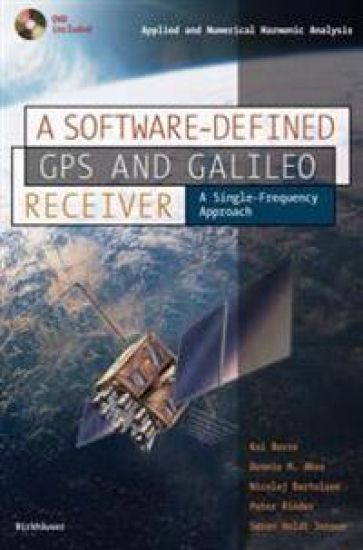
Satellite navigation receivers are used to receive, process, and decode space-based navigation signals, such as those provided by the GPS constellation of satellites. There is an increasing need for a unified open platform that will enable enhanced receiver development and design, as well as cost-effective testing procedures for various applications. This book provide hands-on exploration of new technologies in this rapidly growing field.One of the unique features of the work is the interactive approach used, giving readers the ability to construct their own Global Navigation Satellite Systems (GNSS) receivers. To construct such a reconfigurable receiver with a wide range of applications, the authors discuss receiver architecture based on software-defined radio (SDR) techniques. The presentation unfolds in a systematic, user-friendly style and goes from the basics to cutting-edge research. A complete GPS software receiver implemented using MATLAB code as well as GPS and GIOVE-A signal records allows readers to change various parameters and immediately see their effects. A hands-on method of testing the material covered in the book: supplementary front-end hardware equipment—which may be purchased at http://ccar.colorado.edu/gnss—enables readers working on a Windows or LINUX system to generate real-world data by converting analog signals to digital signals.The book is aimed at applied mathematicians, electrical engineers, geodesists, and graduate students. It may be used as a textbook in various GPS technology and signal processing courses, or as a self-study reference for anyone working with satellite navigation receivers.
If a black box simple group is known to be isomorphic to a classical group over a field of known characteristic, a Las Vegas algorithm is used to produce an explicit isomorphism. The proof relies on the geometry of the classical groups rather than on difficult group-theoretic background.
Despite calls for a more preventive and developmental mode of functioning, school counseling has tended to be driven by a reactive and sometimes crisis orientation. Like social workers and school, counseling, and clinical psychologists, school counselors typically function to alleviate deficits, often in a small percentage of the students they serve. Although this orientation has served school counselors well in many instances, it is not empowering, it does not serve all students, and it does not replace those deficits with the type of positive characteristics and abilities that schools are attempting to develop. This is the first book to provide a comprehensive look at the theory, research, and intervention strategies that comprise a strengths-based, developmental approach to school counseling. In keeping with ASCA recommendations, the Strengths-Based School Counseling (SBSC) framework discusses academic, personal/social and career development outcomes for all students at the elementary, middle and secondary school levels. Other key features include: integrative framework—SBSC builds upon contemporary research from a variety of areas: school counseling, developmental psychology, school psychology, education, positive psychology, resiliency, and social work. evidence-based interventions—detailed examples of successful evidence-based interventions and environments are presented at the elementary, middle, and high school levels for each major developmental area (academic, personal/social, and career) identified in ASCA’s National Model. readability and pedagogy—beautifully written, the text includes lists of key points, tables of student strengths, illustrative examples, and student exercises.
Noncrystalline (NC) solids, as is well known, lack the long range order of crystals. Accordingly, they exhibit scattering, e.g., x-ray, electron, and neutron, but not the diffraction patterns characteristic of crystals. The intensity distributions from NC solids are usually transformed into radial distribution functions (RDF), but the interpretation of the RDF's is not unique. The lack of long-range order, and the non-uniqueness of the structural interpretation, have constituted the main obstacles to the usual solid state physics approach which has been so successful in dealing with crystals. As a corrolary, questions of local order and structure have frequently been de-emphasized. This monograph contains a collection of chapters many of which emphasize local-structure and chemical bonding as opposed to long-range order. Most of the chapters were chosen from talks given at the international symposium, "Structure and Bonding in Noncrystalline Solids," held in Reston, Virginia in May of 1983. Other chapters, however, were simply submitted independently of the Reston conference. Thus, this book is not a proceedings of that conference, nor was it ever intended to be. The chapters presented here range from theory of bonding and structure, to structurally oriented measurements of various kinds, e.g., ESR, Raman, to more applied chapters. Our goal was to produce a monograph that enhances understanding of the structures of NC solids.
Astrophysical research has led to the detection of thousands of planets outside the Solar System. About one-tenth of the extrasolar planets discovered so far reside in binary- or multi-stellar systems, and some of the closest known rocky exoplanets populate these multiple-star systems. While such environments seem good places to look for a second Earth, can Earth-like planets with two or more suns be habitable? And do solar system-like configurations have to be detected to find a habitable exo-Earth?This book addresses these questions. Starting with a brief overview of the various types of double star-planet configurations that have been observed so far, the book discusses the intriguing variety of planetary motion in such environments, taking into account the stellar type, evolution, and activity, and elaborates on how the presence of an additional stellar companion affects planet formation, system architectures and the habitability of planets in binary star systems. New methodologies developed in this area of research are explained and demonstrated for systems such as Alpha-Centauri, HD41004, Kepler-35, and many others. This monograph provides a grand entry to the exciting results that we expect from new missions like TESS, CHEOPS and Plato.
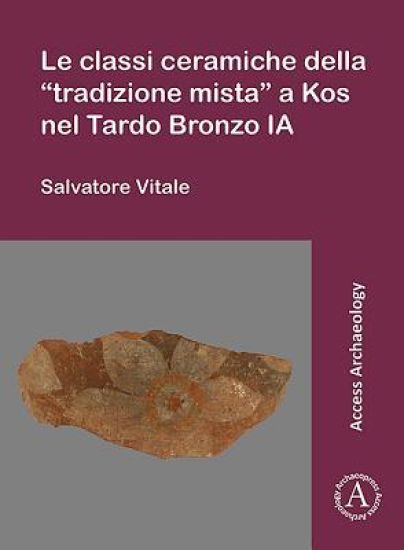
This volume focuses on the pottery classes of the ‘Entangled Tradition’, recovered at the settlement of the ‘Serraglio’ on Kos during the early Late Bronze Age period. The results reveal new information on the chronology, typology, and decoration of Koan Painted Fine (PF) and Painted Medium-Coarse to Coarse (PMC-C) ceramics. Moreover, the analysis of manufacturing processes and consumption patterns contributes to a better comprehension of the socio-cultural and political context in which Koan entangled classes were produced. The data presented in this volume indicate that PF and PMC-C ceramics represent a unique case of fully entangled classes in the Aegean, which merge features of the Koan ‘Local Tradition’ with characteristics of the Minoan potting tradition into a new technological and stylistic language. Contacts between these different cultures are explained based on the theoretical model provided by ‘human mobility’. The specific Koan cultural synthesis was endorsed and promoted by the local elites of the ‘Serraglio’, who aimed to participate in the ‘new environment’ determined by the economic and cultural expansion of Neopalatial Crete. In this respect, the manufacture of Koan entangled classes served a dual role. On the one hand, using transport containers made in the PMC-C class, Koan products were exported and exchanged throughout the Aegean. In addition, the finer vessels of the Koan ‘Entangled Tradition’ were utilized for promoting Minoan-type social practices at the ‘Serraglio’. Through these practices, Koan elites reshaped their identity and portrayed an image of higher status within the local social arena.
The war between two secret organizations of the magic world lasts for many centuries. But only now in the 21st century, where magic and technology have become one, the Union of Witches begins to act, searching the artifacts that were hidden by Freemasons in order to return the world's first Witch back to life.Nora's life is turned upside down the day she discovers that her father is an agent of the Wizards' Secret Service and has disappeared during his last mission in New York City. Nora will stop at nothing to rescue him-even if it means traveling to the human world. Nora, along with her best friend Tim, soon find themselves in New York where they unveil secrets beyond their wildest dreams. Clues unfold, revealing information on the mystery of the Key of Radmar, a relic sought after for centuries by the Union of Witches. Can Nora avoid the darkness that lives hidden among human-kind and rescue her father in time?
An ancient organization revealed itself in our world. Radimus Dorret - head of Wizards' Secret Service in New York - has to disclose the classified information about two young wizards, Henry Jones and Billy Dixon, who found out about the existence of an ancient Brotherhood, which everyone considered disappeared.Henry Jones - a famous young Detective of the magic world - finds a strange message on a crime scene in Paris, but after his return to his hometown Larack, Henry learns about another murder. Now Henry Jones realizes that these crimes are not simply related to each other, but conceal some secret. The investigation takes Henry Jones and Billy Dixon into the depth of the secret life of human and magic worlds, where they find out about the greatest secret of all times. Can Henry Jones confront an ancient organization? Why Henry and his friend are so important for Wizards' Secret Service?