

Kirjahaku
Etsi kirjoja tekijän nimen, kirjan nimen tai ISBN:n perusteella.
1000 tulosta hakusanalla Alan Baker
Examining Human Capital Theory. Strategies for Retaining Millennial Employees in the Bakery Industry
Alan Salmero
GRIN Verlag
2024
pokkari
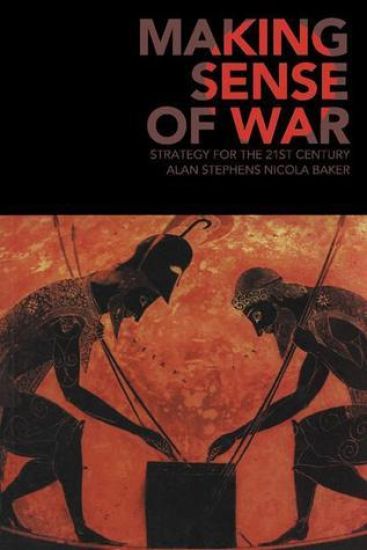
Making Sense of War provides a comprehensive and clear analysis of the complex business of waging war. It gives readers a thorough understanding of the key concepts in strategic thought, concepts that have endured since the Athenian general Thucydides and the Chinese philosopher/warrior Sun Tzu first wrote about strategy some 2500 years ago. It also examines the influence on strategic choice and military strategy of political, legal and technological change. This book discusses strategy at every level of competition, employing a thematic approach and using historical examples from 500 BCE to the present. It discusses the contraints and opportunities facing military commanders in the 21st century, and demonstrates that the formulation of military strategy will continue to be perhaps the single most important responsibility for senior security officials. Making Sense of War offers original insights into the imperatives of military success in the era of asymmetric warfare.
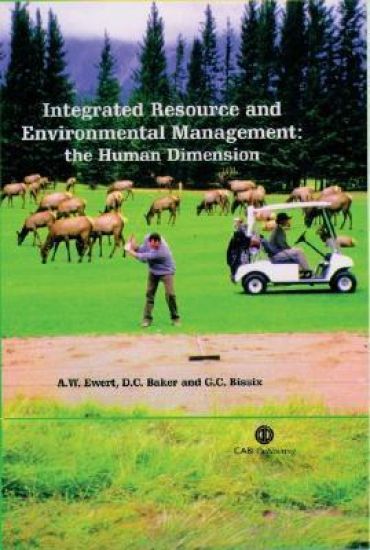
Integrated Resource and Environmental Management
Alan W Ewert; Douglas Baker; Glyn Bissix
CABI Publishing
2004
nidottu
Integrated Resource and Environmental Management (IREM) can be defined as both a management process and a philosophy, that takes into account the many values associated with natural resources within a particular area.This book presents an overview and history of natural resource management, from a global perspective. It discusses the challenges facing IREM by examining issues such as conflict, property rights and the role of science in the management of natural resource. It also addresses the definition and application of IREM from several different contexts, including real-world applications, planning frameworks, and complex systems. It provides a comprehensive aid in natural resource decision-making within the context of the “real world.”
Originally published in 1981. Risk is a problem which all business decision makers have to cope with. The problem is not insurmountable, however, as there now exist well-established techniques for minimising risk and for calculating which of various available options is the optimal one to pursue. This book outlines and discusses these techniques and the theories behind them. Unlike many economic theories which only rarely have any practical applications, the techniques put forward in this book can be used by real businessmen to solve real business problems. The book concentrates on decision-making in two main areas: the allocation of a firm’s resources and the selection of new investments; and the techniques and theories discussed fall into three broad groups: linear programming, decision theory and capital market theory. Intended as an advanced undergraduate textbook for students taking business economics or managerial economics courses, this valuable book will interest specialists and students involved in management studies, microeconomics, strategic planning, operational research, accounting and MBA programmes.
Originally published in 1981. Risk is a problem which all business decision makers have to cope with. The problem is not insurmountable, however, as there now exist well-established techniques for minimising risk and for calculating which of various available options is the optimal one to pursue. This book outlines and discusses these techniques and the theories behind them. Unlike many economic theories which only rarely have any practical applications, the techniques put forward in this book can be used by real businessmen to solve real business problems. The book concentrates on decision-making in two main areas: the allocation of a firm’s resources and the selection of new investments; and the techniques and theories discussed fall into three broad groups: linear programming, decision theory and capital market theory. Intended as an advanced undergraduate textbook for students taking business economics or managerial economics courses, this valuable book will interest specialists and students involved in management studies, microeconomics, strategic planning, operational research, accounting and MBA programmes.

A revised edition of Phil Baker's critically lauded biography of artist and occultist, Austin Osman Spare. London has harbored many curious characters, but few more curious than the artist and visionary Austin Osman Spare (1886-1956). A controversial enfant terrible of the Edwardian art world, the young Spare was hailed as a genius and a new Aubrey Beardsley, while George Bernard Shaw reportedly said "Spare's medicine is too strong for the average man." But Spare was never made for worldly success and he went underground, falling out of the gallery system to live in poverty and obscurity south of the river. Absorbed in occultism and sorcery, voyaging into inner dimensions, and surrounding himself with cats and familiar spirits, he continued to produce extraordinary art while developing a magical philosophy of pleasure, obsession, and the subjective nature of reality. Today Spare is both forgotten and famous, a cult figure whose modest life has been much mythologized since his death. This groundbreaking biographical study offers wide-ranging insights into Spare's art, mind and world, reconnecting him with the art history that ignored him and exploring his parallel London; a bygone place of pub pianists, wealthy alchemists, and monstrous owls. This richly readable and illuminating biography takes us deep into the strange inner world that this most enigmatic of artists inhabited, shedding new light while allowing just a few shadowy corners to flourish unspoiled. Revised, updated, and with a new afterword by the author, this is the definitive edition of Phil Baker's critically lauded Austin Osman Spare: The Life and Legend of London's Lost Artist.

Geography and History is the first book for more than a century to examine comprehensively the interdependence of the two disciplines. Alan Baker, an internationally honoured historical geographer, focuses upon the work of North American, British and French historians and geographers but takes a global and interdisciplinary perspective upon the theory and practice of historical geography and geographical history. He analyses the views of historians on the relationship of their discipline to geography, and geographers on the relationship of theirs to history. He considers in turn locational geographies and spatial histories, environmental geographies and histories, landscape geographies and histories, and regional geographies and histories. Seeking to bridge the 'Great Divide' between history and geography, Dr Baker identifies some basic principles relating historical geography not only to history but also to geography, a reworking which signifies a 'new beginning' for this scholarly hybrid.

This volume is an examination of the relations between geography and history.
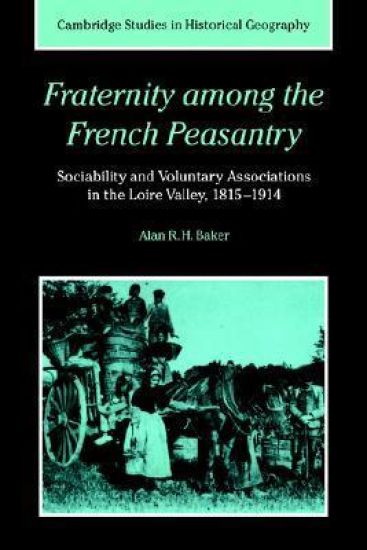
The individualism of the French peasantry during the nineteenth century has frequently been asserted as one of its most striking characteristics. Alan Baker challenges this orthodox view and demonstrates the extent to which peasants continued with traditional, and developed new, forms of collective action. He examines representations of the peasantry and discusses the discourse of fraternity in nineteenth-century France in general before considering specifically the historical development, geographical diffusion and changing functions of fraternal voluntary associations in Loir-et-Cher between 1815 and 1914. Alan Baker focuses principally upon associations aimed at reducing risk and uncertainty and upon associations intended to provide agricultural protection. A wide range of new voluntary associations were established in Loir-et-Cher - and indeed throughout rural France - during the nineteenth century. Their historical geography throws new light upon the sociability, upon the changing mentalités, of French peasants, and upon the role of fraternal associations in their struggle for survival.

The individualism of the French peasantry during the nineteenth century has frequently been asserted as one of its most striking characteristics. Alan Baker challenges this orthodox view and demonstrates the extent to which peasants continued with traditional, and developed new, forms of collective action. He examines representations of the peasantry and discusses the discourse of fraternity in nineteenth-century France in general before considering specifically the historical development, geographical diffusion and changing functions of fraternal voluntary associations in Loir-et-Cher between 1815 and 1914. Alan Baker focuses principally upon associations aimed at reducing risk and uncertainty and upon associations intended to provide agricultural protection. A wide range of new voluntary associations were established in Loir-et-Cher - and indeed throughout rural France - during the nineteenth century. Their historical geography throws new light upon the sociability, upon the changing mentalités, of French peasants, and upon the role of fraternal associations in their struggle for survival.
George Washington
Alan Fusonie; Donna Jean Fusonie; Nancy Kassebaum Baker
University of Virginia Press
2002
nidottu
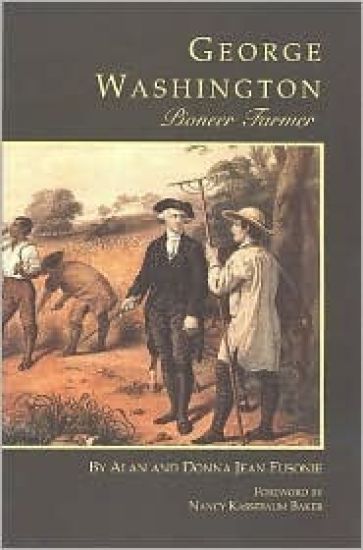
This volume provides a fresh historical focus on George Washington as a pioneer farmer actively engaged in a new approach to agriculture: one based on a more scientific attitude toward crops, farm animals, and the land. As Alan and Donna Jean Fusonie examined his correspondence and diaries, the emerging profile of Washington was of a tireless experimenter eager to share his results with visitors and with farmers in other parts of the country and abroad. In his correspondence Washington used the power of his pen to convey important agricultural thoughts. He increasingly expressed his concern about the ruinous agricultural practices of many of his fellow farmers. Washington's complex shift to a more self-reliant and integrated system of agriculture proved him to be an informed, forward-thinking decision maker who focused on the long-term productivity and conservation of his land at Mount Vernon. The authors, also practicing farmers, are intrigued by the similarity between Washington's outlook and that of an increasing number of today's farmers who use more sustainable approaches.

What was the personality of 19th-century Paris? To answer that question, this book eschews the conventional narrative and chronological route taken by most histories of Paris. Instead, it thematically analyses the complex personality traits of Paris from the onset of the Revolution of 1789 to the beginning of the Great War. Starting with the topographical and cultural legacies that late 18th-century Paris inherited from its foundation in pre-Roman and Roman times and from its medieval infancy and early-modern adolescence, The Personality of Paris unpacks the social and material complexity of the 19th-century city. It considers the role of immigration in the making of Parisians and in the city's growth from half a million in 1801 to almost three million in 1911. It examines the making of its distinctive landscape through the construction of monuments and architectural icons, through its massive re-modelling by Napoléon III and Baron Haussmann, through its five world exhibitions, through its emphasis on food, fashion and leisure, and through the ways in which Parisians sought rural release from urban pressure. Finally, the book considers the self-harm done to the person of 19th-century Paris by revolutions and wars and the damage inflicted on it by 20th-century hubristic politicians and architects.

What was the personality of 19th-century Paris? To answer that question, this book eschews the conventional narrative and chronological route taken by most histories of Paris. Instead, it thematically analyses the complex personality traits of Paris from the onset of the Revolution of 1789 to the beginning of the Great War. Starting with the topographical and cultural legacies that late 18th-century Paris inherited from its foundation in pre-Roman and Roman times and from its medieval infancy and early-modern adolescence, The Personality of Paris unpacks the social and material complexity of the 19th-century city. It considers the role of immigration in the making of Parisians and in the city's growth from half a million in 1801 to almost three million in 1911. It examines the making of its distinctive landscape through the construction of monuments and architectural icons, through its massive re-modelling by Napoléon III and Baron Haussmann, through its five world exhibitions, through its emphasis on food, fashion and leisure, and through the ways in which Parisians sought rural release from urban pressure. Finally, the book considers the self-harm done to the person of 19th-century Paris by revolutions and wars and the damage inflicted on it by 20th-century hubristic politicians and architects.
The Handbook of Logistics and Distribution Management
Alan Rushton; Phil Croucher; Peter Baker
Kogan Page Ltd
2022
nidottu
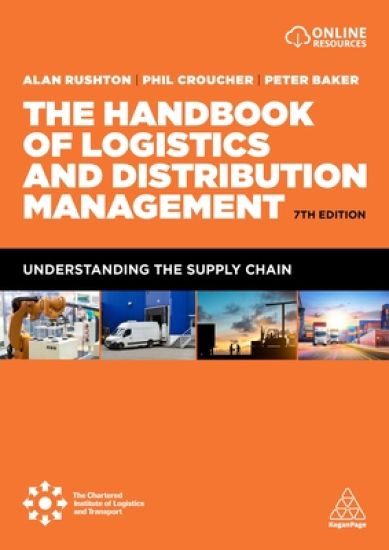
Fully grasp the core principles of logistics, distribution management and the supply chain, in addition to emerging trends and the latest technologies, with this definitive guide that offers clear and straightforward explanations. The Handbook provides practitioners and students with a complete, step-by-step overview of the many different aspects of setting up, managing and optimizing supply chains. Designed to offer a full appreciation of how supply chains are planned and operated, it is structured logically and delves into topics in more clarity and detail than disparate collections of research papers. Integrating both strategic and tactical insights, this textbook is underpinned throughout by real-world data and worked examples that bring the concepts to life. The seventh edition offers: Updates and solutions designed to meet the challenges faced by those studying and working in the sector New coverage of future supply chain related technologies, including artificial intelligence, data analytics, digital twins and autonomous mobile robots and how these can be used to optimize operations and increase productivity Online resources including lecture slides (tables, images and formulae from the text), acronyms and abbreviations and infographics. Written by an author team with extensive practical experience in some of the most challenging environments across the world, this seminal text is an invaluable resource for both practitioners and students, providing a useful desk reference for topics across the wide ranging and vitally important fields of logistics and the supply chain.
The Handbook of Logistics and Distribution Management
Alan Rushton; Phil Croucher; Peter Baker
Kogan Page Ltd
2022
sidottu
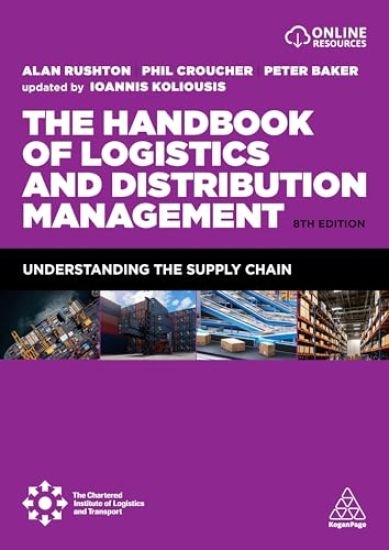
Fully grasp the core principles of logistics, distribution management and the supply chain, in addition to emerging trends and the latest technologies, with this definitive guide that offers clear and straightforward explanations. The Handbook provides practitioners and students with a complete, step-by-step overview of the many different aspects of setting up, managing and optimizing supply chains. Designed to offer a full appreciation of how supply chains are planned and operated, it is structured logically and delves into topics in more clarity and detail than disparate collections of research papers. Integrating both strategic and tactical insights, this textbook is underpinned throughout by real-world data and worked examples that bring the concepts to life. The seventh edition offers: Updates and solutions designed to meet the challenges faced by those studying and working in the sector New coverage of future supply chain related technologies, including artificial intelligence, data analytics, digital twins and autonomous mobile robots and how these can be used to optimize operations and increase productivity Online resources including lecture slides (tables, images and formulae from the text), acronyms and abbreviations and infographics. Written by an author team with extensive practical experience in some of the most challenging environments across the world, this seminal text is an invaluable resource for both practitioners and students, providing a useful desk reference for topics across the wide ranging and vitally important fields of logistics and the supply chain.
The Handbook of Logistics and Distribution Management
Alan Rushton; Phil Croucher; Peter Baker; Ioannis Koliousis
KOGAN PAGE LTD
2026
nidottu
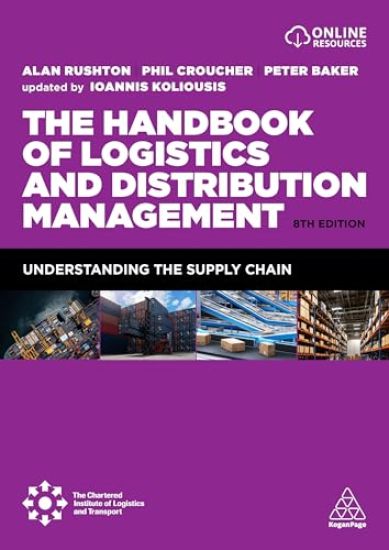
Fully grasp the core principles of logistics, distribution management and the supply chain with this definitive guide that offers clear and straightforward explanations with up-to-date discussions of supply chain innovations. The Handbook of logistics and Distribution Management provides students and practitioners with a complete, step-by-step overview of the different aspects of setting up, managing and optimizing supply chains. Designed to offer a full appreciation of how supply chains are planned and operated, it is structured logically and delves into topics in more clarity and detail than disparate collections of research papers. The eighth edition offers: - Practical solutions designed to meet the challenges faced by those studying and working in the sector at an academic and practitioner level. - New coverage of current supply chain and logistics trends including sustainable operations, digital transformation and AI and blockchain. - Online resources including lecture slides (tables, images and formulae from the text), acronyms and abbreviations and infographics. Integrating both strategic and tactical insights, this textbook is underpinned throughout by real-world data and worked examples and is an essential guide for topics across the wide-ranging fields of logistics and the supply chain.
The Handbook of Logistics and Distribution Management
Alan Rushton; Phil Croucher; Peter Baker; Ioannis Koliousis
KOGAN PAGE LTD
2026
sidottu
Fully grasp the core principles of logistics, distribution management and the supply chain with this definitive guide that offers clear and straightforward explanations with up-to-date discussions of supply chain innovations. The Handbook of logistics and Distribution Management provides students and practitioners with a complete, step-by-step overview of the different aspects of setting up, managing and optimizing supply chains. Designed to offer a full appreciation of how supply chains are planned and operated, it is structured logically and delves into topics in more clarity and detail than disparate collections of research papers. The eighth edition offers: - Practical solutions designed to meet the challenges faced by those studying and working in the sector at an academic and practitioner level. - New coverage of current supply chain and logistics trends including sustainable operations, digital transformation and AI and blockchain. - Online resources including lecture slides (tables, images and formulae from the text), acronyms and abbreviations and infographics. Integrating both strategic and tactical insights, this textbook is underpinned throughout by real-world data and worked examples and is an essential guide for topics across the wide-ranging fields of logistics and the supply chain.
Amateur Musical Societies and Sports Clubs in Provincial France, 1848-1914
Alan R. H. Baker
Springer International Publishing AG
2017
sidottu
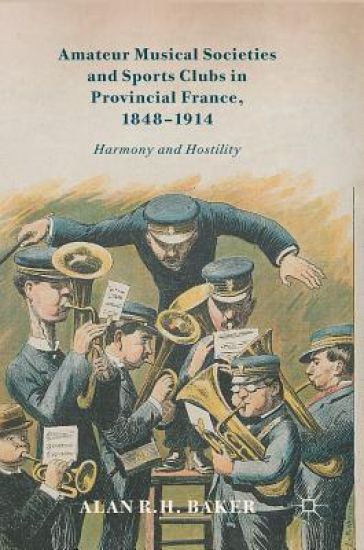
This book explores leisure-related voluntary associations in France during the nineteenth century as practical expressions of the Revolutionary concept of fraternité. Using a mass of unpublished sources in provincial and national archives, it analyses the history, geography and cultural significance of amateur musical societies and sports clubs in eleven départements of France between 1848 and 1914. It demonstrates that, although these voluntary associations drew upon and extended the traditional concept of cooperation and community, and the Revolutionary concept of fraternity, they also incorporated the fundamental characteristics of competition and conflict. Although intended to produce social harmony, in practice they reflected the ideological hostilities and cultural tensions that permeated French society in the nineteenth century.
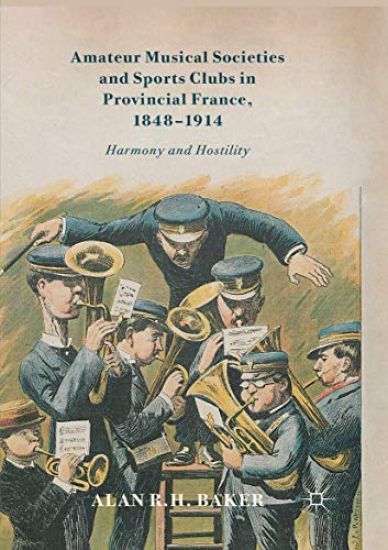
Amateur Musical Societies and Sports Clubs in Provincial France, 1848-1914
Alan R. H. Baker
Springer International Publishing AG
2018
nidottu
This book explores leisure-related voluntary associations in France during the nineteenth century as practical expressions of the Revolutionary concept of fraternité. Using a mass of unpublished sources in provincial and national archives, it analyses the history, geography and cultural significance of amateur musical societies and sports clubs in eleven départements of France between 1848 and 1914. It demonstrates that, although these voluntary associations drew upon and extended the traditional concept of cooperation and community, and the Revolutionary concept of fraternity, they also incorporated the fundamental characteristics of competition and conflict. Although intended to produce social harmony, in practice they reflected the ideological hostilities and cultural tensions that permeated French society in the nineteenth century.