Kirjojen hintavertailu. Mukana 11 244 527 kirjaa ja 12 kauppaa.

Kirjahaku

Etsi kirjoja tekijän nimen, kirjan nimen tai ISBN:n perusteella.

1000 tulosta hakusanalla Albert Defant

Albert Le Blanc

Albert Le Blanc

Nick Butterworth

HARPERCOLLINS PUBLISHERS
2022
nidottu
Celebrate the 20th anniversary of this uplifting story about a bear without a smile, from the bestselling creator of Percy the Park Keeper. This is the story of Albert Le Blanc. (He’s from France, so that ‘Al-bear Le Blonk.) When Albert le Blanc arrives in Mr Jolly’s toy shop, the other toys think he is the saddest-looking bear they have ever seen. But then, Jack-in-a-box has an idea that might just put a smile on their new friend’s face . . . A delightfully funny story about the importance of friendship – and laughter – from the creator of the internationally popular stories about Percy the Park Keeper.
Albert Einstein

Albert Einstein

Marie Hammontree

Prentice Hall IBD
1986
pokkari
Traces the life of the great German-born physicist from the age of five when he received a compass, which first sparked his scientific curiosity, to his exile from Hitler's Germany
Albert Einstein: A Curious Mind

Albert Einstein: A Curious Mind

Sarah Albee

HarperCollins
2020
nidottu
Albert Einstein was a famous scientist who questioned everything—even the laws of physics! Einstein’s innovative thinking paved the way for many important inventions and discoveries that helped shape the world we live in.Beginning readers will learn about the milestones in Albert Einstein’s life in this Level Two I Can Read. This biography includes a timeline and photos about the life of this inspiring scientist.Albert Einstein: A Curious Mind is a Guided Reading Level Q and a Level Two I Can Read book, geared for kids who read on their own but still need a little help.
Albert Einstein: A Curious Mind

Albert Einstein: A Curious Mind

Sarah Albee

Harpercollins
2020
sidottu
Albert Einstein was a famous scientist who questioned everything--even the laws of physics Einstein's innovative thinking paved the way for many important inventions and discoveries that helped shape the world we live in.Beginning readers will learn about the milestones in Albert Einstein's life in this Level Two I Can Read. This biography includes a timeline and photos about the life of this inspiring scientist.Albert Einstein: A Curious Mind is a Guided Reading Level Q and a Level Two I Can Read book, geared for kids who read on their own but still need a little help.
Albert Camus

Albert Camus

Olivier Todd

Vintage
1998
pokkari
Opening with his impoverished childhood in Algiers, Todd brings the historical context to life, shedding light on Camus' later agonising conflict between sympathy for the working class Algerians and for the French colonials with a stake in their adopted land.
Albert's Bubble Bath

Albert's Bubble Bath

Mark Mckinley

Oxford University Press
2025
nidottu
Albert is a grumpy bear and he doesn't like a lot of things. He doesn't enjoy picnics, or fishing, and he especially loathes singing around the campfire. But there is one thing he likes a lot. Bubble baths. The only problem is that the other animals in the forest like bubble baths too, and he can't seem to enjoy his in peace and quiet. Albert has some cunning plans. He puts up lots of signs, he hires the best security . . . he even buries his bath underground. But whatever he does, other animals keep finding their way into Albert's lovely, relaxing bubble bath. In one last desperate bid for solitude, he takes his bath to the skies. Will one mishap too many mean that Albert might finally have to share?
Albert Schweitzer's Ethical Vision

Albert Schweitzer's Ethical Vision

Oxford University Press Inc
2009
nidottu
Albert Schweitzer's leading philosophical idea was "reverence for life": good consists in maintaining and perfecting life, evil in destroying and obstructing life. For Schweitzer, all life is sacred, and ethics deals with human attitudes and behavior toward all living beings. Unlike most other moral philosophers, Schweitzer argues that knowledge of human nature does not lead to any unique moral theory. For that reason, he bases his ethics on much broader foundations, articulated in his philosophy of civilization and philosophy of religion. His central idea is that the material element of our civilization has become far more important than its spiritual counterpart. Even organized religion has put itself in the service of politics and economics, thereby losing its vitality and moral authority. Schweitzer's ethics of reverence for life, argues Predrag Cicovacki, offers a viable alternative at a time when traditional ethical theories are found inadequate. Collecting fifteen of Schweitzer's most effective essays, this volume serves as a compelling introduction to this remarkable thinker.
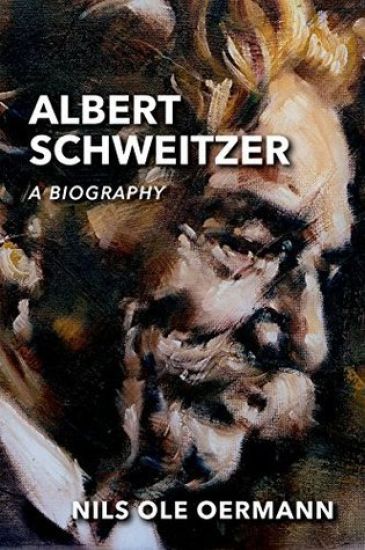
Albert Schweitzer

Albert Schweitzer

Nils Ole Oermann

Oxford University Press
2016
sidottu
This biography provides a versatile insight into the life, work, and thought of Albert Schweitzer (1875-1965). Nils Ole Oermann offers a detailed account of the multifaceted life of Albert Schweitzer who was a theologian, organist, philosopher, physician, and medical missionary. Schweitzer's life was not a straight path from the parsonage in Alsace to the University of Strasbourg, then on to the hospital in Lambarene, and ending with the Nobel Peace Prize in Oslo. Inevery life there are highs and lows, victories and defeats-and Schweitzer's life was no exception. These ups and downs, however, are barely discernible in Schweitzer's 1931 autobiography, Out of my Life and Thought, where he presents his life as an enormous, purposefully constructed edifice, thecornerstone of which was the principle of Reverence for Life, and the almost inevitable outcome of which was the Nobel Peace Prize. To date, biographers, journalists, and hagiographers have told and retold the story of Schweitzer following this basic pattern with relatively little critical modification. Their Schweitzer was a man whose demeanour and charisma set him apart from other intellectual giants of his time. But not everything Schweitzer records in his autobiography corresponds with whatis found in the archives and in his unpublished writings. It is on the basis of these historical sources and more recent publications that Oermann attempts to sketch a more realistic picture of Albert Schweitzer. Oermann draws on newly uncovered personal papers which shed light on Schweitzer'sdealings with the East German authorities and his role in the anti-nuclear movement. He also builds on a number of interviews from those associated with Schweitzer-most notably his daughter.
Albert Camus

Albert Camus

Oliver Gloag

Oxford University Press
2020
nidottu
Few would question that Albert Camus (1913-1960), novelist, playwright, philosopher and journalist, is a major cultural icon. His widely quoted works have led to countless movie adaptions, graphic novels, pop songs, and even t-shirts. In this Very Short Introduction, Oliver Gloag chronicles the inspiring story of Camus' life. From a poor fatherless settler in French-Algeria to the winner of the Nobel Prize for Literature, Gloag offers a comprehensive view of Camus' major works and interventions, including his notion of the absurd and revolt, as well as his highly original concept of pure happiness through unity with nature called "bonheur". This original introduction also addresses debates on coloniality, which have arisen around Camus' work. Gloag presents Camus in all his complexity a staunch defender of many progressive causes, fiercely attached to his French-Algerian roots, a writer of enormous talent and social awareness plagued by self-doubt, and a crucially relevant author whose major works continue to significantly impact our views on contemporary issues and events. ABOUT THE SERIES: The Very Short Introductions series from Oxford University Press contains hundreds of titles in almost every subject area. These pocket-sized books are the perfect way to get ahead in a new subject quickly. Our expert authors combine facts, analysis, perspective, new ideas, and enthusiasm to make interesting and challenging topics highly readable.
Albert of Aachen: Historia Ierosolimitana, History of the Journey to Jerusalem
The Historia Ierosolimitana, attributed to Albert of Aachen, is the most complete, the most detailed and the most colourful of the contemporary narratives of the First Crusade and the careers of the first generation of Latin settlers in Outremer from 1095-1119. It comprises twelve books, the first six telling the story of the First Crusade through to the capture of Jerusalem in 1099 and its aftermath, and the final six describing the internal and external politics of the crusader states during the first two decades of settlement. Largely neglected by crusades scholarship, this modern edition and translation allows it to be studied alongside better known accounts. This volume has been prepared from a critical study of all the extant manuscripts, and features the definitive Latin account, with English translation. Edgington supports the translation and text with an authoritative introduction, extensive historical notes and critical study of the work. This volume will alter the focus of crusades studies, generating interest in previously disregarded aspects of crusade and settlement in the first decades of the twelfth century.
Albert Camus as Political Thinker

Albert Camus as Political Thinker

Samantha Novello

Palgrave Macmillan
2010
sidottu
An intense genealogical reconstruction of Camus's political thinking challenging the philosophical import of his writings as providing an alternative, aesthetic understanding of politics, political action and freedom outside and against the nihilistic categories of modern political philosophy and the contemporary politics of contempt and terrorisms
Albert Camus the Algerian

Albert Camus the Algerian

David Carroll

Columbia University Press
2007
sidottu
In these original readings of Albert Camus' novels, short stories, and political essays, David Carroll concentrates on Camus' conflicted relationship with his Algerian background and finds important critical insights into questions of justice, the effects of colonial oppression, and the deadly cycle of terrorism and counterterrorism that characterized the Algerian War and continues to surface in the devastation of postcolonial wars today. During France's "dirty war" in Algeria, Camus called for an end to the violence perpetrated against civilians by both France and the Algerian National Liberation Front (FLN) and supported the creation of a postcolonial, multicultural, and democratic Algeria. His position was rejected by most of his contemporaries on the Left and has, ironically, earned him the title of colonialist sympathizer as well as the scorn of important postcolonial critics. Carroll rescues Camus' work from such criticism by emphasizing the Algerian dimensions of his literary and philosophical texts and by highlighting in his novels and short stories his understanding of both the injustice of colonialism and the tragic nature of Algeria's struggle for independence. By refusing to accept that the sacrifice of innocent human lives can ever be justified, even in the pursuit of noble political goals, and by rejecting simple, ideological binaries (West vs. East, Christian vs. Muslim, "us" vs. "them," good vs. evil), Camus' work offers an alternative to the stark choices that characterized his troubled times and continue to define our own. "What they didn't like, was the Algerian, in him," Camus wrote of his fictional double in The First Man. Not only should "the Algerian" in Camus be "liked," Carroll argues, but the Algerian dimensions of his literary and political texts constitute a crucial part of their continuing interest. Carroll's reading also shows why Camus' critical perspective has much to contribute to contemporary debates stemming from the global "war on terror." About the Author David Carroll is professor of French and past director of the Critical Theory Institute, former chair of the Department of French and Italian, and past director of the European Studies Program at the University of California, Irvine. His books include French Literary Fascism: Nationalism, Anti-Semitism, and the Ideology of Culture; Paraesthetics: Foucault, Lyotard, Derrida; and The Subject in Question: The Languages of Theory and the Strategies of Fiction. He is also the editor of a collection of essays entitled The States of "Theory" and is currently working on a book entitled Crises in French Identity: From the Dreyfus Affair to the Present.
Albert Camus the Algerian

Albert Camus the Algerian

David Carroll

Columbia University Press
2008
pokkari
In these original readings of Albert Camus' novels, short stories, and political essays, David Carroll concentrates on Camus' conflicted relationship with his Algerian background and finds important critical insights into questions of justice, the effects of colonial oppression, and the deadly cycle of terrorism and counterterrorism that characterized the Algerian War and continues to surface in the devastation of postcolonial wars today. During France's "dirty war" in Algeria, Camus called for an end to the violence perpetrated against civilians by both France and the Algerian National Liberation Front (FLN) and supported the creation of a postcolonial, multicultural, and democratic Algeria. His position was rejected by most of his contemporaries on the Left and has, ironically, earned him the title of colonialist sympathizer as well as the scorn of important postcolonial critics. Carroll rescues Camus' work from such criticism by emphasizing the Algerian dimensions of his literary and philosophical texts and by highlighting in his novels and short stories his understanding of both the injustice of colonialism and the tragic nature of Algeria's struggle for independence. By refusing to accept that the sacrifice of innocent human lives can ever be justified, even in the pursuit of noble political goals, and by rejecting simple, ideological binaries (West vs. East, Christian vs. Muslim, "us" vs. "them," good vs. evil), Camus' work offers an alternative to the stark choices that characterized his troubled times and continue to define our own. "What they didn't like, was the Algerian, in him," Camus wrote of his fictional double in The First Man. Not only should "the Algerian" in Camus be "liked," Carroll argues, but the Algerian dimensions of his literary and political texts constitute a crucial part of their continuing interest. Carroll's reading also shows why Camus' critical perspective has much to contribute to contemporary debates stemming from the global "war on terror."
Albert O. Hirschman

Albert O. Hirschman

Michele Alacevich

Columbia University Press
2021
sidottu
Winner, 2023 Best Book Award, Italian Association for the History of Economic ThoughtOne of the most original social scientists of the twentieth century, Albert O. Hirschman led an uncommonly dramatic life. After fleeing Nazi Germany as a youth, he fought in the Spanish Civil War, took part in antifascist activities in Italy, and organized an underground rescue operation in Marseille through which more than 2,000 people, including Marc Chagall, Arthur Koestler, and Hannah Arendt, escaped Europe. Hirschman moved across topics, methodologies, and disciplinary boundaries as fluidly as he did among countries and languages. His work is marked by a deep suspicion of all-encompassing theories, valuing instead doubt and a sensitivity to contingencies and unexpected consequences.In this intellectual biography, the economic historian Michele Alacevich explores the development and trajectory of Hirschman’s characteristic approach to social-scientific questions. He traces the many strands of Hirschman’s thought and their place in his multifaceted body of work, considering their limitations as well as their strengths. Alacevich puts Hirschman’s ideas into context, following his participation in the major intellectual and political debates of his times. He examines Hirschman’s pioneering work in development studies and his analyses of social change, the history of capitalism, and the workings of democracy alongside his activities in the postwar reconstruction of Europe and economic development in Latin America. A compelling intellectual portrait of a profoundly distinctive thinker, this book also reflects on Hirschman’s legacy and lasting influence.
Albert O. Hirschman

Albert O. Hirschman

Michele Alacevich

Columbia University Press
2022
pokkari
Winner, 2023 Best Book Award, Italian Association for the History of Economic ThoughtOne of the most original social scientists of the twentieth century, Albert O. Hirschman led an uncommonly dramatic life. After fleeing Nazi Germany as a youth, he fought in the Spanish Civil War, took part in antifascist activities in Italy, and organized an underground rescue operation in Marseille through which more than 2,000 people, including Marc Chagall, Arthur Koestler, and Hannah Arendt, escaped Europe. Hirschman moved across topics, methodologies, and disciplinary boundaries as fluidly as he did among countries and languages. His work is marked by a deep suspicion of all-encompassing theories, valuing instead doubt and a sensitivity to contingencies and unexpected consequences.In this intellectual biography, the economic historian Michele Alacevich explores the development and trajectory of Hirschman’s characteristic approach to social-scientific questions. He traces the many strands of Hirschman’s thought and their place in his multifaceted body of work, considering their limitations as well as their strengths. Alacevich puts Hirschman’s ideas into context, following his participation in the major intellectual and political debates of his times. He examines Hirschman’s pioneering work in development studies and his analyses of social change, the history of capitalism, and the workings of democracy alongside his activities in the postwar reconstruction of Europe and economic development in Latin America. A compelling intellectual portrait of a profoundly distinctive thinker, this book also reflects on Hirschman’s legacy and lasting influence.
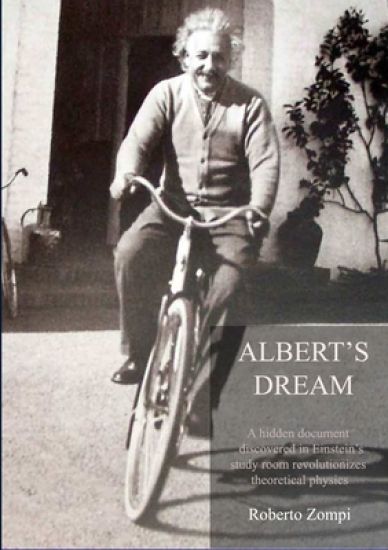
Albert's Dream

Albert's Dream

Roberto Zompi

Lulu.com
2020
pokkari
In Albert Einstein's study room at Princeton Institute for Advanced Study, a manuscript hidden behind the blackboard is found by chance. A few phrases reveal that the physicist was developing secretly a new quantum theory to solve a fundamental problem of physics, still open. The manuscript, however, is incomplete and the search for the missing parts puts in competition world-leading research institutions. A small group of creative students joins the race, but with an innovative approach. The story is invented. Still, it reports real events and ideas of the Physics of the last century, as a framework, together with new ideas for the future, to be developed.
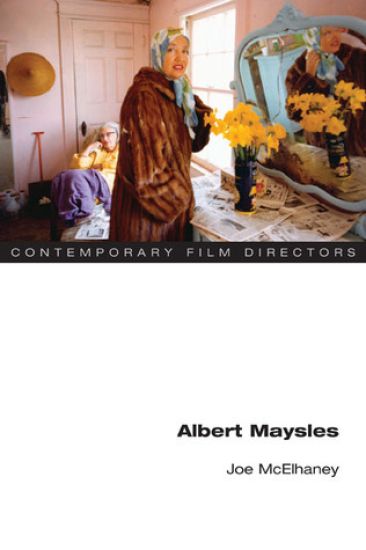
Albert Maysles

Albert Maysles

Joe McElhaney

University of Illinois Press
2009
nidottu
Albert Maysles has created some of the most influential documentaries of the postwar period. Such films as Salesman,Gimme Shelter, and Grey Gardens continue to generate intense debate about the ethics and aesthetics of the documentary form. In this in-depth study, Joe McElhaney offers a novel understanding of the historical relevance of Maysles. By closely focusing on Maysles's expressive use of his camera, particularly in relation to the filming of the human figure, this book situates Maysles's films within not only documentary film history but film history in general, arguing for their broad-ranging importance to both narrative film and documentary cinema. Complete with an engaging interview with Maysles and a detailed comparison of the variant releases of his documentary on the Beatles (What's Happening: The Beatles in the U.S.A. and The Beatles: The First U.S. Visit), this work is a pivotal study of a significant filmmaker.