

Kirjahaku
Etsi kirjoja tekijän nimen, kirjan nimen tai ISBN:n perusteella.
1000 tulosta hakusanalla Alessandro Ademollo

Alessandro Manzoni Studio Biografico: Letture fatte alla Taylorian Institution di Oxford nel maggio dell'anno 1878
Angelo De Gubernatis
Createspace Independent Publishing Platform
2012
nidottu
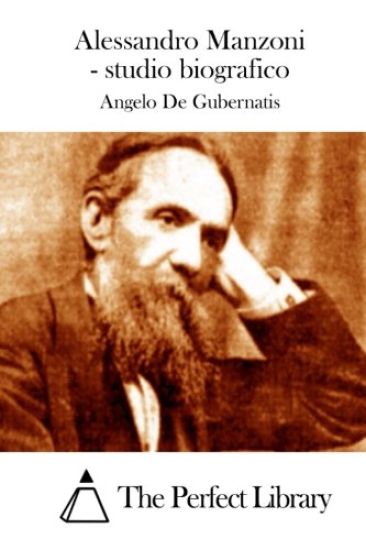
Alessandro Manzoni - studio biografico
Angelo De Gubernatis
Createspace Independent Publishing Platform
2015
nidottu

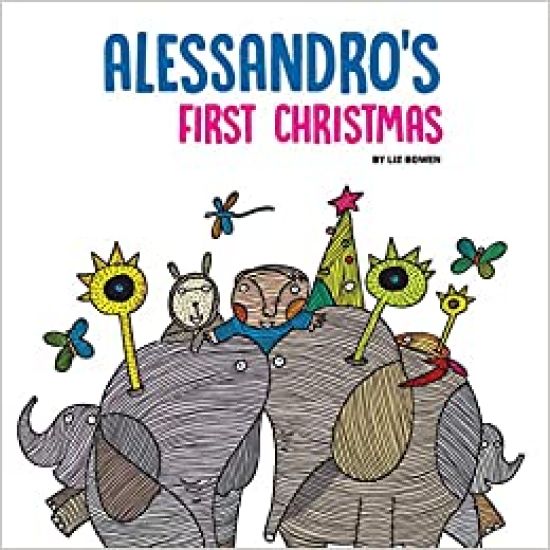
"Alessandro's First Christmas", written by Liz Bowen, describes the magic of Christmas through the eyes of a young child, the power of good over evil and joyful music. It is filled with colorful and artistic illustrations to stimulate the imagination and a love of reading and books in preschool children.


Alessandro Chiodo NEUE ARBEITEN AUF PAPIER 2019
Alessandro Chiodo
Independently Published
2019
pokkari
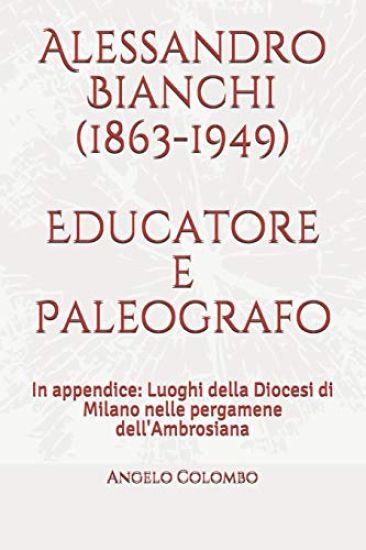
Alessandro Bianchi (1863-1949) Educatore e Paleografo: In appendice: Luoghi della Diocesi di Milano nelle pergamene dell'Ambrosiana
Angelo Colombo
Independently Published
2019
nidottu
Alessandro Bianchi nacque a Gallarate nel 1863. Ordinato sacerdote si dedic con passione alla causa dell'educazione dei discoli rinchiusi nei riformatori, per i quali scrisse pure interessantissime monografie in cui depose il frutto dei suoi studi in tema di rieducazione e di pedagogia applicata ai minorenni. Questi studi diffusero il nome di lui in vasta cerchia di studiosi di cose giuridico-penali tanto che nel 1910 egli fu designato dal Ministero Luzzatti a prendere parte ad una delegazione che doveva recarsi negli Stati Uniti d'America per un Congresso internazionale penitenziario. Il Bianchi sentiva anche attrazione verso gli studi, specialmente paleografici, cos nel 1898 entr a far parte del Collegio dei Dottori della Biblioteca Ambrosiana. Da allora egli si dedic ai lavori scientifici della Biblioteca e particolarmente alla catalogazione del vasto fondo delle pergamene notarili: nel qual campo il servizio da lui reso alla scienza stato veramente cospicuo. In quarant'anni di lavoro assiduo e ingrato egli ide , intraprese e condusse a termine la catalogazione dell'intera raccolta delle antiche pergamene possedute dalla Biblioteca, mettendo quindi a disposizione del pubblico studioso una collezione manoscritta di grande interesse per lo studio della storia, particolarmente medioevale. Il lavoro da lui compiuto non ancora pubblicato, ma esso sta a disposizione del pubblico in dodici densi volumi di regesti.

Alessandro de' Medici: And the Life of his Lover and Murderer, Lorenzino de' Medici
Michael Hone
Independently Published
2019
nidottu
Alessandro--whose mother was reported to have been a black slave, the reason for his swarthy complexion and nickname, Il Moro--took advice from no one, living for his own pleasure, his motto being ''They made me duke, so I'll enjoy it '' By enjoying it he meant wandering the streets at night fully armed, pushing aside anyone in his way, looking for a fight he was destined to win for the simple reason that he had barred the carrying of a sword or a firearm, both of which never left him, nor did his dagger. And he had reason to fear, as the nobility of Florence wanted him, the city's new duke, replaced by legitimate blood, noble blood. He had gained power at age 19 and had by now fully tasted every perversion, so that what was left was taking the hymen of those who still had one, notably nuns, and that of those who kept guard over theirs, virtuous women. He liked his boys too, for quick, easy couplings, heated and virile. His favorite companion was his cousin Lorenzino with whom he shared his bed and more when not extinguished from a night of whoring. And when he awoke with a lustful urge, Lorenzino was always conveniently spread out, naked, at his side. This is how Cellini had caught them many times, as the artist was permitted to come and go as he wished, and as Alessandro had no modesty and no need to hide his vices, Cellini was aware of everything that went on. ''Meanwhile I went on making the Duke's portrait and oftentimes I found him napping after dinner with that Lorenzino of his, '' wrote the artist in his autobiography.No one knows why Lorenzino turned against Duke Alessandro, aided by a professional assassin, Scoronconcolo. In his play, Lorenzaccio, Musset writes that Lorenzo wanted the duke dead so that Florence could become a Republic again. Others suggest that he was just jealous of the duke's powers and privileges. Because Duke Alessandro was so unpopular, he was never without his body armor, weapons and guards. But Lorenzino told him that he had found a Florentine lady of exceptional beauty and, especially, ironclad chastity. Lorenzino would bring her to the duke, and from then on it was up to the duke to prove that he could triumph over virtue. Lorenzino convinced the duke to dismiss the guards for the night, to take off his armor and to slip naked into bed. From then on it was easy for Lorenzino to strike him in the stomach with a dagger, his hand over his mouth to smother his shouts, Scoronconcolo giving the coup-de-gr ce by slitting the duke's throat from ear to ear. Afterwards he rode off to Venice, a glove covering a finger Alessandro had caught between his teeth and nearly bitten off. The events that led to Alessandro's assassination, and the destiny reserved for Lorenzino, are the subjects of this book.
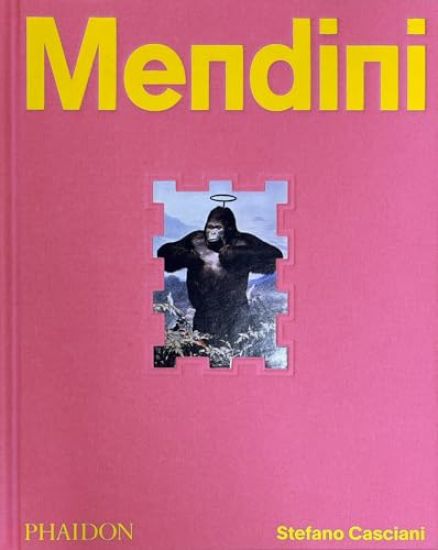
The first complete monograph on the provocative work of influential Italian designer, architect, and critic Alessandro Mendini Born in Milan in 1931, Alessandro Mendini created vivid, boundary-pushing, eccentric work that sits in an aesthetic universe of its own. He was at the heart of Italy’s Radical design movement in the 1960s and 1970s and, later, Postmodernism, championing a sensitive and intellectual approach to design; he edited Domus magazine in the early 1980s; and he collaborated with brands ranging from Alessi, Swarovski, and Hermès to Supreme. Along with his contemporaries Ettore Sottsass and Gaetano Pesce, Mendini helped to redefine the concept of Italian design and architecture. This comprehensive monograph – the first on Mendini’s complete portfolio of work – features a wealth of previously unpublished documents and images. Written by critic Stefano Casciani, who worked with Mendini for many years, the book offers a uniquely personal account illustrated by photographs, ephemera, and many of Mendini’s idiosyncratic and playful sketches. Presented in a dynamic package inspired by Mendini’s distinctive aesthetic, the book is a design object in its own right, with a pink cloth cover featuring one of Mendini’s iconic magazine covers on the front, a sketch of his famous Proost chair on the back, and die-cut laminated tip-in chapter openers with wavy edges.
Before Alessandro Michele took the creative helm at Gucci in 2015, the brand was mostly known for its sleek sophistication and sexy hedonism. Despite having worked at the Italian fashion house for over twelve years as the accessories and jewellery designer, Michele was relatively unknown in the fashion industry and the public sphere. All of that was to change when he sent his models down the runway for the 2015 Fall ready-to-wear collection in an eclectic mix of pussy-bow blouses, chiffon dresses, wallpaper prints and a motley collection of accessories, including fur-lined loafers, berets and granny-style horn-rimmed glasses. Michele’s stylistic design approach created an aesthetic reminiscent of the fashion eccentric who wears flea market finds with high-end designer and heirloom pieces – imperfect, nostalgic and maximalist. The new Gucci woman (and man) were intellectual and sensual misfits who are perfectly at home in the glamourous rag-tag aesthetic of a Wes Anderson film. With his inaugurate collection, Michele tapped into the zeitgeist that was yearning for a more colourful and playful design, and a disregard of traditional gender divisions: while Gucci has hitherto showcased its men’s and women’s collections separately, as well as favoured traditional masculine and feminine looks respectively, Michele broke with the idea of a gender binary, ushering in gender fluidity and a new fantastical vision of masculinity. Although his collections were spectacular in their scope (the Fall/Winter 2017 consists of roughly 120 looks), the designs are also a testimony to his ability to scramble signifiers of gender, pop culture, history and time. Referencing and borrowing from philosophical concepts and ideas, such as the infamous Cyborg collection (Gucci Fall/Winter 2019) that envisioned subjectivities beyond the confines of the human body with replica heads or extra eyes on their hands; the Fall/Winter 2016 collection titled ‘Rhizomatic Scores’, referencing Deleuze and Guattari’s influential concept; or the Fall/Winter 2020 menswear collection titled ‘Masculine, Plural’ that referenced Butler’s notion of gender performativity, Michele exemplifies a fashion auteur who knows how to play not only with gender signifiers but also with signifiers of time, culture and species.

Before Alessandro Michele took the creative helm at Gucci in 2015, the brand was mostly known for its sleek sophistication and sexy hedonism. Despite having worked at the Italian fashion house for over twelve years as the accessories and jewellery designer, Michele was relatively unknown in the fashion industry and the public sphere. All of that was to change when he sent his models down the runway for the 2015 Fall ready-to-wear collection in an eclectic mix of pussy-bow blouses, chiffon dresses, wallpaper prints and a motley collection of accessories, including fur-lined loafers, berets and granny-style horn-rimmed glasses. Michele’s stylistic design approach created an aesthetic reminiscent of the fashion eccentric who wears flea market finds with high-end designer and heirloom pieces – imperfect, nostalgic and maximalist. The new Gucci woman (and man) were intellectual and sensual misfits who are perfectly at home in the glamourous rag-tag aesthetic of a Wes Anderson film. With his inaugurate collection, Michele tapped into the zeitgeist that was yearning for a more colourful and playful design, and a disregard of traditional gender divisions: while Gucci has hitherto showcased its men’s and women’s collections separately, as well as favoured traditional masculine and feminine looks respectively, Michele broke with the idea of a gender binary, ushering in gender fluidity and a new fantastical vision of masculinity. Although his collections were spectacular in their scope (the Fall/Winter 2017 consists of roughly 120 looks), the designs are also a testimony to his ability to scramble signifiers of gender, pop culture, history and time. Referencing and borrowing from philosophical concepts and ideas, such as the infamous Cyborg collection (Gucci Fall/Winter 2019) that envisioned subjectivities beyond the confines of the human body with replica heads or extra eyes on their hands; the Fall/Winter 2016 collection titled ‘Rhizomatic Scores’, referencing Deleuze and Guattari’s influential concept; or the Fall/Winter 2020 menswear collection titled ‘Masculine, Plural’ that referenced Butler’s notion of gender performativity, Michele exemplifies a fashion auteur who knows how to play not only with gender signifiers but also with signifiers of time, culture and species.

Alessandro: El multiverso, el cilindro y la sala omega
Juan Diego Jaen Bayarri
Createspace Independent Publishing Platform
2017
nidottu
Qu har as si amanecieses 40 a os atr s en tu cuerpo de ni o? Gonzalo se enfrenta en este relato a esta extra a situaci n aparentemente irresoluble con la inestimable ayuda de su primo, un cient fico, un genial emprendedor multimillonario y un joven matrimonio. En varios escenarios temporales que se van alternando, los personajes intentan conseguir que la teor a del Cilindro funcione, a caballo entre Espa a y Estados Unidos. Solo un milagro o la ciencia podr a devolver a Gonzalo a su cuerpo adulto.

Alessandro Manzoni: Studio Biografico (Éd.1879)
Angelo De Gubernatis
Hachette Livre - BNF
2012
pokkari

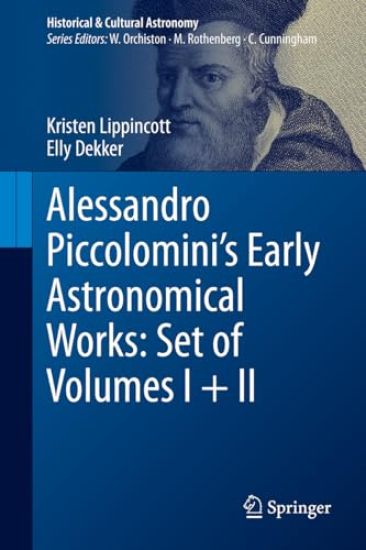
Alessandro Piccolomini’s Early Astronomical Works: Set of Volumes I + II
Kristen Lippincott; Elly Dekker
Springer International Publishing AG
2024
sidottu
This is a set offering the Springer books “Alessandro Piccolomini’s Early Astronomical Works: I. An Exploration of Their Cultural Significance” (ISBN 978-3-031-56785-8) and “Alessandro Piccolomini’s Early Astronomical Works: II. An Examination of Their Scientific Content” (ISBN 978-3-031-56329-4). They present the first detailed scientific examination of Alessandro Piccolomini’s two early astronomical works – De la Sfera del Mondo and De le Stelle Fisse .

This book provides a vivid biography of a towering Italian banker, pioneer and entrepreneur. It weaves the entrepreneurial ventures of Alessandro Torlonia (1800-1886) through the narratives of business and politics in the Nineteenth century, the growth of European financial markets and the decline of Papal power during the Italian Risorgimento. The discussion is founded in rigorous historical research using original sources such as the Archivum Secretum Vaticanum papers and other official documents; the archives of the Torlonia family, and of the Rothschild bank in Paris; memoirs; correspondences, and newspapers. Through this book readers learn that Alessandro Torlonia was a man of many faces, who was one of the most complex and influential characters of Italian economic life in the nineteenth century. Felisini also provides an expert critique of the financial history of the papacy: an area of heightened interest given the notoriety of relations betweenthe Holy See and its bankers in the twentieth and twenty-first centuries. Focal topics such as the history of European elites and the history of European financial markets will have an interdisciplinary appeal for scholars and researchers.