Alexis de Tocqueville was the author of two masterpieces, Democracry in America and The Old Regime and the Revolution. In this volume, Alan S. Kahan, one of the world's leading authorities on Tocqueville's work, presents an accessible and rigorous account of the French author's ideas set in the context of his life and times. It sets out the essential tensions and ambiguities in Tocqueville's thought and analyzes the idea that made him such a compelling and insightful thinker.
La pens e de Tocqueville Tocqueville d fend la libert individuelle et l' galit en politique. Exprimant parfois des r serves sur l' volution possible de la d mocratie vers une dictature de la majorit au nom de l' galit , et rejetant nettement ce titre toute orientation socialiste, il est l'une des plus grandes r f rences de la philosophie politique lib rale. Th oricien du colonialisme, l gitimant l'expansion fran aise en Afrique du Nord (1841-1846), il fustige n anmoins les violences des arm es fran aises en Afrique, s'oppose l'application du r gime militaire en Alg rie (1848), et d fend parmi les premiers l'abolition de l'esclavage dans les colonies (1839). Parall lement, Tocqueville refuse les consid rations de la th se de son ami Joseph Arthur de Gobineau (Essai sur l'in galit des races humaines). Sceptique et hant par la corruption de la d mocratie et le d clin des valeurs aristocratiques, il d fendra aussi une vision de la puissance et de la grandeur nationale, annon ant le nationalisme du si cle suivant . Son oeuvre fond e sur ses voyages aux tats-Unis est une base essentielle pour comprendre ce pays, en particulier au cours du XIXe si cle. M me si une des raisons profondes de son voyage est de partir pour viter les regards malveillants dus ses origines aristocratiques, Tocqueville est surtout avide de rencontrer une grande r publique, lib rale et f d rale. On sait qu'il a aussi consult une documentation dont on peut citer trois ouvrages essentiels: Le F d raliste par Alexander Hamilton, James Madison, et John Jay, puis James Kent (Commentaries on American Law) et Joseph Story (Commentaries on the Constitution of the United States), deux juristes aux opinions conservatrices. Ces ouvrages et commentaires ont le point commun de d fendre des positions f d ralistes. Enfin, il est partisan d'une r forme des prisons, qu'il d fendra dans le livre sur le syst me p nitentiaire, et crit avec De Beaumont, qui suit son voyage en Am rique . Il sera l'auteur de plusieurs rapports et projets de loi. Il pr conise le principe du panoptisme (d crit par Michel Foucault dans Surveiller et punir ) pour r former les prisons fran aises, bas sur l'isolement cellulaire individuel (prison de Cherry-Hill Philadelphie). Cet objectif ne sera r alis en France qu' la fin du XIX esi cle. Plus encore que l'amendement du prisonnier, son objectif majeur en mati re de politique p nale est la protection de la soci t . Il est galement un des membres fondateurs de la colonie p nitentiaire de Mettray pour jeunes mineurs d linquants. Mettray est le mod le o se concentrent toutes les technologies coercitives du comportement.... C'est la face sombre, occult e, de ce lib ral d mocrate
Oeuvres et correspondance in dites d'Alexis de Tocqueville by Alexis de Tocqueville. This book is a reproduction of the original book published in 1861 and may have some imperfections such as marks or hand-written notes.
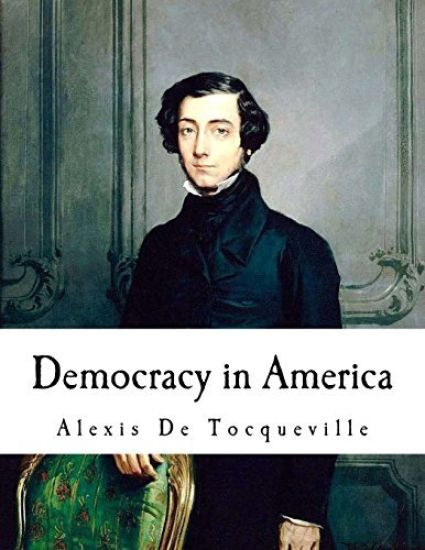
Democracy in America by Alexis De Tocqueville. In the eleven years that separated the Declaration of the Independence of the United States from the completion of that act in the ordination of our written Constitution, the great minds of America were bent upon the study of the principles of government that were essential to the preservation of the liberties which had been won at great cost and with heroic labors and sacrifices. Their studies were conducted in view of the imperfections that experience had developed in the government of the Confederation, and they were, therefore, practical and thorough. When the Constitution was thus perfected and established, a new form of government was created, but it was neither speculative nor experimental as to the principles on which it was based. If they were true principles, as they were, the government founded upon them was destined to a life and an influence that would continue while the liberties it was intended to preserve should be valued by the human family. Those liberties had been wrung from reluctant monarchs in many contests, in many countries, and were grouped into creeds and established in ordinances sealed with blood, in many great struggles of the people. They were not new to the people. They were consecrated theories, but no government had been previously established for the great purpose of their preservation and enforcement. That which was experimental in our plan of government was the question whether democratic rule could be so organized and conducted that it would not degenerate into license and result in the tyranny of absolutism, without saving to the people the power so often found necessary of repressing or destroying their enemy, when he was found in the person of a single despot.