
Kirjahaku
Etsi kirjoja tekijän nimen, kirjan nimen tai ISBN:n perusteella.
1000 tulosta hakusanalla Alfred A Davis






Applied Depth of Field (1985) is a complete and convenient guide for all kinds of photographers who need to exercise control over depth of field. This book assists photographers at all levels – from moderately experienced amateurs right up through working professionals – in learning how to control and to use depth of field, efficiently and quickly, for making all types of photo images.
Applied Depth of Field (1985) is a complete and convenient guide for all kinds of photographers who need to exercise control over depth of field. This book assists photographers at all levels – from moderately experienced amateurs right up through working professionals – in learning how to control and to use depth of field, efficiently and quickly, for making all types of photo images.

To what extent can competition between companies encourage innovations in sustainability that have the potential to solve some of the world's major challenges? Using a series of case studies, this book pits closely related competitors against each other to examine the progress in and obstacles to the evolution of sustainable innovations in energy efficiency, solar power, electric vehicles and hybrids, wind energy, healthy eating, and agricultural productivity. It delves into the efforts of Tesla Motors to bring about a revolution in personal transportation, and the challenges Toyota and General Motors (GM) confront in commercializing hybrids. It explores the movement to healthy food by cereal companies General Mills and Kellogg's, and depicts the battles between Whole Foods and Walmart for the world's palate. By examining the experiences that particular businesses have had with sustainable innovation, this insightful book reflects upon lessons learned and encourages readers to think carefully about the challenges that lie ahead.
All organizations must cope with future uncertainties. These uncertainties affect the strategic choices they make. They must commit scarce organizational resources to future outcomes which they have little assurance will come into being. Marcus explores how decision makers in the energy industry made choices in the face of such uncertainties, specifically examining two major uncertainties they confronted in the 2012–18 period - price volatility and climate change. Marcus tells the story of how different companies in the integrated oil and natural gas sector and in the motor vehicle sector responded to these uncertainties. In the face of these challenges, companies in the energy industry hedged their bets by staking out paradoxical or contrasting positions. On the one hand, they focused on capturing as much gain as they could from the world's current dependence on fossil fuels and on the other hand they made preparations for a future in which fossil fuels might not be the world's dominant energy source.

To what extent can competition between companies encourage innovations in sustainability that have the potential to solve some of the world's major challenges? Using a series of case studies, this book pits closely related competitors against each other to examine the progress in and obstacles to the evolution of sustainable innovations in energy efficiency, solar power, electric vehicles and hybrids, wind energy, healthy eating, and agricultural productivity. It delves into the efforts of Tesla Motors to bring about a revolution in personal transportation, and the challenges Toyota and General Motors (GM) confront in commercializing hybrids. It explores the movement to healthy food by cereal companies General Mills and Kellogg's, and depicts the battles between Whole Foods and Walmart for the world's palate. By examining the experiences that particular businesses have had with sustainable innovation, this insightful book reflects upon lessons learned and encourages readers to think carefully about the challenges that lie ahead.

Originally published in 1921, this book presents a concise study of time and space relations by the renowned British physicist Alfred Robb (1873–1936). The text is one of a series of works on the topic of special relativity written by Robb from 1911 onwards. An appendix section is included. This book will be of value to anyone with an interest in special relativity, the development of physics and the history of science.

Alfred Robb (1873–1936) was a British physicist who worked extensively in the area of special relativity. Originally published in 1936, this book essentially formed a second edition to Robb's A Theory of Time and Space (1914). The alteration in the title was made since it was thought the word 'geometry' better reflected the contents of the text. A considerable amount of fresh material was introduced for the second edition, with the introduction being rewritten and extended, whilst the proofs of a number of theorems were curtailed and simplified. This book will be of value to anyone with an interest in special relativity and the history of science.

Notes on Military Hygiene for Officers of the Line
Alfred A. Woodhull
Cambridge University Press
2014
pokkari
For those engaged in military conflict at the end of the nineteenth century, infection and disease were still as formidable enemies as the guns of an opposing army. Yet advances in sanitary science and understanding continued to help officers keep their troops in optimal fighting condition. After serving as an assistant surgeon for the Union Army during the American Civil War, Alfred Alexander Woodhull (1837–1921) began to publish on the topics of hygiene and sanitation, and how they related to military effectiveness. Arguably his most important publication, the present work was based on lectures he delivered at the US Infantry and Cavalry School. It covers such varied topics as the selection of men, uniform design, and the management of waste. First published in 1890, it was recommended as a textbook by the surgeon general of the time. Reissued here is the revised third edition, which appeared in 1904.
The law of building, engineering, and ship building contracts
Alfred a Hudson
Gale, Making of Modern Law
2010
pokkari

Applying Frequency-Domain Equalization to Code-Division Multiple Access and Transform-Domain Communications Systems
Alfred A Tamayo
Biblioscholar
2012
pokkari
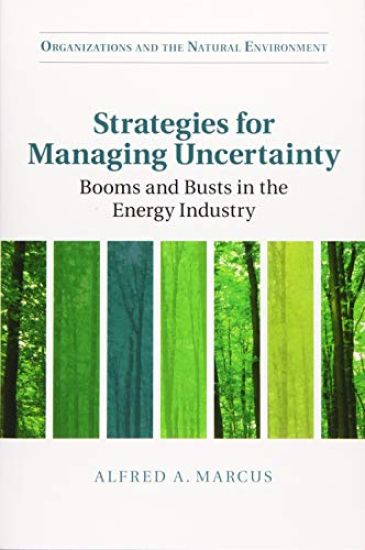
All organizations must cope with future uncertainties. These uncertainties affect the strategic choices they make. They must commit scarce organizational resources to future outcomes which they have little assurance will come into being. Marcus explores how decision makers in the energy industry made choices in the face of such uncertainties, specifically examining two major uncertainties they confronted in the 2012–18 period - price volatility and climate change. Marcus tells the story of how different companies in the integrated oil and natural gas sector and in the motor vehicle sector responded to these uncertainties. In the face of these challenges, companies in the energy industry hedged their bets by staking out paradoxical or contrasting positions. On the one hand, they focused on capturing as much gain as they could from the world's current dependence on fossil fuels and on the other hand they made preparations for a future in which fossil fuels might not be the world's dominant energy source.

This work has been selected by scholars as being culturally important, and is part of the knowledge base of civilization as we know it. This work was reproduced from the original artifact, and remains as true to the original work as possible. Therefore, you will see the original copyright references, library stamps (as most of these works have been housed in our most important libraries around the world), and other notations in the work.This work is in the public domain in the United States of America, and possibly other nations. Within the United States, you may freely copy and distribute this work, as no entity (individual or corporate) has a copyright on the body of the work.As a reproduction of a historical artifact, this work may contain missing or blurred pages, poor pictures, errant marks, etc. Scholars believe, and we concur, that this work is important enough to be preserved, reproduced, and made generally available to the public. We appreciate your support of the preservation process, and thank you for being an important part of keeping this knowledge alive and relevant.