Kirjojen hintavertailu. Mukana 11 244 527 kirjaa ja 12 kauppaa.

Kirjahaku

Etsi kirjoja tekijän nimen, kirjan nimen tai ISBN:n perusteella.

1000 tulosta hakusanalla Alfred Barbou

Alfred Hitchcock's Psycho

Alfred Hitchcock's Psycho

Oxford University Press Inc
2004
nidottu
Alfred Hitchcock's Psycho: A Casebook collects some of the finest essays on this groundbreaking film--a film that is ideal for teaching the language of cinema and the ways in which strong filmmakers can break Hollywood conventions. Psycho is a film that can be used to present the structures of composition and cutting, narrative and genre building, and point of view. The film is also a highpoint of the horror genre and an instigator of all the slasher films to come in its wake. The essays in the casebook cover all of these elements and more. They also serve another purpose: presented chronologically, they represent the changes in the methodologies of film criticism, from the first journalist reviews and early auteurist approaches, through current psychoanalytic and gender criticism. Other selections include an analysis of Bernard Hermann's score and its close relationship to Hitchcock's visual construction; the famous Hitchcock interview by François Truffaut; and an essay by Robert Kolker that, through the use of stills taken directly from the film, closely reads its extraordinary cinematic structure. Contributors include Robert Kolker, Stephen Rebello, Bosley Crowther, Jean Douchet, Robin Wood, Raymond Durgnat, Royal S. Brown, George Toles, Robert Samuels, and Linda Williams
The Letters of Alfred Lord Tennyson: Volume II: 1851-1870

The Letters of Alfred Lord Tennyson: Volume II: 1851-1870

Alfred Tennyson

Oxford University Press
1987
sidottu
The letters in this volume describe the most remarkable years in the life of one of the most eminent Victorians - the years during which Tennyson published In Memoriam , was married, and became Poet Laureate. His own letters are supported and illuminated by contemporary reviews and descriptions of Tennyson as public figure and private man. A valuable personal insight into the poet whose writings reflect so accurately the exact pitch of his age.
The Letters of Alfred Lord Tennyson: Volume III: 1871-1892
This third and final volume of The Letters of Alfred Lord Tennyson, the first collected edition, is notable for the light it throws on Tennyson's efforts as a dramatist and on his interactions with the leading theatre managers, actresses, and actors of the day, especially Henry Irving. The letters reveal his relations with many fellow-authors and literary men, both British and American. An important thread in the volume is his close association with Gladstone; and an extensive correspondence with the Australian, Sir Henry Parkes, reflects his continuing interest in the Empire. The volume ends with his death in 1892. To complete the edition a comprehensive index has been prepared, covering all three volumes. Previous volumes have been warmly praised by critics:
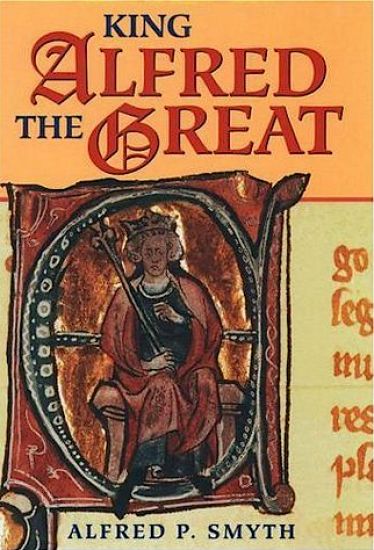
King Alfred the Great

King Alfred the Great

Alfred P. Smyth

Oxford University Press
1995
sidottu
Warrior, law-giver, and scholar, Alfred the Great was an extraordinarily gifted and highly successful king, pushing back the Vikings to preserve what is now thought of as the heart of England. In this, the first major study of King Alfred since Plummer's biography of 1902, the career of King Alfred is followed chronologically and examined in depth. The author provides a detailed examination of the much-disputed medieval biography of King Alfred, attributed to the king's tutor, Asser. Professor Smyth argues that Asser's Life is a medieval forgery; a revelation with profound implications for our understanding of the whole of Anglo-Saxon history. The book also contains major studies on the writings of this gifted king, on the controversial charters of his reign, and on the origins of the Anglo-Saxon chronicle. Professor Smyth shows the Chronicle to have been much more closely connected with the court of King Alfred than has hitherto been allowed, and suggests a new date for the completion of the earliest Alfredian section of the Chronicle. The author also provides a fundamental reassessment of Alfred's military and political achievement in his wars against the Vikings, and compares the experiences of the English king with those of his Frankish contemporaries in their struggle with the same enemy on the other side of the English Channel. Professor Smyth's portrait of Alfred rejects the image of a neurotic and invalid king who supposedly remained a pious illiterate till he was almost 40. Instead, we are shown a man of remarkable energy and intelligence who took necessary steps to defend his people from the Norsemen. We are shown too, a king who had been a scholar all his life and who used his great knowledge to bolster the powers of his own kingship, and to overcome his enemies. Jacket illustration: Initial depicting King Alfred taken from the British Library Manuscript Cotton Claudius D.ii, f.8. This sumptuous compilation contains a collection of Anglo-Saxon, Norman, and Angevin law- codes (Liber legum antiquorum regum) which can be precisely dated to 1321. The inclusion of a Latin translation of the Laws of King Alfred indicates the esteem in which Alfred was held as a law-giver in the high Middle Ages.
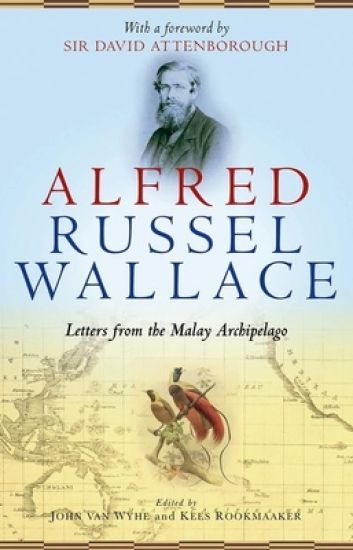
Alfred Russel Wallace

Alfred Russel Wallace

Sir David Attenborough

Oxford University Press
2013
sidottu
This volume brings together the letters of the great Victorian naturalist Alfred Russel Wallace (1823-1913) during his famous travels of 1854-62 in the Malay Archipelago (now Singapore, Malaysia, and Indonesia), which led him to come independently to the same conclusion as Charles Darwin: that evolution occurs through natural selection. Beautifully written, they are filled with lavish descriptions of the remote regions he explored, the peoples, and fascinating details of the many new species of mammals, birds, and insects he discovered during his time there. John van Wyhe and Kees Rookmaaker present new transcriptions of each of the letters, including recently discovered letters that shed light on the voyage and on questions such as Wallace's reluctance to publish on evolution, and why he famously chose to write to Darwin rather than to send his work to a journal directly. A revised account of Wallace's itinerary based on new research by the editors forms part of an introduction that sets the context of the voyage, and the volume includes full notes to all letters. Together the letters form a remarkable and vivid document of one of the most important journeys of the 19th century by a great Victorian naturalist.
Alfred Russel Wallace

Alfred Russel Wallace

Oxford University Press
2015
nidottu
This volume brings together the letters of the great Victorian naturalist Alfred Russel Wallace (1823-1913) during his famous travels of 1854-62 in the Malay Archipelago (now Singapore, Malaysia, and Indonesia). it was these travels which led him to come independently to the same conclusion as Charles Darwin: that evolution occurs through natural selection. Beautifully written, the letters are filled with lavish descriptions of the remote regions he explored, the peoples, and fascinating details of the many new species of mammals, birds, and insects he discovered during his time there. John van Wyhe and Kees Rookmaaker present new transcriptions of each of the letters, including recently discovered letters that shed light on the voyage and on questions such as Wallace's reluctance to publish on evolution, and why he famously chose to write to Darwin rather than to send his work to a journal directly. A revised account of Wallace's itinerary based on new research by the editors forms part of an introduction that sets the context of the voyage, and the volume includes full notes to all letters. Together the letters form a remarkable and vivid document of one of the most important journeys of the 19th century by a great Victorian naturalist.
Alfred the Great

Alfred the Great

Eleanor Shipley Duckett

University of Chicago Press
1958
nidottu
Filled with drama and action, here is the story of the ninth-century life and times of Alfred—warrior, conqueror, lawmaker, scholar, and the only king whom England has ever called "The Great." Based on up-to-date information on ninth-century history, geography, philosophy, literature, and social life, it vividly presents exciting views of Alfred in every stage of his long career and leaves the reader with a sharply-etched picture of the world of the Middle Ages.
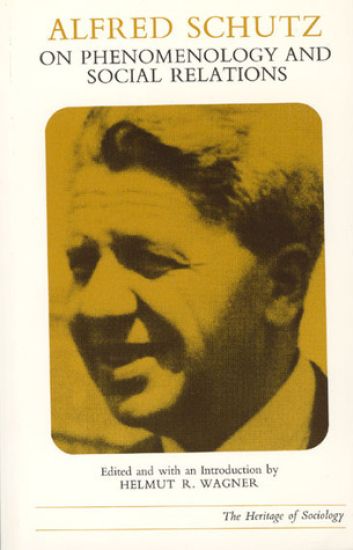
Alfred Schutz on Phenomenology and Social Relations

Alfred Schutz on Phenomenology and Social Relations

Alfred Schutz

University of Chicago Press
1999
nidottu
Alfred Schutz (1899-1959) stood simultaneously in the camps of philosophy and sociology, and his writings constitute the framework of a sociology based on phenomenological considerations. Schutz's basic contributions issue from a critical synthesis of Husserl's phenomenology and Weber's sociology of understanding. He proceeds on the basis of the irreducible souce of all human knowledge in the immediate experiences of the conscious, alert, and active individual. In this volume Helmut Wagner has selected and skillfully correlated various passages both from Schutz's book The Phenomenology of the Social World and from his scattered papers and essays.
Alfred Marshall and Modern Economics

Alfred Marshall and Modern Economics

N. Hart

Palgrave Macmillan
2013
sidottu
Alfred Marshall and Modern Economics re-examines Marshall's legacy and relevance to modern economic analysis with the more settled conventional wisdom concerning evolutionary processes allowing advances in economic theorising which were not possible in Marshall's life time.
Alfred Bester

Alfred Bester

Jad Smith

University of Illinois Press
2016
sidottu
Alfred Bester's classic short stories and the canonical novel The Stars My Destination made him a science fiction legend. Fans and scholars praise him as a genre-bending pioneer and cyberpunk forefather. Writers like Neil Gaiman and William Gibson celebrate his prophetic vision and stylistic innovations. Jad Smith traces the career of the unlikeliest of SF icons. Winner of the first Hugo Award for The Demolished Man, Bester also worked in comics, radio, and TV, and his intermittent SF writing led some critics to brand him a dabbler. In the 1960s, however, New Wave writers championed his work, and his reputation grew. Smith follows Bester's journey from consummate outsider to an artist venerated for foundational works that influenced the New Wave and cyberpunk revolutions. He also explores the little-known roots of a wayward journey fueled by curiosity, disappointment with the SF mainstream, and an artist's determination to go his own way.
Alfred Bester

Alfred Bester

Jad Smith

University of Illinois Press
2016
nidottu
Alfred Bester's classic short stories and the canonical novel The Stars My Destination made him a science fiction legend. Fans and scholars praise him as a genre-bending pioneer and cyberpunk forefather. Writers like Neil Gaiman and William Gibson celebrate his prophetic vision and stylistic innovations. Jad Smith traces the career of the unlikeliest of SF icons. Winner of the first Hugo Award for The Demolished Man, Bester also worked in comics, radio, and TV, and his intermittent SF writing led some critics to brand him a dabbler. In the 1960s, however, New Wave writers championed his work, and his reputation grew. Smith follows Bester's journey from consummate outsider to an artist venerated for foundational works that influenced the New Wave and cyberpunk revolutions. He also explores the little-known roots of a wayward journey fueled by curiosity, disappointment with the SF mainstream, and an artist's determination to go his own way.
Alfred Jarry

Alfred Jarry

Alastair Brotchie

MIT Press
2015
pokkari
This long-awaited biography of Alfred Jarry reconstructs a life both "ubuesque" and pataphysical. When Alfred Jarry died in 1907 at the age of thirty-four, he was a legendary figure in Paris-but this had more to do with his bohemian lifestyle and scandalous behavior than his literary achievements. A century later, Jarry is firmly established as one of the leading figures of the artistic avant-garde. Even so, most people today tend to think of Alfred Jarry only as the author of the play Ubu Roi, and of his life as a string of outlandish "ubuesque" anecdotes, often recounted with wild inaccuracy. In this first full-length critical biography of Jarry in English, Alastair Brotchie reconstructs the life of a man intent on inventing (and destroying) himself, not to mention his world, and the "philosophy" that defined their relation. Brotchie alternates chapters of biographical narrative with chapters that connect themes, obsessions, and undercurrents that relate to the life. The anecdotes remain, and are even augmented: Jarry's assumption of the "ubuesque," his inversions of everyday behavior (such as eating backward, from cheese to soup), his exploits with gun and bicycle, and his herculean feats of drinking. But Brotchie distinguishes between Jarry's purposely playing the fool and deeper nonconformities that appear essential to his writing and his thought, both of which remain a vital subterranean influence to this day.
Extracts from Letters Written by Alfred B. McCalmont, 1862–1865

Extracts from Letters Written by Alfred B. McCalmont, 1862–1865

Alfred B. McCalmont

Pennsylvania State University Press
2012
pokkari
Published in 1908 by the author’s son for private circulation, this volume contains a selection of more than ninety letters written to family members by Alfred B. McCalmont between September 1862 and June 1865. These letters from the war front take the reader from the organization of McCalmont’s Petroleum Guards (Company I) in the 142nd Pennsylvania Volunteers through his service as lieutenant colonel and then colonel, detailing battles and offering insights into the life of a commanding officer. (McCalmont would be promoted to brigadier general in the final hours of the war.) Early letters describe downtime, preparations, engagement, and the aftermath of battle, including discussions of Fredericksburg, Chancellorsville, and Gettysburg. Letters from the war’s later years recount McCalmont’s promotion to colonel of the newly created 208th Pennsylvania Volunteers and contain details and personal observations about the regiment’s involvement in the siege operations at Petersburg and Richmond, the Appomattox Campaign, and the pursuit of Lee.
Alfred Adler, the Forgotten Prophet

Alfred Adler, the Forgotten Prophet

Loren Grey

Praeger Publishers Inc
1998
sidottu
Adler, Freud, and Jung were the key figures in the development of psychology as we know it. Yet, while Freud and Jung are widely studied and debated, Adler is far less well known. Nonetheless, as Loren Grey demonstrates, some of Adler's novel early precepts are valuable tools for personality diagnosis, even to this day. Examples include his belief in the social equality of all human beings, regardless of race, position, class, or gender; that all human behavior is logical—however bizarre or psychotic its goal may be; that mistaken precepts about others, being learned, can be unlearned; and in the importance of understanding the dynamics behind the family interactions with particular emphasis on the ordinal position of each child in the family constellation. Many of these ideas, though ignored or rejected by the early Freudians and Jungians, have become part of the post-Freudian movements in psychology and counseling. In this book, Grey systematically examines the life and ideas of Alfred Adler as well as the approaches taken by his leading students. Many of Adler's early supporters felt that he was 100 years ahead of his time; Grey demonstrates that many of his approaches can serve humanity well in the new millennium. This text provides an important survey for students, scholars, and practitioners of psychology.
Alfred Kazin

Alfred Kazin

Richard M. Cook

Yale University Press
2008
sidottu
The first biography of Alfred Kazin–inveterate New Yorker, autobiographer, and perhaps the last great man of American letters in the tradition of Edmund Wilson Born in 1915 to barely literate Jewish immigrants in the Brownsville section of Brooklyn, Alfred Kazin rose from near poverty to become a dominant figure in twentieth-century literary criticism and one of America’s last great men of letters. Biographer Richard M. Cook provides a portrait of Kazin in his public roles and in his frequently unhappy private life. Drawing on the personal journals Kazin kept for over 60 years, private correspondence, and numerous conversations with Kazin, he uncovers the full story of the lonely, stuttering boy from Jewish Brownsville who became a pioneering critic and influential cultural commentator.Upon the appearance of On Native Grounds in 1942, Kazin was dubbed “the boy wonder of American criticism.” Numerous publications followed, including A Walker in the City and two other memoirs, books of criticism, as well as a stream of essays and reviews that ceased only with his death in 1998. Cook tells of Kazin’s childhood, his troubled marriages, and his relations with such figures as Lionel Trilling, Saul Bellow, Malcolm Cowley, Arthur Schlesinger, Hannah Arendt, and Daniel Bell. He illuminates Kazin’s thinking on political-cultural issues and the recurring way in which his subject’s personal life shaped his career as a public intellectual. Particular attention is paid to Kazin’s sense of himself as a Jewish-American “loner” whose inner estrangements gave him insight into the divisions at the heart of modern culture.
Alfred Kazin's Journals

Alfred Kazin's Journals

Yale University Press
2011
sidottu
At the time of his death in 1998, Alfred Kazin was considered one of the most influential intellectuals of postwar America. What is less well known is that Kazin had been contributing almost daily to an extensive private journal, which arguably contains some of his best writing. These journals collectively tell the story of his journey from Brooklyn's Brownsville neighbourhood to his position as a dominant figure in twentieth-century cultural life. To Kazin, the daily entry was a psychological and spiritual act. 'I turn to this notebook as if it were my lie detector, my confession, my way of ascertaining authenticity - of making myself whole again.' To read through these entries is to reexperience history as a series of daily discoveries by an alert, adventurous, if often mercurial intelligence. It is also to encounter an array of interesting and notable personalities. Sketches of friends, mistresses, family figures, and other intellectuals are woven in with commentary on Kazin's childhood, early religious interests, problems with parents, bouts of loneliness, dealings with publishers, and thoughts on the Holocaust. The journals also highlight his engagement with the political issues and cultural debates and controversies of the decades through which he lived. He wrestles with communism, anticommunism, socialism, cultural nationalism, liberalism, existentialism, Israel, modernism, bohemianism, the American Jewish renaissance, New York City, the Kennedy administration, the Vietnam war, student radicalism, feminism, religious belief, and neoconservatism. Judiciously selected and edited by acclaimed Kazin biographer Richard Cook, this collection provides the public with access to these previously unavailable writings and, in doing so, offers a fascinating social, historical, literary, and cultural record.