Kirjojen hintavertailu. Mukana 11 244 527 kirjaa ja 12 kauppaa.

Kirjahaku

Etsi kirjoja tekijän nimen, kirjan nimen tai ISBN:n perusteella.

1000 tulosta hakusanalla Alfred Polansky

Alfred Marshall and Modern Economics

Alfred Marshall and Modern Economics

N. Hart

Palgrave Macmillan
2013
sidottu
Alfred Marshall and Modern Economics re-examines Marshall's legacy and relevance to modern economic analysis with the more settled conventional wisdom concerning evolutionary processes allowing advances in economic theorising which were not possible in Marshall's life time.
Alfred Bester

Alfred Bester

Jad Smith

University of Illinois Press
2016
sidottu
Alfred Bester's classic short stories and the canonical novel The Stars My Destination made him a science fiction legend. Fans and scholars praise him as a genre-bending pioneer and cyberpunk forefather. Writers like Neil Gaiman and William Gibson celebrate his prophetic vision and stylistic innovations. Jad Smith traces the career of the unlikeliest of SF icons. Winner of the first Hugo Award for The Demolished Man, Bester also worked in comics, radio, and TV, and his intermittent SF writing led some critics to brand him a dabbler. In the 1960s, however, New Wave writers championed his work, and his reputation grew. Smith follows Bester's journey from consummate outsider to an artist venerated for foundational works that influenced the New Wave and cyberpunk revolutions. He also explores the little-known roots of a wayward journey fueled by curiosity, disappointment with the SF mainstream, and an artist's determination to go his own way.
Alfred Bester

Alfred Bester

Jad Smith

University of Illinois Press
2016
nidottu
Alfred Bester's classic short stories and the canonical novel The Stars My Destination made him a science fiction legend. Fans and scholars praise him as a genre-bending pioneer and cyberpunk forefather. Writers like Neil Gaiman and William Gibson celebrate his prophetic vision and stylistic innovations. Jad Smith traces the career of the unlikeliest of SF icons. Winner of the first Hugo Award for The Demolished Man, Bester also worked in comics, radio, and TV, and his intermittent SF writing led some critics to brand him a dabbler. In the 1960s, however, New Wave writers championed his work, and his reputation grew. Smith follows Bester's journey from consummate outsider to an artist venerated for foundational works that influenced the New Wave and cyberpunk revolutions. He also explores the little-known roots of a wayward journey fueled by curiosity, disappointment with the SF mainstream, and an artist's determination to go his own way.
Alfred Jarry

Alfred Jarry

Alastair Brotchie

MIT Press
2015
pokkari
This long-awaited biography of Alfred Jarry reconstructs a life both "ubuesque" and pataphysical. When Alfred Jarry died in 1907 at the age of thirty-four, he was a legendary figure in Paris-but this had more to do with his bohemian lifestyle and scandalous behavior than his literary achievements. A century later, Jarry is firmly established as one of the leading figures of the artistic avant-garde. Even so, most people today tend to think of Alfred Jarry only as the author of the play Ubu Roi, and of his life as a string of outlandish "ubuesque" anecdotes, often recounted with wild inaccuracy. In this first full-length critical biography of Jarry in English, Alastair Brotchie reconstructs the life of a man intent on inventing (and destroying) himself, not to mention his world, and the "philosophy" that defined their relation. Brotchie alternates chapters of biographical narrative with chapters that connect themes, obsessions, and undercurrents that relate to the life. The anecdotes remain, and are even augmented: Jarry's assumption of the "ubuesque," his inversions of everyday behavior (such as eating backward, from cheese to soup), his exploits with gun and bicycle, and his herculean feats of drinking. But Brotchie distinguishes between Jarry's purposely playing the fool and deeper nonconformities that appear essential to his writing and his thought, both of which remain a vital subterranean influence to this day.
Extracts from Letters Written by Alfred B. McCalmont, 1862–1865

Extracts from Letters Written by Alfred B. McCalmont, 1862–1865

Alfred B. McCalmont

Pennsylvania State University Press
2012
pokkari
Published in 1908 by the author’s son for private circulation, this volume contains a selection of more than ninety letters written to family members by Alfred B. McCalmont between September 1862 and June 1865. These letters from the war front take the reader from the organization of McCalmont’s Petroleum Guards (Company I) in the 142nd Pennsylvania Volunteers through his service as lieutenant colonel and then colonel, detailing battles and offering insights into the life of a commanding officer. (McCalmont would be promoted to brigadier general in the final hours of the war.) Early letters describe downtime, preparations, engagement, and the aftermath of battle, including discussions of Fredericksburg, Chancellorsville, and Gettysburg. Letters from the war’s later years recount McCalmont’s promotion to colonel of the newly created 208th Pennsylvania Volunteers and contain details and personal observations about the regiment’s involvement in the siege operations at Petersburg and Richmond, the Appomattox Campaign, and the pursuit of Lee.
Alfred Adler, the Forgotten Prophet

Alfred Adler, the Forgotten Prophet

Loren Grey

Praeger Publishers Inc
1998
sidottu
Adler, Freud, and Jung were the key figures in the development of psychology as we know it. Yet, while Freud and Jung are widely studied and debated, Adler is far less well known. Nonetheless, as Loren Grey demonstrates, some of Adler's novel early precepts are valuable tools for personality diagnosis, even to this day. Examples include his belief in the social equality of all human beings, regardless of race, position, class, or gender; that all human behavior is logical—however bizarre or psychotic its goal may be; that mistaken precepts about others, being learned, can be unlearned; and in the importance of understanding the dynamics behind the family interactions with particular emphasis on the ordinal position of each child in the family constellation. Many of these ideas, though ignored or rejected by the early Freudians and Jungians, have become part of the post-Freudian movements in psychology and counseling. In this book, Grey systematically examines the life and ideas of Alfred Adler as well as the approaches taken by his leading students. Many of Adler's early supporters felt that he was 100 years ahead of his time; Grey demonstrates that many of his approaches can serve humanity well in the new millennium. This text provides an important survey for students, scholars, and practitioners of psychology.
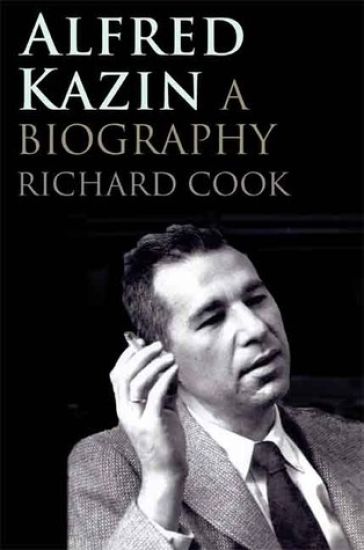
Alfred Kazin

Alfred Kazin

Richard M. Cook

Yale University Press
2008
sidottu
The first biography of Alfred Kazin–inveterate New Yorker, autobiographer, and perhaps the last great man of American letters in the tradition of Edmund Wilson Born in 1915 to barely literate Jewish immigrants in the Brownsville section of Brooklyn, Alfred Kazin rose from near poverty to become a dominant figure in twentieth-century literary criticism and one of America’s last great men of letters. Biographer Richard M. Cook provides a portrait of Kazin in his public roles and in his frequently unhappy private life. Drawing on the personal journals Kazin kept for over 60 years, private correspondence, and numerous conversations with Kazin, he uncovers the full story of the lonely, stuttering boy from Jewish Brownsville who became a pioneering critic and influential cultural commentator.Upon the appearance of On Native Grounds in 1942, Kazin was dubbed “the boy wonder of American criticism.” Numerous publications followed, including A Walker in the City and two other memoirs, books of criticism, as well as a stream of essays and reviews that ceased only with his death in 1998. Cook tells of Kazin’s childhood, his troubled marriages, and his relations with such figures as Lionel Trilling, Saul Bellow, Malcolm Cowley, Arthur Schlesinger, Hannah Arendt, and Daniel Bell. He illuminates Kazin’s thinking on political-cultural issues and the recurring way in which his subject’s personal life shaped his career as a public intellectual. Particular attention is paid to Kazin’s sense of himself as a Jewish-American “loner” whose inner estrangements gave him insight into the divisions at the heart of modern culture.
Alfred Kazin's Journals

Alfred Kazin's Journals

Yale University Press
2011
sidottu
At the time of his death in 1998, Alfred Kazin was considered one of the most influential intellectuals of postwar America. What is less well known is that Kazin had been contributing almost daily to an extensive private journal, which arguably contains some of his best writing. These journals collectively tell the story of his journey from Brooklyn's Brownsville neighbourhood to his position as a dominant figure in twentieth-century cultural life. To Kazin, the daily entry was a psychological and spiritual act. 'I turn to this notebook as if it were my lie detector, my confession, my way of ascertaining authenticity - of making myself whole again.' To read through these entries is to reexperience history as a series of daily discoveries by an alert, adventurous, if often mercurial intelligence. It is also to encounter an array of interesting and notable personalities. Sketches of friends, mistresses, family figures, and other intellectuals are woven in with commentary on Kazin's childhood, early religious interests, problems with parents, bouts of loneliness, dealings with publishers, and thoughts on the Holocaust. The journals also highlight his engagement with the political issues and cultural debates and controversies of the decades through which he lived. He wrestles with communism, anticommunism, socialism, cultural nationalism, liberalism, existentialism, Israel, modernism, bohemianism, the American Jewish renaissance, New York City, the Kennedy administration, the Vietnam war, student radicalism, feminism, religious belief, and neoconservatism. Judiciously selected and edited by acclaimed Kazin biographer Richard Cook, this collection provides the public with access to these previously unavailable writings and, in doing so, offers a fascinating social, historical, literary, and cultural record.
Alfred Stieglitz

Alfred Stieglitz

Phyllis Rose

Yale University Press
2019
sidottu
From the prizewinning Jewish Lives series, a fascinating biography of a revolutionary American artist ripe for rediscovery as a photographer and champion of other artists Alfred Stieglitz (1864–1946) was an enormously influential artist and nurturer of artists even though his accomplishments are often overshadowed by his role as Georgia O’Keeffe’s husband. This new book from celebrated biographer Phyllis Rose reconsiders Stieglitz as a revolutionary force in the history of American art. Born in New Jersey, Stieglitz at age eighteen went to study in Germany, where his father, a wool merchant and painter, insisted he would get a proper education. After returning to America, he became one of the first American photographers to achieve international fame. By the time he was sixty, he gave up photography and devoted himself to selling and promoting art. His first gallery, 291, was the first American gallery to show works by Picasso, Rodin, Matisse, and other great European modernists. His galleries were not dealerships so much as open universities, where he introduced European modern art to Americans and nurtured an appreciation of American art among American artists. About Jewish Lives: Jewish Lives is a prizewinning series of interpretative biography designed to explore the many facets of Jewish identity. Individual volumes illuminate the imprint of Jewish figures upon literature, religion, philosophy, politics, cultural and economic life, and the arts and sciences. Subjects are paired with authors to elicit lively, deeply informed books that explore the range and depth of the Jewish experience from antiquity to the present. In 2014, the Jewish Book Council named Jewish Lives the winner of its Jewish Book of the Year Award, the first series ever to receive this award. More praise for Jewish Lives: "Excellent" –New York Times "Exemplary" –Wall St. Journal "Distinguished" –New Yorker "Superb" –The Guardian
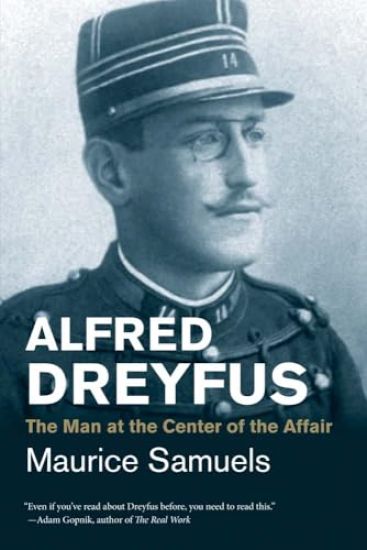
Alfred Dreyfus

Alfred Dreyfus

Maurice Samuels

YALE UNIVERSITY PRESS
2024
sidottu
An insightful new biography of the central figure in the Dreyfus Affair, focused on the man himself and based on newly accessible documents “An admirable introduction not only to its nominal subject but to . . . great historical events.”—Geoffrey Wheatcroft, New York Review of Books On January 5, 1895, Captain Alfred Dreyfus’s cries of innocence were drowned out by a mob shouting “Death to Judas!” In this book, Maurice Samuels gives readers new insight into Dreyfus himself—the man at the center of the affair. He tells the story of Dreyfus’s early life in Paris, his promising career as a French officer, the false accusation leading to his imprisonment on Devil’s Island, the fight to prove his innocence that divided the French nation, and his life of quiet obscurity after World War I. Samuels’s striking perspective is enriched by a newly available archive of more than three thousand documents and objects donated by the Dreyfus family. Unlike many historians, Samuels argues that Dreyfus was not an “assimilated” Jew. Rather, he epitomized a new model of Jewish identity made possible by the French Revolution, when France became the first European nation to grant Jews full legal equality. This book analyzes Dreyfus’s complex relationship to Judaism and to antisemitism over the course of his life—a story that, as global antisemitism rises, echoes still. It also shows the profound effect of the Dreyfus Affair on the lives of Jews around the world.
Alfred Dreyfus

Alfred Dreyfus

Maurice Samuels

YALE UNIVERSITY PRESS
2025
pokkari
An insightful new biography of the central figure in the Dreyfus Affair, focused on the man himself and based on newly accessible documents “An admirable introduction not only to its nominal subject but to . . . great historical events.”—Geoffrey Wheatcroft, New York Review of Books On January 5, 1895, Captain Alfred Dreyfus’s cries of innocence were drowned out by a mob shouting “Death to Judas!” In this book, Maurice Samuels gives readers new insight into Dreyfus himself—the man at the center of the affair. He tells the story of Dreyfus’s early life in Paris, his promising career as a French officer, the false accusation leading to his imprisonment on Devil’s Island, the fight to prove his innocence that divided the French nation, and his life of quiet obscurity after World War I. Samuels’s striking perspective is enriched by a newly available archive of more than three thousand documents and objects donated by the Dreyfus family. Unlike many historians, Samuels argues that Dreyfus was not an “assimilated” Jew. Rather, he epitomized a new model of Jewish identity made possible by the French Revolution, when France became the first European nation to grant Jews full legal equality. This book analyzes Dreyfus’s complex relationship to Judaism and to antisemitism over the course of his life—a story that, as global antisemitism rises, echoes still. It also shows the profound effect of the Dreyfus Affair on the lives of Jews around the world.
Alfred Einstein on Music

Alfred Einstein on Music

Catherine Gold

Praeger Publishers Inc
1991
sidottu
This collection is a tribute to the talent, teaching, and humanism of Alfred Einstein, whose scholarship and criticisms affirm his position as one of the foremost musicologists of the twentieth century. Written by a former student of Einstein's, this portrait draws on the influences and events that shaped his life and work as a Jewish scholar in pre-Nazi Germany and that necessitated his emigration to the United States. Dower provides more than one hundred examples of his criticisms that document the music of Germany and the United States in the second quarter of this century and that demonstrate the art of music criticism at its best.Included is a chronology that is based on information provided by Einstein's daughter, Eva. Her insight into her father's personal life is combined with Catherine Dower's careful chronological documentation of Einstein's professional endeavors, provide a unique evaluation of a critic whose research produced valuable musical discoveries and whose writings always recognized the important relationship between music and its cultural background. The study affords further access to Einstein's writings by identifying the locations of Einstein collections in numerous libraries throughout the United States.
Alfred Reed

Alfred Reed

Douglas M. Jordan

Greenwood Press
1999
sidottu
This reference guide to the life and work of the prolific American wind band composer, Alfred Reed, includes a brief biography followed by detailed bibliography and discography sections. The biography traces Reed's life and those experiences that helped to shape his music and philosophies. Attention is given to Reed's popularity with and influences upon bands throughout the world and especially in Japan. A complete listing of Reed's more than 250 works and premiers are categorized by genre. The extensive discography section cites more than 400 recordings, and the bibliography section includes the many writings by and about Reed. This unique reference will appeal to music scholars and band directors with an interest in Alfred Reed and in wind band music. As a useful research tool, each section of the volume is cross-referenced. Additionally, two appendices list Reed's compositions, one alphabetically and the other chronologically.
Alfred Tennyson

Alfred Tennyson

Leonee Ormond

PALGRAVE MACMILLAN
1993
nidottu
Throughout his long working life, Tennyson was experimenting with new forms and subjects. Widely read in a range of disciplines, he responsed to many of the personalities, events and discoveries of the Victorian age. Still widely regarded as an apologist for the 'establishment', Tennyson was always an outsider. Scourged by reviewers, and haunted by his own nervous disposition, Tennyson endured years of despair. Even when the tide turned in 1850 Tennyson remained a stern critic of his contemporaries.
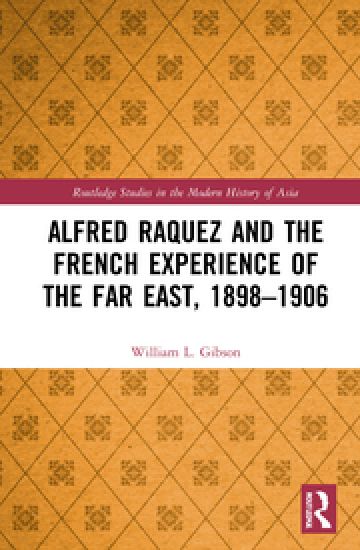
Alfred Raquez and the French Experience of the Far East, 1898-1906
A Study of an Enigmatic Travel Writer and His Work in Colonial Asia during the fin de siècle.In 1898, a man calling himself Alfred Raquez appeared in Indochina claiming to be a writer travelling the world to escape unfathomable sorrows back home in France. He published thousands of pages of highly detailed travel accounts that open a unique window onto the European presence in the Far East. He travelled far into the Zomia of upland Southeast Asia, a peripheral zone populated by people who lived beyond official state power. Raquez explored the nightlife of Shanghai and operated a popular cabaret in Hanoi. An amateur anthropologist, he helped mount expositions of colonial material in Hanoi and Marseille. Raquez met people in the highest circles of belle époque Indochina, as well as the kings of Annam, Cambodia, Laos and Siam. And yet, despite the charm and the ebullience and the erudition, through all his travels and rising fame, the man kept a secret that was so mortifying that even his closest companions would not learn of it until after his death in 1907. In truth, Alfred Raquez did not exist.A fascinating read for students and scholars of colonial Southeast Asia, and European colonialism more broadly.
Alfred Raquez and the French Experience of the Far East, 1898-1906
A Study of an Enigmatic Travel Writer and His Work in Colonial Asia during the fin de siècle.In 1898, a man calling himself Alfred Raquez appeared in Indochina claiming to be a writer travelling the world to escape unfathomable sorrows back home in France. He published thousands of pages of highly detailed travel accounts that open a unique window onto the European presence in the Far East. He travelled far into the Zomia of upland Southeast Asia, a peripheral zone populated by people who lived beyond official state power. Raquez explored the nightlife of Shanghai and operated a popular cabaret in Hanoi. An amateur anthropologist, he helped mount expositions of colonial material in Hanoi and Marseille. Raquez met people in the highest circles of belle époque Indochina, as well as the kings of Annam, Cambodia, Laos and Siam. And yet, despite the charm and the ebullience and the erudition, through all his travels and rising fame, the man kept a secret that was so mortifying that even his closest companions would not learn of it until after his death in 1907. In truth, Alfred Raquez did not exist.A fascinating read for students and scholars of colonial Southeast Asia, and European colonialism more broadly.
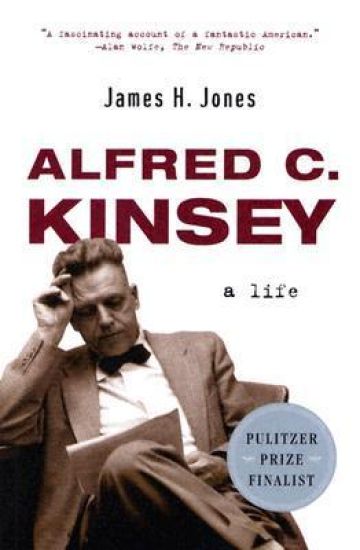
Alfred C. Kinsey

Alfred C. Kinsey

James H. Jones

WW Norton Co
2005
nidottu
In this brilliant, groundbreaking biography, twenty years in the making, James H. Jones presents a moving and even shocking portrait of the man who pierced the veil of reticence surrounding human sexuality. Jones shows that the public image Alfred Kinsey cultivated of disinterested biologist was in fact a carefully crafted public persona. By any measure he was an extraordinary man—and a man with secrets. Drawing upon never before disclosed facts about Kinsey's childhood, Jones traces the roots of Kinsey's scholarly interest in human sexuality to his tortured upbringing. Between the sexual tensions of the culture and Kinsey's devoutly religious family, Jones depicts Kinsey emerging from childhood with psychological trauma but determined to rescue humanity from the emotional and sexual repression he had suffered. New facts about his marriage, family life, and relationships with students and colleagues enrich this portrait of the complicated, troubled man who transformed the state of public discourse on human sexuality.