Kirjojen hintavertailu. Mukana 11 627 469 kirjaa ja 12 kauppaa.

Kirjahaku

Etsi kirjoja tekijän nimen, kirjan nimen tai ISBN:n perusteella.

193 tulosta hakusanalla Alkaly-K

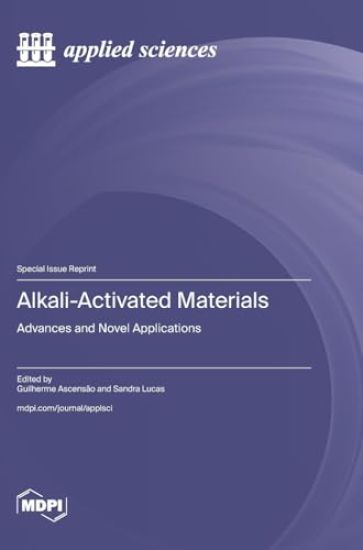
Alkali-Activated Materials in Environmental Technology Applications
Alkali-activated materials, including geopolymers, are being studied at an increasing pace for various high-value applications. The main drivers for this emerging interest include the low-energy, low-cost, and readily up-scalable manufacturing process; the possibility to utilize industrial wastes and by-products as raw materials; and beneficial material properties comparable to conventional materials. It has already been verified that alkali-activated materials are very versatile in environmental technology applications for pollution control. The current research in the field focuses on advanced manufacturing methods, material properties, and applications, for example, additive manufacturing, modification of surface chemistry, CO2 capture, and green catalysis. Alkali-Activated Materials in Environmental Technology Applications discusses what novel possibilities alkali-activated materials provide in comparison to conventional materials (such as high-temperature ceramics, synthetic zeolites, or organic polymers). The specific environmental applications that are covered include water and wastewater treatment, air pollution control, stabilization/solidification of hazardous wastes, and catalysts in chemical processes. In addition, preparation methods, material properties, and the chemistry of alkali-activated materials are revisited from the viewpoint of environmental technology applications. This book also discusses how well alkali-activated materials fit under the concepts of green chemistry and circular economy and how the life cycle analysis of these materials compares to conventional materials.
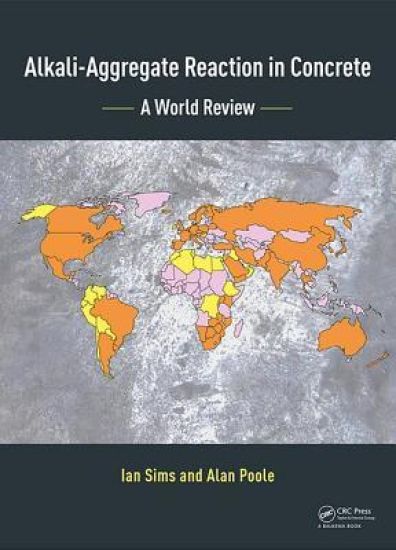
Alkali-Aggregate Reaction in Concrete
Alkali-Aggregate Reaction in Concrete: A World Review is unique in providing authoritative and up to date expert information on the causes and effects of Alkali-Aggregate Reaction (AAR) in concrete structures worldwide. In 1992 a first edition entitled The Alkali-Silica Reaction in Concrete, edited by Professor Narayan Swamy, was published in a first attempt to cover this concrete problem from a global perspective, but the coverage was incomplete. This completely new edition offers a fully updated and more universal coverage of the world situation concerning AAR and includes a wealth of new evidence and research information that has accumulated in the intervening years.Although there are various textbooks offering readers sections that deal with AAR deterioration and damage to concrete, no other single book brings together the views of recognised international experts in the field, and the wealth of scattered research information that is available. It provides a ‘state of the art’ review and deals authoritatively with the mechanisms of AAR, its diagnosis and how to treat concrete affected by AAR. It is illustrated by numerous actual examples from around the world, and comprises specialist contributions provided by senior engineers and scientists from many parts of the world.The book is divided into two distinct but complementary parts. The first five chapters deal with the most recent findings concerning the mechanisms involved in the reaction, methods concerning its diagnosis, testing and evaluation, together with an appraisal of current methods used in its avoidance and in the remediation of affected concrete structures. The second part is divided into eleven chapters covering each region of the world in turn. These chapters have been written by experts with specialist knowledge of AAR in the countries involved and include an authoritative appraisal of the problem and its solution as it affects concrete structures in the region.Such an authoritative compilation of information on AAR has not been attempted previously on this scale and this work is therefore an essential source for practising and research civil engineers, consultant engineers and materials scientists, as well as aggregate and cement producers, designers and concrete suppliers, especially regarding projects outside their own region.
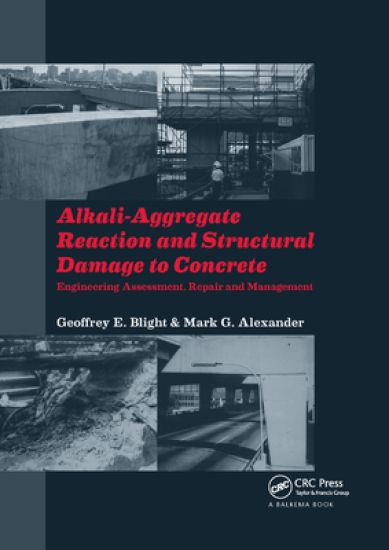
Alkali-Aggregate Reaction and Structural Damage to Concrete

Alkali-Aggregate Reaction and Structural Damage to Concrete

Geoffrey E. Blight; Mark G Alexander

CRC Press
2011
sidottu
Since AAR was first identified in 1940, it has been a subject dominated by studies of the mineralogy of AAR-susceptible aggregates, the chemistry of the AAR and related reactions and laboratory tests used to diagnose AAR and predict potential future swelling. Civil and structural engineers have found the literature bewildering and difficult to apply to their immediate requirements of assessing the present and future effects of AAR on the strength, safety and serviceability of plain and reinforced concrete structures. The book discusses methods that can be used for laboratory destructive and in situ non-destructive testing to assess the effects of AAR, and in-service measurements and load-testing to assess the present and future safety of reinforced concrete structures. Methods of repair and rehabilitation and their long-term success are discussed, as are methods of halting or slowing the progress of AAR. At the same time, the fundamentals of AAR are explained in terms intelligible to the civil and structural engineer who is primarily trained in structural mechanics and design, but also needs to have a basic understanding of the AAR process and its effects on concrete.
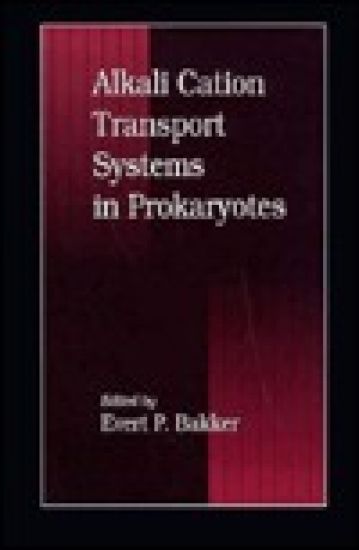
Alkali Cation Transport Systems in Prokaryotes
Alkali Cation Transport Systems in Prokaryotes is the first book that brings together the physiological, structural, and molecular biological aspects of the transport of sodium, potassium, and ammonium across the bacterial cell membrane. Sodium translocation plays a major role in energy coupling of some prokaryotes, and much of the book is devoted to new and exciting developments in this field. Over 30 experts have contributed to this excellent reference for microbiologists, biochemists, molecular biologists, cell biologists, chemotherapists, and researchers interested in bioenergetics.
Alkali-Aggregate Reaction in Concrete
Alkali-Aggregate Reaction in Concrete: A World Review is unique in providing authoritative and up to date expert information on the causes and effects of Alkali-Aggregate Reaction (AAR) in concrete structures worldwide. In 1992 a first edition entitled The Alkali-Silica Reaction in Concrete, edited by Professor Narayan Swamy, was published in a first attempt to cover this concrete problem from a global perspective, but the coverage was incomplete. This completely new edition offers a fully updated and more universal coverage of the world situation concerning AAR and includes a wealth of new evidence and research information that has accumulated in the intervening years.Although there are various textbooks offering readers sections that deal with AAR deterioration and damage to concrete, no other single book brings together the views of recognised international experts in the field, and the wealth of scattered research information that is available. It provides a ‘state of the art’ review and deals authoritatively with the mechanisms of AAR, its diagnosis and how to treat concrete affected by AAR. It is illustrated by numerous actual examples from around the world, and comprises specialist contributions provided by senior engineers and scientists from many parts of the world.The book is divided into two distinct but complementary parts. The first five chapters deal with the most recent findings concerning the mechanisms involved in the reaction, methods concerning its diagnosis, testing and evaluation, together with an appraisal of current methods used in its avoidance and in the remediation of affected concrete structures. The second part is divided into eleven chapters covering each region of the world in turn. These chapters have been written by experts with specialist knowledge of AAR in the countries involved and include an authoritative appraisal of the problem and its solution as it affects concrete structures in the region.Such an authoritative compilation of information on AAR has not been attempted previously on this scale and this work is therefore an essential source for practising and research civil engineers, consultant engineers and materials scientists, as well as aggregate and cement producers, designers and concrete suppliers, especially regarding projects outside their own region.
Alkali-Aggregate Reaction and Structural Damage to Concrete

Alkali-Aggregate Reaction and Structural Damage to Concrete

Geoffrey E. Blight; Mark G Alexander

CRC Press
2018
nidottu
Since AAR was first identified in 1940, it has been a subject dominated by studies of the mineralogy of AAR-susceptible aggregates, the chemistry of the AAR and related reactions and laboratory tests used to diagnose AAR and predict potential future swelling. Civil and structural engineers have found the literature bewildering and difficult to apply to their immediate requirements of assessing the present and future effects of AAR on the strength, safety and serviceability of plain and reinforced concrete structures. The book discusses methods that can be used for laboratory destructive and in situ non-destructive testing to assess the effects of AAR, and in-service measurements and load-testing to assess the present and future safety of reinforced concrete structures. Methods of repair and rehabilitation and their long-term success are discussed, as are methods of halting or slowing the progress of AAR. At the same time, the fundamentals of AAR are explained in terms intelligible to the civil and structural engineer who is primarily trained in structural mechanics and design, but also needs to have a basic understanding of the AAR process and its effects on concrete.
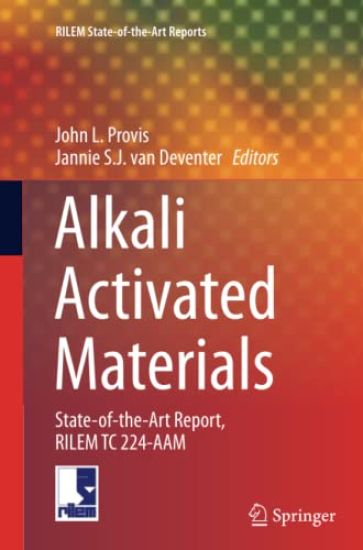
Alkali Activated Materials
This is a State of the Art Report resulting from the work of RILEM Technical Committee 224-AAM in the period 2007-2013. The Report summarises research to date in the area of alkali-activated binders and concretes, with a particular focus on the following areas: binder design and characterisation, durability testing, commercialisation, standardisation, and providing a historical context for this rapidly-growing research field.
Alkali Activated Materials
This is a State of the Art Report resulting from the work of RILEM Technical Committee 224-AAM in the period 2007-2013. The Report summarises research to date in the area of alkali-activated binders and concretes, with a particular focus on the following areas: binder design and characterisation, durability testing, commercialisation, standardisation, and providing a historical context for this rapidly-growing research field.
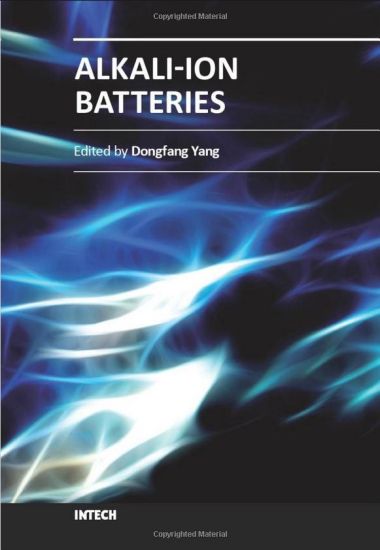
Alkali-ion Batteries
This book covers selected topics in different aspects of science and technology of alkali-ion batteries written by experts from international scientific community. Through the 9 chapters, the reader will have access to the most recent research and development findings on alkali-ion batteries through original research studies and literature reviews. This book covers inter-disciplinary aspects of alkali-ion batteries including new progress on material chemistry, micro/nano structural designs, computational and theoretical models and understanding of structural changes during electrochemical processes of alkali-ion batteries.
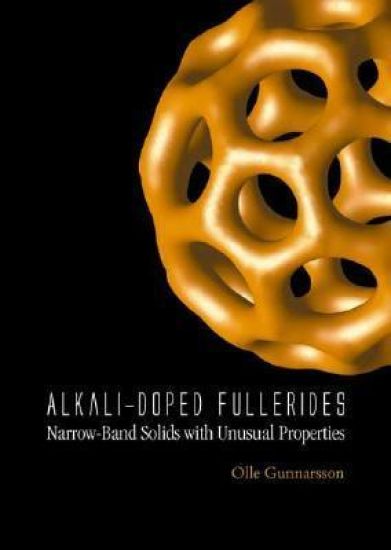
Alkali-doped Fullerides: Narrow-band Solids With Unusual Properties

Alkali-doped Fullerides: Narrow-band Solids With Unusual Properties

Olle Gunnarsson

World Scientific Publishing Co Pte Ltd
2004
sidottu
Alkali-doped fullerides have attracted strong interest since their production became possible about fifteen years ago. This book presents recent work which may solve intriguing problems arising from a variety of remarkable properties. For example, these solids are superconductors with high transition temperatures, although the similarity between the electronic and phonon energy scales should suppress superconductivity. Moreover, the Ioffe-Regel condition for electrical conductivity is strongly violated. The book shows why superconductivity is nevertheless possible, owing to a local pairing mechanism. The Ioffe-Regel condition is derived quantum-mechanically, and it is explained why the underlying assumptions are violated for fullerides and high-Tc cuprates, for example. The book treats electronic and transport properties, reviewing theoretical and experimental results. It focuses on superconductivity, electrical conductivity and metal-insulator transitions, emphasizing the electron-electron and electron-phonon interactions as well as the Jahn-Teller effect.