Rare Isotope Beams (RIBs) are ion beams of exotic radioactive nuclei. The study of these nuclei is key to understanding the limits of nuclear existence, nucleo-synthesis in such violent stellar sites as supernovae and merging neutron stars, and the fundamental symmetries of nature. These nuclei also provide a unique probe to study condensed matter and many of them are potentially new radioisotopes for more effective medical diagnostics and therapy.Rare Isotope Beams: Concepts and Techniques gives an up-to-date overview of all these aspects of RIB science in a single volume containing the scientific motivation, production techniques, experimental techniques for studying exotic nuclei, methods used in condensed matter research, and medical applications. The emphasis throughout is on concepts to facilitate understanding of the essence of each topic in this diverse and cross-disciplinary field involving nuclear physics, astrophysics, and particle accelerators. A brief description of major RIB facilities is also presented.Exotic nuclei are difficult to produce in enough numbers and their production involves different nuclear reaction routes and a wide range of advanced technologies, which are presented in a comprehensive manner. Experimental techniques used to study exotic nuclei are provided with examples highlighting the intricate nature of such experiments. Another unique feature is the open-ended nature of the discussions, bringing out the future challenges and possibilities in this evolving field.The book offers an excellent overview of concepts and techniques involved in RIB science for new researchers entering the field as well as professionals.
Achieving Successful Business Outcomes: Driving High Performance & Effective Transformations in a Continuously Evolving Business Environment Navigating in space is exponentially more difficult than navigating on the road – because there are too many directions to investigate, too many unknowns to be prepared for and infinite pathways to chart in the galactic system. So it is with business. Business environments are extremely demanding and change continuously, precipitated by innumerable actors and conditions. Business success cannot be predicated on the pedigree of a leader or a prescribed theory alone, as start-ups have amply proven. Large companies have tried to copy nimble-footed start-ups while start-ups, after achieving a certain size, have been forced to adapt to unchartered territory. Disruptions seems to be the order of the day.This book is about achieving successful business outcomes. An aircraft has a complex dashboard of dials, where only a critical few need to be monitored continuously, and other subsets warrant attention only during specific phases of the flight. A well-modeled business can be managed successfully using a similar strategy. But the larger question is how to model a business, with closely correlated variables, to represent the reality of the environment and to allow for devising, formulating and adjusting business strategy and actions in real-time.The author uses a simple but well-researched STA-Triangle (space, time and action) model to achieve this purpose. The core of the STA model is to help navigate effectively in a rapidly changing business environment. Unlike traditional business studies that use a single lens to define business rules or organizational practices, it uses the combination of space, time and action as the driver of outcomes – something fundamental and core to human thinking across the ages. This book contains both theoretical and practical applications – the former helps propel further research and analysis and the latter helps practicing leaders confidently drive their firms forward in any environmental conditions. It will also help causal readers understand how the future is evolving and how different organizations are responding to this change. The author includes more than a hundred supporting examples and tools that help create highly incisive and unique views for calibrating strategy and execution.Visit the authors' website at www.alokksinha.com
The origin of agroforestry practices—growing trees and shrubs with food and fruit crops and grasses is traditional and very old—but the science of agroforestry is new. Years of experience and experiments have shown that agroforestry as a land-use system is capable of yielding both food and wood and at the same time helps in conserving and rehabilitating the ecosystems. It has the capability to increase the overall productivity of land, maintain the nutrient balance in the soil, and above all, protect the nature. In the recent years, agroforestry has been recommended as a core subject in the curriculum of B. Sc. (Forestry) and B. Sc. (Agriculture) courses of agricultural universities. This book has been divided into ten chapters covering very comprehensive information on all aspects of agroforestry including history, concepts, systems classification, tree-crop interactions, planning and management, diagnosis and design, policy and projects, and propagation and management practices of multipurpose trees.This book is co-published with NIPA. Taylor and Francis does not sell or distribute its print and electronic editions in India, Pakistan, Nepal, Bhutan, Bangladesh and Sri Lanka.
Developing countries worldwide have been embarking on ‘smart cities’ programmes using new technology solutions to improve public services. Faced with severe problems of digital divide, poverty, unemployment, inequality, and financial and social exclusion, these cities have to negotiate hard in order to reach their goals. This book examines urban governance, digital divide, poverty, unemployment, and financial and social exclusion and presents a theoretical perspective on inclusive cities, urbanization, migration, slums,and affordable housing.The book aims at formulating and implementing an agenda for inclusive, equitable, and sustainable urban development in tune with the UN-SDGs, the New Urban Agenda of Habitat III, and India’s new national urban missions. It probes into the scope of adopting inclusionary urban planning, zoning, and housing, financing inclusive city development, and poverty alleviation through municipal finance reforms using findings and lessons from detailed field studies of Indian cities. It also suggests an agenda for slum-free and poverty-free cities in an attempt to make these cities more people-focused, humane, and inclusionary.This book will be of interest to scholars and researchers of political science, policy studies, public administration, urban studies, urban planning and management, urban sociology, and geography, besides being of interest to policy researchers, community workers, grass roots researchers, policymakers, and sociologists.
Nagas addresses the nature-embedded belief systems and subsistence strategies of the Naga people. Knowledge systems that were once spread across the Naga communities but are now confined to specific villages and communities, are examined with respect and support for the sustainable futures of Indigenous peoples. Chapters cover various Naga crafts-ancient sciences through representative case studies featuring Naga communities who still practice the same indigenous methods. Through exploring the adherence to these practices, the volume reflects on the Naga’s original worldview and is an indispensable guide to their origins. Such practices are vanishing rapidly, and this book helps preserve the knowledge for future generations. Providing the invaluable perspectives of a scholar who has devoted his life to the study of the Nagas and an Indigenous researcher with unique experiences of growing up in Nagaland, this book is suitable for researchers in archaeology, anthropology and Indigenous Studies.
Developing countries worldwide have been embarking on ‘smart cities’ programmes using new technology solutions to improve public services. Faced with severe problems of digital divide, poverty, unemployment, inequality, and financial and social exclusion, these cities have to negotiate hard in order to reach their goals. This book examines urban governance, digital divide, poverty, unemployment, and financial and social exclusion and presents a theoretical perspective on inclusive cities, urbanization, migration, slums,and affordable housing.The book aims at formulating and implementing an agenda for inclusive, equitable, and sustainable urban development in tune with the UN-SDGs, the New Urban Agenda of Habitat III, and India’s new national urban missions. It probes into the scope of adopting inclusionary urban planning, zoning, and housing, financing inclusive city development, and poverty alleviation through municipal finance reforms using findings and lessons from detailed field studies of Indian cities. It also suggests an agenda for slum-free and poverty-free cities in an attempt to make these cities more people-focused, humane, and inclusionary.This book will be of interest to scholars and researchers of political science, policy studies, public administration, urban studies, urban planning and management, urban sociology, and geography, besides being of interest to policy researchers, community workers, grass roots researchers, policymakers, and sociologists.
‘A riveting page-turner about the world of technology and dealmaking’ – Jonathan Safran Foer, author of Extremely Loud & Incredibly Close'An extraordinary account… details the thrills and horrors of the risks [Sama] so frequently took'Sunday TimesA gripping, wildly entertaining memoir that takes you behind the scenes of global business and shines a rare light on the people that are reshaping our world.Veteran Morgan Stanley banker Alok Sama thought he’d seen it all. Then he found himself chief dealmaker at the most influential technology investor in the world: SoftBank, backer of Arm Holdings, Yahoo, Nvidia, TikTok, Uber, T-Mobile, Alibaba and WeWork.The Money Trap is Sama’s thrilling, stranger-than-fiction story, detailing his experiences alongside SoftBank’s iconic founder Masayoshi Son – a visionary maverick who wants to be remembered as ‘the crazy guy who bet on the future’ and whose mission is ‘happiness for everyone’. Sama takes the reader on a wild ride as he consorts with billionaire CEOs and heads of state, negotiates mega-deals across the world and contends with a mysterious dark-arts smear campaign that takes a toll on his private life.This fascinating and humorous saga provides a unique insider perspective on an industry that is disrupting our daily lives. Written with self-deprecating wit, unflinching honesty and searing introspection, The Money Trap is ultimately a morality tale: in life, as in technology investing, more money isn’t always the answer.'[A] raffish and funny exposé of life on the highest peaks of finance . . . wittily observed . . . I imagine the financially ambitious reader drooling with pleasure' - Wall Street Journal
‘A riveting page-turner about the world of technology and dealmaking’ – Jonathan Safran Foer, author of Extremely Loud & Incredibly Close'An extraordinary account… details the thrills and horrors of the risks [Sama] so frequently took'Sunday TimesA gripping, wildly entertaining memoir that takes you behind the scenes of global business and shines a rare light on the people that are reshaping our world.Veteran Morgan Stanley banker Alok Sama thought he’d seen it all. Then he found himself chief dealmaker at the most influential technology investor in the world: SoftBank, backer of Arm Holdings, Yahoo, Nvidia, TikTok, Uber, T-Mobile, Alibaba and WeWork.The Money Trap is Sama’s thrilling, stranger-than-fiction story, detailing his experiences alongside SoftBank’s iconic founder Masayoshi Son – a visionary maverick who wants to be remembered as ‘the crazy guy who bet on the future’ and whose mission is ‘happiness for everyone’. Sama takes the reader on a wild ride as he consorts with billionaire CEOs and heads of state, negotiates mega-deals across the world and contends with a mysterious dark-arts smear campaign that takes a toll on his private life.This fascinating and humorous saga provides a unique insider perspective on an industry that is disrupting our daily lives. Written with self-deprecating wit, unflinching honesty and searing introspection, The Money Trap is ultimately a morality tale: in life, as in technology investing, more money isn’t always the answer.'[A] raffish and funny exposé of life on the highest peaks of finance . . . wittily observed . . . I imagine the financially ambitious reader drooling with pleasure' - Wall Street Journal
The transformative role of artificial intelligence (AI) in modern biomanufacturing, focusing on key areas such as Process Analytical Technology (PAT), Good Manufacturing Practice (GMP) compliance, predictive analytics, and AI-driven quality systems. It bridges cutting-edge AI applications with the complexities of biotherapeutic production, offering insights into automation, real-time monitoring, and process optimization.Delving into the core of biomanufacturing, the book provides a structured journey through its critical phases. It begins with an introduction to modern biomanufacturing principles, quality-by-design approaches, and the integration of AI. Subsequent chapters examine raw material management, lean manufacturing practices, and the application of predictive analytics to optimize supply chains. Readers will explore advanced tools such as AI-enhanced data acquisition in PAT, automated standard operating procedures (SOPs), and AI-driven process controls for fermenters and chromatography systems. The text also addresses GMP essentials, including personnel management, hygienic facility design, and pharmaceutical water systems. Key chapters highlight AI's role in validation processes, sterile packaging, and regulatory compliance, referencing global guidelines from organizations such as the WHO, FDA, and ICH. Real-world case studies featuring therapeutic proteins, monoclonal antibodies, and vaccines underscore the practical applications of AI in scaling and maintaining biotherapeutic production.This book equips readers with a comprehensive understanding of AI's potential to enhance efficiency, accuracy, and compliance in biomanufacturing. Whether you are a professional, researcher, or student, this guide offers actionable insights into leveraging AI to revolutionize biotherapeutic production while adhering to the highest industry standards.What You Will Learn· Understand how AI enhances every phase of biotherapeutic production, from raw material management to regulatory compliance, optimizing efficiency, accuracy, and quality.· Explore the role of AI in advanced data acquisition, process control, and continuous improvement, including applications in fermenters, flow filtration, and chromatography systems.· Gain insights into leveraging AI for automating standard operating procedures (SOPs), predictive maintenance, quality assurance, and adhering to global GMP standards like WHO and FDA guidelines.· Learn how AI transforms upstream and downstream processes, ensures sterility in packaging, and supports case studies on therapeutic proteins, monoclonal antibodies, and human vaccines.· Discover the potential of AI in shaping the future of biomanufacturing, including challenges, data security, and the ethical implications of AI-driven automation.
This is the first comprehensive volume on nearly periodic structures and mistuned blade vibration. Alok Sinha presents fundamental concepts and state-of-the-art techniques in the analysis of free and forced response of a nearly periodic structure, weaving together his own work (covering thirty-five years of research in this field) with works by other researchers. He also discusses similarities between tools used in bladed rotor analysis and condensed matter physics. Specific subjects covered include the reasons behind mode localization, the reasons behind amplitude amplification of steady-state response, state-of-the-art computational techniques for mistuned bladed rotors including multistage rotors, identification of mistuning from measured response, vibration localization in linear atomic chains, and analysis of two-dimensional periodic structures.
This is a textbook for a first course in mechanical vibrations. There are many books in this area that try to include everything, thus they have become exhaustive compendiums, overwhelming for the undergraduate. In this book, all the basic concepts in mechanical vibrations are clearly identified and presented in a concise and simple manner with illustrative and practical examples. Vibration concepts include a review of selected topics in mechanics; a description of single-degree-of-freedom (SDOF) systems in terms of equivalent mass, equivalent stiffness, and equivalent damping; a unified treatment of various forced response problems (base excitation and rotating balance); an introduction to systems thinking, highlighting the fact that SDOF analysis is a building block for multi-degree-of-freedom (MDOF) and continuous system analyses via modal analysis; and a simple introduction to finite element analysis to connect continuous system and MDOF analyses. There are more than sixty exercise problems, and a complete solutions manual. The use of MATLAB® software is emphasized.
Over the past several years, extensive research has been done on the microbial production of polyunsaturated fatty acids (PUFA). Regardless, research on the oleaginous microalgae used as feedstock for biofuels production and the overall story about the production of nutraceutical fatty acids from oleaginous microalgae has been very limited. This volume provides an exclusive insight on the production of nutraceutical fatty acids from oleaginous microalgae and their role on human health. Some saturated and monounsaturated fatty acids can be synthesized by humans, whereas long-chain polyunsaturated fatty acids (PUFAs) such as a-linolenic acid and linoleic acid cannot and are deemed essential. The products of these acids, such as DHA, which is important for early visual and neurological development, are extremely important to human health. Replacing SFAs with omega-3 and omega-6 fatty acids in the diet reduce the risk of cardiovascular diseases and prevent Alzheimer's, bipolar disorder, and schizophrenia, among other benefits. The ever-rising global demand for omega-3 & 6 PUFAs, however, cannot be met solely by fish oil, due to diminishing fish stocks and pollution of marine ecosystems, which has led to increased interest in alternative sustainable sources. Vegetable oils from genetically engineered plant oilseeds and microorganisms are two potential alternatives to fish oil, even though omega-3 PUFAs are highest in the latter. Although transgenic plants present numerous advantages, their production is dependent on seasonal and climatic conditions and the availability of arable land. Moreover, there are public concerns regarding the cultivation of transgenic crops in open ecosystems. These, together with regulatory issues restrict the large-scale production of genetically modified crops. Microorganisms, however, are known natural producers of microbial oils similar to those obtained from plants and animals and a possible source of nutritionally important omega-3 & 6 PUFAs. This groundbreaking volume presents invaluable new research on essential fatty acids, their production from various oleaginous microorganisms, biochemical and metabolic engineering to improve PUFAs content in oil, extraction and purification of omega 3 fatty acids, and the current market scenario. Whether a veteran engineer or scientist using it as a reference or a professor using it as a textbook, this outstanding new volume is a must-have for any engineer or scientist working in food science.
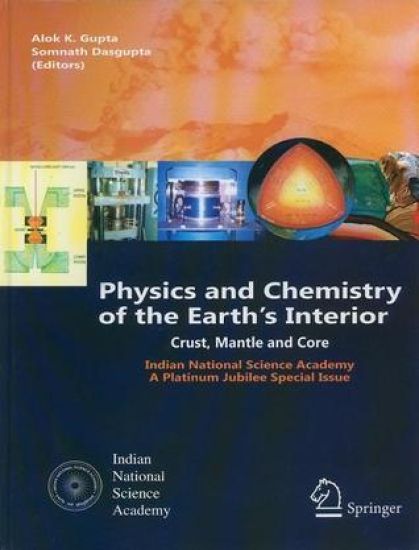
The Indian National Science Academy was established in January 1935 with the objective of promoting science in India and harnessing scientific knowledge for the cause of humanity and national welfare. In 1968 it was designated as the adhering organisation in India to the International Council for Scientific Union (ICSU) on behalf of the Government of India. Over the years, the Academy has published a number of journals, volumes, biographical memoirs, etc. The year 2009–2010 will be specially celebrated to mark the Platinum Jubilee of the Academy. Many programmes are planned in different centres in India on this occasion. In addition, the Academy has decided to publish a number of special volumes on different s- jects ranging from earth sciences to life sciences. This volume is on Physics and Chemistry of the Earth’s Interior. One of the main objectives of geophysicists is to establish the internal structure of the earth as revealed by seismic tomography. It is also their primary goal to correlate geophy- cal data to reveal thermal and chemical state of the crust, mantle and core of the earth. In - der to interpret seismic velocities and associated density and elastic properties in terms of mineralogical and petrological models of the earth’s interior, thermodynamic and hi- pressure temperature data from mineral physics are essential. With the advent of different types of multi-anvil and laser-heated diamond anvil equipment, it is now possible to simulate conditions prevalent even in the lower mantle and core of the earth.
DIVORCE 2 DIVORCE Your Heart in your Home As a human being, it is our right to use and enjoy every moment of our life on the Earth utilizing all the resources available with us. But, at the same time, rights are rights if we are always mindful of our duties ensuring the quality and quantity of life for ourselves and the upcoming generations. The book is a humble, humane and sincere attempt to share some of the thoughts and processes on the current state of affairs facing our human life on the mother Earth. It is not possible for the author to bring out all facts and aspects of human life here in this book.
Computer vision is one of the most complex and computationally intensive problem. Like any other computationally intensive problems, parallel pro cessing has been suggested as an approach to solving the problems in com puter vision. Computer vision employs algorithms from a wide range of areas such as image and signal processing, advanced mathematics, graph theory, databases and artificial intelligence. Hence, not only are the comput ing requirements for solving vision problems tremendous but they also demand computers that are efficient to solve problems exhibiting vastly dif ferent characteristics. With recent advances in VLSI design technology, Single Instruction Multiple Data (SIMD) massively parallel computers have been proposed and built. However, such architectures have been shown to be useful for solving a very limited subset of the problems in vision. Specifically, algorithms from low level vision that involve computations closely mimicking the architec ture and require simple control and computations are suitable for massively parallel SIMD computers. An Integrated Vision System (IVS) involves com putations from low to high level vision to be executed in a systematic fashion and repeatedly. The interaction between computations and information dependent nature of the computations suggests that architectural require ments for computer vision systems can not be satisfied by massively parallel SIMD computers.